
NEW
Font size
 Worksheets
Hospital and Laboratory Staff Communication
Total questions: 13
Worksheet time: 7mins
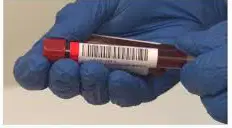
Specimen Labels
Labels must contain patient identification for each tube.
Labels can be handwritten without any identification.
Labels are optional for specimen tubes.
Labels should only include the date of collection.
Do not speak casually about patients outside the workplace.
It is acceptable to discuss patient information with friends.
Avoid discussing patient information casually outside of work.
You can share patient stories as long as you don't use names.
Discussing patient care is encouraged to raise awareness.
Introduce yourself and state what part of the hospital or laboratory staff you belong to.
It's important to introduce yourself and specify your role.
You can skip the introduction if the patient seems comfortable.
Only doctors need to introduce themselves.
Introductions are not necessary in emergency situations.
Laboratory Requisitions/Labels
Include time/date of specimen collection, source of specimen, special comments/precautions/requests, and optional info like billing information and MD address.
Only include the patient's name and ID number.
Must contain the laboratory's address and contact number only.
Should list the types of tests to be performed without any additional information.
Common Identification Methods
Use at least two methods, such as a date of birth or driver’s license, with verbal confirmation.
Only use a driver's license for identification.
Always ask for a social security number as the primary identification method.
Identification can be done verbally without any documents.
Inform the patient of the venipuncture procedure and/or test ordered by the physician.
Communicate clearly to the patient about the procedure or test they will undergo. They will appreciate it.
Skip explaining the procedure to save time.
Only inform the patient if they ask about the procedure.
Assume the patient knows what to expect.
Correct Patient Identification
Is not very important in healthcare.
Can lead to minor inconveniences.
Is extremely important and must be done right every time.
Is only necessary for surgical procedures.
Do not disclose any patient information unless authorized by the patient.
Only the physician can inform a patient of laboratory test results.
Family members can always receive patient information without consent.
Patients can disclose their information to anyone they choose.
Laboratory test results can be shared with friends if the patient is present.
HIPPA.
Responsible for ensuring confidentiality and privacy in healthcare.
A law regulating health insurance coverage.
A program for healthcare cost reduction.
An organization for healthcare professionals.
Confirming Patient Identification
Using only the patient's name
Using at least two ways to identify patients, such as armband or driver’s license, with verbal confirmation from the patient.
Relying solely on medical records
Asking the patient's family for identification
All clinical documents, including laboratory test results, must be kept confidential and private.
Confidentiality and privacy are essential for all clinical documents and lab results.
All clinical documents can be shared with anyone who requests them.
Laboratory test results do not require confidentiality.
Clinical documents should be kept in public records.
C.A.P. stands for
College of American Pathologists
Certified Association of Professionals
Council of Academic Physicians
Clinical Assessment Program
Confirm patient identification by a three-way match, in an 'inpatient' setting.
1. Check test requisitions/labels.
2. Check hospital identification armband.
3. Ask for patient's verbal identification.
4. Review patient's medical history.

