
 Worksheets
Intro to Neuro
Total questions: 32
Worksheet time: 19mins
What is the correct order of the flow of information in the nervous system?
Sensory receptor → Sensory input → Brain and spinal cord → Integration → Effector → Motor output
Effector → Motor output → Brain and spinal cord → Sensory input → Sensory receptor → Integration
Brain and spinal cord → Sensory receptor → Effector → Sensory input → Motor output → Integration
Sensory input → Effector → Sensory receptor → Brain and spinal cord → Motor output → Integration
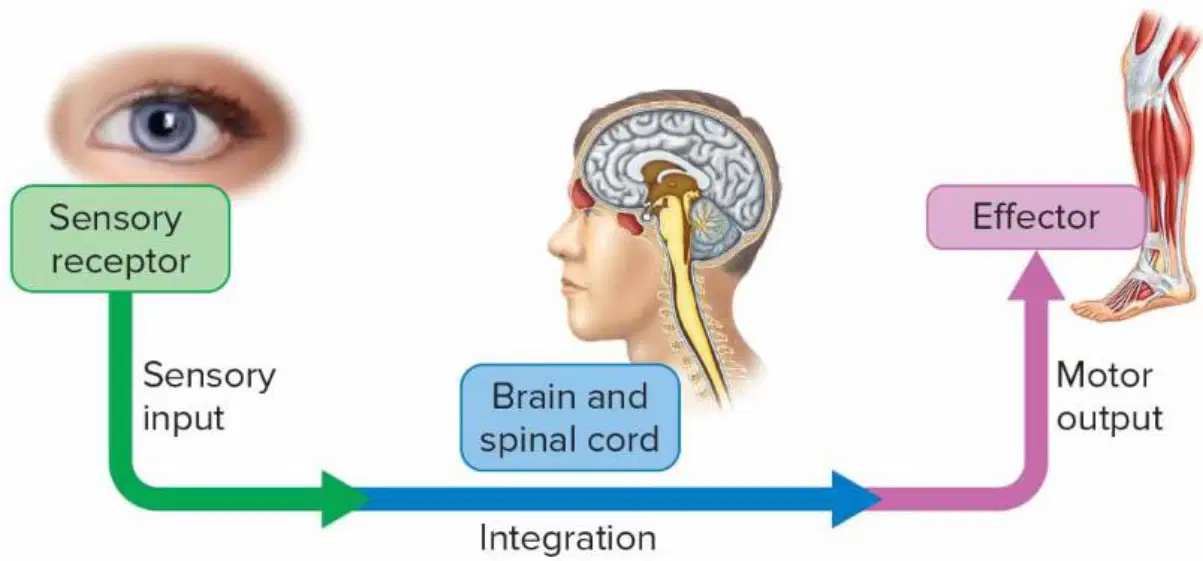
Which part of the nervous system is responsible for producing motor output?
Sensory receptor
Brain and spinal cord
Effector
Sensory input
Which of the following are parts of the Central Nervous System (CNS)?
A) Brain and Spinal cord
B) Cranial nerves and Spinal nerves
C) Heart and Lungs
D) Muscles and Bones
Which system connects the CNS to other body parts?
Central Nervous System (CNS)
Peripheral Nervous System (PNS)
Digestive System
Respiratory System
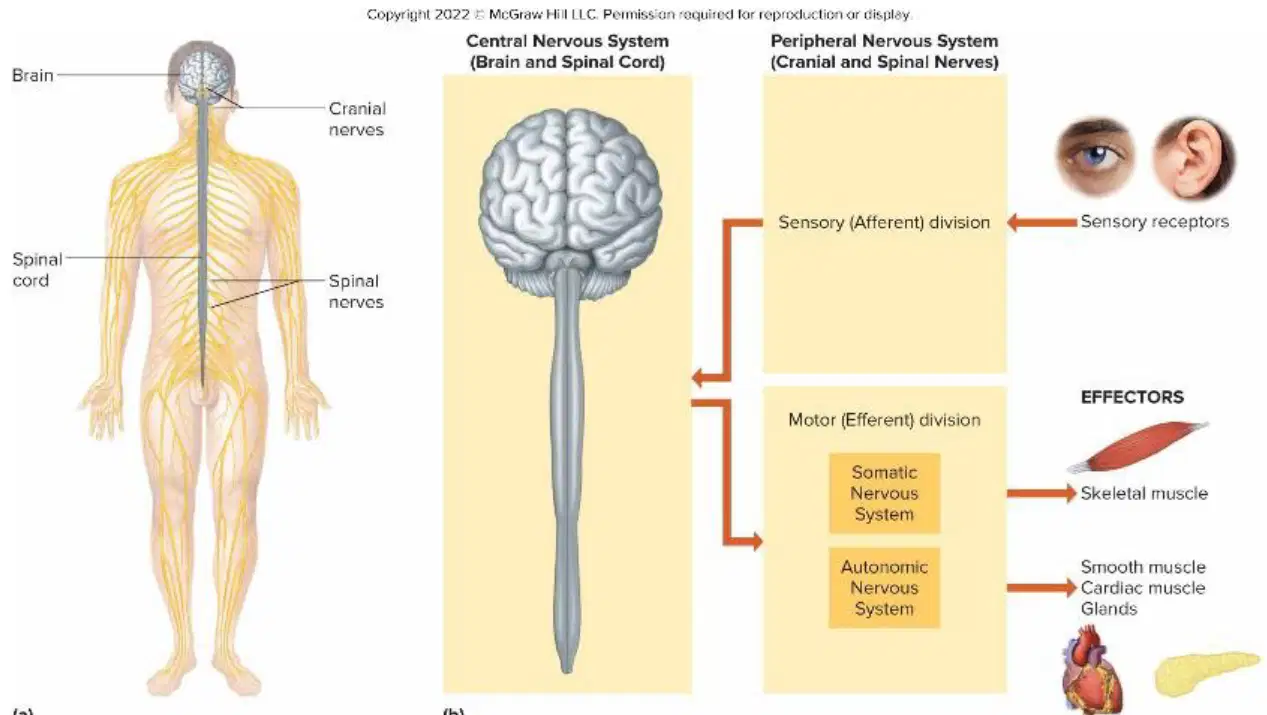
The Somatic Nervous System is a part of which division?
Sensory (Afferent) division
Motor (Efferent) division
Central Nervous System
Sensory receptors
Which function of the nervous system involves receiving information and gathering information by detecting changes?
Sensory Function
Integrative Function
Motor Function
Autonomic Function
Which part of the neuron is responsible for transmitting impulses and releasing neurotransmitters to another neuron or effector?
Dendrite
Axon
Cell body (soma)
Nucleus
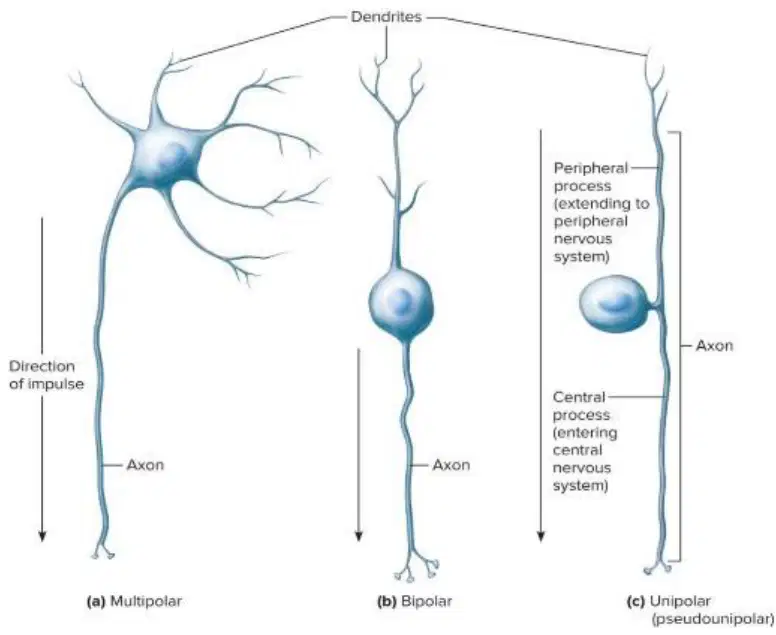
According to the classification of neurons by structure, which type of neuron makes up 99% of neurons?
Bipolar neurons
Multipolar neurons
Unipolar neurons
Sensory neurons
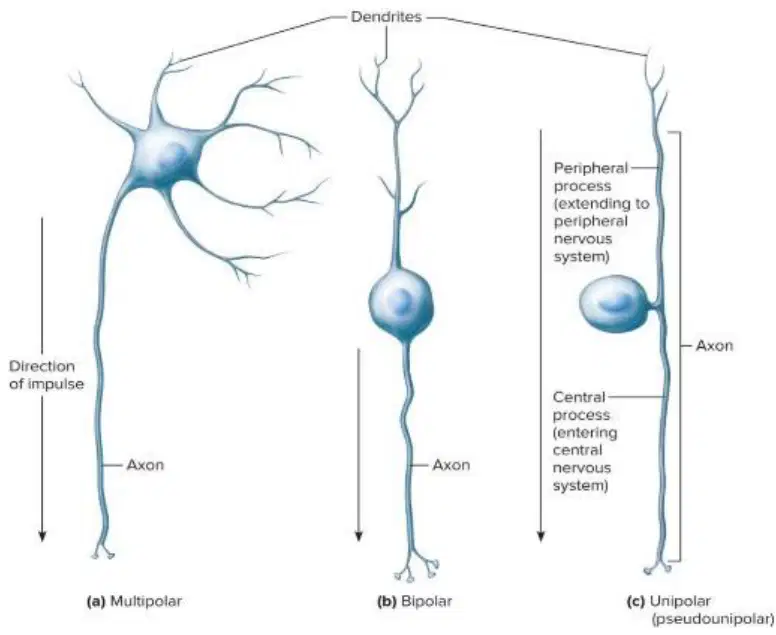
Fill in the blank: Unipolar neurons have __________ process.
one
two
three
multiple
Which type of neuroglia forms scar tissue?
Oligodendrocytes
Astrocytes
Microglia
Ependymal cells
Which type of neuroglia help regulate the composition of cerebrospinal fluid?
Astrocytes
Oligodendrocytes
Microglia
Ependymal cells
Which cell type is responsible for forming the myelin sheath in the central nervous system?
Astrocyte
Oligodendrocyte
Microglial cell
Ependymal cell
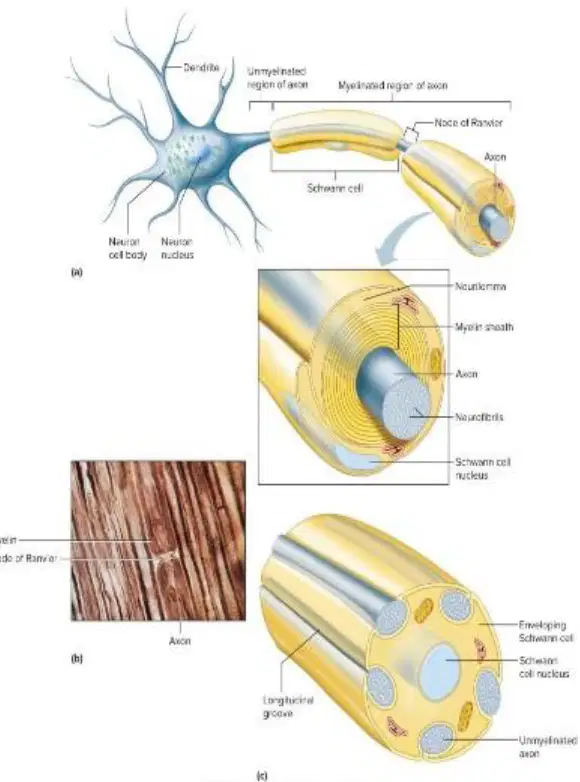
What is the primary function of Schwann cells in the peripheral nervous system?
Support clusters of neuron cell bodies
Produce myelin sheath found on some peripheral axons
Transmit electrical impulses
Store neurotransmitters
What is destroyed in the CNS by an immune response in Multiple Sclerosis?
Myelin sheaths
Neurons
Astrocytes
Blood vessels
In Multiple Sclerosis, myelin is attacked by what?
A person's own antibodies
Bacterial toxins
Viral RNA
Dietary fats
A cell membrane is usually electrically charged, or ________, so that the inside of the membrane is negatively charged with respect to the outside of the membrane.
polarized
neutralized
deionized
oxidized
What is the charge of the cell membrane at rest?
-70
-55
-80
+70
Which Channels are open during depolarization?
What is happening during repolarization of the cell?
Which nerve is sensory and responsible for our ability to see?
optic (II)
oculomotor (III)
accessory (XI)
trigeminal (V)
Which nerve is motor and responsible for moving eye to look at the nose?
trochlear (IV)
abducens (VI)
facial (VII)
glossopharyngeal (IX)
Which nerve is sensory & motor and responsible for facial sensation and chewing?
trigeminal (V)
olfactory (I)
vagus (X)
oculomotor (III)
Which nerve is motor and responsible for lateral eye movement?
abducens (VI)
optic (II)
accessory (XI)
facial (VII)
Which nerve is sensory & motor and responsible for facial movements and taste?
facial (VII)
olfactory (I)
vagus (X)
trochlear (IV)
Which nerve is sensory and responsible for hearing and balance?
vestibulocochlear (VIII)
facial (VII)
vagus (X)
oculomotor (III)
Which nerve is sensory & motor and responsible for tongue movement and taste?
glossopharyngeal (IX)
facial (VII)
trochlear (IV)
hypoglossal (XII)
Which nerve is motor & sensory and responsible for heart rate & respiration rate and organ sensation & taste?
vagus (X)
optic (II)
facial (VII)
hypoglossal (XII)
Which nerve is motor and responsible for movement of the larynx, soft palate, and shoulder shrugging?
accessory (XI)
trigeminal (V)
vestibulocochlear (VIII)
vagus (X)
Which nerve is motor and responsible for movement of the larynx, soft palate, and shoulder shrugging?
accessory (XI)
trigeminal (V)
vestibulocochlear (VIII)
vagus (X)
Which nerve is motor and responsible for tongue movement?
hypoglossal (XII)
facial (VII)
olfactory (I)
trigeminal (V)
Which nerve is sensory and controls your ability to smell?
olfactory (I)
trochlear (IV)
vagus (X)
optic (II)
Place the cranial nerves in the correct category
Facial VII
Trigeminal V
Vagus X
Glossopharyngeal IX
Olfactory I
Optic II
Vestibulcochlear VIII
Occulomotor III
Abducens VI
Trochlear IV
Accessory XI
Hypoglossal XII

