
 Worksheets
Anatomy and Physiology Basics Quiz
Total questions: 87
Worksheet time: 7hrs 15mins
What is the main difference between anatomy and physiology?
Anatomy is the study of the function of body parts, while physiology is the study of their structure.
Anatomy is the study of the structure of body parts, while physiology is the study of their function.
Anatomy and physiology both study the same aspects of the body.
Anatomy is only about diseases, while physiology is about health.
Which branch of anatomy focuses on the study of large, visible structures?
Microscopic anatomy
Gross anatomy
Cytology
Histology
What does microscopic anatomy study?
Large organs visible to the naked eye
The function of body parts
Small structures requiring a microscope
The movement of muscles
Which of the following is an example of something studied in gross anatomy?
Cells
Tissues
Organs
Enzymes
What is cytology the study of?
Tissues
Organs
Cells
Bones
What does histology focus on?
Study of bones
Study of tissues
Study of muscles
Study of organs
A scientist is using a microscope to examine the structure of tissues in the human body. Which branch of anatomy is the scientist practicing?
Gross anatomy
Physiology
Histology
Cytology
If a researcher is interested in how the heart pumps blood, which field are they studying?
Anatomy
Physiology
Cytology
Histology
Which directional term describes the position of the head relative to the neck?
superior
inferior
distal
lateral
What is the correct directional term for the hand in relation to the elbow?
distal
proximal
medial
superficial
The nose is ________ to the brain. Which term correctly fills the blank?
anterior
posterior
lateral
deep
Which term best describes the position of the spine relative to the sternum?
posterior
anterior
superficial
proximal
The sternum is ________ to the vertebrae. What is the correct directional term?
anterior
posterior
distal
inferior
Which directional term describes the muscles in relation to the bones?
superficial
deep
medial
proximal
The ears are ________ to the eyes. Which term is correct?
lateral
medial
superior
inferior
What is the correct directional term for the shoulder in relation to the elbow?
proximal
distal
superior
posterior
The mouth is ________ to the cheeks. Which term completes the sentence?
medial
lateral
anterior
superficial
Which term describes the position of the stomach relative to the lungs?
inferior
superior
proximal
posterior
A student is asked to label the directional term that means "toward the midline of the body." Which term should they use?
medial
lateral
superior
distal
If a structure is described as "closer to the point of attachment," which directional term applies?
proximal
distal
superficial
inferior
A doctor notes that a wound is "farther from the trunk of the body." Which directional term is most appropriate?
distal
proximal
anterior
posterior
Which directional term would you use to describe a structure that is "toward the back of the body"?
posterior
anterior
superior
medial
During a first aid class, Ava is learning about anatomical directions. The instructor asks her to point to the part of the body that is "toward the feet or lower part of the body." What is the correct directional term Ava should use?
inferior
superior
lateral
proximal
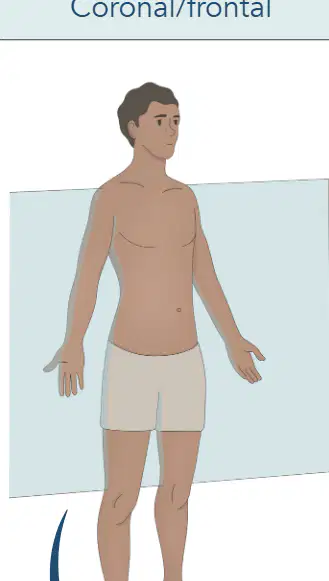
Which anatomical plane divides the body into anterior (front) and posterior (back) sections?
Coronal/frontal
Sagittal
Transverse
Oblique
What is another name for the transverse plane in human anatomy?
Horizontal or axial plane
Coronal or frontal plane
Sagittal or lateral plane
Oblique or diagonal plane

Which anatomical plane splits the body into left and right sides?
Sagittal
Coronal/frontal
Transverse
Oblique
Evelyn is designing a robot that can rotate at the waist, allowing the upper and lower halves of its torso to move independently. Along which anatomical plane should Evelyn design the rotation mechanism?
Transverse
Coronal/frontal
Sagittal
Oblique
Which anatomical plane would you use to describe a cut that splits the body into equal left and right halves, and what is a helpful memory trick for this plane?
Sagittal; Sagittal think Splits the Sides
Coronal/frontal; Face the Front with Coronal Cut
Transverse; Transverse think cuts the Torso into a Top half
Oblique; Remember the Oblique Angle
Which of the following best describes a compound?
The smallest unit of an element that retains its chemical properties.
A molecule that is formed from atoms of more than one element.
A group of two or more atoms bonded together.
An atom that exists alone.
What is the smallest unit of an element that retains its chemical properties?
Atom
Molecule
Compound
Ion
Which of the following is a group of two or more atoms bonded together?
Atom
Molecule
Compound
Element
According to the material, which statement is true about molecules?
Molecules can only be made of one type of atom.
Molecules exist in masses, which are groups of two or more atoms.
Molecules are always compounds.
Molecules cannot exist alone.
Which type of tissue creates protective boundaries throughout the body and is involved in the diffusion of ions and molecules?
Epithelial tissue
Muscle tissue
Nervous tissue
Connective tissue
What is the primary function of muscle tissue?
Used to initiate movement in the body
Supports and connects all other tissues
Transmits and integrates information
Creates protective boundaries
Which tissue type is most abundant in the body and supports and connects all other tissues?
Epithelial tissue
Muscle tissue
Connective tissue
Nervous tissue
Which tissue transmits and integrates information through the central and peripheral nervous system?
Muscle tissue
Connective tissue
Epithelial tissue
Nervous tissue
Which of the following best explains why connective tissue is considered the most abundant tissue in the body?
It lines the organs and body cavities.
It supports and connects all other tissues.
It initiates movement.
It transmits electrical signals.
A patient has a disorder affecting the transmission of information through their nervous system. Which tissue is most likely affected?
Muscle tissue
Connective tissue
Nervous tissue
Epithelial tissue
What is the function of ribosomes in a cell?
Controls what enters and exits the cell
Produces energy (ATP) to power cellular functions
Site of protein synthesis
Site of steroid & lipid synthesis and lipid metabolism
Which cell structure contains the cell's genetic material and coordinates cell activities?
Cell Membrane
Nucleus
Mitochondria
Golgi Apparatus
A scientist is studying a structure in the cell that produces energy (ATP) to power cellular functions. Which structure is the scientist most likely investigating?
Ribosomes
Golgi Apparatus
Mitochondria
Microtubules
If a cell is unable to maintain its internal balance by controlling what enters and exits, which structure is most likely malfunctioning?
Cell Membrane
Nucleus
Ribosomes
Golgi Apparatus
Which of the following best describes the function of microtubules in a cell?
Produces energy (ATP) to power cellular functions
Supports cell, gives cell shape, involved in intracellular & cellular movements
Site of protein synthesis
Contains the cell's genetic material
A patient has a disorder affecting the site of steroid and lipid synthesis in their cells. Which organelle is most likely affected?
Ribosomes
Mitochondria
Golgi Apparatus
Nucleus
What is the universal donor blood type?
AB+
O-
A+
B-
Which blood component is also known as erythrocytes?
Platelets
Plasma
Red blood cells
White blood cells
Which of the following blood types can donate to both AB- and AB+?
O+
AB-
B+
A+
Lily is in need of a blood transfusion and her blood type is A+. Which blood types can she safely receive blood from?
O-, O+, A-, A+
O-, O+, B-, B+
AB-, AB+, O-, O+
A-, B-, AB-, O-
Which blood type is considered the universal recipient?
O-
AB+
A+
B-
A patient with B+ blood type can receive blood from which of the following types?
O-, O+, B-, B+
O-, O+, A-, A+
AB-, AB+, O-, O+
A-, B-, AB-, O-
Which type of blood vessel carries deoxygenated blood back to the heart?
Arteries
Veins
Capillaries
Aorta
What is the main function of arteries in the circulatory system?
Carry deoxygenated blood to the lungs
Carry oxygenated blood away from the heart
Carry nutrients to the heart
Carry waste products to the kidneys
Which blood vessel is an exception to the general rule of veins and arteries, carrying deoxygenated blood away from the heart?
Pulmonary vein
Pulmonary artery
Aorta
Superior vena cava
Place the following in the correct order for the flow of deoxygenated blood through the right side of the heart: Right Atrium, Pulmonary Valve, Tricuspid Valve, Right Ventricle.
Right Atrium → Tricuspid Valve → Right Ventricle → Pulmonary Valve
Right Atrium → Right Ventricle → Tricuspid Valve → Pulmonary Valve
Tricuspid Valve → Right Atrium → Right Ventricle → Pulmonary Valve
Right Atrium → Pulmonary Valve → Tricuspid Valve → Right Ventricle
What is the final destination of deoxygenated blood after it leaves the right ventricle?
Aorta
Pulmonary artery
Pulmonary vein
Left atrium
Which structure receives oxygenated blood from the lungs?
Right atrium
Pulmonary artery
Pulmonary vein
Right ventricle
What is the correct sequence for the flow of oxygenated blood through the left side of the heart?
Pulmonary vein → Left atrium → Bicuspid/Mitral valve → Left ventricle → Aortic valve → Aorta
Pulmonary vein → Left ventricle → Left atrium → Bicuspid/Mitral valve → Aorta → Aortic valve
Left atrium → Pulmonary vein → Bicuspid/Mitral valve → Left ventricle → Aorta → Aortic valve
Pulmonary vein → Bicuspid/Mitral valve → Left atrium → Left ventricle → Aorta → Aortic valve
What is the main function of the aorta in the cardiovascular system?
Carry deoxygenated blood to the lungs
Carry oxygenated blood to the tissues/body
Carry blood from the body to the heart
Carry blood to the right atrium
Which valve is located between the left atrium and the left ventricle?
Tricuspid valve
Pulmonary valve
Bicuspid/Mitral valve
Aortic valve
Which chamber of the heart receives oxygen-poor blood from the body?
Right atrium
Left atrium
Right ventricle
Left ventricle
What is the main function of the left ventricle in the cardiovascular system?
To pump oxygenated blood to the body
To receive deoxygenated blood from the body
To pump blood to the lungs
To receive blood from the lungs
While studying for his biology exam, Henry wonders which artery supplies oxygenated blood to the heart muscle itself. Which artery is it?
Coronary artery
Pulmonary artery
Brachiocephalic artery
Subclavian artery
If a blockage occurs in the left anterior descending artery, which part of the heart is most at risk?
The front wall of the left ventricle
The right atrium
The apex of the heart
The superior vena cava
Which vessel carries oxygenated blood from the lungs to the heart?
Left pulmonary veins
Right pulmonary artery
Superior vena cava
Aortic arch
Explain the pathway of blood flow starting from the right atrium and ending at the aortic arch.
Right atrium → Right ventricle → Pulmonary artery → Lungs → Pulmonary veins → Left atrium → Left ventricle → Aortic arch
Right atrium → Left ventricle → Pulmonary artery → Lungs → Pulmonary veins → Right ventricle → Left atrium → Aortic arch
Right atrium → Right ventricle → Pulmonary veins → Lungs → Pulmonary artery → Left atrium → Left ventricle → Aortic arch
Right atrium → Left atrium → Right ventricle → Left ventricle → Aortic arch
Which structure is a small flap that prevents food from entering the windpipe?
Epiglottis
Larynx
Bronchioles
Diaphragm
What is the cartilage structure responsible for producing sound?
Trachea
Larynx
Pharynx
Bronchi
Which of the following are groups of air sacs located at the ends of the smallest airways?
Bronchi
Alveoli
Cilia
Intercostal muscles
What muscle beneath the lungs assists with breathing?
Intercostal muscles
Diaphragm
Larynx
Epiglottis
Which projections move debris and microbes out of the airway?
Bronchioles
Cilia
Alveoli
Trachea
What is the shared pathway for both air and food?
Larynx
Pharynx
Trachea
Bronchi
Which structure is a tube reinforced with cartilage rings and lined with tiny hair-like structures?
Trachea
Bronchioles
Alveoli
Epiglottis
What are the smaller airways that branch off from the main windpipe?
Bronchioles
Bronchi
Alveoli
Cilia
Which structure transports air directly to the clusters of air sacs in the lungs?
Bronchi
Intercostal muscles
Larynx
Diaphragm
What muscles play a role in the breathing process and are located between the ribs?
Diaphragm
Intercostal muscles
Cilia
Pharynx
Arrange the following steps of gas exchange in the correct order: 1. Blood from the pulmonary artery moves from the heart into capillaries surrounding the alveoli. 2. Gas exchange occurs; CO₂ is exhaled out because it is a waste product, while the O₂ we breathe in binds to hemoglobin in the red blood cells. 3. O₂ is absorbed into the bloodstream and is transported to the body’s organs and tissues. 4. The venous system brings CO₂-rich blood back to the heart, where it is pumped to the lungs for exhalation. Which is the correct order?
1, 2, 3, 4
2, 1, 3, 4
1, 2, 4, 3
1, 2, 3, 4
Which of the following structures is part of the upper respiratory tract?
Sphenoid sinus
Trachea
Bronchioles
Alveoli
What is the main function of the alveoli in the respiratory system?
Gas exchange
Sound production
Filtering air
Producing mucus
Which structure separates the thoracic cavity from the abdominal cavity and plays a key role in breathing?
Diaphragm
Larynx
Pharynx
Frontal sinus
The trachea branches into which of the following structures?
Primary bronchi
Alveolar sac
Pharynx
Sphenoid sinus
If a patient has a blockage in their bronchioles, which part of the respiratory system is directly affected?
Lower respiratory tract
Upper respiratory tract
Nasal cavity
Frontal sinus
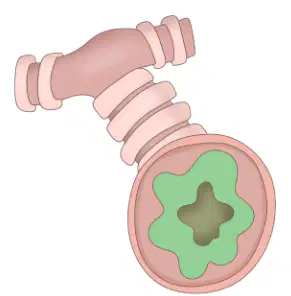
Which chronic condition is present in any stage of life and includes narrowing of the airways, excess mucus, and wheezing?
Asthma
Emphysema
Hemothorax
Pleuritis
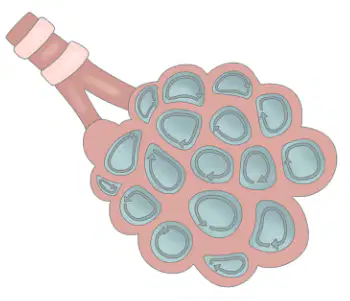
What are classic signs of emphysema?
Hyperinflation of the alveoli and air-trapping
Inflammation of pleuritic membranes
Blood collecting in the pleural space
Narrowing of the airways
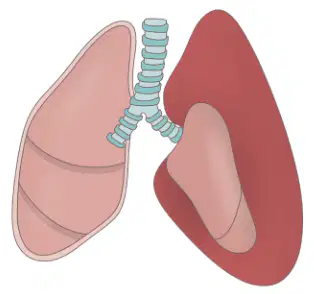
Which condition is often caused by trauma to the chest, resulting in blood collecting in the pleural space and collapsing the lung?
Hemothorax
Asthma
Emphysema
Pleuritis
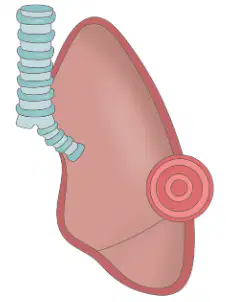
What is the inflammation of pleuritic membranes called?
Pleuritis
Emphysema
Asthma
Hemothorax
Mia is learning about how her body digests food. She discovers that one organ stores bile to help digest fat. Which organ is it?
Oral cavity
Liver
Gallbladder
Pancreas
What is the main function of the pancreas in the digestive system?
Absorption of sodium and water
Produces digestive enzymes and insulin
Storage of feces
Ingestion of food and water

