Worksheets
NMAT PART II - Reviewer
Total questions: 84
Worksheet time: 42mins
Tanjiro, a 23-year-old demon slayer, presented to a rural emergency room with complaints of shortness of breath, fatigue, dizziness, and tingling sensations in his fingers after completing a three-day ascent to the summit of Mount Apo as part of the stone hashira training, which reaches approximately 2,954 meters above sea level. On the final day of his training, he began experiencing difficulty breathing during mild activity. Upon evaluation in the emergency room, Tanjiro’s vital signs revealed a mild drop in oxygen saturation at 88% on room air. An arterial blood gas analysis showed a pH of 7.47, indicating alkalosis; a PaCO₂ of 30 mmHg, suggestive of hyperventilation; a PaO₂ of 60 mmHg, consistent with mild hypoxemia; and a normal lactate level. His body temperature was 36.5°C, and both his hemoglobin level (15.5 g/dL) and chest X-ray were within normal limits. Which of the following best explains why Tanjiro despite having only mildly reduced arterial oxygen saturation, exhibited signs of tissue hypoxia after his high-altitude ascent?
The low ambient oxygen at high altitude caused a rightward shift of the oxygen-hemoglobin dissociation curve, leading to inadequate hemoglobin oxygen loading in the lungs.
Hyperventilation-induced respiratory alkalosis shifted the oxygen-hemoglobin dissociation curve to the left, impairing oxygen unloading at the tissue level.
Decreased levels of hemoglobin due to altitude sickness reduced oxygen-carrying capacity, resulting in insufficient oxygen transport.
The increase in 2,3-bisphosphoglycerate (2,3-BPG) at high altitude shifted the dissociation curve to the left, enhancing oxygen loading and tissue delivery
A nine-year-old boy, admired by his classmates for being effortlessly cool like Sakamoto, often munches on chocolate candies while showing off his stylish moves during playtime. Even though he remains highly active throughout the day, his caregivers notice that he tends to have a reduced appetite at mealtimes. What is the main reason why continuously eating chocolate while playing might reduce the child’s appetite?
The sugar triggers cortisol release, leading to increased production of glucose from non-carbohydrate sources
Elevated blood sugar levels from the candy activate the brain’s satiety control center
The sugar prompts the pancreas to release glucagon, which increases the breakdown of stored glycogen.
The sugar in candies makes the stomach feel full, reducing hunger
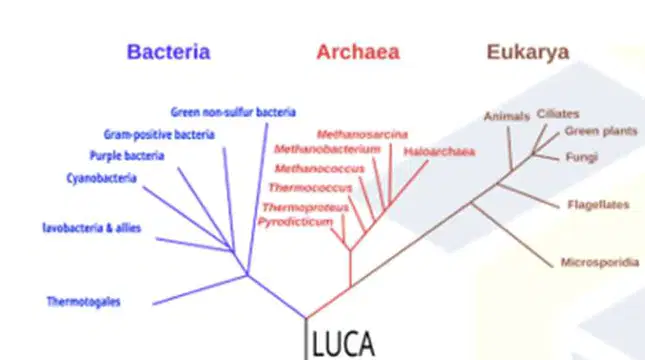
The phylogenetic tree in the image illustrates the evolutionary relationships between Bacteria, Archaea, and Eukarya. Whichof the following implications can be inferred from the image?
Bacteria are the most evolved domain, with a higher diversity than Archaea and Eukarya.
Eukarya evolved independently from both Bacteria and Archaea without any shared ancestry.
All three domains (Bacteria, Archaea, and Eukarya) evolved at the same time without divergence.
Archaea and Eukarya share a more recent common ancestor compared to their relationship with Bacteria.
Nami, a 30-year-old navigator of the Straw Hat Pirates, notices that her body is not in rhythm and her menstrual cycles have become irregular. When Chopper, the crew doctor, examines her. The tests show low FSH and LH but high prolactin levels. Upon a series of physical and laboratory tests, Chopper diagnoses her with a pituitary prolactinoma, a benign tumor that affects hormone secretion. Which of the following best explains how Nami’s condition affects her ovarian and uterine function?
Increased prolactin suppresses GnRH secretion, reducing FSH and LH release, leading to anovulation and endometrial atrophy.
Elevated prolactin stimulates excessive estrogen secretion, causing persistent endometrial hyperplasia leading to pituitary prolactinoma
High prolactin levels directly stimulate follicular development but prevent luteal phase function explaining here irregular menstrual cycle.
Prolactinoma enhances progesterone secretion, resulting in prolonged luteal phases and irregular menstruation
Asevere wildfire engulfs a pine forest located in a mountainous region during the peak of the dry season. The fire spreads rapidly, burning down trees, shrubs, and ground vegetation. Wildlife is forced to migrate or perish, leaving behind a landscape of ash and charred remains. Despite the destruction, the topsoil is not completely eroded; in fact, it has become enriched with minerals from the burned organic matter. In the weeks after the wildfire, the area appears barren, but small resilient organisms soon begin to colonize the scorched land. These early colonizers pave the way for other plant and animal species to return, gradually restoring the ecosystem to become a climax community. Which group of organisms is most likely to be the first to colonize and grow in the burned forest ecosystem after the wildfire?
Lichens
Tall hardwood trees
Grasses
Migrating birds
Yuji, a 45-year-old sorcerer, has been diagnosed with a hormonal imbalance affecting his metabolism. Despite his strength and stamina in battle, he begins experiencing unexplained weight changes, fatigue, and difficulty maintaining energy levels. Laboratory tests confirm the imbalance in thyroid hormones that affect the thyroid hormones’ target cells in his body. What factors influence the activation of Yuji’s target cells are TRUE?
I. The level of hormones in the blood
II. Stimulation of second messenger production
III. The number of hormone receptors on the target cell
IV. The affinity between the hormone and its receptor
I, II, and III
II, III, and IV
I, III, and IV
I, II, IV
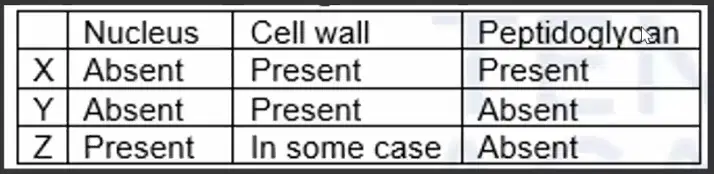
Which of the following statements is correct based on the table given below:
X is referring to Archaea, while Y is referring to Bacteria
Y is referring to Archaea, while Z is referring to Eukarya
X is referring to Eukarya, while Y is referring to Bacteria
Y is referring to Bacteria, while Z is referring to Eukarya
Sakura, a 30 year old kunoichi, recently recovered from a viral illness that mainly attacked her respiratory system. However, she noticed that throughout her sickness, her skin remained unaffected and showed no signs of viral infection. Curious, she asks the village medic-nin why viruses don't seem to grow or spread on the surface of the skin. If the medic-nin were to explain, which of the following would be most likely the answer?
The skin's surface temperature creates an unfavorable environment for viral growth
The top layer of the skin is made up only of dead cells
Oil secreted by the skin's glands blocks oxygen from reaching viruses
Fine hairs on the skin act as a natural protective shield
Chargaff's rules are fundamental to understanding DNA structure. According to these rules, in any molecule, the amount of adenine (A) equals the amount of thymine (T), and the amount of cytosine (C) equals the amount of guanine (G). This base-pairing rule forms the basis for the double-helix structure of DNA, as described by Watson and Crick. If a DNA molecule contains 30% adenine (A), what percentage of the molecule is guanine (G)?
20%
30%
40%
60%
During a routine botany lab session, a biology student observes the sensitive plant (Mimosa pudica) as part of her assigned activity. When she touches the plant's leaves, they fold in wards almost immediately. What causes the leaves of Mimosa pudica to move when touched?
Muscle-like contractions at the base of the stem
The displacement of xylem and phloem
Changes in turgor pressure in the cells at the base of the stem
The effects of hormones like gibberellin and auxin
Sanji, a chef in the Straw Hats Pirates, notices that freshly harvested lettuce tends to wilt and lose its crisp texture when left uncovered in the refrigerator. To prevent this, the chef washes the lettuce and covers it with damp cloth before storage. The lettuce remains fresh and firm for a longer period, making it ideal for salads and other dishes. From a biological perspective, why does covering the lettuce with a damp cloth help maintain its crispness?
The damp cloth reduces oxygen exposure, slowing down the respiration rate of the lettuce.
The moisture from the cloth helps maintain turgor pressure in the lettuce cells, preventing wilting.
The cloth blocks light, which stops photosynthesis and delays spoilage.
The damp cloth absorbs excess moisture, preventing bacterial growth on the lettuce.
In the study of human anatomy, bone and cartilage are both specialized types of connective tissue that play essential roles in supporting and structuring the body. These tissues are composed of cells embedded within an extracellular matrix, but they differ significantly in their structure, function, and growth patterns. Bone is a dense, rigid tissue that provides support and strength to the skeleton, aiding in protection, movement, and mineral storage. Cartilage, on the other hand, is a more flexible, resilient tissue found in areas such as the joints, nose, and respiratory tract. Which statement correctly identifies a key difference between bone and cartilage?
Cartilage grows more slowly than other tissues because it lacks blood vessels, which limits its ability to receive nutrients and repair itself.
Bone functions as a shock absorber and is commonly found in the respiratory tract, where it helps to cushion and protect tissues.
The matrix of bone tissue is composed entirely of organic materials, giving it its strength and rigidity.
Bone tissue lacks a direct blood supply, which affects its growth pattern, resulting in bidirectional growth rather than uniform growth.
A 45-year-old patient is admitted to the hospital with complaints of persistent headaches, nausea, and confusion. Laboratory tests reveal an excessive secretion of antidiuretic hormone (ADH). Given this condition, the patient's fluid balance is closely monitored to assess any imbalances in water and sodium levels. How does the oversecretion of antidiuretic hormone (ADH) affect the patient's water and sodium concentration?
Increased water excretion and dilution hypernatremia
Decreased water retention and hyponatremia
Increased water retention and dilutional hyponatremia
Decreased water excretion and hypernatremia
In a conservation project, scientists are studying the impact of environmental changes on freshwater microorganisms. They accidentally release a freshwater protozoan from a river into the more saline waters of Manila Bay. The scientists observe the protozoan's reaction to this new saline environment and need to understand how the change in salinity affects its cellular functions. What is likely to occur to the protozoan as it moves from the freshwater river into the saline waters of Manila Bay?
Water would diffuse out of the cell because the surrounding water is more saline.
Water would diffuse into the cell since the protozoan's internal environment is less saline compared to the surrounding water.
The cell would remain isotonic with its surroundings, showing no net movement of water.
The cell would become hypertonic relative to its surroundings, resulting in a shift in solute concentrations.
In a population of 1000 mice, the coat color is determined by a single gene with two alleles: a dominant allele (B) for black fur and a recessive allele (b) for white fur. Researchers observe that 160 mice in the population have white fur. Assuming the population is in Hardy-Weinberg equilibrium, calculate the frequency of the dominant allele (B). Given the above scenario, what is the frequency of the dominant allele (B) in the mouse population?
0.36
0.40
0.60
0.64
mH3PO4+nHCl → oPCl5+pH2O Based on the reaction, what are the values for m, n, o, and p?
m=1, n=5, o=1, p=4
m=1, n=4, o=1, p=5
m=1, n=3, o=1, p=2
m=1, n=2, o=3, p=3
Balance the reaction: Pb(NO3)2+KI → KNO3+PbI2
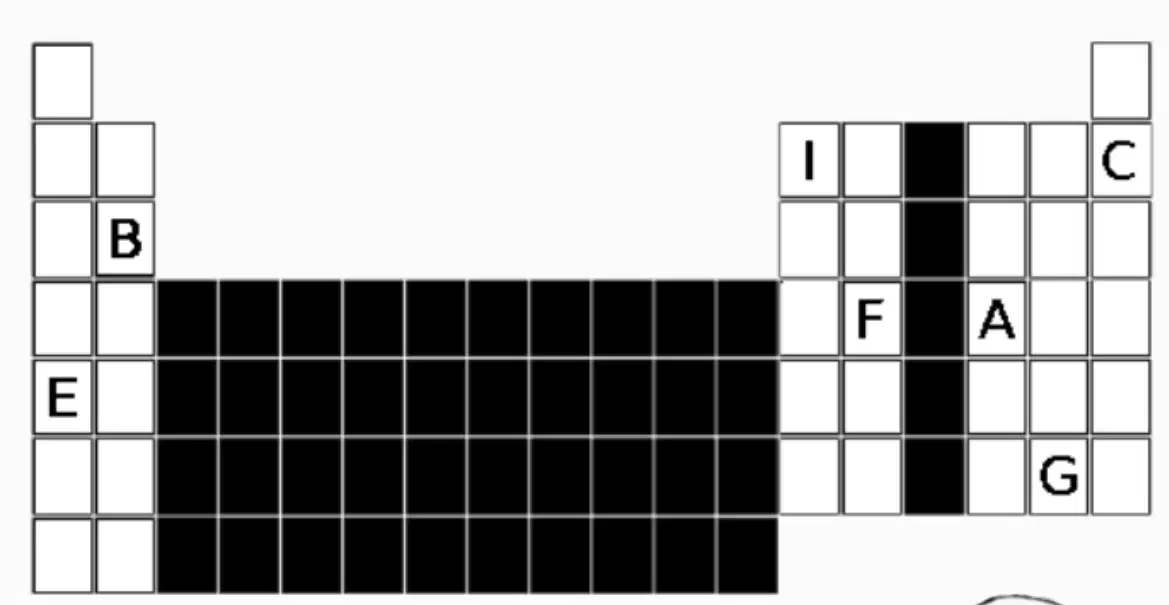
An unknown element has a mass number of 85 and 48 neutrons. What is the identity of the unknown element?
C
G
F
E
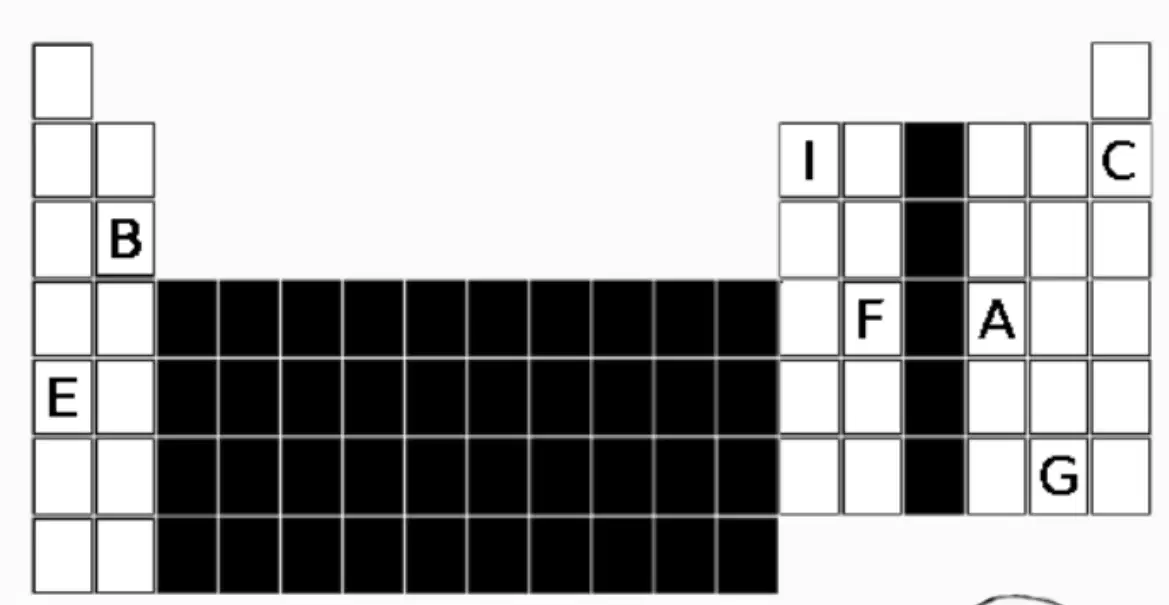
Which of the following element would be inert?
A
C
G
E
If the temperature of water is increased, which of the following will definitely increase?
molecular weight
molecular size
volume
mass
The table above shows the properties of substances A, B, and C. Which of the following three substances is in gaseous state?
Substance A
Substance B
Substance C
Substance B and C
Which of the following phases of matter is the simplest form of matter?
gas
liquid
solid
plasma
When heated, HgO decomposes to form Hg and O2. If 1 mole of HgO decomposed, how many moles of O2 will be formed?
1/2
1
2
3
If 4.61g of PbI2 was isolated from the reaction of Pb(NO3)2 and NaI, what will be the calculated amount of NaI that reacted with PbI2? (Molar mass: PbI2=330 g/mol ; NaI=150 g/mol)
1.50 g
3.00 g
4.61 g
9.22 g
What is the change in energy for an electron in a hydrogen atom when it drops from energy level n=2 to n=1?
-1.635 x 10⁻¹⁸
-2.635 x 10⁻¹⁸
-3.635 x 10⁻¹⁸
-9.635 x 10⁻¹⁸
What is the change in energy for an electron in a
hydrogen atom when it relaxes from n=5 to n=2?
-2.635 x 10⁻¹⁸
-4.535 x 10⁻¹⁸
-4.635 x 10⁻¹⁸
4.57 x 10⁻¹⁹
The visible region of a spectrum has wavelengths ranging from 400 to 700 nm. A liquid substance which absorbs radiation of wavelength 290 nm will appear...
red
green
blue
colorless
Which of the following terms accurately describes the energy associated with the process: Li(g)→Li+(g)+e−
electron affinity
binding energy
ionization energy
electronegativity
A prism disperses white light, forming a spectrum. Which of the following is the best explanation for this phenomenon?
Refraction
Reflection
Dispersion
Diffraction
AgCl can be dissolved in water only to the extent of 0.0021 g per 100 mL of water at 100℃. What is the solubility of AgCl at 100℃?
0.0021 g/mL
2.1 x 10⁻⁵ g/mL
0.021 g/mL
0.21 g/mL
If 0.0005 g of AgCl was dissolved in 50 mL dH2O, what type of solution was prepared?
1 g/mL
1 x 10⁻⁵ g/mL
What law discusses solubility of gases?
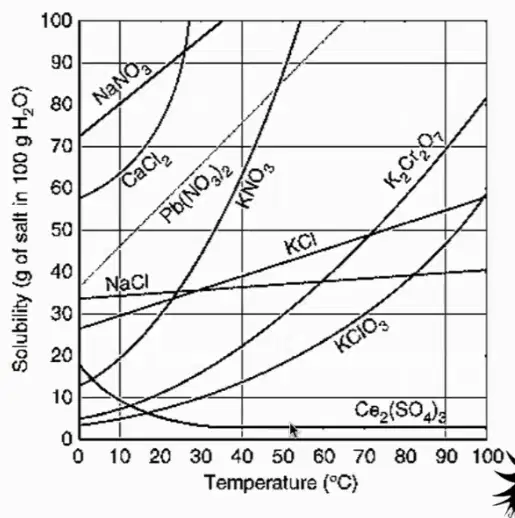
When 50 g of potassium chloride, KCl, is dissolved in 100 g of water at 50℃, the solution can be correctly described as:
dilute
unsaturated
saturated
supersaturated
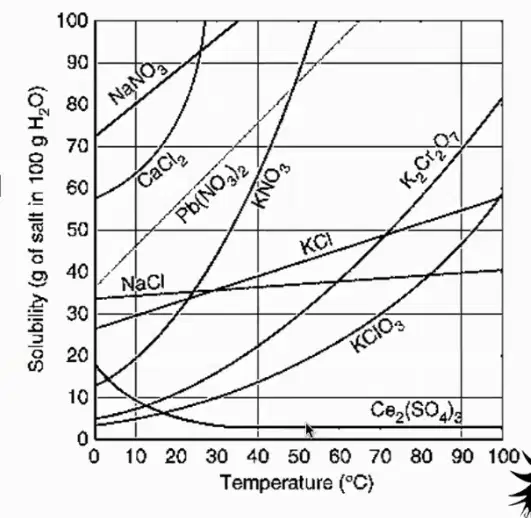
When 30 g of NaCl is dissolved in 100 g of water at 10℃, the solution can be described as:
dilute
unsaturated
saturated
supersaturated
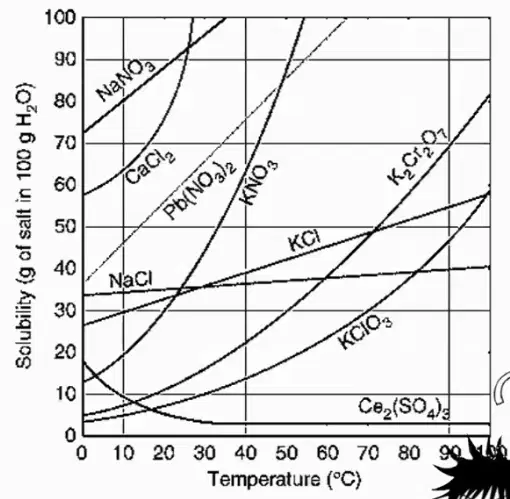
The graph shows the solubility of different substances. Which of the following can be inferred from the graph?
All substances dissolve at high temperature
The solubility of Pb(NO3)2 decreases with temperature
The solubility of Ce2(SO4)3 increases with temperature
NaCl has higher solubility than KCl at lower temperature
In the preparation of some candied fruits, sliced fruits are cooked in a solution of sugar in water. Upon cooling, sugar crystallized on the surface of the fruit pieces. What type of sugar solution was used?
dilute
unsaturated
saturated
supersaturated
Coke contains "carbonated water" - water with dissolved carbon dioxide gas. The drinks are bottled with CO2 pressure greater than 1 atm. How does the solubility of CO2 in soft drinks vary with temperature?
Temperature does not affect solubility
The higher the temperature, the greater the solubility of CO2
The higher the temperature, the lesser the solubility of CO2
The carbon dioxide is soluble to the same extent at any temperature
Which of the following describe(s) a saturated solution?
I. Its concentration is given by the solubility of the solute.
II. It contains the maximum amount of solute that can dissolve at a given temperature.
III. It is a solution that completely dissolves, leaving no remaining substances, and has the ability to dissolve more solution.
I only
II only
I and III only
II and III only
The equilibrium constant for the formation of hydrogen iodide from hydrogen and iodine is 45 at a certain temperature. Which of the following is true regarding this equilibrium?
I. The reaction is product favored.
II. The reaction is reactant favored.
III. Equilibrium lies to the right.
IV. Equilibrium lies to the left.
I and III
I and IV
II and III
II and IV
N2 (g) + 3H2 (g) -> 2NH3 (g)
In which direction -toward reactants or toward products- does the reaction shift if the equilibrium is stressed by each change when H2 is added?
shift towards right
shift towards left
in equilibrium
N2 (g) + 3H2 (g) -> 2NH3 (g)
In which direction -toward reactants or toward products- does the reaction shift if the equilibrium is stressed by each change when NH3 is added?
shift to the left
shift to the right
equilibrium
N2 (g) + 3H2 (g) -> 2NH3 (g)
In which direction -toward reactants or toward products- does the reaction shift if the equilibrium is stressed by each change when NH3 is removed?
shift to the right
shift to the left
in equilibrium
N2 (g) + 3H2 (g) -> 2NH3 (g)
What is the effect on this equilibrium if pressure is increased?
equilibrium is to the left
equilibrium is to the right
N2 (g) + 3H2 (g) -> 2NH3 (g)
What is the effect on this equilibrium if pressure is decreased?
equilibrium shifts to the left
equilibrium shifts to the right
What is the effect on this equilibrium if pressure is decreased?
3O2 (g) -> 2O3 (g)
equilibrium shift to the right
equilibrium shift to the left
If the reaction A + B -> C + D is initially at equilibrium and then more A is added, which of the following is not true?
more collisions of A and B will occur
equilibrium will shift to the right
moles of B will be increased
moles of D will be increased

Suppose you want to make an electrochemical cell, which of the following gives the correct arrangement of the acids/bases in the order of decreasing conductivity
SUBSTANCE X > SUBSTANCE Y > SUBSTANCE Z > SUBSTANCE W
SUBSTANCE X > SUBSTANCE Z > SUBSTANCE Y > SUBSTANCE W
SUSBTANCE Z > SUBSTANCE W > SUBSTANCE Y > SUBSTANCE X
SUBSTANCE Z > SUBSTANCE Y > SUBSTANCE W > SUBSTANCE X
Arrange these bases in order of increasing basicity.
Base A: pKb = 13.10
Base B: pKb = 8.74
Base C: pKb = 11.87
Base D: pKb = 12.0
B < C < D < A
A < D < C < B
The lowest vapor pressure among these substances at a room temperature is _.
ethanol, BP = 78℃
methanol, BP = 65℃
2-propanol, BP = 82℃
methyl chloride, BP = -24.2℃

Which of the acids listed in the table is the weakest?
ClCH2COOH
Cl3CCOOH
Cl2CHCOOH
CH3COOH
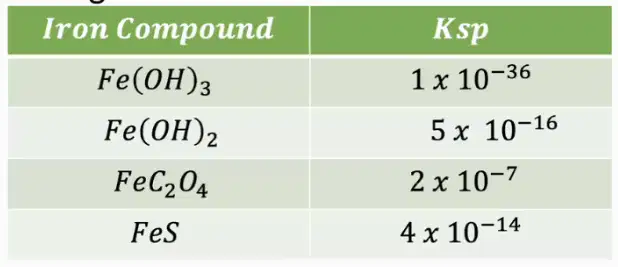
The solubility products constants of four compounds are given above. Based on the table, which of the following statements is FALSE about the iron compounds?
Fe(OH)2 dissolves faster than Fe(OH)3
FeS is less soluble than FeC2O4
FeS is the least soluble compound
FeC2O4 is the most soluble compound
If this mixture is transferred from a 1.5 L flask to a 5 L flask, in which direction does a net change occur to return to equilibrium?
N2 (g) + 3H2 (g) -> 2NH3 (g)
to the left, reactant favored
to the right, product favored
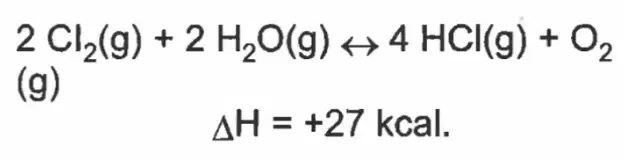
Base your answer to the following question on the following system at equilibrium: If the temperature of the system is increased at a constant pressure, the rate of the forward reaction will _.
decrease
increase
remain the same
According to Le Chatelier's Principle, if a system at equilibrium is distributed, which means a stress is applied, the system will react in a way that will restore it to a new equilibrium state. Study the chemical reaction below. H2 + I2 + 20 J -> 2HI
An increase in temperature will shift the reaction towards the _.
reactant
product
still in equilibrium
cannot be determined
A negative catalyst will
lower the activation energy of the reaction
does not alter the activation energy of the reaction
provide a new and easy path for the reaction
increase the activation energy of the reaction
Which of the following compounds has a different empirical formula than the rest?
Acetic acid C2H4O2
Acetylenediol C2H202
Glucose C6H12O6
Ribose C5H10O5
A mutation alters the tertiary structure of an enzyme leading to a loss of function. Which aspect of the enzyme's structure is most likely affected by this mutation, resulting in changes to active site's shape?
Primary structure only
Secondary structure only
The sequence of its cofactor
Tertiary and quaternary structure
A triglyceride contains an alcohol and three moles of fatty acid joined together by _
ester linkage
ether linkage
peptide linkage
glycosidic linkage
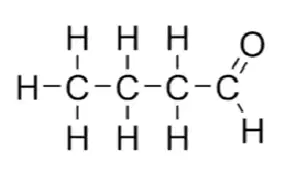
Based on the structure, what can you infer?
it is easily hydrolyzable
it can readily be converted into an alcohol
it contains a ketone functional group
it is an aromatic compound
it contains an amide functional group
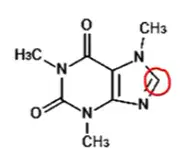
Which of the following is the hybridization of the carbon being pointed at in the structure of caffeine above?
sp
sp3
sp2
sp3d
Which of the family of carbon compounds is distinguished by the presence of a carbonyl group, within the molecule?
amides
aldehydes
esters
ketones
Which nutrient class is responsible for these principal representative functions: (1) coenzyme for many metabolic pathways
lipids
minerals
proteins
vitamins
Which of the following is a characteristic property of phenols aromatic substitution
Phenols can oxidize to carboxylic acid
Phenols are more acidic than alcohols
Phenols do not participate in hydrogen bonding
Phenols are less reactive than benzene in electrophilic aromatic substitution
Aldehydes form silver mirror
Lugol's reagent
Tollen's reagent
Schiff's reagent
Benedict's reagent
Which of the following abbreviated representations is used to show that carbon-to-carbon bonds in benzene are equivalent and the pi electrons are delocalized over the entire molecule


C6H6

In an elimination reaction, which mechanism is characterized by a two-step process where the rate-determining step is the formation of carbocation intermediate?
Substitution Nucleophilic Unimolecular
Elimination Unimolecular in an Elimination Reaction
Substitution Nucleophilic Bimolecular
Elimination Bimolecular

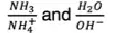
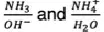
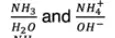
In the reaction. Which of the following are the conjugate acid base pairs?

What is 75℃ in ℉?
167℉
103℉
73.7℉
9.67℉
Which of the following is a scalar quantity?
I. A bag of 3.50 kilograms
II. The tree at 3.00 miles of north
III. A car moving at 6.00 kilometers per hour
I only
I and III only
II and III only
I, II, and III
Which of the following represent a scalar quantity?
A rice weighs 7.50 kilograms
1 car moves at 5.60 m/s northward
A crane lifts the brick 200 N upward
A treehouse is located at 120km, 60 degree southwest
The dimension L represents the length of an object. Which of the following dimensions can be represented by L2?
I. Area of a land
II. Volume of a bottle
III. Surface area of the Earth
I only
II only
I and III only
I, II, and III
Given that M, L, and T are the dimensions for mass, length, and time, respectively. Which of the following is the dimensional analysis for force?
ML/T
ML/T2
ML2/T
ML2/T2
One way of describing motion is to observe an object's change in position over a time interval. This is referred to as___.
Displacement
Velocity
Acceleration
Gravity
A 20-newton force was applied in the northwest direction. What can be concluded about its components?
The x-component of the force is negative; the y-component is positive.
The x-component of the force is positive; the y-component is negative.
The x-component of the force is positive; the y-component is positive.
The x-component of the force is negative; the y-component is negative.
The location of a particle has changed. What can we say about the displacement and the distance covered by the particle?
Neither displacement nor distance can be zero.
Either displacement or distance may be zero.
Both displacement and distance may be zero.
Displacement is positive and distance is negative.
Identify if the statements is/are true or false.
I. An object which is slowing down has acceleration.
II. An object which is moving at constant speed in a circular path has acceleration.
I is true; II is false
I is false; II is true
Both I and II are true
Both I and II are false
An object moves at an average speed of 10 m/s for 20 seconds. It then moves at 20 m/s for 30 seconds. The average speed of the object over the 50-second period is_.
0.6 m/s
1.2 m/s
15.0 m/s
16.0 m/s
An object is dropped from rest and feels air resistance as it falls. Which of the following represents its acceleration as a function of time?
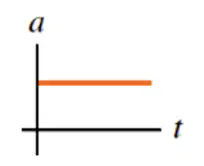
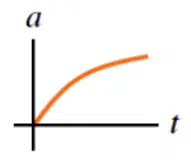
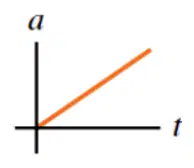
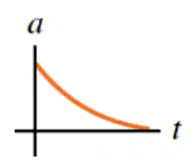
An object falls from an airplane. As it approaches the Earth, which of the following will happen?
Its velocity will increase.
Its velocity will decrease.
Its acceleration will increase.
Its acceleration will decrease.
An object moves at an average speed of 10 m/s for 20 seconds. It then moves at 20 m/s for 30 seconds. The average speed of the object over the 50-second period is _.
0.6 m/s
1.2 m/s
15.0 m/s
16.0 m/s
A train traveling at 10 m/s accelerated at 1 m/s2 for 15 seconds. What is the final velocity?
5 m/s
10 m/s
15 m/s
25 m/s
A baseball is thrown by the center fielder to the home plate where it is caught by the catcher. Which of the following is true about the magnitude of the horizontal component of the ball's velocity?
It is maximum at the highest point of the trajectory.
It is the maximum just before hitting the catcher's mitt.
It is minimum after leaving the center field's hand.
It is constant at any point of the trajectory.
A cannonball was launched over a cliff. Which of the following statements is true about the ball's motion as it goes down, neglecting air resistance?
The vertical velocity at the highest point is 10 m/s
The vertical velocity of the ball is 10 m/s after 1 second
The horizontal velocity decreases by 10 m/s every second
The horizontal velocity of the ball is 10 m/s after 2 seconds
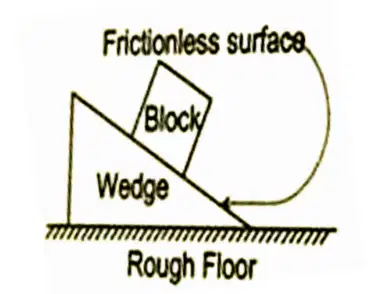
Consider the block that sits on top of the wedge as shown in figure above. While the block is still on top of the wedge, what is the direction of the normal force exerted by the block on the wedge?