
 Worksheets
1.5 Employment Benefits Analysis
Total questions: 25
Worksheet time: 13mins
Health Insurance is:
A type of insurance that covers medical expenses
A policy that only covers car accidents
A savings account for retirement
A loan for buying a house
Retirement Benefits are:
payments or advantages received after retiring from work
taxes paid during employment
bonuses given for good performance
penalties for early withdrawal from a job
Sick Leave is:
a type of leave taken when an employee is ill or unwell.
a leave taken for vacation purposes.
a leave granted for attending family functions.
a leave for professional development activities.
Vacation Pay is:
a payment made to employees for time off work
a bonus given for exceptional performance
a deduction from salary for absences
an allowance for travel expenses
A Flexible Spending Account (FSA) is:
A special account you put money into that you use to pay for certain out-of-pocket health care costs.
A type of retirement savings account for employees.
A government program that provides free healthcare.
A loan provided by banks for medical expenses.
A Health Savings Account (HSA) is:
A tax-advantaged savings account for medical expenses
A type of retirement account for travel expenses
A government grant for healthy living
A loan for purchasing health insurance
Workers' Compensation is:
a type of insurance that provides wage replacement and medical benefits to employees injured in the course of employment
a retirement savings plan for employees
a government tax on employee wages
a bonus program for outstanding workers
Life Insurance is:
a contract that pays a sum of money to beneficiaries upon the insured person's death
a type of car insurance
a savings account for retirement
a loan given by banks
Disability Insurance is:
a type of insurance that provides income in case a person is unable to work due to a disability.
insurance that only covers medical expenses for accidents.
a policy that pays for car repairs after an accident.
insurance that covers only life-threatening illnesses.
The job that offers the better overall compensation package is determined by evaluating factors such as salary, benefits, bonuses, and work-life balance.
Salary, benefits, bonuses, and work-life balance
Location and office size only
Company logo and dress code
Number of employees and office color
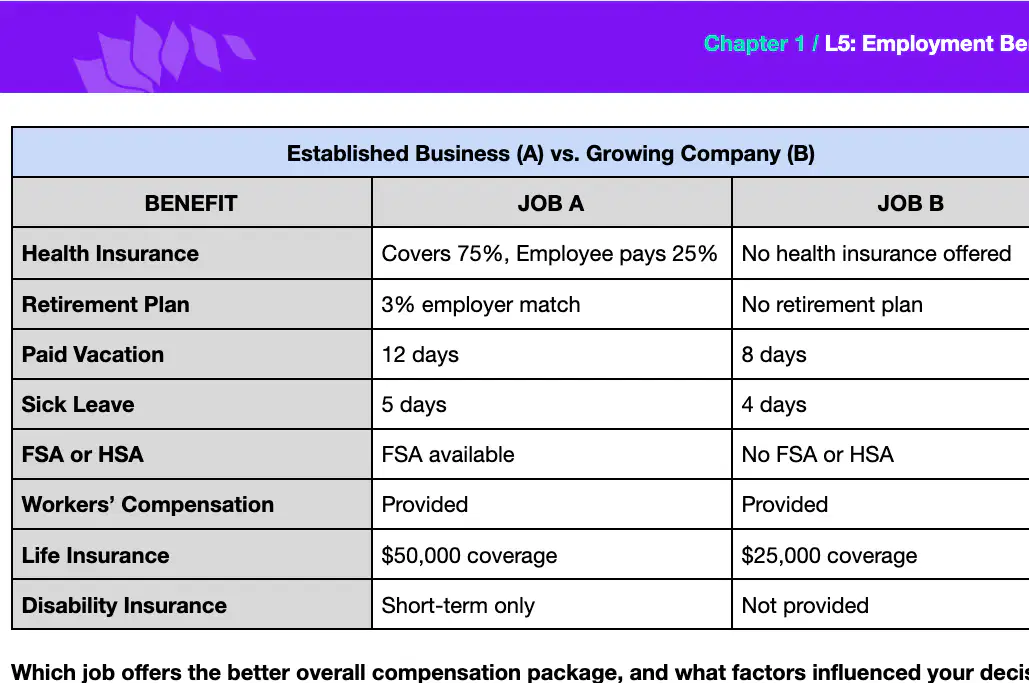
According to the table, which job offers health insurance?
Job A
Job B
Both Job A and Job B
Neither Job A nor Job B
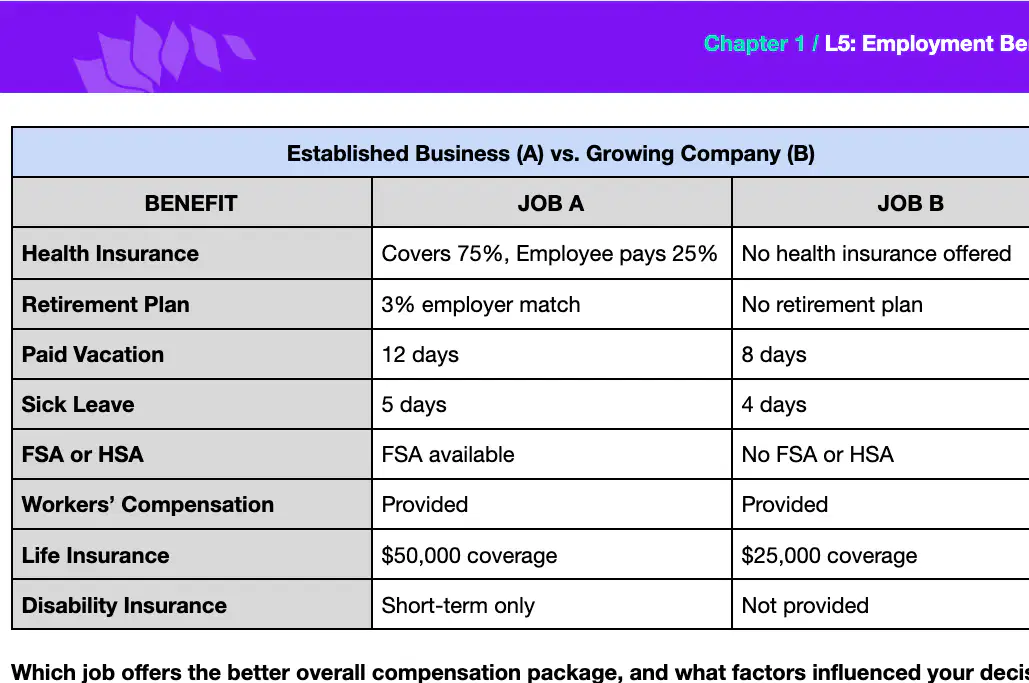
According to the table, which job offers a retirement plan?
Job A
Job B
Both Job A and Job B
Neither Job A nor Job B
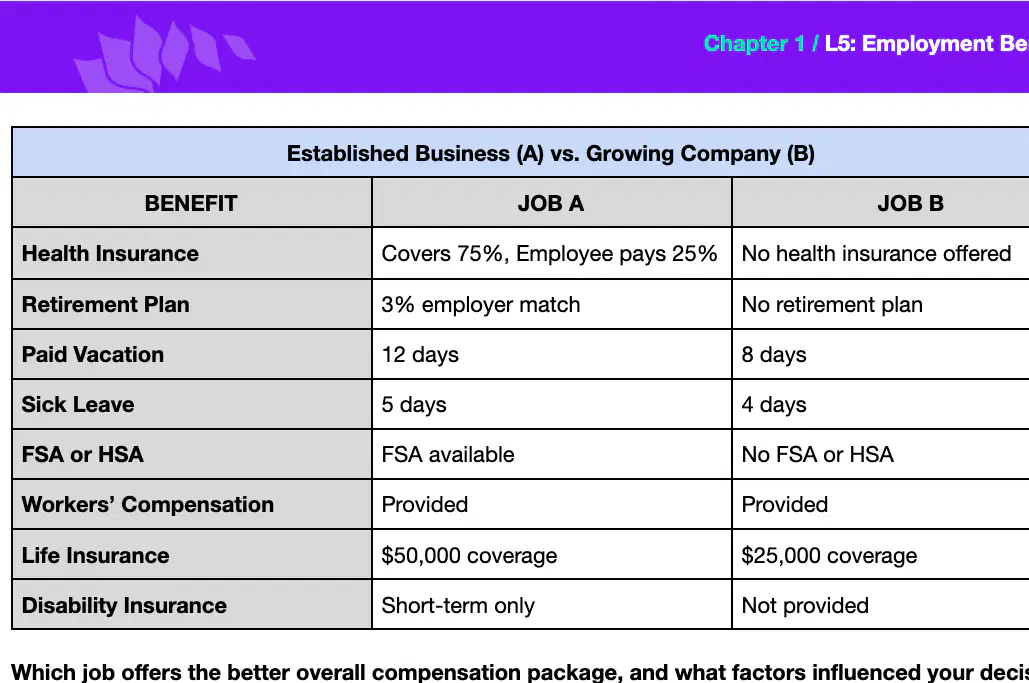
According to the table, how many paid vacation days does Job B offer?
8 days
5 days
10 days
12 days
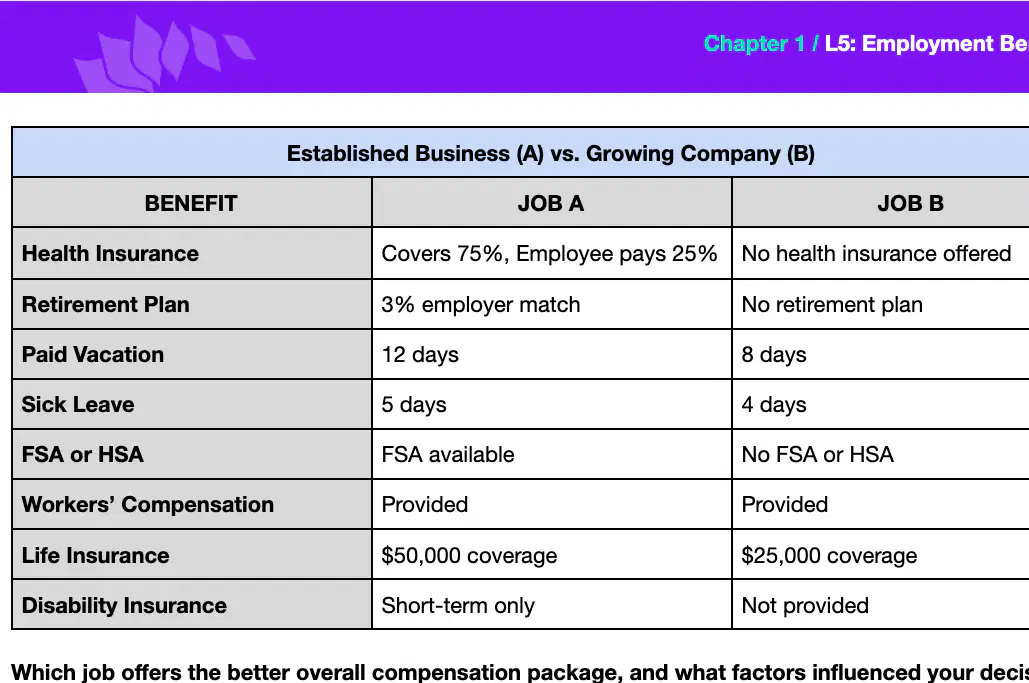
According to the table, which job offers more sick leave days?
Job A
Job B
Both offer the same
Neither offers sick leave
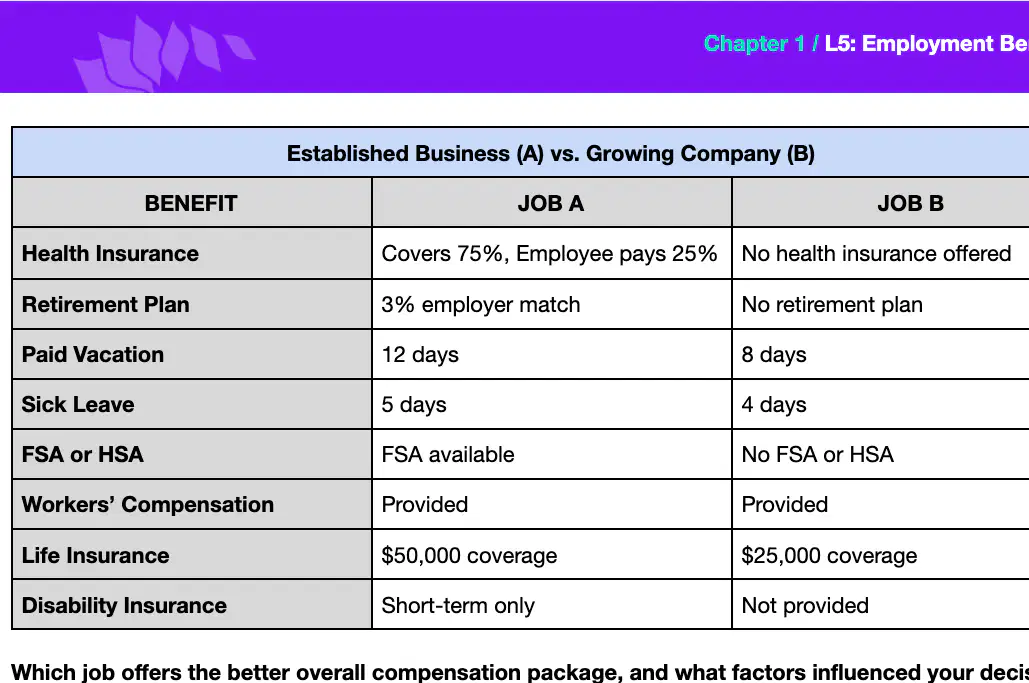
According to the table, which job offers FSA or HSA?
Job A
Job B
Both Job A and Job B
Neither Job A nor Job B
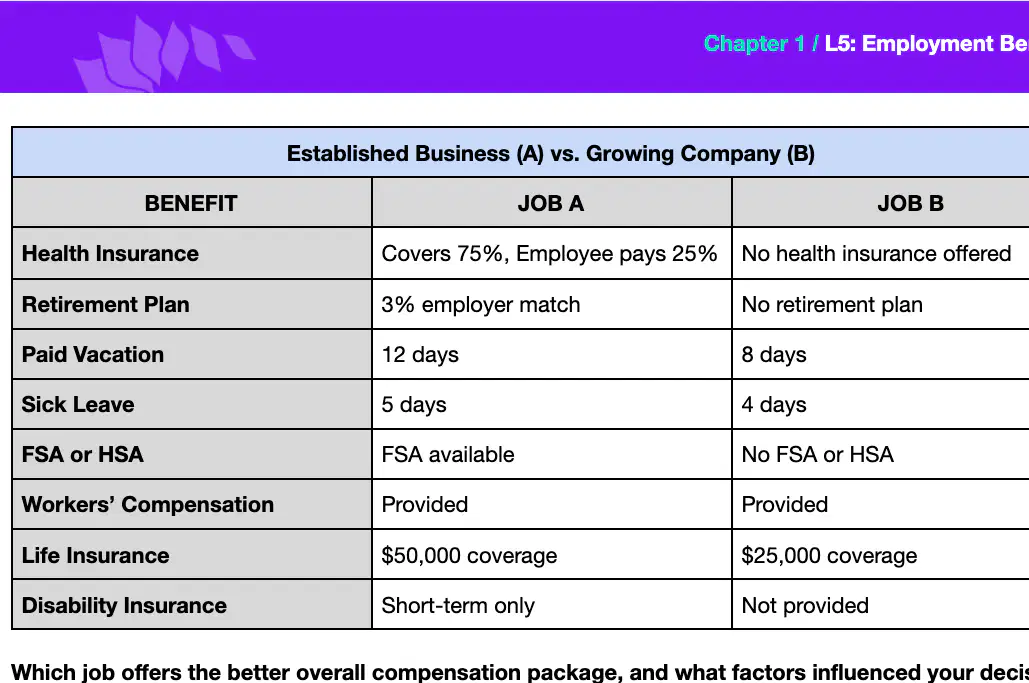
According to the table, which job provides workers’ compensation?
Job A
Job B
Both Job A and Job B
Neither Job A nor Job B
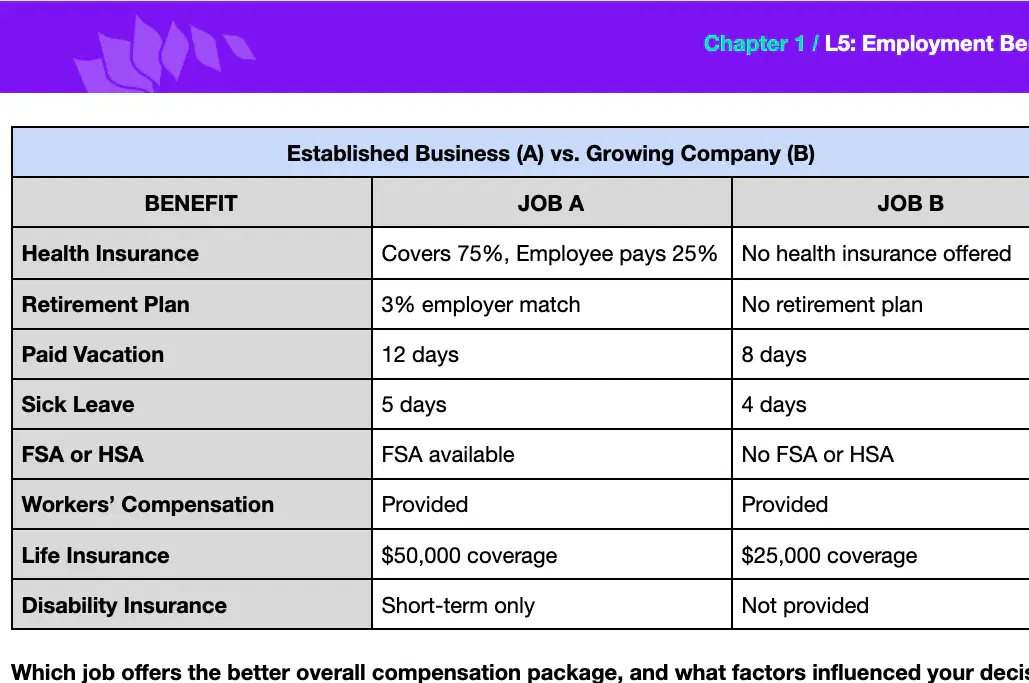
According to the table, how much life insurance coverage does Job A offer?
$50,000 coverage
$25,000 coverage
$100,000 coverage
$10,000 coverage
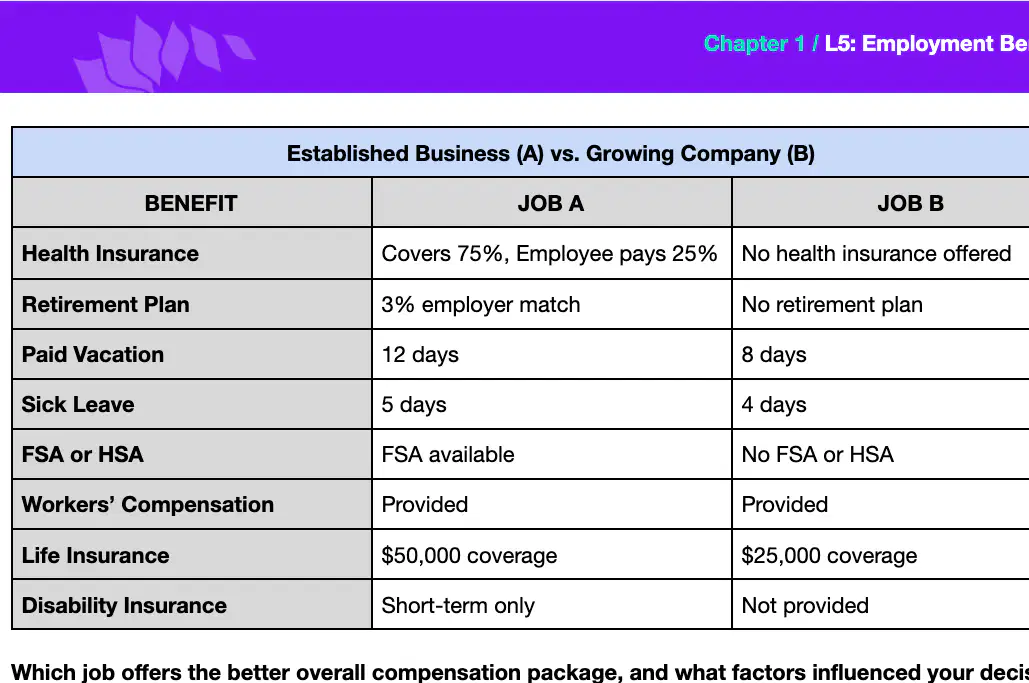
According to the table, which job offers disability insurance?
Job A
Job B
Both Job A and Job B
Neither Job A nor Job B
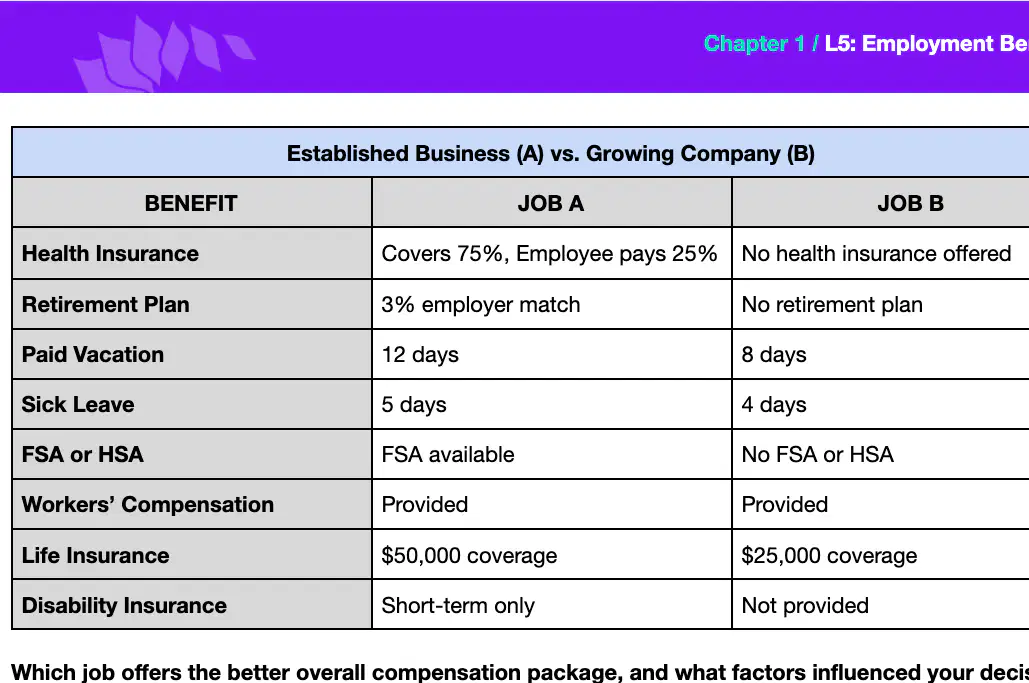
Which job offers the better overall compensation package, and what factors influenced your decision?
Job A offers the better overall compensation package due to higher salary and better benefits.
Job B offers the better overall compensation package due to flexible hours.
Both jobs offer the same overall compensation package.
Neither job offers a good compensation package.

According to the table, which job offers a higher percentage of health insurance coverage?
Job A
Job B
Both offer the same
Neither offers health insurance
The job that offers the better overall compensation package is determined by which factors?
Salary, benefits, bonuses, and work-life balance
Location and office size only
Company logo and dress code
Number of employees and office color
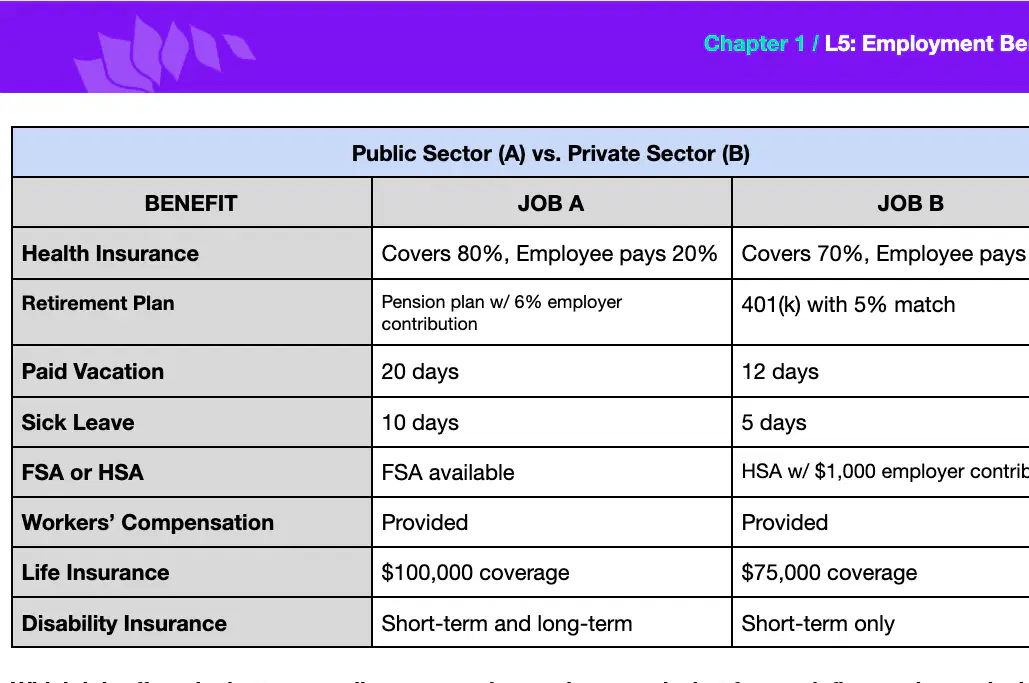
According to the table, which job offers better health insurance coverage?
Job A: Covers 80%, Employee pays 20%
Job B: Covers 70%, Employee pays 30%
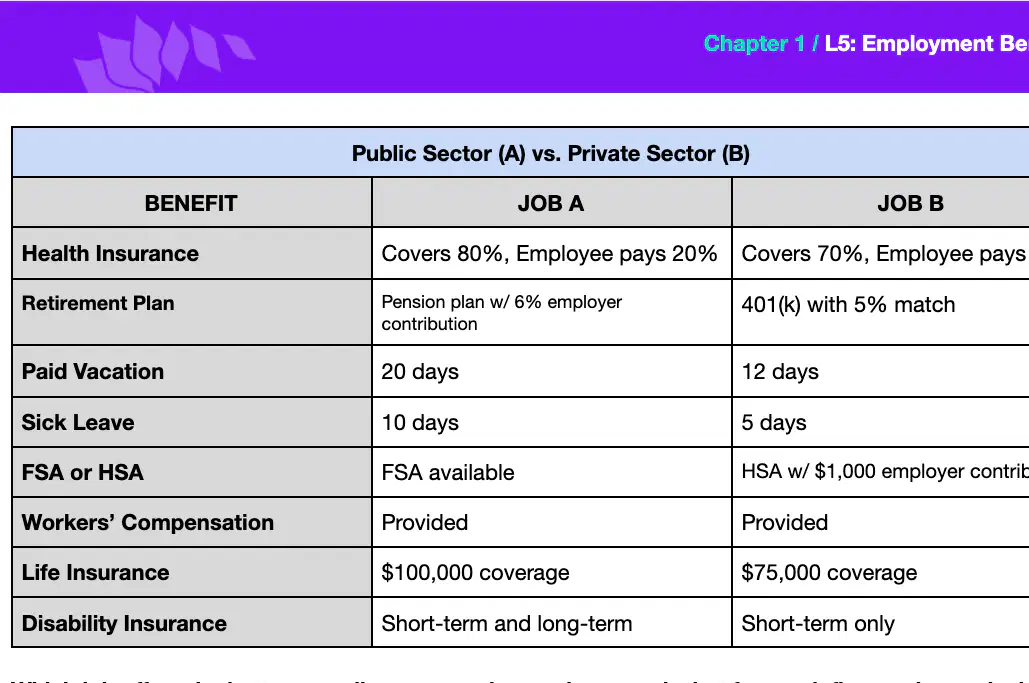
According to the table, which job offers a pension plan with a 6% employer contribution?
Job A
Job B

How many paid vacation days does Job B offer?
12 days
8 days
15 days
20 days
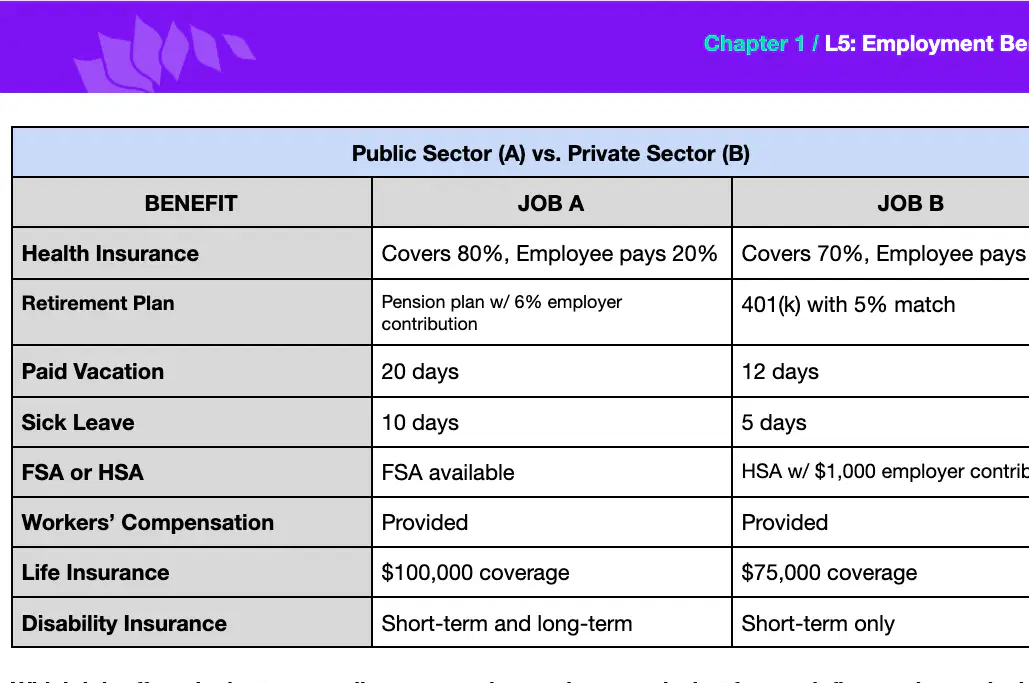
Which job offers an HSA with a $1,000 employer contribution?
Job A
Job B

