
NEW
Font size
 Worksheets
Organic Agriculture summative
Total questions: 50
Worksheet time: 25mins
What is a key principle of organic agriculture?
Exclusive reliance on synthetic pesticides and fertilizers
Maximizing monoculture for increased yield
Promoting soil health, biodiversity, and ecological balance
Prioritizing genetically modified organisms (GMOs) for disease resistance
What is a major challenge for farmers switching to organic farming?
Abundant availability of cheap synthetic inputs
High demand for non-certified organic produce
Lack of consumer awareness regarding organic products
The required conversion period (2-3 years) during which produce cannot be sold as "organic"
What is "green manure" in organic farming?
A type of synthetic fertilizer used for quick growth
A chemical herbicide derived from natural sources
Decomposed animal waste used as a nutrient source
Live plants turned into the soil to improve fertility and structure
What is the system where consumers get produce directly from farmers called?
Industrialized organic farming
Community Supported Agriculture
Large-scale corporate farming
Conventional market distribution
Besides farming, what is a major business opportunity in organic agriculture?
Development of synthetic fertilizers
Manufacturing of chemical pesticides
Production of genetically modified seeds
Processing and marketing of organic food products
If a pesticide storage area is unsafe, which regulation is being violated?
Philippine National Standard (PNS) for Organic Agriculture
Philippine Good Agricultural Practices (PhilGAP)
Occupational Safety and Health Standards (OSHS)
International Organization for Standardization (ISO)
To sell produce as "organic" in the Philippines, which regulation must a farmer follow?
Food Safety Act of the Philippines
Philippine Good Agricultural Practices (PhilGAP)
Occupational Safety and Health Standards (OSHS)
Philippine National Standard (PNS) for Organic Agriculture
Which regulation focuses on food safety and preventing contamination in harvested vegetables?
Philippine Good Agricultural Practices (PhilGAP)
Labor Code of the Philippines (LCP)
Occupational Safety and Health Standards (OSHS)
Philippine National Standard (PNS) for Organic Agriculture
Which tool is used for digging and loosening soil?
Rake
Shovel
Hoe
Pruning Shears
What material is used to support climbing plants?
Stakes
Twine
Garden Hose
Burlap
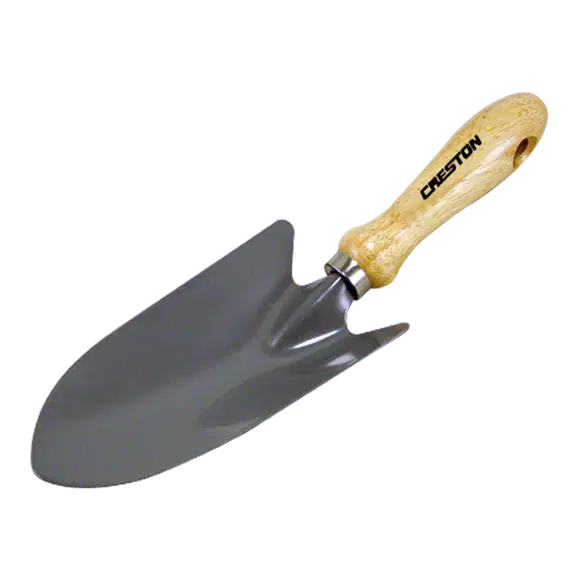
What is the farm tool in the image?
Cultivator
Hand Fork
Trowel
Weeder
Which equipment is used for tilling large areas?
Wheelbarrow
Rotavator
Sprayer (handheld)
Watering Can
What type of maintenance prevents equipment from breaking down?
Responsive Maintenance
Emergency Maintenance
Corrective Maintenance
Preventive Maintenance
Why do you lubricate farm equipment?
To increase friction
To clean the surface
To add decorative shine
To reduce wear and tear and allow smooth movement
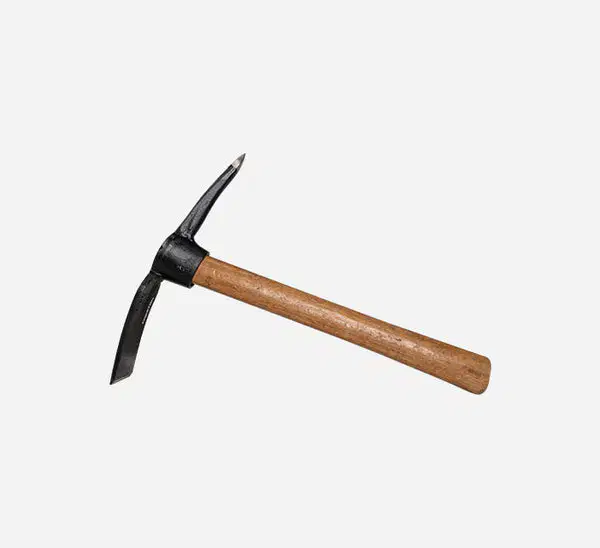
What is the tool in the image used for?
Weeding delicate plants
Breaking up hard, rocky soil
Spreading fertilizer
Pruning small branches
How do you prevent a digging bar from rusting after use?
Cleaning and drying
Lubricating
Sharpening
Painting
If a rotavator makes a grinding noise and the farmer stops to fix it, what kind of maintenance is this?
Lubrication, as they need to add oil to the gears.
Scheduled Maintenance, as it's part of a routine check.
Corrective Maintenance, because they are addressing an existing problem to fix it.
Preventive Maintenance, because they are checking for issues before they become critical.
Why is it important to sharpen cutting tools?
Sharpening is only necessary for decorative purposes.
Sharpening makes the tools look newer and more appealing.
Dull tools can be used for heavier tasks without damaging them.
Sharp tools require less effort to use, reduce strain on the user, and make cleaner cuts, which is beneficial for plant health.
Storing a garden hose properly in a shed follows which maintenance principle?
Sharpening to maintain efficiency.
Sanitation to prevent contamination.
Lubrication to reduce friction.
Storing tools properly to extend their lifespan and prevent damage.
What activity breaks up soil clods after plowing?
Clearing
Farrowing
Harrowing
Plowing
What is the main purpose of mulching?
To increase pest infestation
To improve soil drainage by creating furrows
To directly provide nutrients for immediate plant uptake
To conserve soil moisture, suppress weeds, and regulate soil temperature
How are plants arranged in a square planting system?
Only along the contours of the land
In an irregular, scattered pattern to mimic natural growth
In long, continuous rows without regard for spacing between rows
At equal distances from each other in all directions, forming a square pattern
Which of these is a natural organic insecticide?
Pyrethroids (synthetic)
Neem oil
Glyphosate
Malathion
What is the main purpose of plowing?
To create irrigation channels
To compact the soil for better stability
To remove all existing microorganisms from the soil
To aerate the soil, incorporate organic matter, and loosen it for root development
What is the primary benefit of tilling the soil before planting?
To enhance water retention in the soil
To eliminate weeds and pests
To improve soil structure and nutrient availability
To increase soil acidity for better crop yield
What is the long-term effect of adding "beneficial microorganisms" to soil?
To make the soil completely sterile for the next planting season
To provide a quick chemical nutrient boost to plants
To immediately kill all harmful insects and fungi
To enhance nutrient cycling, suppress pathogens, and improve soil structure naturally
What is the main advantage of "inter-cropping"?
It simplifies pest management by only needing one type of treatment.
It always guarantees higher yields for all combined crops.
It can maximize land use, enhance biodiversity, and potentially reduce pest pressure.
It makes harvesting more efficient by standardizing crop types.
A farmer uses ladybugs to control aphids. What kind of pest control is this?
Natural Predators; utilizing biological control to manage pests.
Application of Beneficial Microorganisms; promoting soil health.
Attractants and Repellants; using natural scents to deter pests.
Crop Rotation; diversifying planting schedules.
How do contour plowing and mulching help prevent soil erosion?
Contour plowing creates channels for water, while mulch prevents weed growth.
Both practices compact the soil, making it more resistant to erosion.
Contour plowing slows down water flow, and mulch protects the soil surface, both reducing erosion and improving water infiltration.
These practices are primarily for pest control, not erosion.
How does "fallowing" (letting land rest) help organic farm soil?
It allows the farmer to use synthetic fertilizers without repercussions during this period.
It allows the soil to rest, regenerate nutrients naturally, break pest and disease cycles, and improve overall soil structure without chemical intervention.
It depletes the soil of all nutrients, making it ready for a fresh start with chemical inputs.
It is primarily a method to control weed growth through mechanical means only.
After clearing land, what is the next step in preparing it for planting?
Immediately apply organic fertilizer and plant the seeds.
Begin harvesting existing wild plants.
Install an irrigation system first.
Proceed with plowing or digging to loosen and aerate the soil.
What is the best way to keep seedlings moist and protected from temperature changes after planting?
Deep plowing
Farrowing for drainage
Applying a thick layer of organic mulch
Implementing a broadcast seeding method
What is the best first step for an organic farmer to deal with caterpillars eating their crops?
Immediately spray a broad-spectrum organic insecticide without identifying the specific pest.
Introduce natural predators like parasitic wasps that target caterpillars.
Plow under the entire crop to eliminate the caterpillars.
Increase the application of chemical fertilizers to make the plants more resistant.
What is the first step of land preparation?
Plowing
Harrowing
Clearing
Farrowing
What is it called when you scatter seeds over an area?
Row Planting
Broadcasting
Hill Planting
Transplanting
Why is harrowing done after plowing?
To create furrows for irrigation.
To remove deep-rooted weeds.
To compact the soil for better water retention.
To break up large soil clods and level the soil surface.
Why would a farmer put dried leaves and straw around new plants?
To provide immediate nutrients to the plants.
To improve drainage in waterlogged soil.
To attract beneficial insects.
To conserve soil moisture, suppress weeds, and regulate soil temperature.
How do beneficial micro-organisms help plants?
They directly kill all types of insect pests.
They accelerate the ripening process of fruits.
They act as a physical barrier against weeds.
They improve nutrient uptake, enhance soil health, and can suppress plant diseases.
What is the main advantage of organic fertilizers over synthetic ones?
Organic fertilizers provide immediate, concentrated nutrients for rapid growth.
Organic fertilizers primarily focus on killing soil pathogens.
Organic fertilizers improve soil structure, increase microbial activity, and release nutrients slowly over time.
Organic fertilizers are generally cheaper and easier to apply for large-scale operations.
If pests attack a cornfield that only grows corn, what should the farmer do next season to prevent pests?
Increasing the amount of synthetic fertilizer
Reducing the frequency of irrigation
Implementing crop rotation with a non-host plant for the pest
Applying a broad-spectrum organic insecticide immediately
Planting marigolds next to tomatoes to prevent disease is an example of what strategy?
Introducing natural predators
Using an organic insecticide
Inter-cropping with a repellent plant
Application of beneficial micro-organisms
What is the correct order of steps to prepare uncultivated, grassy land for planting?
Farrowing, Plowing, Harrowing, Clearing
Clearing, Plowing, Harrowing, Farrowing
Harrowing, Clearing, Plowing, Farrowing
Plowing, Farrowing, Clearing, Harrowing
Which planting system saves space and helps deter pests?
Inter-cropping
Monoculture
Row Planting
Broadcasting
Which is a better long-term organic pest control: using an organic insecticide or using natural predators and crop rotation?
Strategy A, because it provides quick and decisive pest elimination.
Strategy B, because it promotes natural balance, reduces reliance on external inputs, and can lead to more resilient ecosystems.
Both strategies are equally beneficial as long as the products used are organic.
Strategy A, because it requires less planning and knowledge of ecological interactions.
For a small, sustainable garden, what is a good planting system, method, and care activity based on organic principles?
System: Monoculture to simplify management; Method: Broadcasting for quick planting; Care: Applying broad-spectrum synthetic pesticides for quick pest control.
System: Inter-cropping (e.g., tomatoes with basil); Method: Hill Planting for good drainage; Care: Introducing ladybugs as natural predators for aphids.
System: Row Planting for easy access; Method: Direct seeding for most crops; Care: Frequent tilling to control weeds.
System: Companion planting with only one type of crop; Method: Transplanting only; Care: Using strong chemical fertilizers for rapid growth.
What is it called when you remove unwanted parts from a harvested vegetable?
Sorting
Sizing
Trimming
Washing
Why is it important to know when a vegetable is perfectly ripe for harvesting?
To determine the market price of the vegetable
To know the exact amount of water needed for washing
To decide which type of packaging to use for the vegetable
To ensure optimal flavor, texture, and nutritional content, and to maximize shelf life
What happens if leafy green vegetables are left in the sun for hours after harvesting?
The vegetables will become sweeter due to increased sugar content.
The vegetables will change color, indicating improved ripeness.
The vegetables will become more resistant to microbial contamination.
The vegetables will experience rapid wilting, loss of turgor, and accelerated spoilage.
For a large farm, what is the advantage of using a machine to sort vegetables instead of people?
Option A, because manual sorting ensures higher accuracy and less damage.
Option B, because automated sorting offers greater speed, uniformity, and reduced labor costs for large volumes.
Both options are equally advantageous, depending on the type of vegetable.
Option A, as it requires less initial investment compared to automated systems.
What are three essential steps for handling harvested organic bell peppers to keep them fresh?
Sequence: Careful Harvesting; Trimming and Sorting; Cooling and Packaging.
Sequence: Random picking, piling them high in unventilated bins, and waiting a week before any handling.
Sequence: Washing with strong detergents, sizing only for very large peppers, and storing in open air.
Sequence: Harvesting at immature stage, immediate rough packing, and direct shipping without cleaning

