
NEW
Font size
 Worksheets
Primitive Health Care Beliefs
Total questions: 41
Worksheet time: 21mins
According to primitive health care beliefs, what was thought to be the cause of illness and disease?
Bacteria
Evil spirits and demons
Poor nutrition
Lack of exercise
Primitive Health Care Beliefs: What is trepanation?
A method of setting broken bones
Boring a hole in the skull to release demons, used to treat mental illness and nervous disorders like epilepsy
A type of herbal medicine
A form of ancient physical therapy
Who were the first known people to keep accurate health records?
The early Egyptians
The ancient Greeks
The Romans
The Chinese
Who inscribed health records on stone and also performed the duties of physicians in early Egypt?
Priests
Farmers
Scribes
Merchants
According to Early Egyptian beliefs, the body was a system of channels. Which of the following was NOT considered one of these channels?
Blood
Urine
Bones
Air
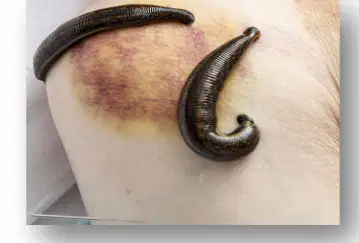
What was the purpose of using leeches in Early Egyptian medicine?
To open blocked channels
To heal broken bones
To improve eyesight
To treat burns
Gods were called upon to heal those with disease in early Egyptian times.
True
False
Who is believed to be the first known Egyptian physician?
Ra
Imhotep
Anuket
Bastet
Which of the following did Early Chinese medicine establish?
Modern surgery
Pharmacopoeia (official list of medicinal drugs)
Vaccination
Antibiotics
Early Chinese medicine believed the body should be treated as a _______.
whole
machine
collection of parts
spirit
object
Fill in the blank: __________ is the practice of pricking the skin or tissues with needles, used to alleviate pain and to treat various conditions.
Acupuncture
Chiropractic
Homeopathy
Aromatherapy
Fill in the blank: __________ is the burning of Moxa (herb mixture of dried wormwood or mugwort) over acupressure points, often used in conjunction with acupuncture.
Moxibustion
Cupping
Phlebotomy
Electrotherapy
What did early Greeks begin to study in relation to health science?
The cause of disease
The structure of the atom
The laws of motion
The process of photosynthesis
What is the Caduceus?
A rod entwined with 2 serpents and adorned with two wings
A symbol associated with medicine, a healing-single staff entwined by a single serpent
A symbol of peace
A laurel wreath
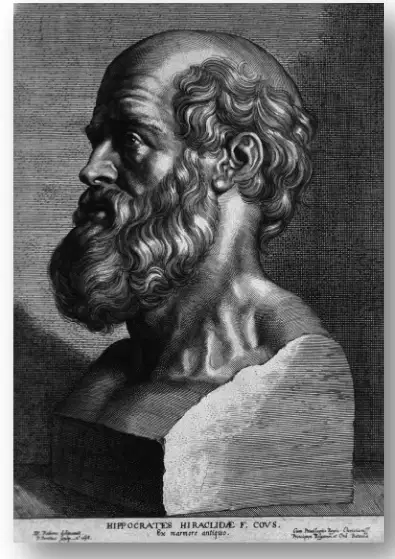
Who founded the Hippocratic School of Medicine?
Galen
Hippocrates
Aristotle
Socrates
What is the Hippocratic Oath?
A code of conduct for teachers
A code of conduct for physicians based on strong ethics - a version is still used today
A law for ancient Greek citizens
A diet plan
Hippocrates determined that disease was caused by ________, environment and habit.
diet
weather
magic
exercise
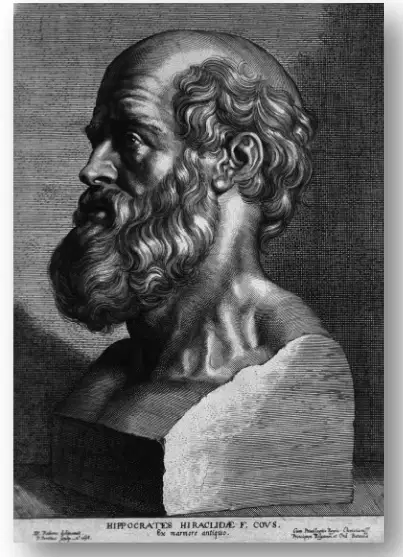
According to the slide 'Early Greek Influence', why did Hippocrates use observation of the external body to understand anatomy and physiology?
Because he preferred it over dissection
Because religion prohibited dissection of the body
Because he did not have access to bodies
Because he was not interested in anatomy
According to the Hippocratic Oath, a physician should remember that there is art to medicine as well as science, and that warmth, sympathy, and understanding may outweigh the surgeon's knife or the chemist's drug.
True
False
Which ancient civilization recognized the importance of sanitation and public health?
Early Romans
Ancient Greeks
Ancient Egyptians
Ancient Chinese

What did the early Romans create to carry clean water to cities and sewer systems to carry waste away from cities?
Aqueducts and sewer systems
Bridges and tunnels
Roads and amphitheaters
Temples and statues
According to Claudius Galen, which of the following is NOT one of the four body humors?
Blood
Yellow bile
Black bile
Water
Fill in the blank: Claudius Galen believed that illness occurred when one of the four body humors was out of balance due to environment, diet, and habits. The four body humors are Blood, Yellow bile, Black bile, and _______.
Phlegm
Saliva
Sweat
Mucus
Claudius Galen believed that environment, diet, and habits could affect the balance of the four body humors, leading to illness.
True
False
During the Dark Ages (400AD-800AD), what happened to the advancement of medicine?
It rapidly progressed
It stalled from the dark ages through the Middle Ages
It was only practiced by women
It was banned worldwide
Who practiced custodial care in convents and monasteries during the Dark Ages (400AD-800AD)?
Doctors and nurses
Priests and monks
Kings and queens
Merchants
What was the primary treatment during the Dark Ages (400AD-800AD)?
Surgery
Prayer
Vaccination
Blood transfusion
If medications were used during the Dark Ages (400AD-800AD), what were they made from?
Synthetic chemicals
Plants and herbal mixtures
Animal organs
Minerals only
During the Middle Ages (800 AD – 1350 AD), what was the name of the plague that killed 60 million people?
Spanish Flu
Bubonic plague, "black death"
Smallpox
Cholera
During the Middle Ages (800 AD – 1350 AD), who performed bloodletting, dental extractions, and minor surgeries in addition to shaves and haircuts?
Doctors
Barbers
Priests
Apothecaries
During the Renaissance period (1350-1650 AD), what medical practice was re-established as an accepted practice?
Bloodletting
Dissection of the human body
Herbal medicine
Astrology
Fill in the blank: The development of the ________ allowed for printing of medical books and shared information during the Renaissance period (1350-1650 AD).
printing press
microscope
stethoscope
thermometer
Medical universities were created during the Renaissance period (1350-1650 AD).
True
False
Which medical pioneer recorded the anatomy of the body based on dissections in the 1500s?
Hippocrates
William Harvey
Leonardo da Vinci
Andreas Vesalius
Who described the circulation of blood and pumping of the heart in 1628?
Hippocrates
Leonardo da Vinci
William Harvey
Edward Jenner

Who invented the microscope in 1666?
Antonio van Leeuwenhoek
Isaac Newton
Galileo Galilei
Robert Hooke

Who invented 'double spectacles' (bifocals) in 1784?
Benjamin Franklin
Thomas Edison
Isaac Newton
Alexander Graham Bell

Who developed the vaccine for smallpox in 1796?
Edward Jenner
Louis Pasteur
Alexander Fleming
Jonas Salk
1816 ________ invented the stethoscope.
Rene Laennec
Edward Jenner
Louis Pasteur
Joseph Lister
Who identified the cause of childbirth fever and stressed the importance of handwashing in 1847?
Dorothea Dix
Ignaz Semmelweis
Rene Laennec
Florence Nightingale
In the 1850s, ________ reformed mental hospitals to improve care and conditions for mentally ill patients in prison systems.
Dorothea Dix
Clara Barton
Elizabeth Blackwell
Susan B. Anthony

