
 Worksheets
4.1 Skeletal System
Total questions: 46
Worksheet time: 23mins
The skeletal system includes all your ______ and joints.
bones
muscles
nerves
veins
Which of the following is NOT a function of the skeletal system?
Support for your body
Movement for your body
Digestion of food
Protection for your vital organs
The skeletal system is a major source of ______ cell production.
blood
nerve
muscle
skin
The skeletal system stores ______.
calcium
glucose
oxygen
vitamin D
Bones are made of water, calcium, living cells, and _______.
tissue
sugar
plastic
oil
What percentage of bones is made up of calcium?
50%
10%
70%
30%
Bones are 50% calcium, 25% water, and 25% _______ which make up the tissues. Fill in the blank.
living cells
fatty acids
bone marrow
cartilage
How many types of bone tissue are there?
One
Two
Three
Four
Fill in the blank: Compact Bone Tissue is the ______ layer of the bone. It is dense, smooth, and strong.
outside
inner
top
central
Fill in the blank: Cancellous Bone Tissue is the ______ layer of the bone. It is spongy and light weight.
inner
outer
middle
surface
Which type of bone tissue is spongy and light weight?
Compact Bone Tissue
Cancellous Bone Tissue
What are long bones?
Bones that are short
Bones that are flat
Bones that are long
Bones that are round
The Skeletal System: The ______ is the longest, heaviest, and strongest bone in the body. It is also called the thigh bone.
femur
humerus
tibia
radius
The femur will not break through normal, everyday activity unless there is a deficiency in the bone or an extreme amount of ______ or trauma.
stress
calcium
exercise
rest
The Skeletal System: Most occurrences of a broken femur happen through which of the following?
Sports injuries
Auto accidents
Falling from a chair
Running
The femur connects to your hip via a ______ joint.
hinge
ball-and-socket
pivot
saddle
The humerus is the ______ bone in the upper arm.
long
short
flat
irregular
Your body makes over 2 million ______ Blood Cells per second.
White
Red
Blue
Green
Long bones help with red and white blood cell production.
True
False
What are short bones?
A) Bones that are long
B) Bones that are flat
C) Bones that are short
D) Bones that are irregular
Your ankles and wrists have ______ bones in them.
short
long
flat
irregular
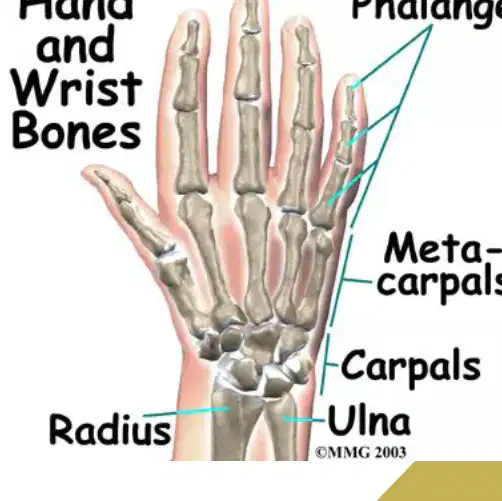
Which of the following bones is found in the wrist?
Metatarsals
Carpals
Tibia
Calcaneus
The Skeletal System: Name two examples of flat bones mentioned in the passage.
Ribs, sternum, skull
Femur, tibia, fibula
Humerus, radius, ulna
Vertebrae, pelvis, patella
Which bones are classified as irregular bones according to the passage?
Vertebrae and the small bones in your face.
Femur and tibia.
Ribs and sternum.
Humerus and radius.
The human body contains how many bones?
206
210
201
215
The smallest bone in the human body is:
Femur
Stapes
Ulna
Clavicle
What is the main purpose of the axial skeleton?
Movement
Support and protection
Digestion
Respiration
The appendicular skeleton is made up of the bones of the ______ including the pectoral and pelvic girdle.
limbs
skull
vertebral column
thorax
What is the main purpose of the appendicular skeleton?
Support and protection
Movement
Respiration
Digestion
The Skeletal System: Which type of joint allows bending and extending movements?
Ball-and-socket Joints
Hinge Joints
Pivot Joints
Saddle Joints
The Skeletal System: Which joints are found in the elbows, fingers, knees, and toes?
Hinge Joints
Ball and Socket Joints
Pivot Joints
Gliding Joints
The Skeletal System: Which type of joint allows 360 degrees of movement?
Hinge Joints
Ball-and-socket Joints
Pivot Joints
Saddle Joints
The Skeletal System: Ball-and-socket joints are found in the ______ and shoulders.
hips
knees
elbows
wrists
The Skeletal System: Which type of joint allows only rotation around a single axis?
Hinge Joints
Ball-and-socket Joints
Pivot Joints
Saddle Joints
The Skeletal System: Pivot joints are only found in your ______.
neck
elbow
knee
wrist
The Skeletal System: Which type of joint is only found in your thumb and allows movement in flexion/extension and abduction/adduction?
Hinge Joints
Ball-and-socket Joints
Pivot Joints
Saddle Joints
Ligaments attach bone to _______.
bone
muscle
skin
cartilage
Tendons attach muscle to _______ and muscle to bone.
muscle
skin
cartilage
nerve
Cartilage is the cushions _______ bones. It keeps bones from rubbing against each other.
between
under
above
inside
The six benefits your skeleton provides you with are:
Support, movement, protection, production of blood cells, storage of minerals, and endocrine regulation.
Support, digestion, respiration, excretion, sensation, and reproduction.
Movement, digestion, respiration, excretion, sensation, and reproduction.
Protection, digestion, movement, excretion, sensation, and reproduction.
The difference between compact and cancellous bone tissue is:
Compact bone is dense and strong, while cancellous bone is spongy and porous.
Compact bone is found only in children, while cancellous bone is found only in adults.
Cancellous bone is denser than compact bone.
Compact bone is spongy and porous, while cancellous bone is dense and strong.
The four types of bones are:
Long, short, flat, irregular
Round, square, flat, irregular
Long, round, flat, triangular
Short, round, flat, square
Tendons and ligaments differ in their function and location in the body. Which of the following best describes the difference between them?
Tendons connect muscles to bones, while ligaments connect bones to other bones.
Tendons connect bones to other bones, while ligaments connect muscles to bones.
Tendons connect muscles to muscles, while ligaments connect bones to muscles.
Tendons connect bones to cartilage, while ligaments connect muscles to cartilage.
The four types of joints and how they work are:
Hinge, ball-and-socket, pivot, and gliding joints; they allow movement in different directions and ranges.
Fixed, sliding, rolling, and elastic joints; they allow only up and down movement.
Rotary, linear, flexible, and rigid joints; they allow only circular movement.
Elastic, compressive, tensile, and shear joints; they allow only stretching and compressing.
The axial skeleton is:
the part of the skeleton that includes the skull, vertebral column, and rib cage, and supports and protects the organs of the head, neck, and trunk.
the part of the skeleton that includes the arms and legs only.
the part of the skeleton responsible for producing blood cells only.
the part of the skeleton that stores fat and minerals only.
The appendicular skeleton is a part of the human body that:
includes the limbs and is responsible for movement
protects the brain and spinal cord
forms the central axis of the body
is made up only of the skull and ribcage

