
 Worksheets
Foot; Leg and Knee
Total questions: 45
Worksheet time: 32mins
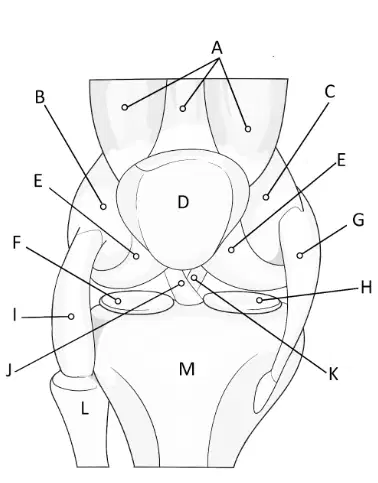
What Ligament is labeled K
(a)
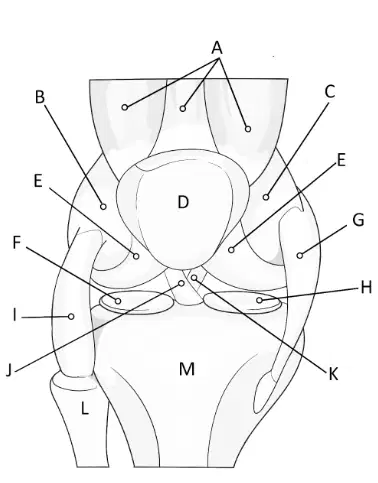
Which bone is labeled D
(a)
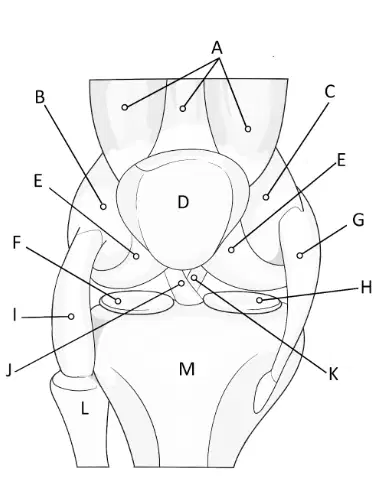
What Ligament is I
(a)

What Ligament is J
(a)
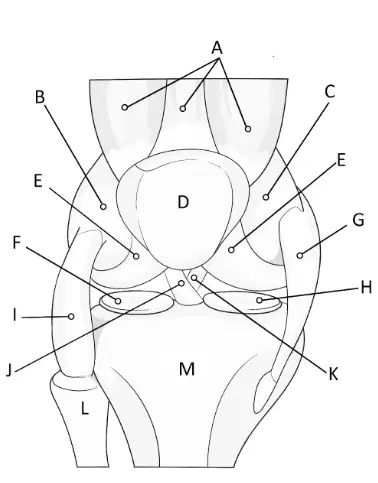
What Ligament is G
(a)
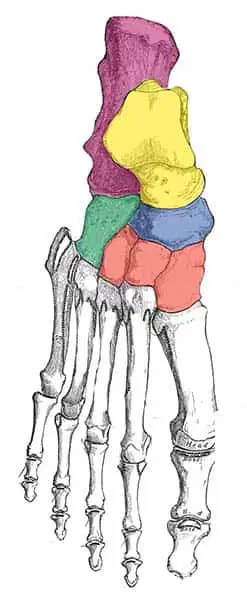
What group of bones are these?
(a)

Which group of bones are colored red?
(a)
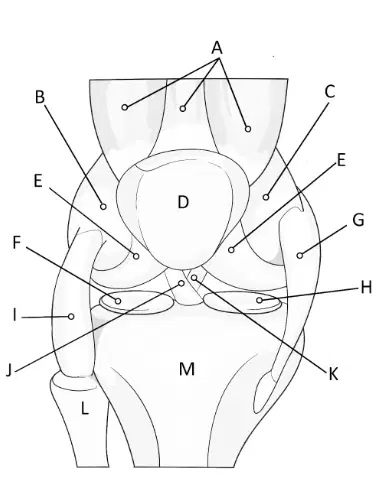
What bone is L?
(a)
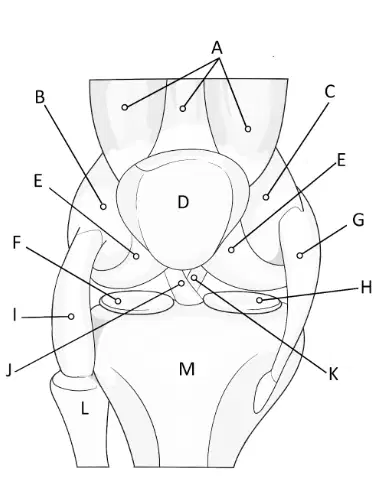
What bone is M?
(a)
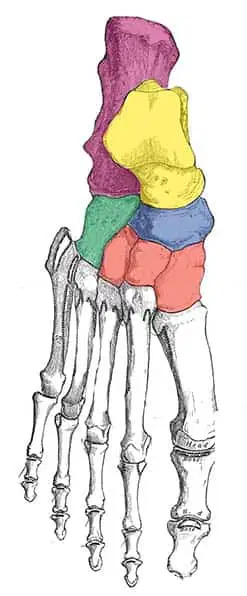
What bone is yellow?
(a)
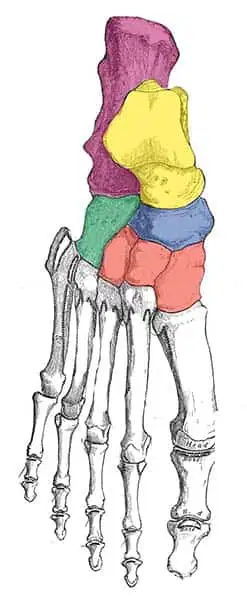
What bone is colored blue?
(a)
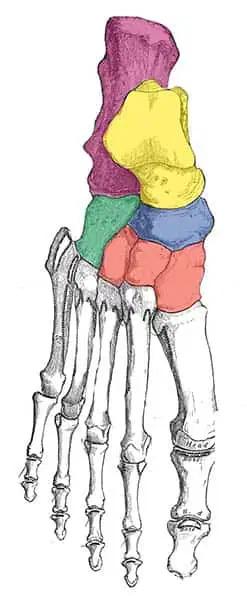
Which bone is green?
(a)
Sits on top of the foot and connects to the tibia and fibula to form the ankle joint.; Transfers weight from the leg to the foot.
PCL
Talus
Phalanges
Metatarsals
This bone forms the heel of the foot and serves as the attachment point for the Achilles tendon.
Cuboid
Navicular
Calcaneus
Talus
Which group of bones forms the arch of the foot and helps in weight distribution during walking?
Fibula
Tibia
Metatarsals
Phalanges
These are the small bones at the front of the foot that make up the toes.
Talus
Metatarsals
Phalanges
Calcaneus
Which bone is located on the lateral side of the foot and helps stabilize the foot during movement?
Navicular
Cuboid
Talus
Calcaneus
What is the collective name for the seven bones that make up the rear part of the foot?
Phalanges
Sesamoids
Tarsals
Metatarsals
Which bone in the foot articulates directly with the first metatarsal and plays a key role in the medial arch?
Cuboid
Calcaneus
Navicular
Talus

How many tarsal bones does each foot have?
14
5
7
26
How many metatarsals are in each foot?
5
7
26
14
How do you Label the metatarsals?
(a)
Which bone in the foot is located between the talus and the cuneiform bones?
Calcaneus
Navicular
Cuboid
Metatarsal
Which bones form the toes of the foot?
Tarsals
Phalanges
Metatarsals
Talus
Which tarsal bone is found on the lateral side of the foot and articulates with the fourth and fifth metatarsals?
Navicular
Talus
Cuboid
Calcaneus
Which bone in the foot is commonly known as the 'ankle bone' and helps connect the leg to the foot?
Navicular
Talus
Calcaneus
Cuboid
Which group of bones is located between the tarsals and the phalanges in the foot?
Phalanges
Metatarsals
Talus
Sesamoids
Which bone supports the lateral longitudinal arch of the foot and is found on the outer side?
Navicular
Talus
Calcaneus
Cuboid
Located inside the knee, it prevents the tibia (shin bone) from moving forward relative to the femur
(a)
located on the inside of the knee and prevents the knee from buckling inward (valgus stress).
(a)
located on the outside of the knee and helps prevent the knee from buckling outward (varus stress)
(a)
located inside the knee and prevents the tibia from moving backward relative to the femur.
(a)
Which bone in the foot is the largest and forms the foundation of the rear part of the foot?
Navicular
Cuboid
Calcaneus
Talus
Which group of bones connects the tarsals to the phalanges and plays a crucial role in foot movement?
Phalanges
Calcaneus
Metatarsals
Sesamoids
Which tarsal bone is located medially and articulates with all three cuneiform bones?
Calcaneus
Cuboid
Navicular
Talus
Anterior Talofibular Ligament connects what two bones
Talus and Tibia
Calcaneus and Fibula
Talus and Fibula
Patella and Femur
Calcaneofibular Ligament connects what two bones?
Calcaneus and femur
Talus and Calcaneus
Talus and fibula
Calcaneus and fibula
Which bone in the foot directly receives the weight from the tibia?
Cuboid
Talus
Navicular
Calcaneus
Which bone in the foot is located directly anterior to the calcaneus?
Cuboid
Navicular
Phalanges
Talus
The ball-shaped upper part of the femur that fits into the acetabulum of the pelvis, forming the hip joint
Femoral Shaft
Femoral Toe
Femoral Head
Femoral Neck
This is the narrow portion just below the femoral head that connects the head to the shaft of the femur.
Femoral Head
Femoral Neck
Acetabulum
Femoral Shaft
The long, cylindrical portion of the femur that extends from the hip to the knee.
Femoral Head
Femoral Neck
Femoral Shaft
Femoral Finger
Which tarsal bone articulates with the tibia to form part of the ankle joint?
Navicular
Cuboid
Talus
Calcaneus
What is the main function of the plantar fascia?
To provide shock absorption
To support the arch of the foot
To facilitate foot inversion
To enhance toe flexion

