
 Worksheets
Workplace Safety and Health Quiz
Total questions: 30
Worksheet time: 15mins
Which of the following is a component of a safety data sheet (SDS)?
Employee salary details
Emergency contact numbers
Hazard identification
Company mission statement

What is a safe practice when using a ladder?
Climbing with tools in hand
Overreaching while on the ladder
Ensuring the ladder is on a stable surface
Using a ladder in poor weather conditions
What does OSHA stand for?
Occupational Safety and Health Act
Occupational Safety and Hazard Act
Occupational Security and Health Act
Occupational Safety and Health Administration
Which of the following is NOT one of the four most common hazards in trades?
Falls
Electrical shocks
Caught-between accidents
Struck-by accidents
According to OSHA, what is a hazard?
A potential for harm
A type of equipment
A safety procedure
A workplace rule
Why is it important for a technician to be aware of safety data sheets (SDS)?
To improve communication skills
To understand emergency procedures
To be informed about chemical hazards
To enhance technical knowledge
What is the primary purpose of a lockout/tagout (LOTO) policy?
To increase electrical efficiency
To ensure safety by de-energizing circuits
To enhance the speed of maintenance
To reduce the cost of electrical components
What does the tagout (TO) practice involve?
Locking a mechanism in the open position
Placing a tag on a mechanism or switch
Removing a tag from a mechanism
Installing a new electrical switch
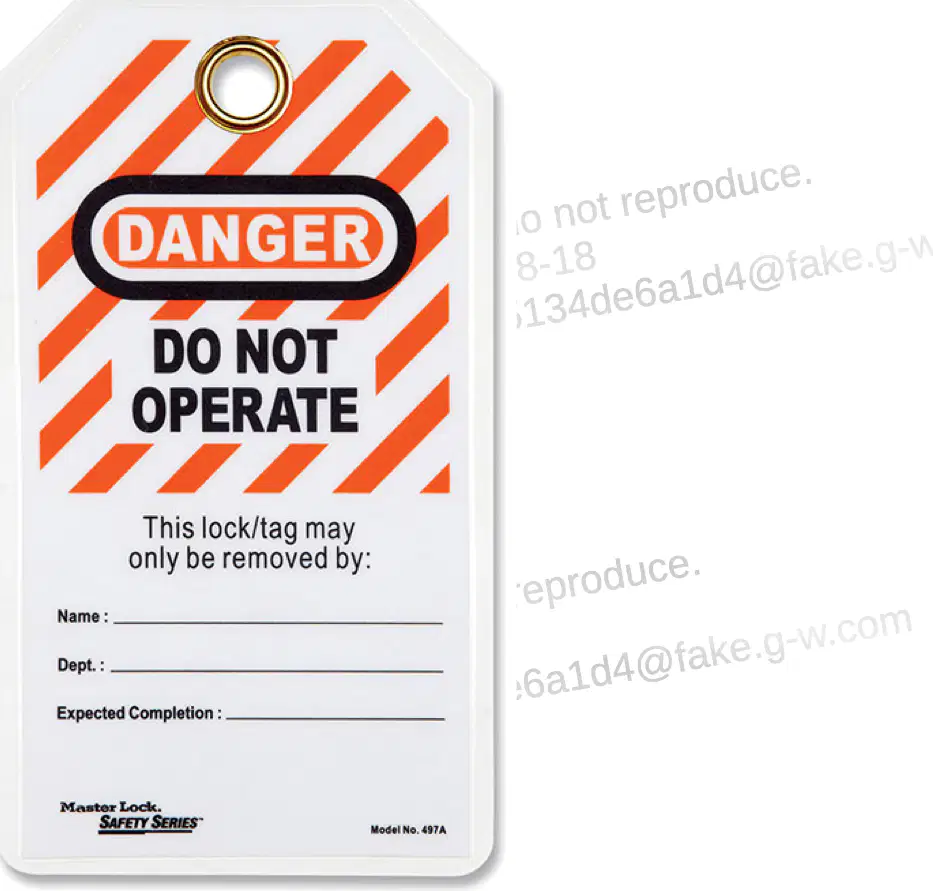
This tag includes the words "Danger: Do Not Operate" and has spaces for which of the following details?
Name, department, and expected completion
Date, supervisor, and location
Machine type, serial number, and inspector
Shift, equipment number, and reason for lockout
What is a potential risk when standing in wet areas while checking live connections?
Slipping and falling
Becoming part of the circuit
Damaging the equipment
Losing tools
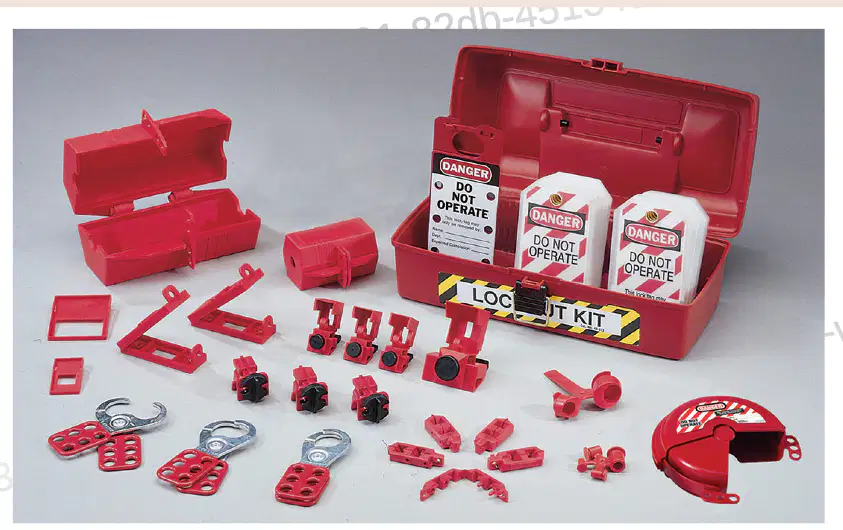
What type of footwear should be worn when taking electrical measurements?
Sandals
Shoes with insulated soles and heels
Barefoot
High heels
What should be ensured when using electrical tools?
They are lightweight.
They are grounded and connected to grounded circuits.
They are colorful.
They are battery-operated.
Why should jewelry not be worn when working on live electric circuits?
It can cause a fashion distraction.
It can conduct electricity and cause shock or burns.
It can get tangled in wires.
It can lose its shine.
What does the acronym P.A.S.S. stand for in the context of using a fire extinguisher?
Pull, Aim, Squeeze, Sweep
Push, Align, Squeeze, Sweep
Pull, Adjust, Squeeze, Stop
Push, Aim, Squeeze, Stop
Why should you never use water on an electrical (Class C) fire?
It can cause the fire to spread
It can cause electrical shock
It can damage the fire extinguisher
It can extinguish the fire too quickly
What is the average extinguishing power duration of a portable fire extinguisher?
5 seconds
10 seconds
15 seconds
20 seconds

What should you aim at when using a fire extinguisher to put out a fire?
The flames
The base of the fire
The smoke
The top of the fire
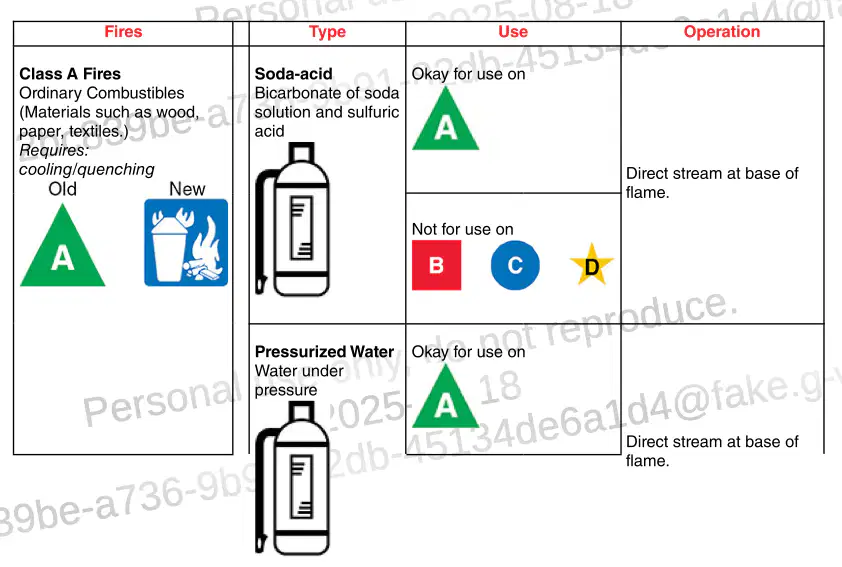
Which type of fire extinguisher is okay for use on Class A fires?
Soda-acid
Pressurized water
Carbon dioxide
Dry chemical

What type of fire extinguisher is required for Class C fires involving electrical equipment?
Water
Foam
Nonconducting agent
Dry chemical

Which class of fire involves combustible metals such as magnesium and lithium?
Class A
Class B
Class C
Class D
How does refrigerant pressure affect the risk of freezing?
Increases the risk
Decreases the risk
Has no effect
Only affects heating
What information should be included on a refrigerant cylinder label?
Manufacturer's contact information
Type of refrigerant, net weight, color coding, TDG requirements, bar coding, SDS reference
Expiry date and storage instructions
Operating temperature range
What is the purpose of a fusible plug in a refrigerant cylinder?
To increase the pressure inside the cylinder.
To release the entire refrigerant charge if overheated.
To prevent the cylinder from being used.
To make the cylinder lighter.
What is the maximum temperature a refrigerant cylinder should not exceed?
100°F
125°F
150°F
200°F
Why should refillable refrigerant cylinders not be filled more than 80%?
To save refrigerant.
To prevent the cylinder from becoming a deadly projectile.
To make the cylinder easier to carry.
To reduce the weight of the cylinder.
What is the purpose of using nitrogen in refrigeration system servicing?
To increase the temperature
To purge air from tubing
To add moisture to the system
To reduce the system's pressure
Why must nitrogen be pressure-regulated before use in refrigeration systems?
To prevent it from freezing
To avoid bursting a weak point
To increase its pressure
To enhance its cooling effect

What is the function of a pressure regulator in a gas cylinder system?
To increase the gas flow
To monitor and control pressure
To add oxygen to the gas
To change the gas type
What should never be used to test for pressure or leaks due to the risk of explosion?
Water
Oxygen
Nitrogen
Helium
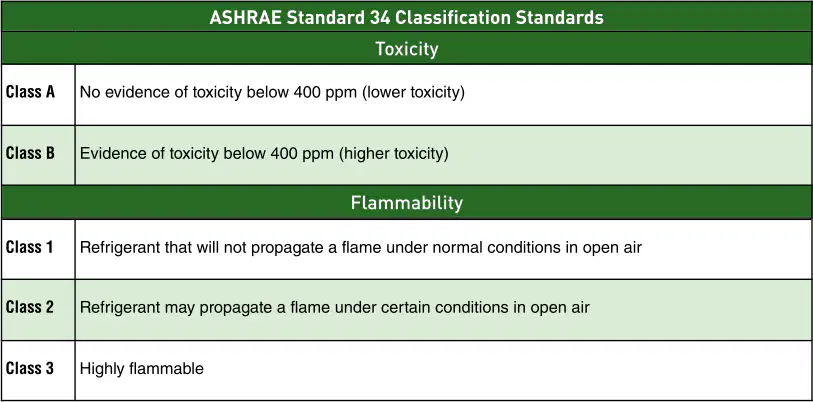
According to ASHRAE Standard 34, what is the classification for a refrigerant that is highly flammable?
Class 1
Class 2
Class 3
Class 4

