
 Worksheets
Chapter 2 : Signs, Signals, and Roadway Markings
Total questions: 48
Worksheet time: 24mins
The purposes of traffic signs are
to stop, to warn, to decide.
to regulate, to warn, to guide.
to observe, to direct, to guide.
You are approaching an intersection. You intend to make a left turn after stopping for a STOP sign. Bushes block your view to the right. You should
stop evenly with the STOP sign, creep forward, and stop again if necessary.
reduce speed early, stop where you can see best, and continue when the way is clear.
accelerate after stopping since you have the right of way.
Yielding in traffic means
allowing others to go before you.
coming to a complete stop every time.
expecting others to stop for you.
The basic speed law requires you to drive
no faster than is safe for existing conditions.
at the maximum posted speed limit.
within 5 mph of the 55 mph speed limit.
A red circle and diagonal slash on a sign means that
the action is not allowed.
a hazard is ahead.
two roads intersect ahead.
Most warning signs are
diamond-shaped.
square-shaped.
round-shaped.
The message on a diamond-shaped sign might be
Curve, Hill, or Winding Road.
No Turn, Speed Zone Ahead, or Left Lane Must Turn Left.
One Way, Wrong Way, or No Trucks.
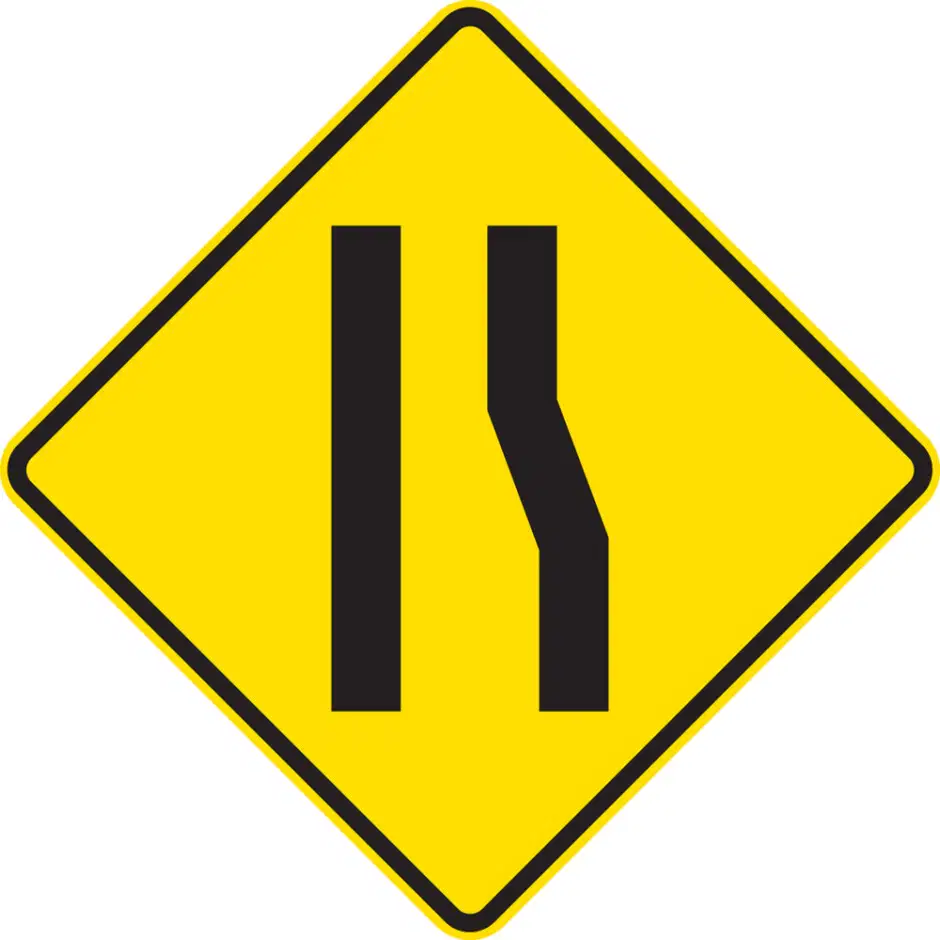
This yellow warning sign means
a left curve ahead.
the roadway narrows.
a winding road ahead.
You pass a school zone sign. You should
know you are within one block of a school.
stop immediately.
go 30 mph.
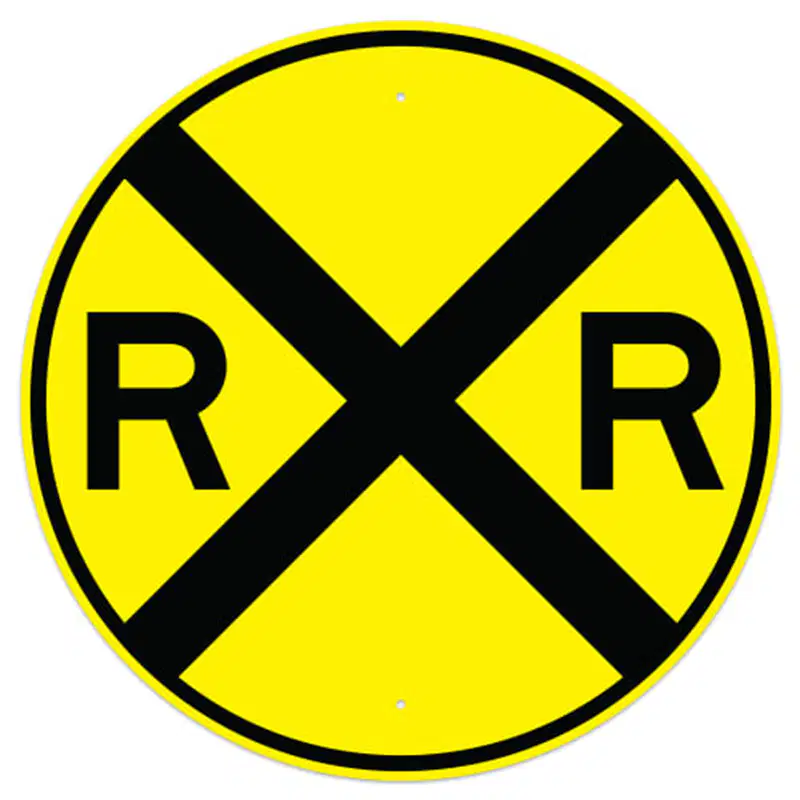
What does this sign mean?
yield the right of way
no passing
railroad crossing
A sign with an orange background in a diamond or rectangular shape indicates a
recreation area.
speed zone.
construction zone.

The message on this sign means
Railroad Crossing.
Keep Right Ahead.
Dangerous Intersection.
What type of sign provide information such as routes, intersections, service areas, and other points of interest.
Regulatory
Warning
Guide
Interstate highways are identified on signs with what kind of shape?
triangular
round
shield
Your red traffic signal changes to green while a pedestrian is crossing in your traffic lane. You should
give the right of way to the pedestrian.
give the right of way to left-turning vehicles.
beep loudly and then proceed.
Your traffic light changes to yellow as you approach an intersection. In most cases, what action should you take?
Signal for a right turn and slow.
Accelerate to clear the intersection.
Make every reasonable effort to stop.
A flashing red light at an intersection means that you must
make a complete stop and proceed when the way is clear.
stop only if there is cross traffic.
slow down and proceed with caution.
A yellow light or arrow means
a red light or a red arrow is about to appear.
you may turn right with caution.
hurry to pass before the light changes.
What should you do if a police officer is directing traffic?
follow his directions, regardless of traffic signals.
must be the same as the light at the intersection.
is just a suggestion.
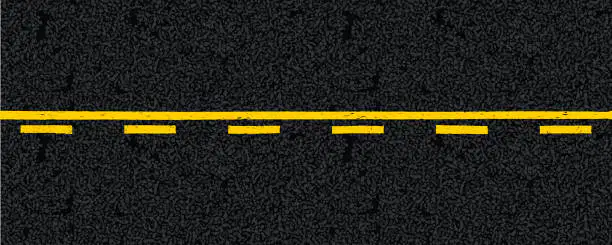
A solid line and a broken line painted on the center of a two-lane highway means passing is
not allowed when the solid line is on your side.
allowed in either direction.
allowed only when the solid line is on your side.
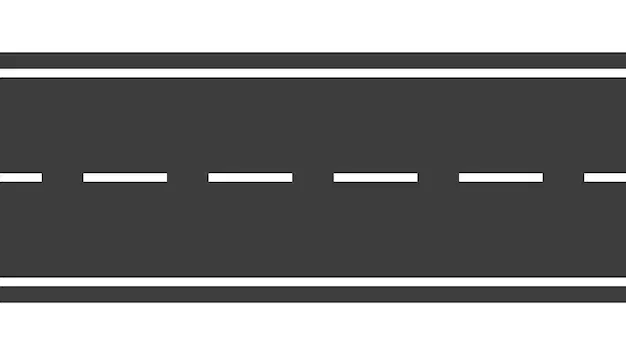
Broken white lines
separate lanes of traffic moving in the same direction.
indicate a no-passing zone.
warn of a railroad crossing ahead.

The roadway marking to which the arrow is pointing means
stop here for STOP sign.
pedestrian crosswalk.
no turns at this intersection.
Curbs painted red, yellow, or white are generally designated as
no-parking zones.
limited-time parking.
user parking only.
Whenever you approach a YIELD sign at an intersection, you should
slow or stop and give the right of way to traffic.
slow down and proceed.
make a full stop, then proceed.
What must you do at a four-way STOP sign?
Stop and wait for your turn to move.
Yield to all drivers approaching from the left.
Slow down if other traffic is nearby.

When you see this sign, you should drive
no faster than 55 mph.
at least 55 mph.
55 mph at night.
Posted minimum speed limits are
the slowest to drive under normal conditions.
speed limits lowered for driving at night.
not legal and need not be observed.

A sign shaped like this means
warning.
railroad crossing.
school zone.
A sign with a yellow background is a
warning sign.
regulatory sign.
recreation area sign.

The message on this sign might be
Hill.
Cross Road.
Railroad Crossing.
A school zone sign is
yellow with five sides.
red with three sides.
red with eight sides.
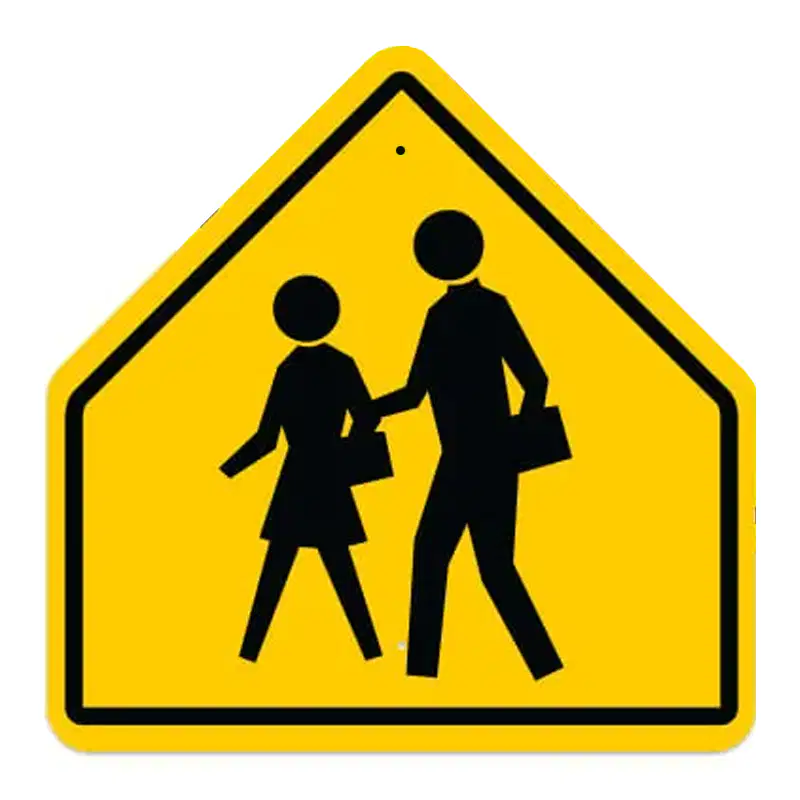
You should expect this sign
near a school crossing.
at a school-bus loading zone.
near a church.
Running children and bicyclists can be expected in a
school zone.
bus-loading zone.
tow-away zone.
A construction zone is indicated by
an orange sign.
a blue sign.
a green sign.
What does a round traffic sign mean?
pedestrian crossing
railroad crossing
yield to other traffic
Guide signs
provide information.
warn of dangers ahead.
have white letters on a red background.
If your vehicle is first in line when the light turns green, you should check
traffic to the left, the right, and ahead.
your rearview mirror.
your speedometer.
Before you make a right-turn-on-red, make sure
no pedestrians are in any crosswalks.
you turn when the red light flashes.
you turn when the light facing you turns yellow.
You see a green arrow pointing to the right. You want to turn right. You should
turn right after yielding to other traffic and pedestrians.
stop and then turn right.
slow down and wait for a green light.
Pedestrians should only cross at an intersection when
they face a WALK signal or symbol.
they are on a one-way street.
they see no vehicles on the roadway.
When the center roadway marking of a two-way roadway is a single broken yellow line, it means that
passing is permitted if it can be done safely.
passing in either lane is prohibited.
passing is legal with left turns prohibited.
Two solid yellow center lines on a two-lane highway indicate
no passing from either way.
passing only with caution.
left turns between intersections.
A solid white line between two lanes of traffic means that you are
generally not to cross the line.
in a passing zone.
in a speed zone.
The purpose of a rumble strip is to
wake up drivers who are falling asleep.
Both are Correct
warn you that you are driving too close to the roadway edge.
No-Parking zones often are near
fire hydrants, curves, and intersections.
railroad crossings.
where pedestrians cross.
If you park in a space that has the handicapped parking symbol, you must
have the proper permit.
not be able to find any other parking space.
not be able to walk.

This road sign means
No right turn
drive only in the direction of the arrow
curve ahead

. This sign tells you that:
There is a series of curves ahead
The road narrows ahead
No turns are allowed on the road

