
 Worksheets
Zero Product Property
Total questions: 80
Worksheet time: 3hrs 36mins
What are the x-intercepts of the parabola?
y = -3(x + 5)(x - 9)
(-5, 0) and (9, 0)
(5,0) and (-9, 0)
(5, 0) and (9, 0)
(-3, 0) and (5, 0)and (-9, 0)
What are the x-intercepts of the parabola?
y = ¼(x + 2)(x - 6)
(-2, 0) and (6, 0)
(2, 0) and (-6, 0)
(-2, 6)
(¼, 0) and (-2, 0) and (6, 0)
The solution, root, x-intercept, and zero of a problem are all the same thing.

Which quadratic equation models the parabola shown?
y = (x-2)(x-5)
y = (x+2)(x+5)
y = -(x+2)(x+5)
y = -(x-2)(x-5)

Which quadratic equation models the parabola shown?
y = (x-2)(x+5)
y = (x+2)(x+5)
y = -(x-2)(x-5)
y = -(x+2)(x+5)
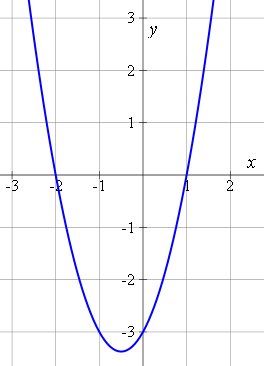
Which equation matches the x-intercepts x=5,-7 ?
(x+5)(x-7)=0
(x-5)(x+7)=0
(x+5)(x+7)=0
(x-5)(x-7)=0
What are the x-intercepts:
(x - 5)(x - 1) = 0
{ 5, 1 }
{ 5, -1 }
{ -5, 1 }
{ -5, -1 }
What are the x-intercepts:
(x - 3)(x + 6) = 0
{ -3, -6 }
{ 3, -6 }
{ -3, -6 }
{ 3, 6 }
What are the zeros of the quadratic function below?
y = (2x – 5)(x + 6)
–5/2, 6
–6, 5/2
5/2, 6
–6, –5/2

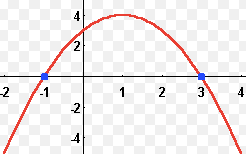
What are the zeros of the quadratic function shown in the graph?
–2, –10
–2, 10
6
2, 10

Which of of the following is a linear factor for the quadratic function in the graph?
x – 1
x + 3
x – 3
x
Which of the following is the graph of y = 0.5 (x – 8) (x + 2)?


What are the zeros of the equation y = x(x + 5)?
0, –5
–5
0, 5
1, –5

In factored form you can see the ______ of the graph easily.
y-intercept
vertex
x-intercepts

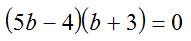
What are the x-intercepts for g(x) = (x + 8)(x + 2)
8 and 2
(8, 2)
-8 and - 2
(-8, -2)
What's another name for the x-intercepts?
Roots
Vertices
axis of symmetry
Minimums
What are the zeros? y = (x - 3)(x + 8)
-3 and 8
3 and -8
-3 and -8
3 and 8
Which of the following is Intercept (Factored) Form?
y=ax2+bx+c
y=a(x−p)(x−q)
y=a(x−h)2+k
What is an equation of a quadratic with x-intercepts at (−1,0) and (−10,0)
y=−2(x+1)(x−10)
y=31(x+1)(x+10)
y=−101(x−1)(x+10)
y=3(x−1)(x−10)
What is an equation of a quadratic with x-intercepts at (4,0) and (−5,0)
y=−31(x+4)(x−5)
y=4(x+4)(x+5)
y=−54(x−4)(x+5)
y=3(x−4)(x−5)
What is an equation of a quadratic with x-intercepts at (7,0) and (11,0)
y=−31(x+7)(x−11)
y=−(x+7)(x+11)
y=52(x−7)(x+11)
y=23(x−7)(x−11)
y=8(x−2)(x+3) What are the zeros (x-intercepts) of the equation
(2,0) and (3,0)
(−2,0) and (3,0)
(2,0) and (−3,0)
(−2,0) and (−3,0)
y=−32(x+1)(x+3) What are the zeros (x-intercepts) of the equation
(1,0) and (3,0)
(−1,0) and (3,0)
(1,0) and (−3,0)
(−1,0) and (−3,0)
y=41(x+5)(x−6) What are the zeros (x-intercepts) of the equation
(5,0) and (6,0)
(−5,0) and (6,0)
(5,0) and (−6,0)
(−5,0) and (−6,0)
In which form is this equation? y=(x−3)(x+8)
Standard
Factored
Vertex
Parabolic
Convert to Factored Form
x2 + 5x - 24
(x - 8)(x + 3)
(x + 8)(x - 3)
(x + 6)(x - 4)
(x + 12)(x - 2)
Convert to Factored Form:
x2 - 10x + 24
(x - 6)(x - 4)
(x + 6)(x + 4)
(x - 12)(x + 2)
(x - 8)(x - 3)
Convert to Factored Form:
3a2 + 4a + 1
(7a-10)(a-8)
Not factorable
(3a+1)(a+1)
(3a-1)(a-1)
Convert to Factored Form
(hint...take out the greatest common factor first)
2c2 + 2c - 84
(c-6)(2c+14)
(c+7)(2c-12)
(c-4)(2c+21)
2(c+7)(c-6)
Convert to Factored Form:
(hint: use slide n' divide)
4x2-16x-9
(2x-9)(2x+1)
(2x+9)(2x-1)
(4x-1)(x+9)
(x+1)(4x-9)
What are the x-intercepts of the parabola?
y = -3(x + 5)(x - 9)
(-5, 0) and (9, 0)
(5,0) and (-9, 0)
(5, 0) and (9, 0)
(-3, 0) and (5, 0)and (-9, 0)
What are the x-intercepts of the parabola?
y = ¼(x + 2)(x - 6)
(-2, 0) and (6, 0)
(2, 0) and (-6, 0)
(-2, 6)
(¼, 0) and (-2, 0) and (6, 0)
Solve using Zero-Product Property.
(2x - 2)(5x + 5) = 0
x = -1
x = -1 or x = 1
x = 1
x = -2 or x = 5
Which equation matches the x-intercepts x=5,-7 ?
(x+5)(x-7)=0
(x-5)(x+7)=0
(x+5)(x+7)=0
(x-5)(x-7)=0
What are the x-intercepts:
(x - 5)(x - 1) = 0
{ 5, 1 }
{ 5, -1 }
{ -5, 1 }
{ -5, -1 }
What are the x-intercepts:
(x - 3)(x + 6) = 0
{ -3, -6 }
{ 3, -6 }
{ -3, -6 }
{ 3, 6 }
Solve for the values of x:
(x - 5)(x - 1) = 0
(5, 0) or (1, 0)
(-5, 0) or (-1, 0)
(0, -5) or (0, -1)
(0, 5) or (0, 1)
(x - 3)(x + 6) = 0
What are the solutions?
(2x + 5)(5x - 2) = 0
x = -5/2, -2/5
x = -5/2, 2/5
x = 5/2, 2/5
x = 5/2, -2/5
What are the x-intercepts?
2(x + 5)(x + 1) = 0
x = 0, 5, 1
x = 0, - 5, -1
x = 5, 1
x = -5, -1
(x + 2)(x - 3) = 0, the binomials are called...?
(x + 2)(x - 3) = 0 ?
(x + 2)(x - 3) = 0
(2x - 1)(x + 4) = 0
0=x(x - 6)
z(z - 15)=0
What are the zeros of (2x+5)(x-6)=?
-6, 5/2
-5/2, 6
6, 2
5, -6
Solve for X:
(x-5)(x+6)=0
{5,5 }
{ -5,-5 }
{ -5,-6 }
{5,-6 }
Solve for x: x(x-3)(x-4) = 0
{0,3,4 }
{3,4 }
{ 0,-3,-4 }
{ }
(4x+8)(8x-16)=0
{2}
{-2}
{-2,2}
{0,-2,2}
Solve for x: (x - 7)(x + 2)
-7, 2
7, -2
7, 2
-7, -2
Solve for x: (2x - 6)(x + 1)
-6, 1
3, -1
-3, 1
-3, -1
r(r+7)=0
r=0, r=−7
r=0, r=7
r=−7
r=7
j(j−9)=0
j=0, j=9
j=0, j=−9
j=9
j=−9
(u−2)(u+8)=0
u=2, u=−8
u=−2, u=8
u=2, u=8
u=−2, u=−8
(7f−3)(9f+1)=0
f=73, f=−91
f=−73, f=91
f=7,3 f=91
f=−73, f=−91
(h+8)(h+5)=0
h=−8, h=−5
h=8, h=5
h=−8, h=5
h=8, h=−5
(c+6)(c−7)=0
c=−6, c=7
c=6, c=−7
c=6, c=7
c=−6, c=−7
(2q+1)(q−9)=0
q=−21, q=9
q=21, q=−9
q=−21, q=−9
q=21, q=9
(h+8)(9h+7)=0
h=−8. h=−97
h=8, h=97
h=−8, h=97
h=8, h=−97
If the answer is ZERO, what must be true?
xy=0
Both
x=0 and y=0
Either
x=0 OR y=0
x=2 and y=1/2
x=2 and y= -1/2
Solve for x
5x=0
x=0
x=5
x=2
x= -5
Solve for x
x+5=0
x=0
x=5
x=2
x= -5
Solve for x
x−5=0
x=0
x=5
x=2
x= -5
Solve for x
3x−6=0
x=0
x=5
x=2
x= -5
Use the Zero Product Property to solve for the values of x.
(x+2)(x−3)=0
2 and 3
-2 and -3
2 and -3
-2 and 3
Solve using the Zero Product Property:
(3x+2)(x+1)=0
x=1, x=32
x=−1, x=−32
x=2, x=1
x=−1, x=32
Solve for the values of x:
(2x - 1)(x + 4) = 0
x = 1/2 or -4
x = 1/2 or 4
x = 2 or -4
x = -2 or 4

Solve for m
m=1, m= -7
m=0, m= -7
m=0, m= 7
m=-1, m= -7

Solve for x
x =8/3 or x =-3
x=8/3 or x=3
x= -8/3 or x=-3
x= 3/8 or x=3

Find the value for P
p = 1/3 or p= -3/8
p= 1/3 or p=3/8
p= -1/3 or p=3/8
p=3/1 or p=8/3

