
 Worksheets
The Four Forces of Flight
Total questions: 37
Worksheet time: 19mins
Fill in the blank: The upward force that works against gravity and keeps the airplane in the air is called _____
Lift
Drag
Thrust
Weight
Fill in the blank: The force that pulls everything down toward Earth is called _____
Gravity
Magnetism
Friction
Electricity
Fill in the blank: The backward force created by air resistance, which works against thrust and tries to slow the airplane down, is called _____
Drag
Lift
Gravity
Torque
Fill in the blank: The forward force that propels the airplane through the air, produced by the airplane's engines, is called _____
Thrust
Drag
Lift
Weight
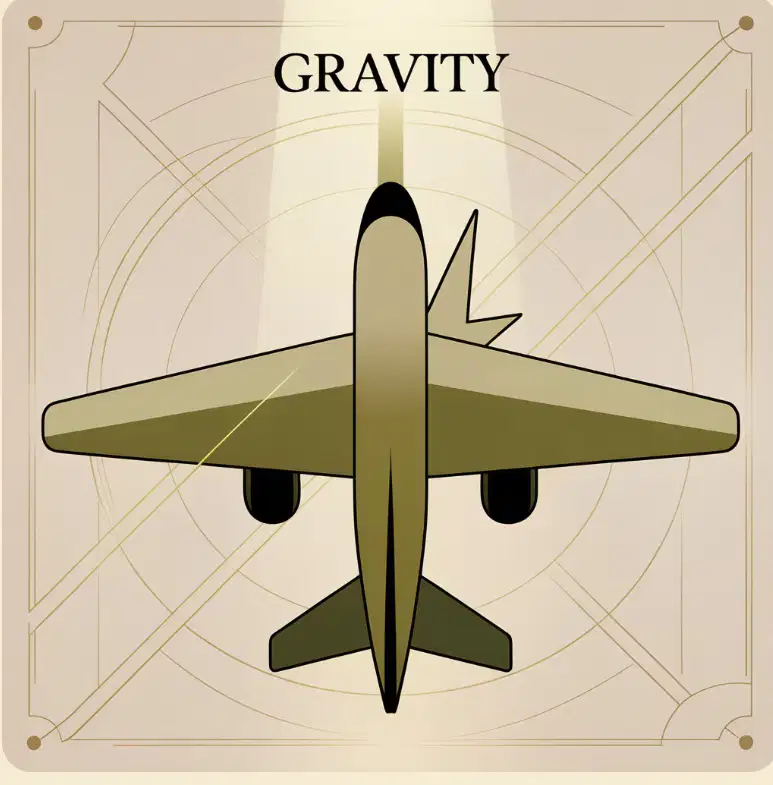
According to the passage, what is gravity?
The force that pushes objects away from Earth
The invisible force that keeps us grounded on Earth
The energy that makes airplanes fly
The attraction between objects with no mass
Fill in the blank: Sir Isaac Newton described gravity as the attraction between objects with ____.
mass
color
temperature
volume
True or False: The force of gravity on an airplane decreases significantly during a flight as fuel is consumed.
True
False
Where is the force of gravity concentrated on an airplane?
At the airplane's nose
At the airplane's tail
At the airplane's center of gravity
At the airplane's wings
What challenge does gravity present for airplanes according to the passage?
Gravity creates a powerful pull toward Earth that must be overcome for flight to occur.
Gravity helps airplanes fly higher without using fuel.
Gravity makes airplanes move faster in the air.
Gravity causes airplanes to float easily above the ground.
What is the critical upward force that counteracts gravity and allows airplanes to fly?
Lift
Drag
Thrust
Weight
According to the passage, what is the special aerodynamic shape of an airplane's wing called?
Airfoil
Fuselage
Rudder
Cockpit
According to Bernoulli's principle, what happens to air pressure as the speed of the air increases over the top of the wing?
The air pressure decreases (creates lower pressure).
The air pressure increases (creates higher pressure).
The air pressure remains the same.
The air pressure fluctuates randomly.
True or False: The top surface of an airplane wing is flat, while the bottom is curved.
True
False
What law explains the upward force created when a wing deflects air downward at a slight upward angle?
Newton's Third Law of Motion
Bernoulli's Principle
Archimedes' Principle
Boyle's Law
The difference in air pressure above and below an airplane's wing creates lift because:
the pressure below the wing is higher than above, pushing the wing upward.
the pressure above the wing is higher than below, pushing the wing downward.
the air moves slower above the wing than below, creating lift.
the wing generates lift by pushing air downward only.
What is the main function of thrust in an airplane?
To slow the airplane down
To push the airplane forward through the air
To create turbulence
To reduce lift
Fill in the blank: Aircraft engines generate thrust by taking in air, compressing it, mixing it with fuel, igniting the mixture, and expelling the resulting hot gases at high speed. This process creates a powerful ________ force.
forward
backward
sideways
upward
Which of the following is essential for the wings to generate lift?
Backward motion
Forward motion
Stationary position
Downward motion
As the airplane moves forward, what does it create over and under the wings?
Heat
Airflow
Noise
Pressure
Pilots control thrust by adjusting engine power. More power means more thrust, which results in faster speeds and potentially more lift.
True
False
Fill in the blank: During takeoff, pilots apply maximum thrust to quickly accelerate the aircraft to the speed needed for ________.
liftoff
landing
cruising
taxiing
What is drag in the context of an aircraft's motion through the air? Fill in the blank: Drag is the aerodynamic force that ________ an aircraft's motion through the air.
opposes
accelerates
stabilizes
initiates
Which type of drag is caused by the aircraft's shape pushing through the air?
Induced drag
Parasitic drag
Form drag
Skin friction drag
Which type of drag is a byproduct of lift generation at the wingtips?
Parasitic drag
Induced drag
Form drag
Skin friction drag
Form drag is resistance created by the ________ of aircraft components.
shape
color
weight
material
Skin friction drag is caused by air molecules interacting with the ________ of the aircraft.
surface
engine
cockpit
wingspan
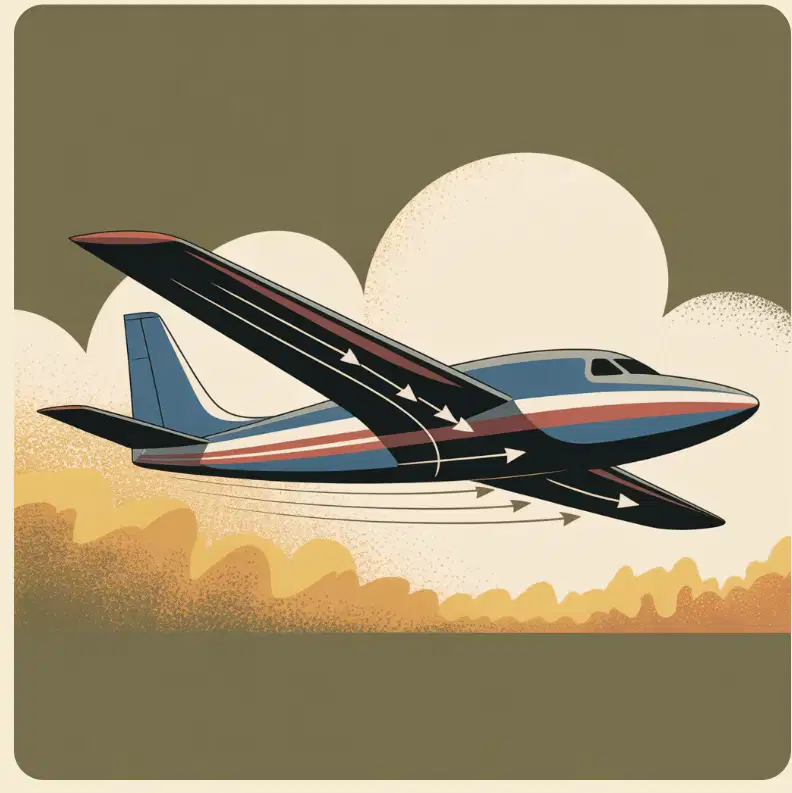
Aircraft designers work to minimize drag because:
it increases fuel efficiency and performance.
it makes the aircraft heavier.
it reduces the need for maintenance.
it increases the size of the aircraft.
As an airplane's speed increases, drag increases exponentially.
True
False
What is the primary function of ailerons on an aircraft?
Control pitch (nose up or down)
Control roll (banking left or right)
Control yaw (nose left or right)
Increase thrust
Fill in the blank: Elevators are found on the _______ at the tail and control pitch (nose up or down).
horizontal stabilizer
vertical stabilizer
wing
fuselage
The rudder is used to control yaw (nose left or right) and is especially important during crosswind landings and engine failures in multi-engine aircraft.
True
False
When a pilot turns the control wheel or stick, one aileron moves up while the other moves down, creating a difference in lift that _______ the aircraft.
rolls
stops
lands
speeds up
Which control surface do pilots use to increase the angle of attack and generate more lift by raising the nose of the aircraft?
Rudder
Ailerons
Elevators
Flaps
Fill in the blank: Airplanes fly through the careful balance of lift, gravity, thrust, and ____. These four forces must be managed throughout every phase of flight.
drag
speed
altitude
temperature
What creates the lift that counteracts gravity in an airplane?
The engine thrust
The special airfoil shape of wings
The weight of the airplane
The landing gear
Fill in the blank: Aircraft engines generate the ____ needed to overcome drag and create the forward motion essential for wings to produce lift.
thrust
friction
gravity
pressure
How do pilots control the balance of an airplane?
By adjusting the landing gear
By using control surfaces and engine power adjustments
By changing the color of the airplane
By opening windows

