
NEW
Font size
 Worksheets
Teaching Basic Concepts through Play
Total questions: 39
Worksheet time: 1hrs 18mins
Fill in the blank: Basic concepts are the simple building blocks of ______. Children need to understand them before they can read, write, or do math.
learning
playtime
sports
music
Which of the following are examples of basic concepts that help children make sense of the world?
A) Colors, shapes, numbers, and opposites
B) Animals, plants, and minerals
C) Books, pencils, and erasers
D) Cars, trains, and airplanes
Fill in the blank: When children know basic concepts, they can follow directions, describe what they see, and ______ better.
communicate
jump
paint
whisper
Fill in the blank: One benefit of play is cognitive growth and early literacy, which helps children think, explore, and ________.
understand
ignore
forget
sleep
Fill in the blank: Social and emotional development from play teaches kindness, sharing, and ________.
confidence
selfishness
ignorance
fear
Fill in the blank: Physical coordination and motor skills from play improves movement, balance, and ________.
strength
color
temperature
height
Fill in the blank: Play is a child's natural way of ________. For young children, play is not just fun—it is how they explore, experiment, and make sense of the world.
learning
resting
eating
sleeping
Fill in the blank: When we teach through play, we make learning ________. This keeps children focused, helps them remember better, and makes them want to keep learning.
enjoyable
difficult
boring
confusing
Which of the following is a key reason to teach through play?
Play is Natural and Fun
Play is Boring
Play is Difficult
Play is Unnecessary
Children learn faster while playing.
True
False
Fill in the blank: Play keeps children _______.
engaged
hungry
asleep
silent
What is the key pillar of learning through play described as: 'Children learn best when they are actively involved in hands-on activities.'?
Active Engagement
Passive Observation
Silent Reflection
Remote Instruction
What is the key pillar of learning through play described as: 'Learning is most effective when it connects to real-life experiences.'?
Meaningful Contexts
Random Activities
Isolated Facts
Repetitive Drills
What is the key pillar of learning through play described as: 'Children are naturally motivated to explore when they’re having fun.'?
Joyful Exploration
Passive Observation
Strict Instruction
Silent Reflection
What is the key pillar of learning through play described as: 'Playing with others helps develop communication and teamwork skills.'?
Social Interaction
Physical Activity
Creative Expression
Independent Study
Which activity helps children learn about colors?
Sorting toys, blocks, or buttons by color.
Listening to a bedtime story.
Building a sandcastle at the beach.
Drawing shapes with a pencil.
Which activity helps children learn about colors?
Painting and mixing colors during art play.
Listening to a story about animals.
Building with wooden blocks.
Playing a game of tag.
Which activity helps children learn about colors?
Playing 'Color Hunt' around the classroom (e.g., find something red).
Listening to a story about animals.
Building a tower with blocks.
Drawing shapes on the board.
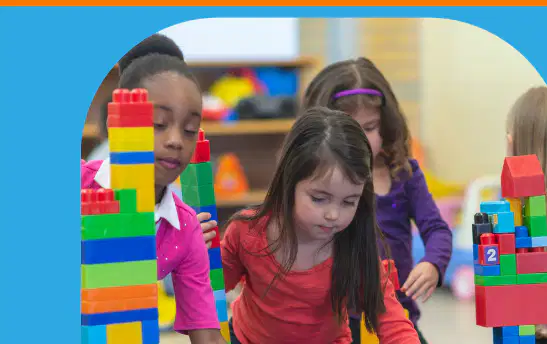
Which activity helps children learn about shapes?
Building towers with blocks of different shapes.
Listening to a story about animals.
Singing a song about the weather.
Drawing lines with a pencil.
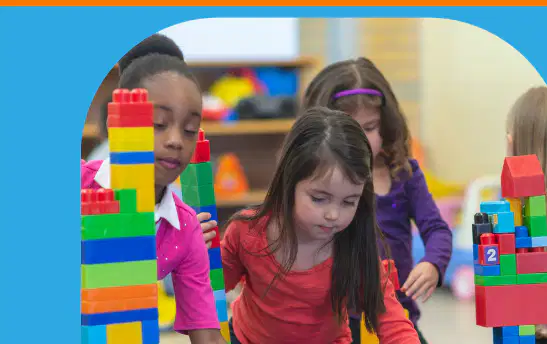
Which activity helps children learn about shapes?
Tracing and cutting out shapes with playdough or paper.
Listening to a story about animals.
Singing the alphabet song.
Running around the playground.
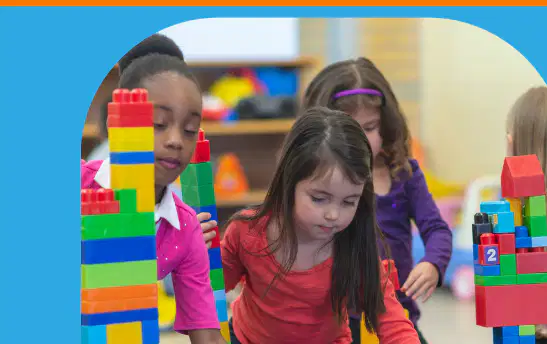
Which activity helps children learn about shapes?
Playing 'shape matching' games (circle with circle, square with square).
Listening to a story about animals.
Singing a song about the weather.
Drawing only with one color.

Which activity helps children learn about numbers?
Counting toys as you clean up ('Let's put away 5 cars').
Drawing pictures with crayons.
Listening to a bedtime story.
Playing with building blocks without counting.
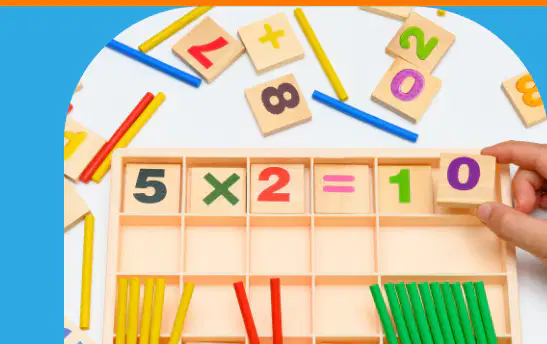
Which activity helps children learn about numbers?
Hopscotch with numbers.
Drawing with crayons.
Listening to music.
Playing tag.
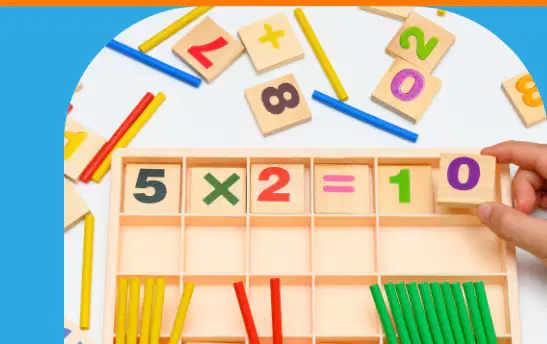
Which activity helps children learn about numbers?
Number songs and clapping games (e.g., 'Five Little Ducks').
Drawing pictures of animals.
Listening to bedtime stories.
Painting with watercolors.

Which activity helps children learn about opposites?
Acting games: 'Stand up / sit down,' 'fast / slow.'
Drawing pictures of animals
Counting numbers from 1 to 10
Singing the alphabet song

Which activity helps children learn about opposites?
Using toys: A big ball vs. a small ball.
Drawing a picture of a house.
Counting from 1 to 10.
Singing the alphabet song.

Which activity helps children learn about opposites?
Storybooks that highlight opposites.
Counting numbers from 1 to 10.
Drawing shapes like circles and squares.
Singing the alphabet song.
At what age does symbolic play typically begin, where children start using objects to represent something else?
Age 2
Age 3
Age 4
Age 5
Fill in the blank: In symbolic play, a stick becomes a ________ and a block becomes a car.
magic wand
tree branch
pencil
sword
Which of the following is NOT a characteristic of complex pretend play?
Creating longer, detailed stories
Taking on roles like doctor or teacher
Practicing letters and numbers
Involving friends, rules, and planning
Early academic concepts through play at age 5 include practicing letters, numbers, and problem-solving.
True
False
Give an example of how play can be used to learn early academic concepts, as described for age 5.
Playing 'store' to learn about money, counting blocks, or tracing letters in sand.
Watching TV shows about animals.
Listening to music without any interaction.
Taking a nap during class.
Fill in the blank: _______ of brain development happens before age 5.
80%
20%
50%
30%

Fill in the blank: Finland’s education success is rooted in _______.
play
competition
rote memorization
standardized testing
Fill in the blank: Play reduces _______ issues in class.
behavioral
academic
attendance
technological
Which of the following is encouraged to support learning through play?
Open-ended play at home
Strict study schedules
Limiting playtime
Only classroom learning
Who should you share the idea of supporting learning through play with?
Fellow educators & parents
Only students
Only teachers
No one
Learning should feel like _________.
discovery
routine
memorization
obligation
When children play, they are also learning. Play makes learning fun and lasting.
True
False

