
NEW
Font size
 Worksheets
Atomic Structure and The Periodic Table - U1
Total questions: 23
Worksheet time: 12mins
Which element is represented by the symbol "Sr"?
Strontium
Sulfur
Selenium
Silicon
What is the atomic number of an element with 9 protons?
9
10
15
18
Which element is found in period 1 of the periodic table?
Hydrogen
Helium
Lithium
Beryllium

An element that is in period 4 and in group 15 is likely to be which of the following?
Arsenic
Phosphorus
Nitrogen
Oxygen

An unknown element is brittle, with 3 electron shells and 6 valence electrons. Which element is it?
C
As
O
S

Which group contains the noble gases?
Group 1
Group 17
Group 18
Group 16
Which model represents a particle with a -3 charge?
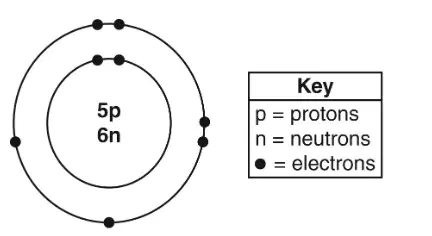
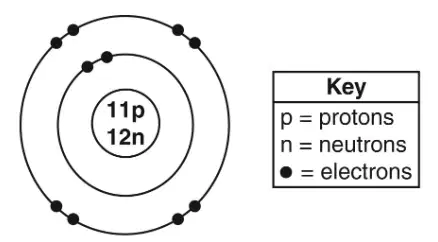
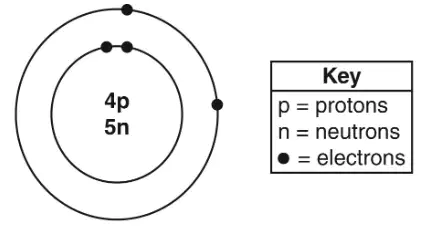
Model C
A neutral phosphorus (P) atom contains 15 protons and 16 neutrons. A Phosphorus ion (P-3) should have how many electrons?
15
18
31
35
A change in the number of neutrons in an atom will change an isotope. What will happen when the number of protons changes in an atom?
Energy will be destroyed.
Chemical bonding will occur.
A new element will form.
The atom will gain a charge.
Identify the isotope with 12 protons, 14 neutrons, and 12 electrons.
Silicon - 26
Magnesium - 26
Silicon - 24
Magnesium - 24
Which of the following is an isotope of Lithium with 3 neutrons?
Lithium-6
Lithium-7
Lithium-8
Lithium-5
This element is in the same group as bromine (Br) but has fewer protons than magnesium (Mg).
Chlorine
Fluorine
Iodine
This element has 6 electron shells and 8 valence electrons.
Cesium (Cs)
Xenon (Xe)
Radon (Rn)
This element is in the alkaline earth metals group and has 3 electron shells. It must be
Beryllium
Magnesium
Sodium
Which of the following choices represents an atom with the same number of protons, but different number of neutrons?
Isotope
Molecule
Compound
Element
Which model represents a particle with no charge?
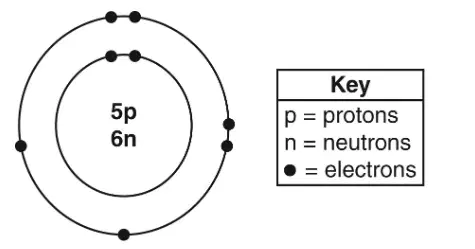
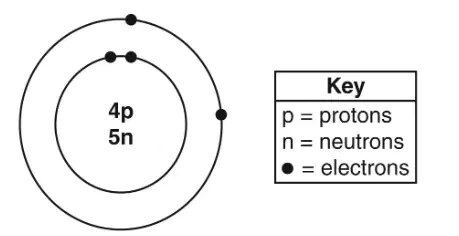
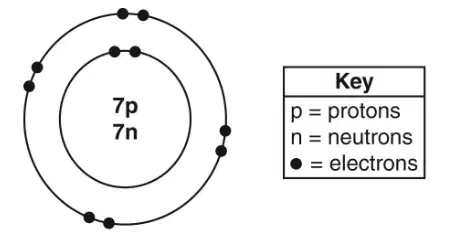

What is the atomic number of the isotope with the symbol notation 132Cs ?
132
55
77
23

Which group does the element with 13 protons and 15 electrons belong to?
Alkaline Earth Metals
Alkali Metals
Boron Family
Nitrogen Family
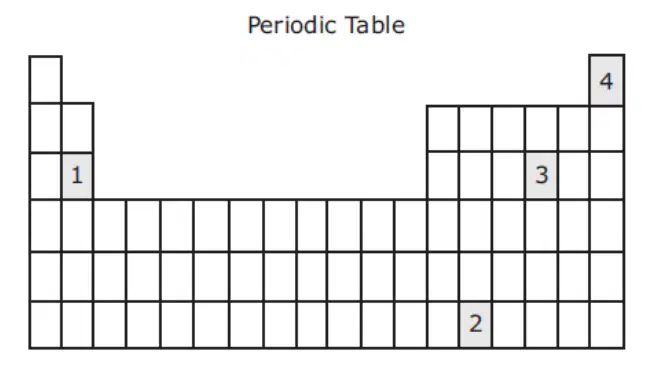
The model of the periodic table shows the location of four elements. A student is asked to identify the element that is a colorless gas and does not react with other elements. At which location in this periodic table would the element most likely be found?
1
2
3
4
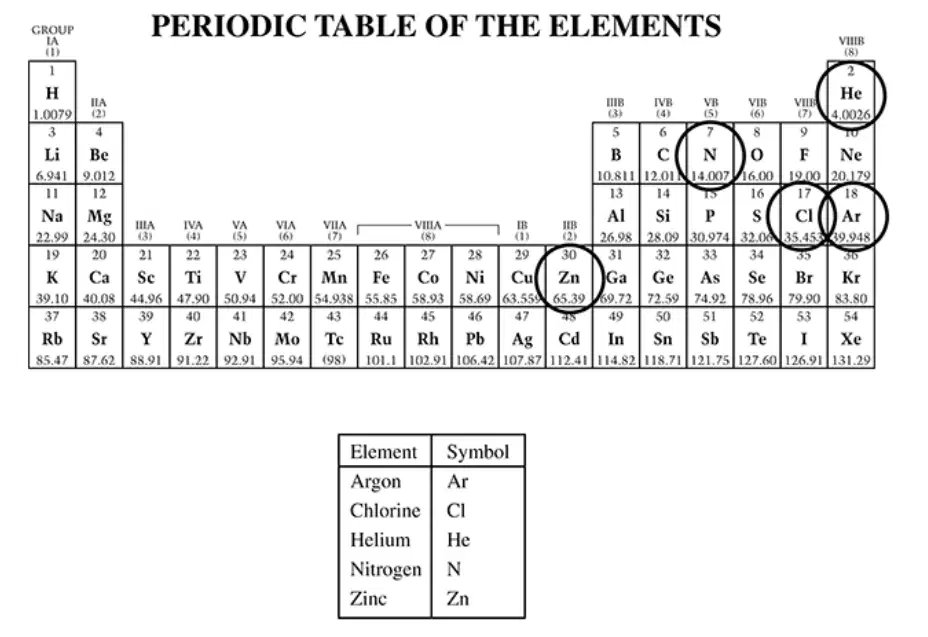
Based on its location on the partial periodic table shown, which element would you predict has chemical properties that are most similar to argon (Ar)?
Chlorine (Cl)
Helium (He)
Nitrogen (N)
Zinc (Zn)
As you move from left to right across the periodic table, characteristics of the elements change as well. Which is the correct sequence, moving from left to right?
metalloid - metal - nonmetal
metal - nonmetal - metalloid
metal - metalloid - nonmetal
nonmetal - metalloid - metal
What do all elements in a group, except groups 3-12, have in common?
The number of protons
The number of neutrons
The number of valence electrons
The number of energy levels
What forms when an atom loses an electron?
cation
anion
isotope
periscope

