
 Worksheets
Lesson 1 Assessment: The First Americans
Total questions: 40
Worksheet time: 33mins
Why did the first Americans migrate from Asia to the Americas?
in search of food
to locate fertile farmland
to flee from hostile tribes
in search of a better climate
How do scientists think people migrated from Asia to the Americas during the last Ice Age?
They sailed across a narrow strait.
They traveled south from Canada.
They traveled across a land bridge.
They sailed to Mexico and then drifted north.
Which of these best explains why different cultural regions formed in North America?
A. Groups settled in the areas at various times.
B. Groups chose where they lived based on their special skills.
C. Groups needed to distinguish themselves from other groups.
D. Groups adapted to the environments in which they settled.
Which of these was most important to the survival for the majority of American Indians?
land and home ownership
trade to meet their daily needs
ability to use natural resources
warm and mild climate conditions
Which of these enabled most American Indians to settle in permanent villages?
trading
hunting
herding
farming
How do historians learn how American Indians lived so long ago?
They read their journals.
They study their artifacts.
They live in their shelters.
They speak to their families.
Which of these characterizes an American Indian cultural region?
A. People migrated together.
B. People have the same leader.
C. People share a similar language.
D. People come from the same family.
Which of these was most important in determining the way of life of an American Indian group?
food sources
language skills
land ownership
religious celebrations

Which of these was a strong influence on the kind of homes created by each American Indian group?
wealth
climate
religion
education
Which of these describes how most American Indians viewed their environment?
They believed they owned the land on which they lived.
They believed that the land should remain unchanged.
They believed they were a part of a community of living things.
They believed they were the rulers of the region in which they lived.
Which of these was an important resource of the Northwest Coast people?
Great Lakes
Pacific Ocean
Gulf of Mexico
Mississippi River
American Indians of which region lived in a very arid (dry) climate?
California
Great Basin
Plateau
Southwest
How was it possible for the mesa people to grow corn in the desert?
They used rain barrels.
They dug irrigation ditches.
They traded their crops for water.
They planted drought-tolerant corn.

American Indians who lived on the Plains wore clothing made from animal hides. Which of these was an important activity in this region?
fishing
mining
hunting
gathering
How did the American Indians in the Southeast live?
They lived in wooden longhouses in the forest.
They lived in adobe villages on top of flat mesas.
They lived in underground pit houses beside major rivers.
They lived in towns clustered around large earthen mounds.
Which of these describes one way American Indians adapted the environment to meet their needs?
Arctic people raised livestock.
Southwest people made many things with corn.
Great Plains people made clothing from animal hides.
Eastern Woodlands people burned trees to plant corn.
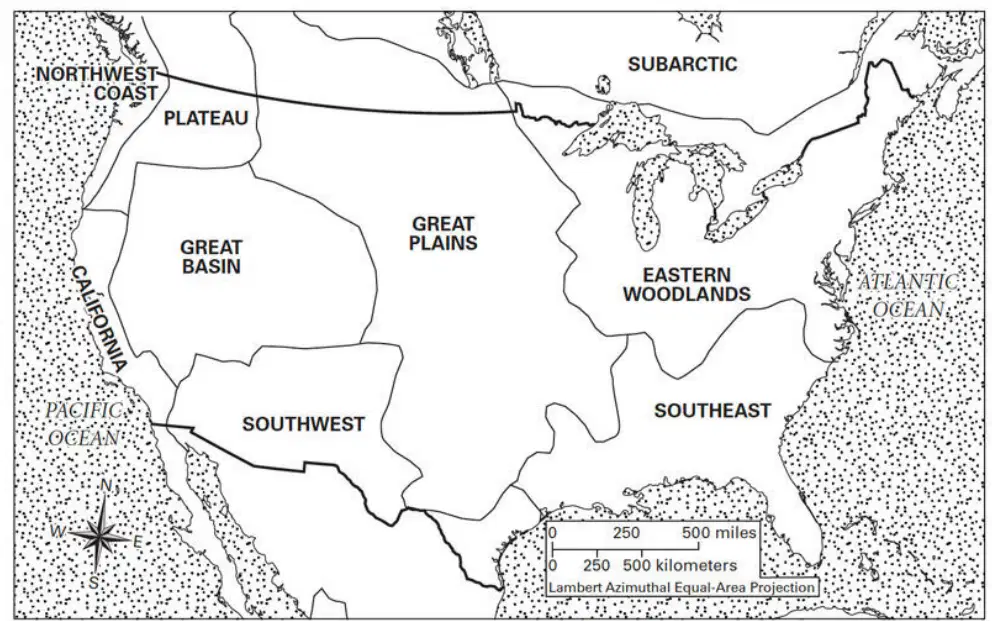
Which cultural region is described by the below information? • dense grasses • treeless grasslands • large bison herds
Great Plains
Pacific Northwest
Southwest
Eastern Woodlands

What was one important resource for American Indians of the Eastern Woodlands?
Wood (from forests)
Gold
Cactus
Buffalo
People in the Arctic cultural region may have faced which of the following challenges in adapting to their environment?
Extreme cold, limited food sources, and long periods of darkness
Frequent earthquakes, tropical diseases, and dense forests
High altitudes, desert heat, and monsoon rains
Volcanic eruptions, fertile soil, and abundant rainfall
Which of the following best describes what you should do when writing about two artifacts from two different Native American cultural regions?
Describe how each artifact is made, its uses, and how it shows adaptation to its region.
List only the names of the artifacts and their regions.
Explain only the materials used to make the artifacts.
Write about the climate of each region without mentioning artifacts.
Beringia is the name of the land bridge that once connected
North America and South America.
Alaska and California.
Asia and North America.
Africa and North America.
The first Americans ended up in North America after a long migration, because
they were looking for new land to start a new civilization.
they followed their food source as they slowly moved towards the Americas.
they were trying to find North America.
they were running away from the giant mammals.
Archaeologists study _____________________ to learn about the cultures and way of life of ancient peoples
theory
culture
climate
artifacts
The movement of people from one place to another is called
migration.
glacier.
origin story.
nomads.

Which of the following choices identifies the name of the first peoples of the Americas?
Native Americans
South Americans
Europeans
Australians

The theory that the first Americans came to North America by land over a path that connected Northeastern Asia with modern day Alaska.
Land Bridge Theory
Coastal Route Theory
Migration Theory

Which theory of migration is best supported by the evidence below:
"At this point in history, it is believed that sea levels declined causing the exposure of dry land."
Land Bridge Theory
Coastal Route Theory

Read the description below to determine if it is an example of an adaptation to or modification of the environment made by Native Americans:
"Native Americans learned to make hunting tools using the natural resources in the area."
Adaptation
Modification
Neither

Read the description below to determine if it is an example of an adaptation to or modification of the environment made by Native Americans:
"In warmer climates, Native Americans gathered wild plants and fruits for food."
Adaptation
Modification
None of the Above
Which of the following statements is TRUE about Native Americans?
Native American farming practices were harmful to the environment.
People who live in the same cultural region share a language and way of life.
Native Americans all lived in the same environment.
There were not many people in America before the 1400s.
Which of these was a strong influence on the kind of shelters used by each American Indian
group?
wealth
climate
religion
education
_______ is the name of the land bridge that once connected Asia and North America.
Bering Straight
Erie Canal
Beringia
London Bridge
Which of these is a feature that determines Native American cultural regions?
People migrated together.
People have the same leader.
People share a similar language.
People come from the same family.

Which of these best explains why different cultural regions formed in North America?
Groups settled in the areas at various times.
Groups chose where they lived based on their special skills.
Groups needed to distinguish themselves from other groups.
Groups adapted to the environments in which they settled.
How do historians learn how American Indians lived so long ago?
They speak to their families.
They read their journals.
They study their artifacts.
They live in their shelters.
Which of these describes how American Indians viewed their environment?
They believed they were a part of a community of living things.
They believed that the land should remain unchanged.
They believed they owned the land on which they lived.
They believed they were the rulers of the region in which they lived.
How do scientists think people migrated from Asia to the Americas during the last Ice Age?
They sailed across a narrow strait.
They traveled south from Canada.
They traveled across a land bridge.
They sailed to Mexico and then drifted north.

