
Font size
 Worksheets
Intro to UI and UX Design - Codecademy
Total questions: 44
Worksheet time: 43mins
UI Design stands for (a) and UX Design stands for (b) .
The interface through which a user interacts with a device.
User Interface (UI) Design
User Experience (UX) Design
Interaction
Describes the entire experience around a product or service, taking into account the user's emotional state, the context or environment, and the designed system or artifact.
User Interface (UI) Design
User Experience (UX) Design
Experience
Organize these options into the right categories
Layout
Colors
Typography
Interaction Design
Brand Identity
Responsiveness and usabilty
Accessibility and inclusivity
Front-end development
User journey
User research
Deliverables
Personas
Journey maps
Storyboards
Prototypes
The five elements of (a) , from abstract to concrete, are strategy, scope, structure, skeleton, and surface.
A (a) is anyone who might use or maintain a product. The (b) is the person ultimately intended to use the product, who may have less technical know-how.
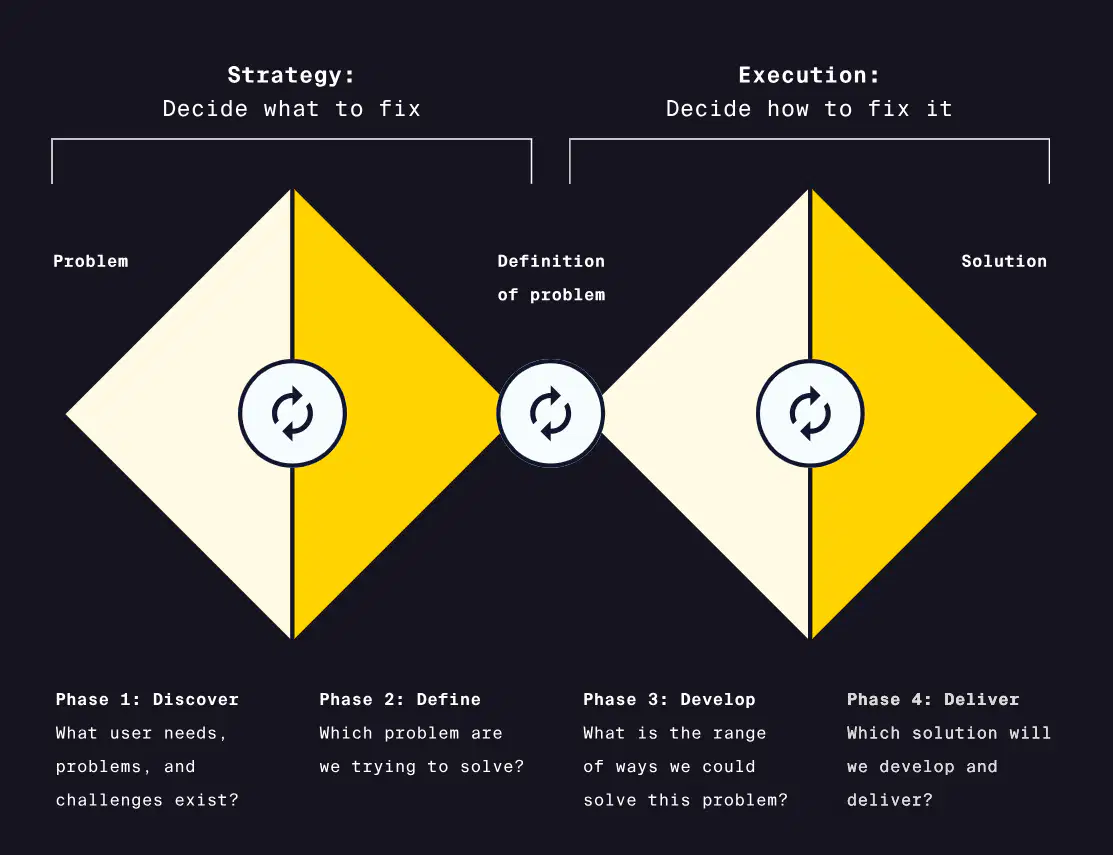
This image best represents what?
The Double Diamond Model
The Product Development Life Cycle
Design Thinking
User-Centered Design
UX Honeycomb
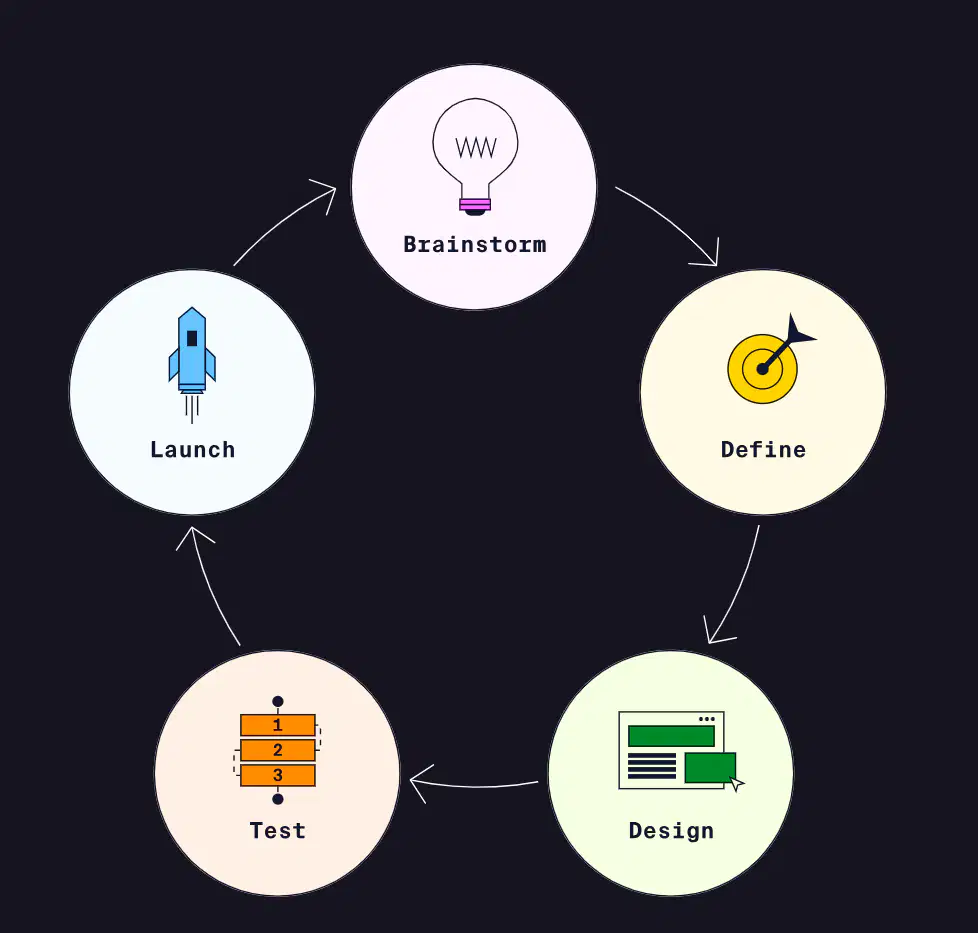
This image best represents what?
The Double Diamond Model
The Product Development Life Cycle
Design Thinking
User-Centered Design
UX Honeycomb
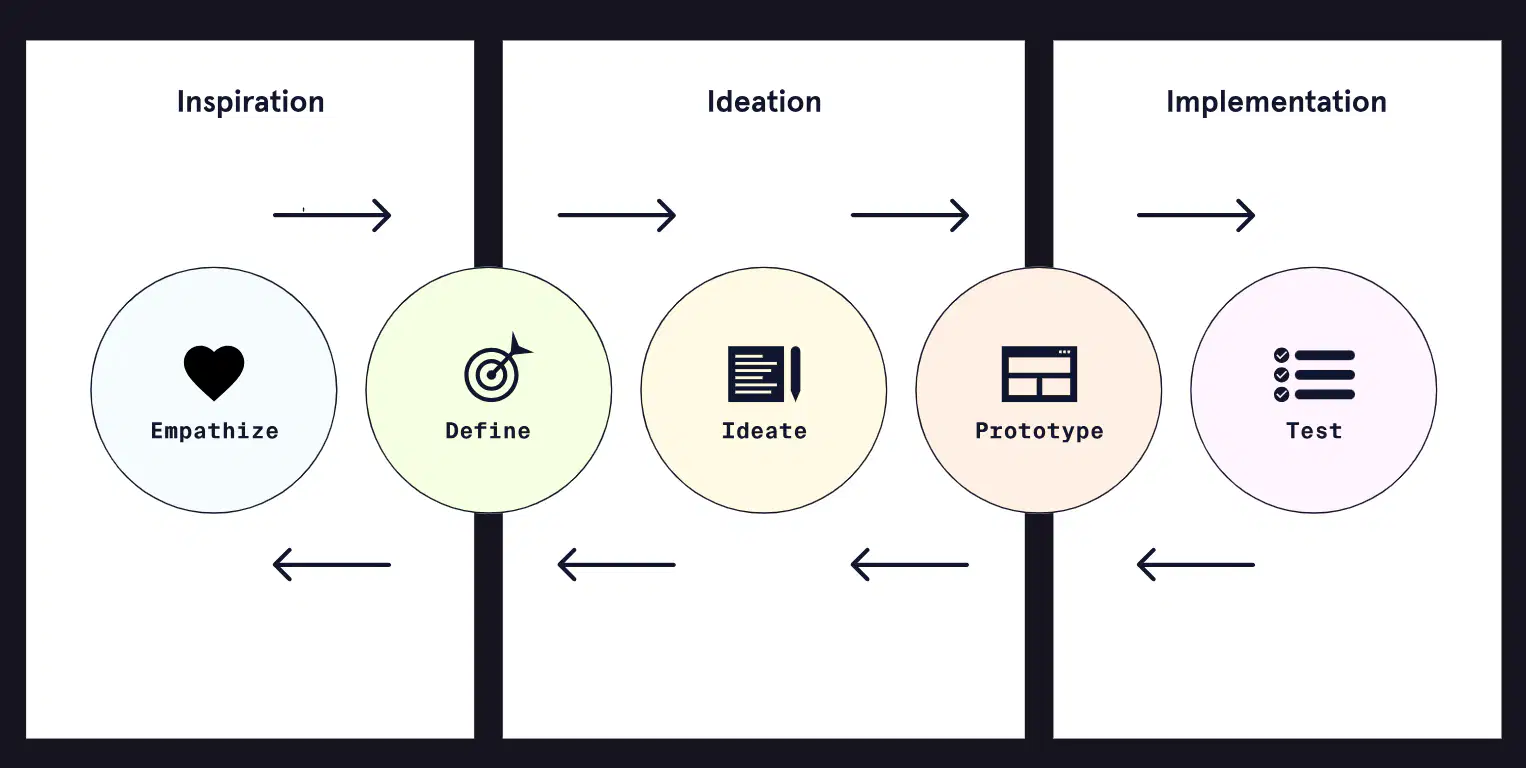
This image best represents what?
The Double Diamond Model
The Product Development Life Cycle
Design Thinking
User-Centered Design
UX Honeycomb
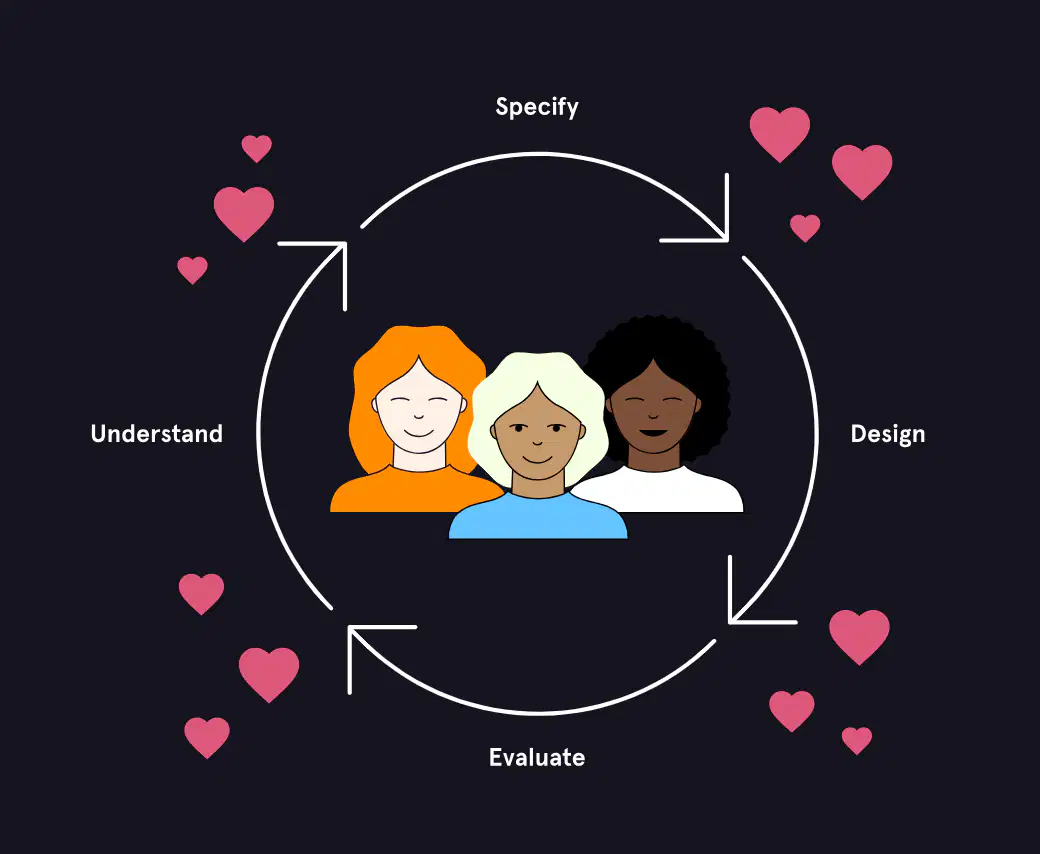
This image best represents what?
The Double Diamond Model
The Product Development Life Cycle
Design Thinking
User-Centered Design
UX Honeycomb
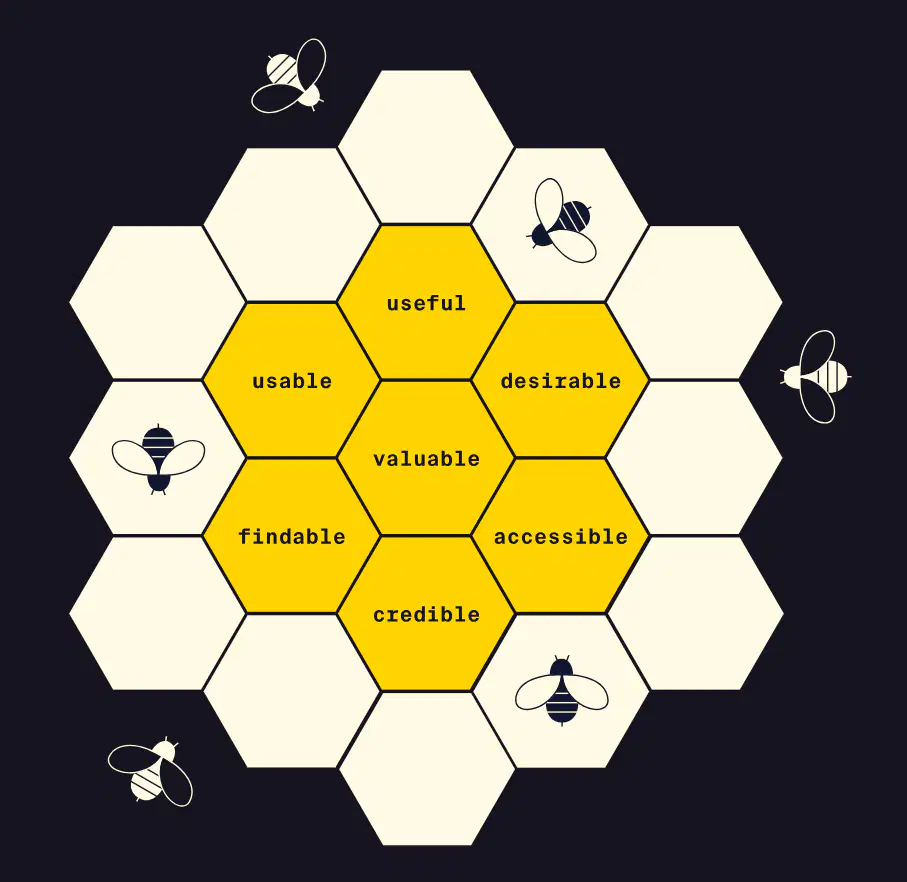
This image best represents what?
The Double Diamond Model
The Product Development Life Cycle
Design Thinking
User-Centered Design
UX Honeycomb
Discover, Define, Develop, and Deliver are what?
The four stages of the Double Diamond Model.
The two types of thinking emphasized by the Double Diamond Model.
Divergent thinking and Convergent thinking are what?
The four stages of the Double Diamond Model.
The two types of thinking emphasized by the Double Diamond Model.
The five stages of the (a) are (b) , Define, Design, Test, and (c) .
True or False: The Product Development Life Cycle is continuous. Products and interfaces should be continuously tested and improved even after they launch.
True
False
There are five steps to the Design Thinking Process. Put them in the correct order.
Empathize
Define
Ideate
Prototype
Test
Design thinking puts (a) at the center of every stage of the process and encourages (b) to fully empathize with the (c) .
Put in the correct category.
Easy to use
Easy to understand
meets a user need
What is the term for research methods like surveys and A/B testing that can be measured numerically?
Quantitative methods
Qualitative methods
Behavioral methods
What kind of user research methods focus on observing user behavior?
Quantitative methods
Qualitative methods
Behavioral methods
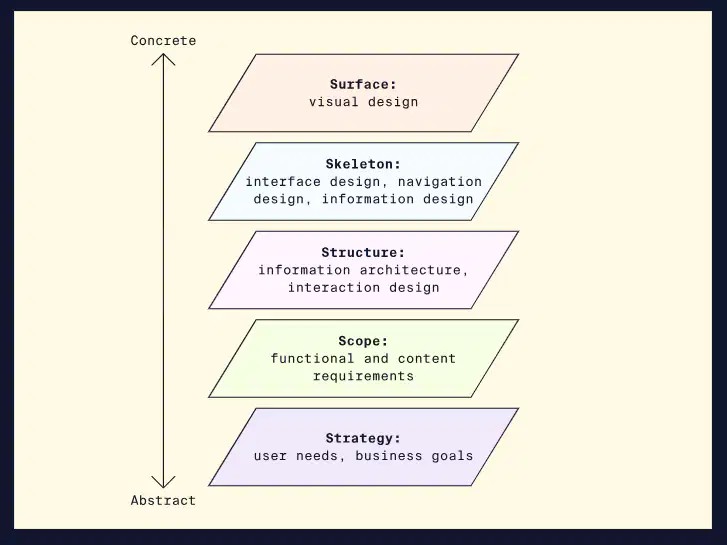
Which layer of the five elements of UX design is UI design primarily focused on?
Surface
Scope
Strategy
Structure
Skeleton
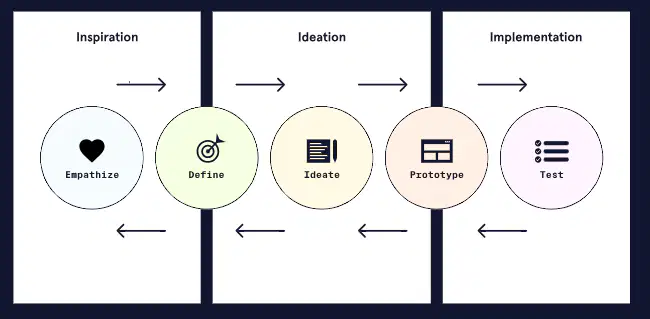
Which methodology puts people at the center of every process, encourages designers to set aside assumptions, and has five steps: empathize, define, ideate, prototype, and test?
Double diamond model
Design thinking
Product development life cycle
User-centered design
Which type of thinking explores many possible solutions and generates new ideas?
Divergent thinking
Convergent thinking
The discover and define phases of the double diamond diagram are focused on (a) , while the develop and deliver phases are focused on (b) .
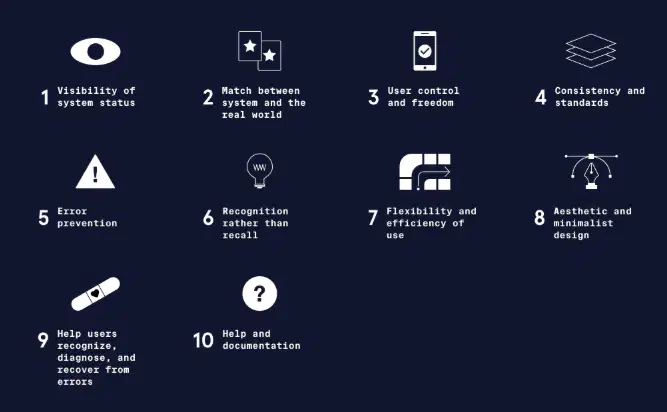
Jakob Nielsen and Don Norman developed a set of ten principles for good interaction design known as:
user-centered design
user ethnography
usability heuristics
the UX honeycomb
In user-centered design, product development should respond to both:
context of use and business requirements
context of use and usability testing
interaction design and information architecture
visual design and content strategy
What is the best term to describe the person who will ultimately use a product?
customer
user
designer
end-user
Match the appropriate terms from the UX Honeycomb to the definitions below:
the product, company, and services are trustworthy
credible
easy to use and understand
usable
visually attractive and succinct
desirable
easy to navigate and find information
findable
users with disabilities can use the product
accessible
Complex, multi-dimensional problems addressed by design thinking are commonly referred to as:
sticky issues
a can of worms
wicked problems
rotten problems
Which of the following is NOT a core activity of design thinking?
intuition
inspiration
ideation
implementation
Which of the following is considered a qualitative user research method?
user interviews
A/B testing
analytics
surveys
(a) is an intentional problem-solving process focused on planning or making something for a specific use or purpose. (b) is focused on the visual design of the interface. (c) is focused on the holistic experience around a product or service.
User-centered design is an (a) process that puts (b) at the center of product development.
Which type of thinking analyzes, filters, and focuses ideas to make decisions?
Convergent thinking
Divergent thinking
A wireframe is constructed with (a) wireframe elements that can help communicate ideas during the wireframing process.
A wireframe is a (a) representation of a digital interface that defines...
- (b) : how information on the page will be organized
- (c) : how the elements that make up the page are organized.
Why is it important to be able to communicate the purpose of a wireframe?
For stakeholders and developers to be on the same page.
To improve wireframe functionality.
To validate design decisions.
Designers (a) to create quick concepts and to iterate ideas in a lower fidelity format before transitioning to a more polished (b) using a digital tool. By adding simple design elements and interactivity, designers create a (c) .
Which term is defined as the organization and presentation of valuable information within a digital interface?
Information Architecture
Wireframes
User Interface Design
User Research
What do user workflows represent?
The path a user takes to complete a task.
The content hierarchy.
The structural layout of a digital interface.
What is Figma?
a browser-based digital design tool.
a spreadsheet tool for data computation and graphing.
a video editing software
a 3D rendering tool
In Figma, a (a) is a container that is representative of the device or screen size you are designing for.
The (a) is located (b) of the Figma editor and it displays a dynamic list of the order of all the objects as they are added to the canvas.
In Figma, the tools to create designs are found in (a) while the tools to add interactivity to designs can be found in (b) .

