
 Worksheets
002400
Total questions: 38
Worksheet time: 19mins
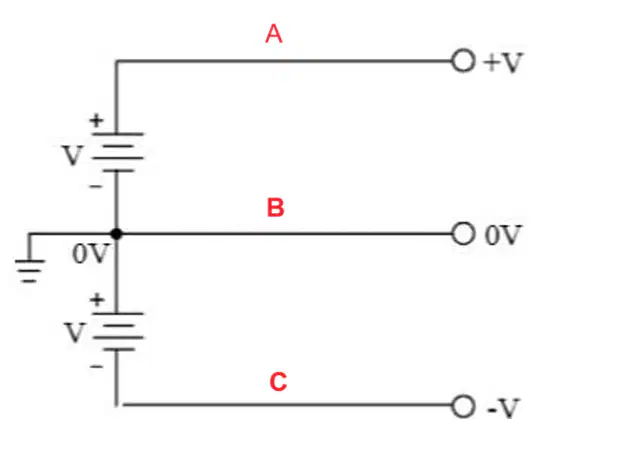
In a Dual Power Supply diagram shown, "A" is the _____.
positive rail
negative rail
ground rail
neutral rail
In a Dual Power Supply diagram shown, "B" is the _____.
positive rail
negative rail
ground rail
neutral rail
A dual power supply is a specified power supply from one source, which has _______ terminal supplies
one
two
three
four
In dual power supply, the common junction is normally connected to ground and is referred to as the _______.
0V or ground rail
+V or positive rail
-V or negative rail
rail road
In dual power supply, the potential difference between the outer rails is equal to ______.
2 x V
1 x V
0 x V
3 x V
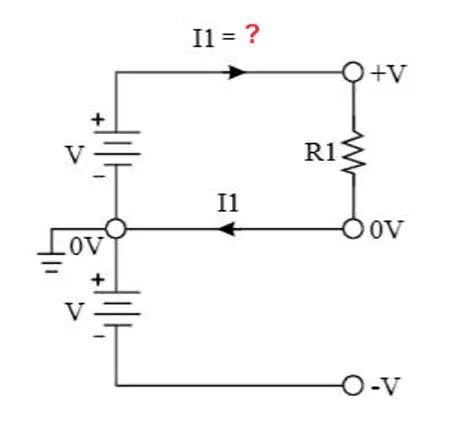
DUAL POWER SUPPLY
In the diagram below, determine I1
I1 = R1V
I1 = R12V
I1 = V1R1
I1 = V2 R2
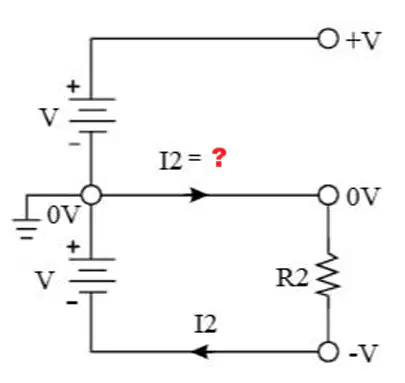
DUAL POWER SUPPLY
In the diagram below, determine I2
I2 = R2V
I2 = R12V
I2 = V2R2
I2 = It−I1
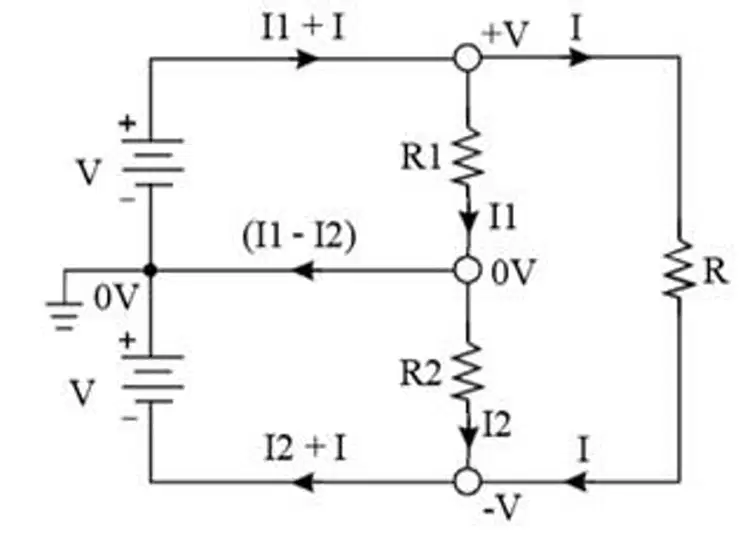
DUAL POWER SUPPLY
when I1=I2
there will be no current in the 0V (ground rail)
the circuit will explode
+V will be maximum
-V will be 0
DUAL POWER SUPPLY
there will be no current in the 0V (ground rail), when ____
I1=I2
I1+I2=I
I1=3A
I2=1A

DUAL POWER SUPPLY
determine I
I=R2V
I=+RV
I=R1V
I=−R2V
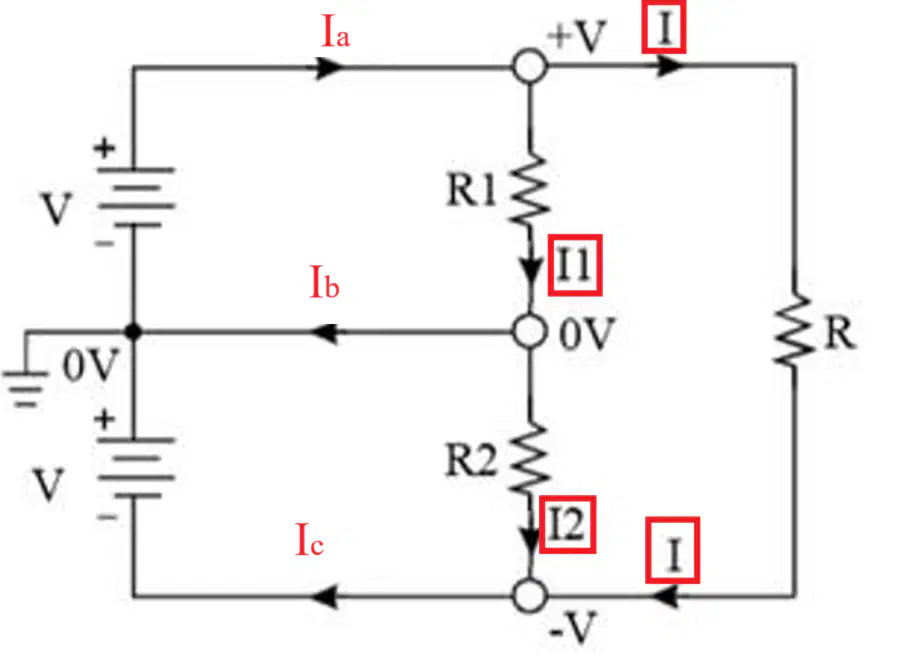
DUAL POWER SUPPLY
determine the Ia
I1+I
I1−I2
I
I2
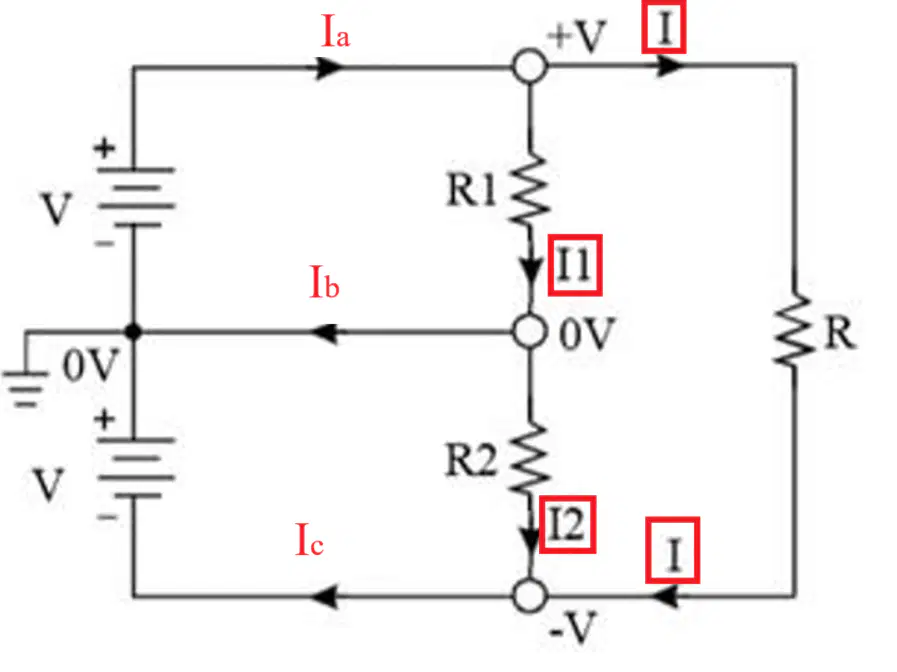
DUAL POWER SUPPLY
determine Ib
I1+I
I1−I2
I
I2
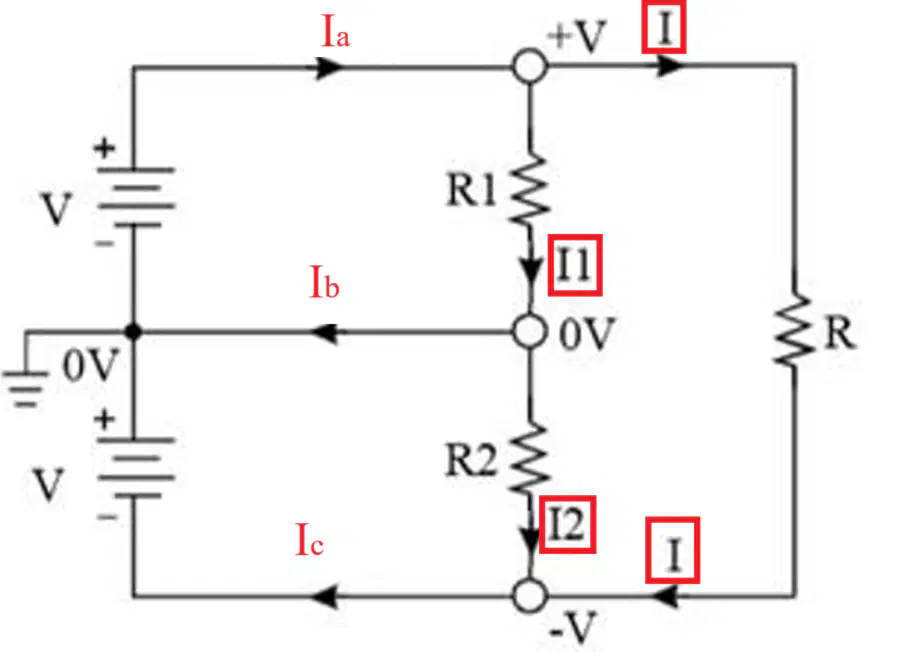
DUAL POWER SUPPLY
determine Ic
I1+I
I1−I2
I2+I
I2
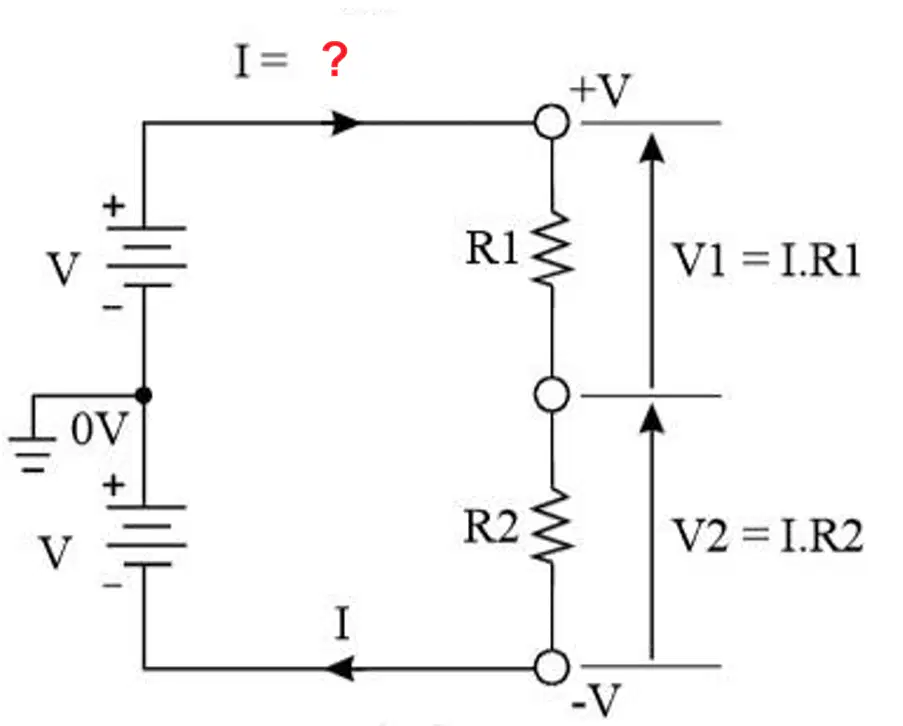
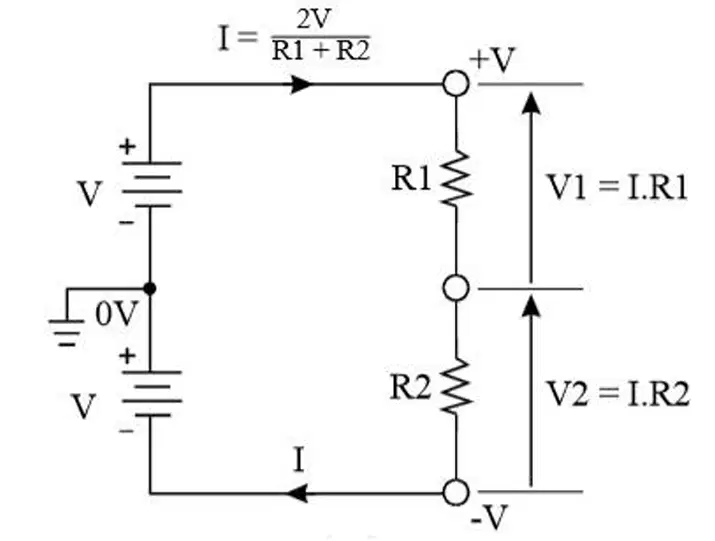
Determine I.
I=(R1+R2)2V
I=(R1+R2)V
I=I⋅R1
I=I⋅R2
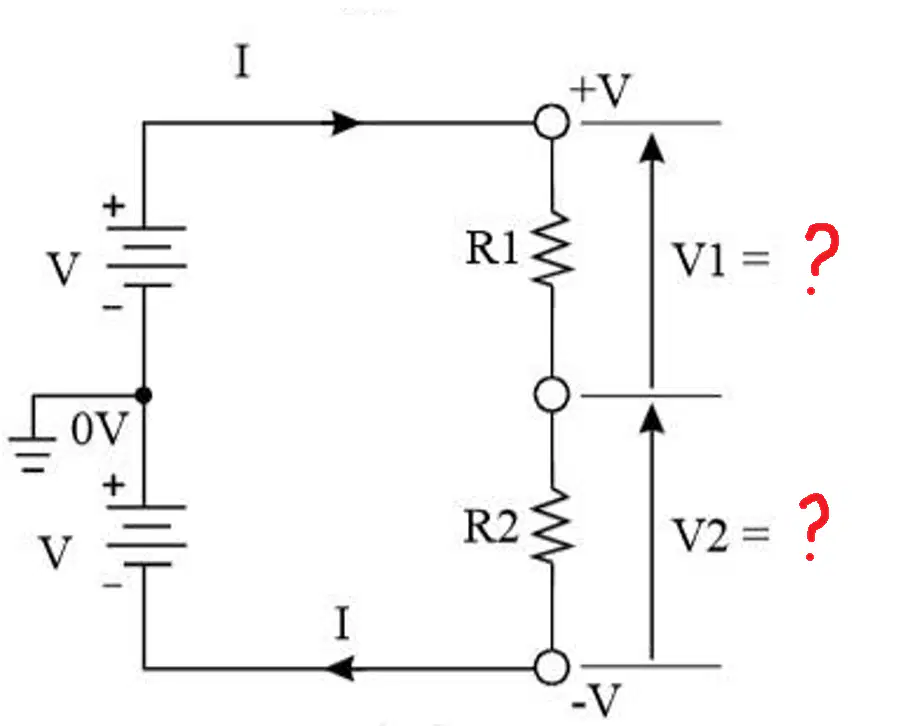
Determine V1
V1=I⋅R1
V1=I⋅R2
V1=I⋅(R1+R2)
V1=V2
Determine V2
V2=I⋅R2
V1=I⋅R1
V1=I⋅(R1+R2)
V1=V2
a loss of the ground rail would produce _________.
a rise of voltage across one of the supplies.
a short circuit
a decrease of voltage
no effect in the circuit
A loss of the ground rail could cause damage to the equipment
TRUE
FALSE
Protective fuses SHOULD BE connected in the ground rail circuit to avoid this possibility.
TRUE
FALSE
When DC and AC supplies are combined, the AC voltage will ______.
have a DC bias
drop to zero
will become DC
will reach maximum
COMBINED AC AND DC
DC Voltage = 6V
AC Voltage = 20 Vpp
What is the output voltage
-4V to 16V
-6V to 14V
0 to +20V
-5V to +15V
COMBINED AC AND DC
DC Voltage = -2V
AC Voltage = 20 Vpp
What is the output voltage
-2V to +18V
-12V to 8V
0 to +20V
-5V to +15V
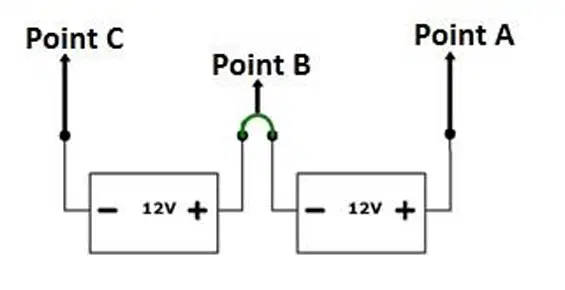
In the figure below, what is the voltage reading at point A with point B as a reference?
+12V
0V
-12V
+24V
In the same figure, what is the voltage reading at point A with point C as a reference?
+12V
0V
-12V
+24V
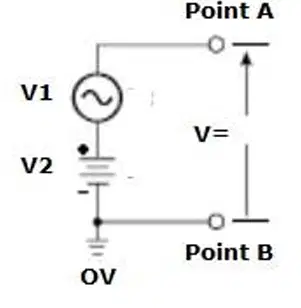
In this figure, what is voltage level between point A and point B?
V1 + V2
V1
V2
V2V1
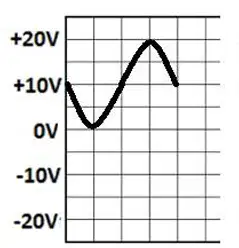
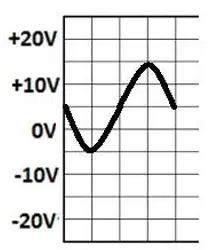
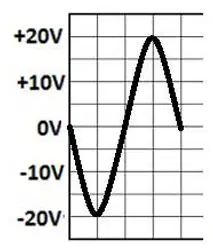
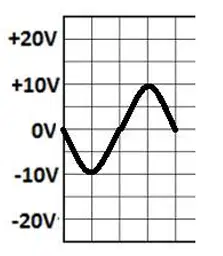
Refer to the figure below. If V1=20 Vpp and V2=5V , which of the following waveform represents the output voltage V?
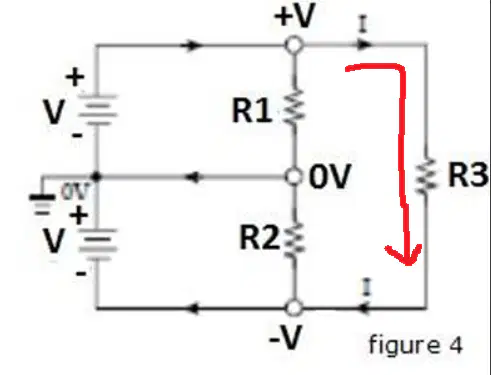
What is the current in R3?
I=R32V
I=R3V
I=R3(+V−V)
I=I2−I1
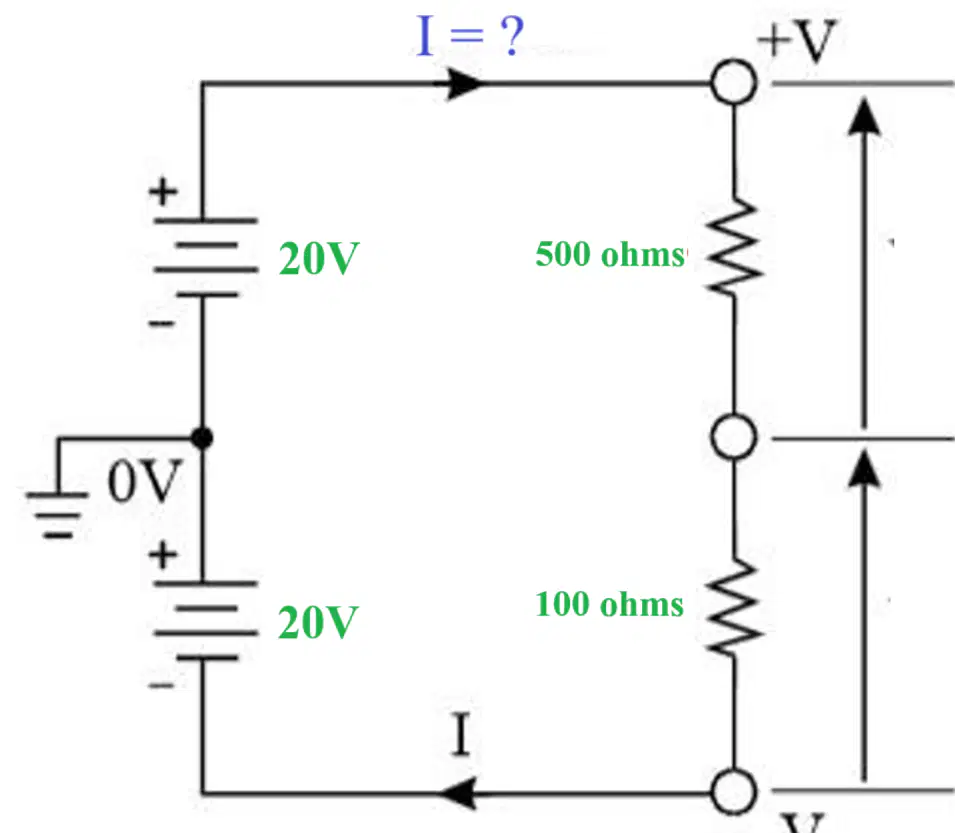
Determine the current "I"
66.7 mA
0.067 mA
4.8 A
0.0897 A

Determine I1
0.24A
0.1A
0.48A
480mA

Determine I2
0.15A
120mA
0.24A
240mA
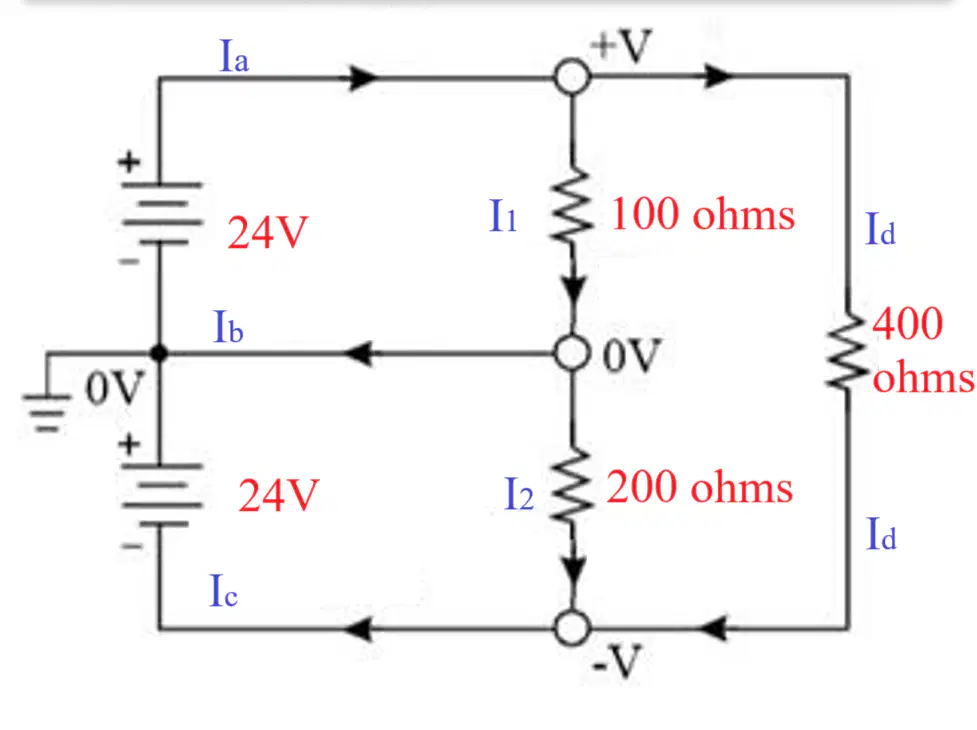
Determine Id
0.12A
120uA
0.16A
240mA
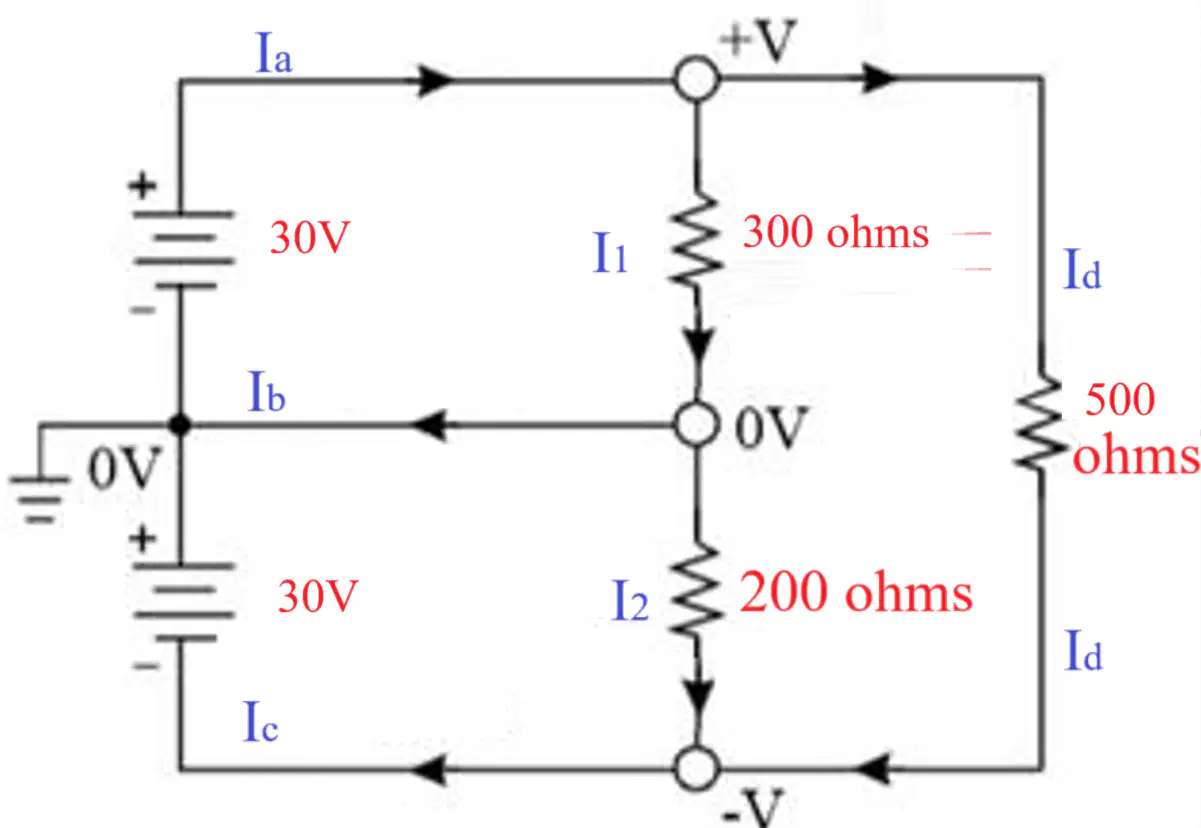
Determine Ic
0.12A
120uA
0.27A
240mA

Determine Ib
-0.05A
120mA
0.16A
240mA

what is the diagram shown?
Wheatstone bridge
London bridge
Wheat Bread
full-wave rectifier
In a "balanced" Wheatstone bridge, ____.
IR3=0
IR3=1A
IR3=π
IR3=maximum
In a "balanced" Wheatstone bridge, ____.
R4R1=R5R2
R2R1=R5R4
V1=V2
IR3=0
In an "unbalanced" Wheatstone bridge, ____.
R4R1=R5R2
I1R1=I2R2
V1=V2
IR3=0
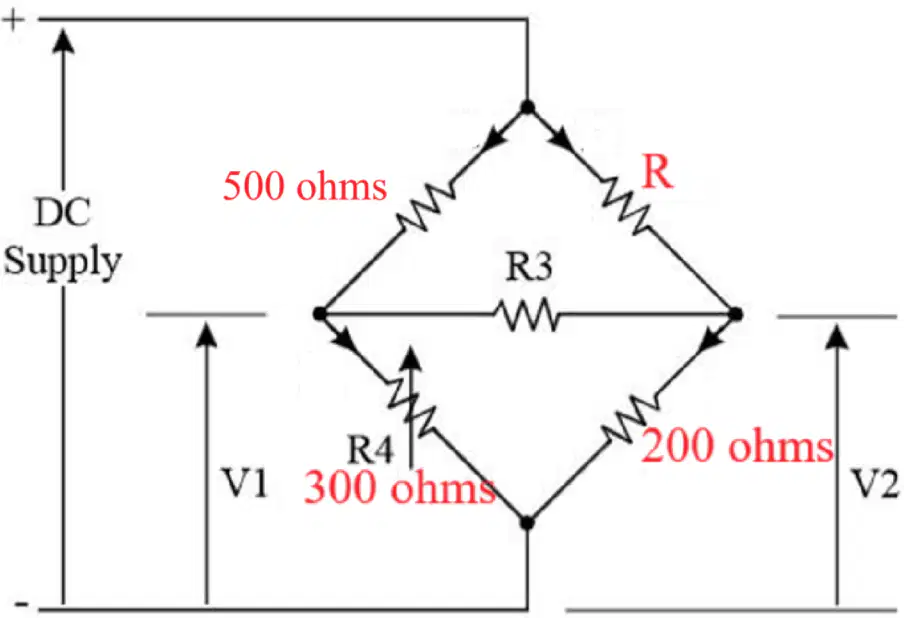
Assume a balanced Wheatstone bridge. Determine "R".
66.7 ohms
333.33 ohms
100 ohms
133 ohms

