
 Worksheets
Electrical Hazards and Safety Devices
Total questions: 43
Worksheet time: 22mins
Identify the three main electrical hazards
Electric shock, fire, and tripping
Electric shock, noise, and dust
Fire, water leakage, and falling objects
Burns, cold, and poor lighting
One of the three main electrical hazards is _________.
Electrical shock
Water leakage
Broken glass
Chemical burns
Fill in the blank: One of the three main electrical hazards is _________.
Trip hazards
Water leaks
Loud noises
Poor lighting
To protect yourself from an electrical shock, you should keep devices _______ and don’t use them with wet hands.
away from water
close to your body
under your pillow
near open flames
To protect yourself from an electrical shock, you should not fix electrical devices unless the _______ is off.
power
light
fan
switch
To protect yourself from an electrical shock, you should always _______ before working on it.
measure voltage
check the manual
tighten all screws
replace the fuse
What are some common causes of electrical fires?
Short circuits, overloaded circuits, and faulty wiring
Water leakage, poor lighting, and dust
Loud noises, open windows, and old paint
None of the above
A ________ occurs when electricity finds an unintended path, often with lower resistance, which in turn, dangerously increased current, producing significant heat.
short circuit
open circuit
resistor
fuse
Overloaded circuits occur when too much ________ flows through the circuit, usually because of too many components connected in parallel, exceeding its capacity.
electrical current
resistance
voltage
power
Overloaded circuits can cause components to overheat and potentially lead to fires or damage.
True
False
What is the most immediate danger of unsecured electrical cords?
Fire hazard
Tripping with them
Electric shock
Water damage
According to the passage, slips, trips, and falls account for approximately how many non-fatal injuries per year in the U.S.?
2.5 million
500,000
1 million
4 million
Which of the following is a recommended way to protect people from trip hazards with electric wires?
Keep cords out of walkways
Leave cords loose on the floor
Use extra-long cords
Place cords in the middle of the room
Securing cords with clips or tape can help prevent them from moving around and causing trip hazards.
True
False
Why is it recommended to use shorter cords if possible?
Extra-long cords create tangles and loops, increasing the risk of trip hazards.
Shorter cords are more expensive than longer ones.
Shorter cords reduce the power supply to devices.
Shorter cords are more difficult to store.
According to the passage, name four of the most common electrical safety devices.
Circuit breakers, fuses, GFCI, and grounding
fuses, GFCI, light bulbs and switches
Circuit breakers, fuses, extension cords and plugs
Circuit breakers, fuses, CIFG, and grounding
What does GFCI stand for?
Ground Fault Circuit Interrupters
General Fuse Control Indicator
Ground Flow Current Integrator
Gas Flow Control Interface
What is the main function of circuit breakers and fuses?
To increase the flow of electricity
To interrupt the flow of electricity when the current exceeds a safe level
To store electricity
To generate electricity
Which of the following statements is true?
Fuses can be reset after they blow
Circuit breakers need to be replaced after they trip
Circuit breakers can be reset, while fuses need to be replaced once they blow
Both fuses and circuit breakers need to be replaced after use
Which of the following describes a thermal trip?
An electromagnet trips the breaker instantly when a high-current short circuit happens.
A metallic strip bends when excessive heat from an overload occurs, triggering the trip mechanism.
The breaker resets automatically after a fault.
The breaker is only used in commercial settings.
Which type of circuit breaker has a delay before tripping to allow small and quick current surges while still protecting against dangerous overloads?
Magnetic circuit breaker
Thermal circuit breaker
Automatic circuit breaker
Manual circuit breaker
A thermal circuit breaker trips almost instantaneously to protect against severe short circuits.
True
False
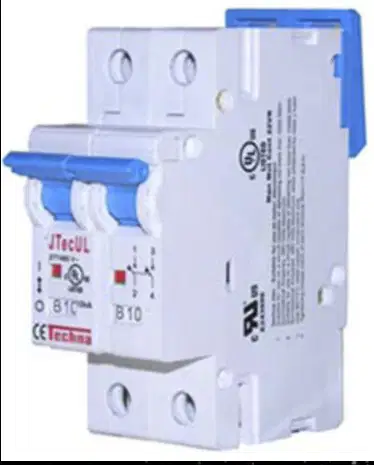
What should you do when a circuit breaker trips?
Replace the circuit breaker
Switch it off and on to reset
Ignore it
Call an electrician
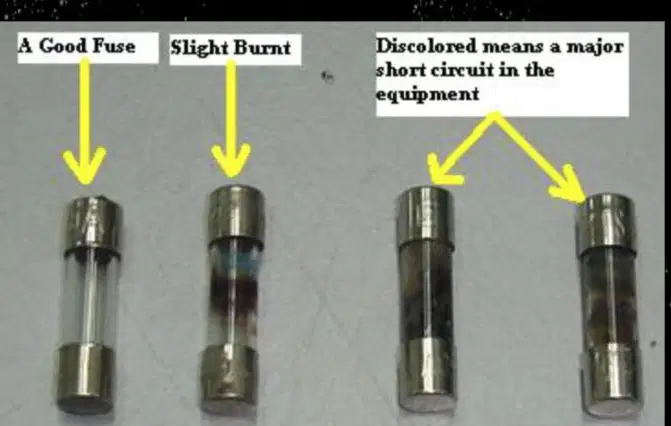
When a fuse blows, what should you do to restore the circuit?
Switch it off and on
Replace the fuse
Ignore it
Call an electrician
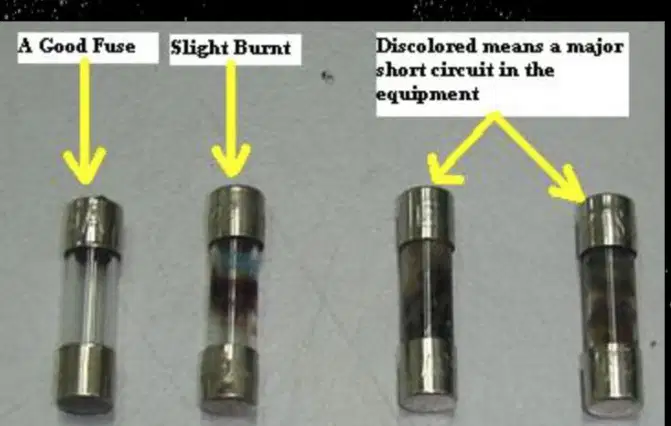
A discolored fuse means a major short circuit in the equipment.
True
False
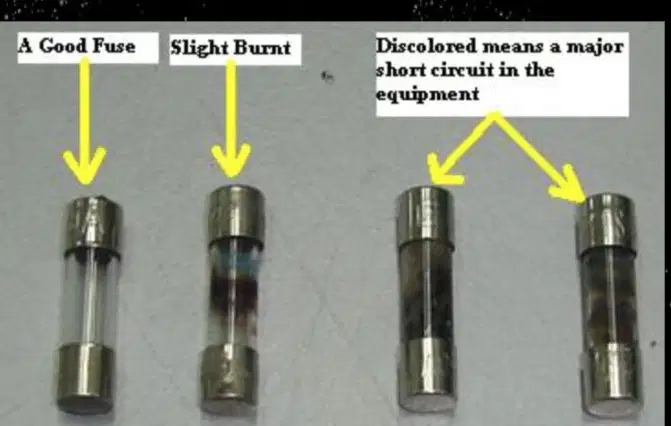
Which of the following images shows a good fuse?
First fuse
Second fuse
Third fuse

What is the main purpose of a ground in a building's wiring system?
To create a safe path into the earth if something goes wrong.
To increase the voltage in the circuit.
To reduce the amount of wiring needed.
To provide power to backup systems.
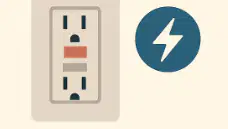
A GFCI shuts off power instantly if it senses electricity going where it shouldn't, like through water or a person.
True
False
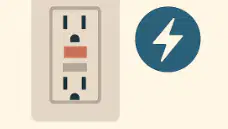
Where are you most likely to see GFCI outlets?
Bedrooms
Bathrooms, kitchens, or outdoor outlets where water is nearby
Living rooms
Garages

Fill in the blank: A ground has _________ to the earth, which creates a safe path if something goes wrong.
High voltage
Low resistance
Affinity
A circuit
What offers a 'Ground' in electrical terms? Fill in the blank: Ground = _________.
safe escape route for electricity
source of electrical power
insulator for current
device for increasing voltage
What is the function of a Ground Fault Circuit Interrupter (GFCI)? Fill in the blank: Ground Fault Circuit Interrupter = quick "__________" when electricity leaks.
shut-off switch
power booster
voltage increaser
current amplifier
The best method to verify a piece of equipment is properly grounded is:
Use a multimeter to measure the resistance between the equipment's ground terminal and a known-good ground source.
Visually inspecting the equipment for a ground wire.
Touching the equipment to see if you feel a shock.
Assuming it is grounded if it is plugged in.
It is important to measure voltage before working on electrical equipment because:
it ensures the equipment is de-energized and safe to handle.
it increases the current flow in the circuit.
it guarantees the equipment will work faster.
it prevents the need for any safety equipment.
The immediate danger of unsecured electrical cord is:
Tripping hazard
Improved lighting
Reduced electricity bill
Better device performance
The action that should be taken when a circuit breaker trips is:
Reset the breaker turning off and on.
Ignore the tripped breaker and continue using the circuit.
Replace the breaker immediately without checking the cause.
Increase the load on the circuit to test the breaker.
The feature of a ground that creates a safe path for current is:
low resistance to earth
high voltage to earth
open circuit from earth
insulation from earth
A fuse should be replaced when:
it has blown or melted due to excessive current.
it is still functioning properly.
the circuit is working normally.
there is no sign of damage.
As a general rule, you should measure ______ before working on electrical equipment.
the voltage
the current
the resistance
the temperature
A circuit breaker that has a delay before it trips is called:
Instantaneous circuit breaker
Thermal circuit breaker
Magnetic circuit breaker
Grounded circuit breaker

keeps them insulated

When a short-circuit takes place, the fuse wire melts and breaks the __________.
circuit
electric shock
Earth
kilowatt-hour.

What is it called when electricity has a path to the earth wire (for safety)?
ground
double insulated
trip switch
potential divider
circuit breaker

