
 Worksheets
Why Human Flight?
Total questions: 45
Worksheet time: 23mins
According to Wilbur Wright, the desire to fly is an idea handed down to us by our ancestors who looked enviously on the birds soaring freely through ________ on the infinite highway of the air.
space
clouds
wind
light
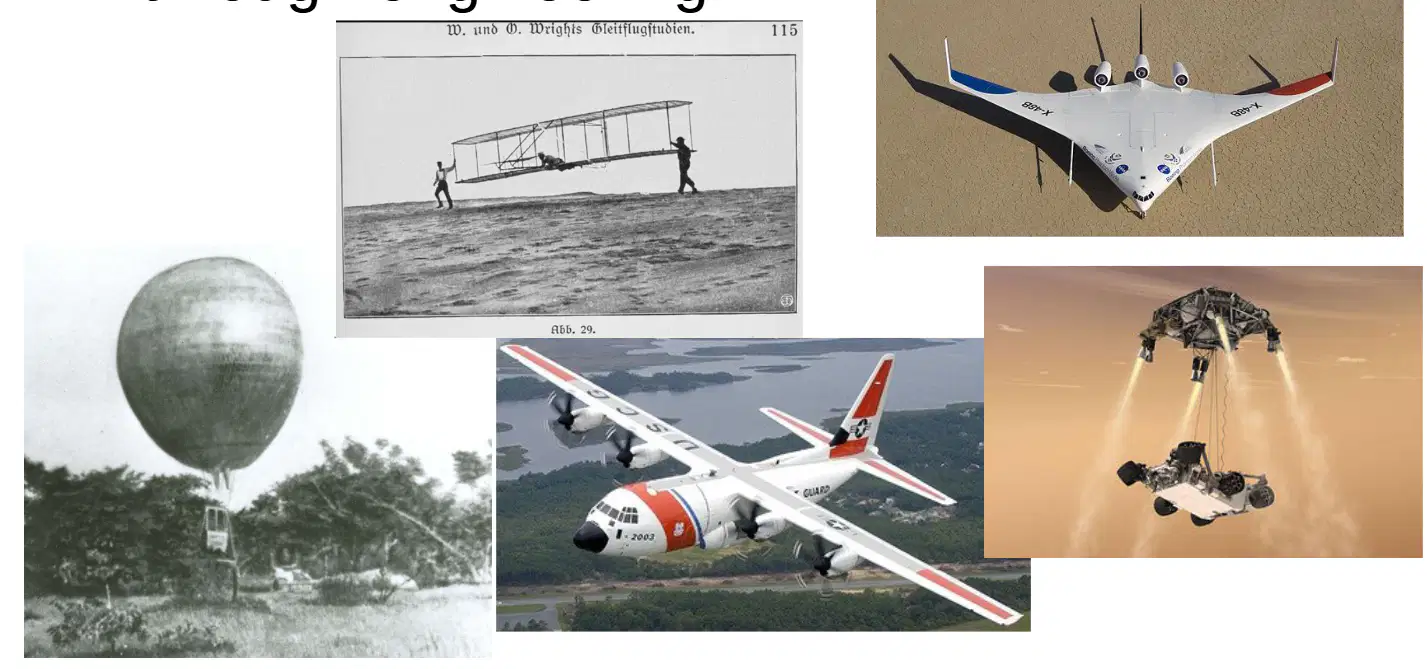
The progress in Aerospace Engineering was achieved through which of the following?
Advancements in technology and scientific research
Random chance and luck
Ignoring scientific principles
Stagnation and lack of innovation
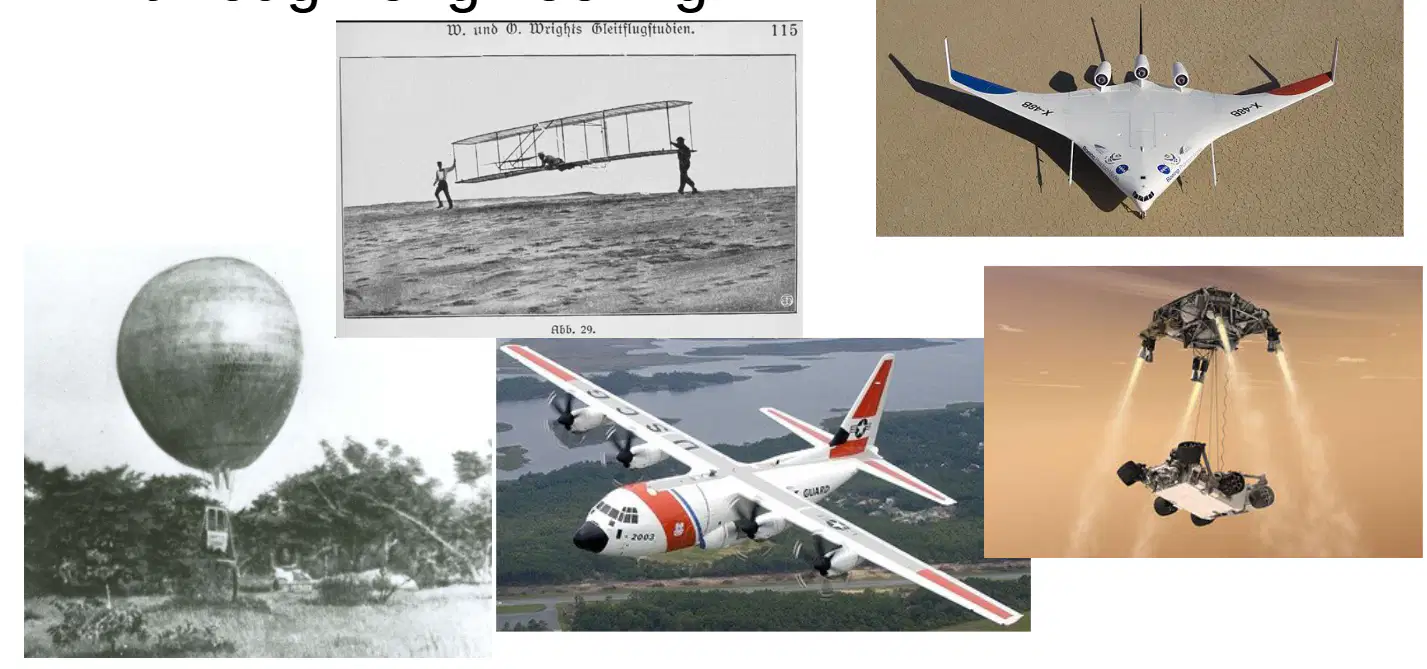
Aerospace Engineering: Science, technology, and math are applied through engineering by:
Designing and building aircraft and spacecraft using scientific principles
Focusing only on theoretical concepts without practical application
Ignoring technological advancements in engineering projects
Relying solely on artistic skills for engineering solutions
Fill in the blank: Creative ______ is crucial in early aerospace engineering.
thinking
drawing
cooking
dancing
What prevented Leonardo da Vinci's idea of a flying machine from becoming reality over 600 years ago?
Lack of interest
Technological limitations
Political reasons
Financial issues
Designing and flying a lighter than air vehicle was an important step.
True
False
Who were the inventors associated with lighter than air flight in 1782?
Wright brothers
Montgolfier brothers
Curie brothers
Lumière brothers
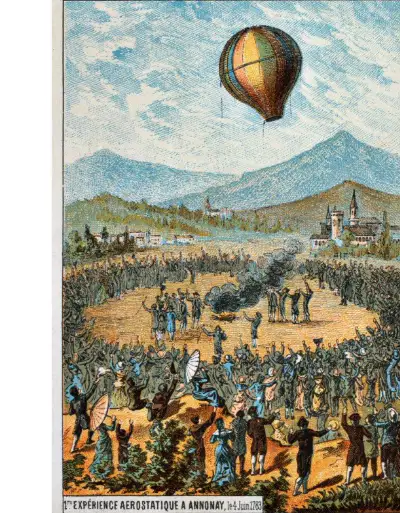
What inspired lighter than air flight?
Rising smoke
Falling rain
Blowing wind
Shining sun
Fill in the blank: In one century, human flight progressed from a flight of 6.8 mph to ________ of mph for aircraft and tens of thousands mph for spacecraft.
thousands
hundreds
dozens
millions
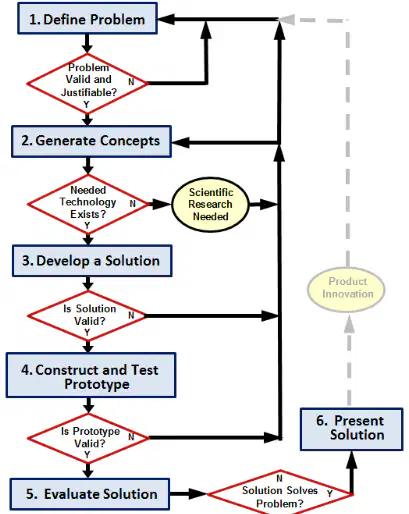
According to the process diagram, what is the first step in the engineering design process?
Generate Concepts
Define Problem
Develop a Solution
Evaluate Solution
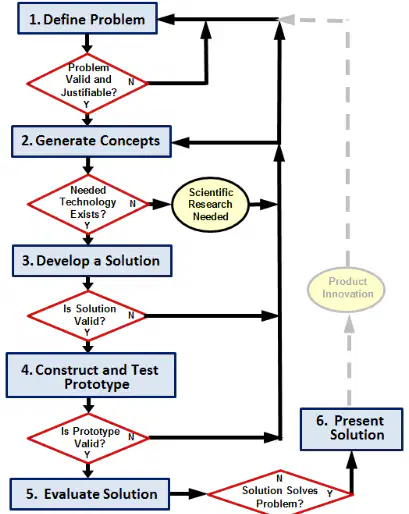
The engineering design process includes the step 'Construct and Test Prototype'.
True
False
Fill in the blank: The process of image, design, test, fail, learn, and try again is important for ________ innovation.
product
financial
historical
seasonal
Which of the following was a catalyst for the growth of commercial aviation?
Legislation
Competition and fame
Need for fast transportation
All of the above
Who was the first person to make a non-stop crossing of the Atlantic Ocean in 1927?
Amelia Earhart
Charles Lindbergh
Orville Wright
Howard Hughes
Who was the first woman to make a non-stop crossing of the Atlantic Ocean in 1932?
Amelia Earhart
Bessie Coleman
Harriet Quimby
Jacqueline Cochran
The need for fast transportation in commercial aviation was driven by which of the following?
Mail delivery
Paying passengers
Both A and B
None of the above
During World War I through the start of WWII, what did engineers develop to improve aircraft?
More efficient aircraft and better engines
Heavier armor for ground vehicles
Advanced submarine technology
Improved trench warfare tactics
Which of the following advances in aerospace engineering and manufacturing capability were made possible during World War II?
Aircraft performance
Navigation aids
RADAR
All of the above
Fill in the blank: Advances in aerospace engineering and manufacturing capability during World War II made possible improvements in ________, navigation aids, and RADAR.
aircraft performance
food preservation
medical imaging
textile production
Who was the pilot that flew Mach 1.06 (~700 mph @ 43,000 ft) in 1947?
Captain Chuck Yeager
Neil Armstrong
Amelia Earhart
Howard Hughes
Who conceptualized the helicopter around 1480?
Leonardo da Vinci
Isaac Newton
Galileo Galilei
Nikola Tesla
Who engineered the wide scale production of helicopters in 1944?
Igor Sikorsky
Howard Hughes
Wernher von Braun
Orville Wright
Which of the following is NOT mentioned as a step in the engineering process for rotorcraft?
Design
Test
Succeed
Improve
What term does the Federal Aviation Administration (FAA) use for what is also referred to as a Drone?
Small Unmanned Aircraft System (sUAS)
Remote Piloted Vehicle (RPV)
Autonomous Flying Device (AFD)
Personal Aerial Vehicle (PAV)
Which of the following is NOT a type of Small Unmanned Aircraft System (sUAS)?
Drone
Helicopter
Quadcopter
UAV, Unmanned Aerial Vehicle
The term 'UAV' stands for what in the context of Small Unmanned Aircraft Systems?
Unmanned Aerial Vehicle
Universal Airborne Vehicle
Unidentified Aerial Vehicle
United Aerial Venture
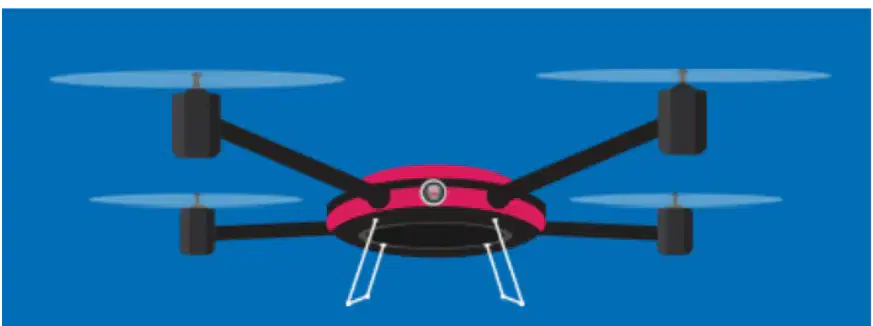
The image below shows an example of which type of Small Unmanned Aircraft System (sUAS)?
Drone (specifically a multirotor or quadcopter)
Fixed-wing glider
Helicopter (full-size)
Hot air balloon
According to the rules for Small Unmanned Aircraft Systems, what is the weight range for which you must register a sUAS?
Less than 0.55 lb
Greater than 0.55 lb and less than 55 lb
More than 55 lb
Any weight
What is the maximum altitude you can fly a Small Unmanned Aircraft System (sUAS)?
100 feet
200 feet
400 feet
1000 feet
Fill in the blank: When flying a Small Unmanned Aircraft System (sUAS), you must fly within _________.
line of sight
5 miles of an airport
the clouds
beyond visual range
If you want to fly a Small Unmanned Aircraft System (sUAS) for work, what do you need?
A Remote Pilot Airman Certificate
A Driver's License
A Student Pilot Certificate
A Commercial Pilot License
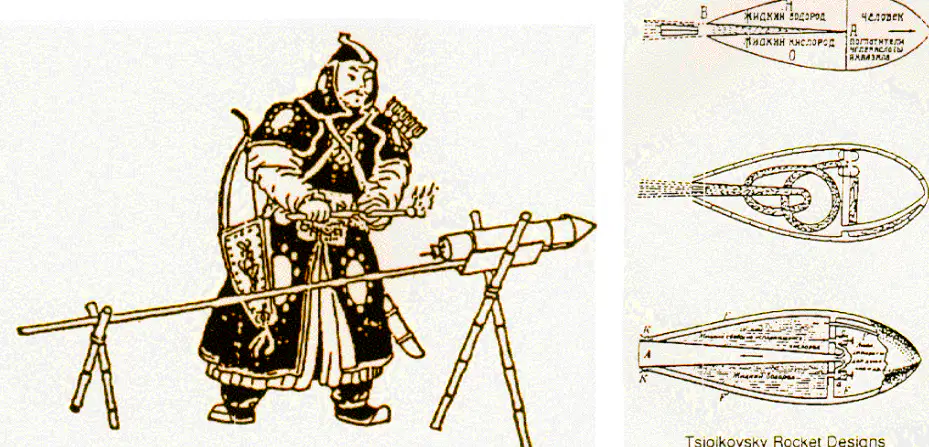
Who is credited with using rockets in 1,232 AD based on the development of black powder?
Russians
Chinese
Americans
Indians
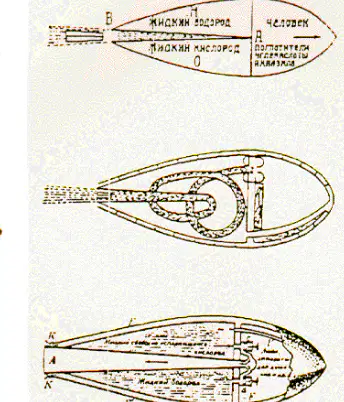
Which Russian space scientist developed equations in 1903 to reach space?
Einstein
Tsiolkovsky
Newton
Gagarin
Who is considered the father of modern rocket propulsion?
Isaac Newton
Robert Goddard
Wernher von Braun
Elon Musk
In what year was the first liquid fueled rocket launched?
1926
1932
1915
1945
Competition Drives Accomplishment: The United States successfully launched its first satellite, Explorer I, in which year?
1958
1955
1962
1949
The US passed the National Aeronautics and Space Act creating NASA in which month and year?
October, 1958
July, 1957
January, 1959
March, 1958
The space race between the United States and the Soviet Union was similar to which event in 1927?
Lindbergh crossing the Atlantic to win a prize
The signing of the Kellogg-Briand Pact
The founding of the Academy Awards
The opening of the first talking movie theater
In what year did President Kennedy proclaim that the US should commit to landing on the moon within the decade?
1957
1961
1969
1972
What did the US need to figure out after President Kennedy's proclamation about landing on the moon?
How to land on the moon within the decade.
How to build a new White House.
How to end World War II.
How to colonize Mars.
How many years of engineering, failure, and learning did it take for the US to achieve the goal of landing on the moon?
Nine years
Five years
Twelve years
Fifteen years
Who won the race to the moon?
America
Russia
China
India
Who was the first person to step on the moon on July 20, 1969?
Neil Armstrong
Buzz Aldrin
Yuri Gagarin
Michael Collins
What is the key to success mentioned in the context of the Space Race?
Determination
Luck
Wealth
Fame
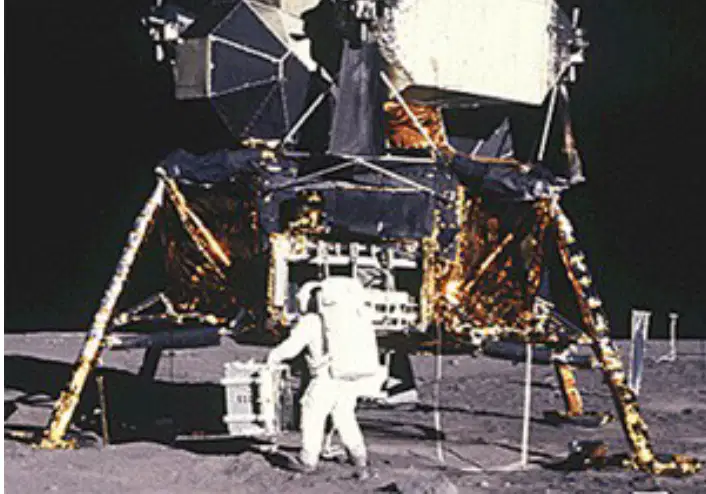
Look at the image below. What does it show about the Space Race?
key events and achievements during the Space Race.
famous battles from World War II.
the development of modern computers.
the construction of the Great Wall of China.

