
NEW
Font size
 Worksheets
Matter & Gas Laws
Total questions: 50
Worksheet time: 26mins
Define the term: Matter.
anything that has mass and takes up space.
energy that cannot be seen or touched.
can only be found in liquid form.
a force that causes objects to move.
What is the Kinetic Molecular Theory?
the behavior of particles in matter; it states that all matter is made of particles that are in constant motion.
states that all matter is made of stationary particles that do not interact.
energy is created from chemical reactions only.
the arrangement of electrons in an atom.
Define the term: Solid.
A solid is a state of matter with a definite shape and volume.
A solid is a state of matter with no definite shape but a definite volume.
A solid is a state of matter with no definite shape and no definite volume.
A solid is a state of matter that can be easily compressed.
Define the term: Liquid.
A liquid is a state of matter with a definite volume but no definite shape.
A liquid is a state of matter with a definite shape and volume.
A liquid is a state of matter with no definite volume or shape.
A liquid is a state of matter with a definite shape but no definite volume.
Define the term: Gas.
A gas is a state of matter with no definite shape or volume.
A gas is a solid with a fixed shape and volume.
A gas is a liquid with a definite volume but no definite shape.
A gas is a type of energy that cannot be seen or touched.
What is thermal energy?
Thermal energy is the total kinetic energy of the particles in a substance.
Thermal energy is the energy stored in the nucleus of an atom.
Thermal energy is the energy an object has due to its position above the ground.
Thermal energy is the energy produced by moving electric charges.
What is the definition of temperature?
Temperature is a measure of the average kinetic energy of the particles in a substance.
Temperature is the total mass of a substance.
Temperature is the amount of space a substance occupies.
Temperature is the force exerted by a substance.
the process of a liquid changing into a solid.
Sublimation
Melting
Evaporation
Freezing
the process of a solid changing into a liquid.
Condensation
Melting
Freezing
Evaporation
the process of a liquid changing into a gas at the surface of the liquid.
Evaporation
Condensation
Sublimation
Freezing
the process of a gas changing into a liquid.
Evaporation
Condensation
Melting
Freezing
the process of a solid changing directly into a gas without becoming a liquid first.
Sublimation
Condensation
Melting
Evaporation
What are physical properties?
characteristics of a substance that can be observed or measured without changing the substance's identity.
characteristics that can only be observed during a chemical reaction.
the ability of a substance to conduct electricity only.
the changes that occur when a substance is mixed with water.
What is a physical change?
a change that creates a new substance with different properties.
a change in a substance that does not change its identity.
always involves a chemical reaction.
cannot be reversed under any circumstances.
Define the term: Chemical change.
A chemical change is a change in which one or more substances are converted into different substances.
A chemical change is a change in the physical state of a substance without forming a new substance.
A chemical change is a temporary change that can be easily reversed.
A chemical change is a change in shape or size of a substance.
What is an element?
a pure substance that cannot be broken down into simpler substances by chemical means.
a mixture of two or more substances that can be separated by physical means.
a substance that can be broken down into simpler substances by chemical means.
a compound formed by the combination of two or more atoms.
a substance made of two or more elements that are chemically combined.
mixture of elements
element
compound
mixture
Define the term: Mixture.
A mixture is a combination of two or more substances that are not chemically combined.
A mixture is a pure substance made of only one type of atom.
A mixture is a substance that cannot be separated by physical means.
A mixture is a compound formed by a chemical reaction between elements.
What is a homogeneous mixture?
a mixture in which the composition is uniform throughout.
a mixture in which the components can be easily distinguished.
a mixture that always contains only one substance.
a mixture in which the composition is not uniform throughout.
a mixture in which the composition is not uniform throughout.
heterogeneous mixture
a simple solution
homogeneous mixture
compound
Define the term: Solution.
A solution is a homogeneous mixture of two or more substances.
A solution is a pure element found in nature.
A solution is a type of chemical reaction.
A solution is a solid formed from two metals.
the substance that is dissolved in a solution.
solute
solution
solvent
mixture
Define the term: Solvent.
A solvent is the substance that dissolves the solute in a solution.
A solvent is the substance that is dissolved in a solution.
A solvent is always a solid in a solution.
A solvent is the product formed after a chemical reaction.
What is volume?
the color of an object.
the weight of an object.
the amount of space an object or substance occupies.
the temperature of an object.
the force exerted per unit area.
temperature
Gas Law
Volume
Pressure
What is Boyle’s Law?
Boyle’s Law states that the pressure of a gas increases as the volume decreases, provided temperature is constant.
Boyle’s Law states that the temperature of a gas increases as the pressure increases, provided volume is constant.
Boyle’s Law states that the volume of a gas increases as the temperature increases, provided pressure is constant.
Boyle’s Law states that the pressure of a gas decreases as the temperature increases, provided volume is constant.
What is Charles’ Law?
Charles’ Law states that the pressure of a gas increases as the temperature decreases, provided volume is constant.
Charles’ Law states that the volume of a gas increases as the temperature increases, provided pressure is constant.
Charles’ Law states that the volume of a gas decreases as the temperature increases, provided pressure is constant.
Charles’ Law states that the pressure of a gas is directly proportional to its volume, provided temperature is constant.
What is Gay-Lussac’s Law?
Gay-Lussac’s Law states that the temperature of a gas decreases as the pressure increases, provided volume is constant.
Gay-Lussac’s Law states that the volume of a gas increases as the pressure increases, provided temperature is constant.
Gay-Lussac’s Law states that the pressure of a gas decreases as the temperature increases, provided volume is constant.
Gay-Lussac’s Law states that the pressure of a gas increases as the temperature increases, provided volume is constant.
Which describes the particle arrangement for a solid, liquid, and gas?
A: Solid - closely packed, Liquid - slightly apart, Gas - far apart
B: Solid - far apart, Liquid - closely packed, Gas - slightly apart
C: Solid - slightly apart, Liquid - far apart, Gas - closely packed
D: Solid - far apart, Liquid - slightly apart, Gas - closely packed
Matter changes between states through processes such as melting, freezing, evaporation, and condensation.
by changing temperature or pressure
by changing color
by breaking into pieces
by mixing with other substances
Which of the following is an example of all the following processes: freezing, melting, evaporation, condensation, and sublimation?
Water turning to ice, ice melting, water evaporating, steam condensing, and dry ice sublimating
Water boiling, rain falling, snow melting, fog forming, and salt dissolving
Ice melting, sugar dissolving, water freezing, oil evaporating, and glass condensing
Water freezing, wood burning, metal rusting, plastic melting, and paper sublimating
Which of the following lists contains only examples of physical properties?
Color, density, melting point
Rusting, burning, rotting
Digestion, combustion, fermentation
Photosynthesis, oxidation, respiration
Which of the following lists contains only examples of chemical properties?
Flammability, reactivity with acid, ability to rust
Color, melting point, density
Boiling point, solubility, hardness
Texture, mass, volume
Select the option that lists 2 examples of a physical change.
Melting ice and tearing paper
Burning wood and rusting iron
Cooking an egg and baking a cake
Digesting food and burning gasoline
Which of the following lists contains examples of a chemical change?
Burning wood and rusting iron
Melting ice and boiling water
Dissolving sugar and breaking glass
Freezing water and tearing paper
Which of the following lists the 6 pieces of evidence for a chemical change?
Color change, temperature change, gas production, formation of a precipitate, light emission, odor change
Color change, melting, freezing, boiling, dissolving, condensation
Temperature change, size change, shape change, dissolving, freezing, boiling
Gas production, melting, freezing, color change, dissolving, condensation
Which of the following lists contains only examples of an element?
Oxygen and Gold
Water and Salt
Carbon Dioxide and Sugar
Air and Sand
Which of the following lists contains only examples of a compound?
Water (H2O) and carbon dioxide (CO2)
Oxygen (O2) and nitrogen (N2)
Iron (Fe) and gold (Au)
Hydrogen (H2) and helium (He)
Which of the following lists contains examples of a mixture?
Salt and water, air
Gold and silver, diamond
Oxygen and hydrogen, iron
Copper and zinc, helium
Which of the following lists contains 2 examples of a solution?
Salt water and sugar water
Sand and iron filings
Oil and water
Vinegar and oil
According to Boyle’s Law, increasing the volume of a gas will cause the pressure to:
decrease
increase
remain the same
double
According to Charles’ Law, increasing the volume of a gas will result in which of the following changes to its temperature?
The temperature increases.
The temperature decreases.
The temperature remains the same.
The temperature becomes zero.
According to Gay-Lussac’s Law, what happens to pressure when temperature increases or decreases?
Pressure increases with increasing temperature and decreases with decreasing temperature.
Pressure decreases with increasing temperature and increases with decreasing temperature.
Pressure remains constant regardless of temperature changes.
Pressure fluctuates randomly with temperature changes.
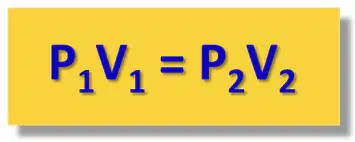
Solve the following word problem using Boyle’s Law: A gas with a volume of 4 L at a pressure of 205 kPa is allowed to expand to a volume of 12 L. What is the pressure in the container if the temperature remains constant?
68.3 kPa
102.5 kPa
34.1 kPa
615 kPa
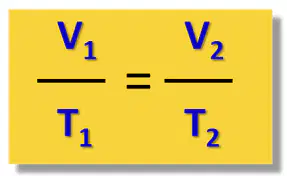
Solve the following word problem using Charles’ Law: If 15 L of neon at 298.15 K is allowed to expand at 45 L, what must the new temperature be to maintain constant pressure?
894.45 K
596.30 K
149.07 K
223.61 K

Solve the following word problem using Gay-Lussac’s Law: The gasses in a hair spray can are at a temperature of 27°C and a pressure of 30 lbs/in². If the gasses in the can reach a pressure of 90 lbs/in², the can will explode. To what temperature must the gasses be raised in order for the can to explode? Assume constant volume. (Don’t forget to convert to Kelvins first)
900.45 K (or 627°C)
300.15 K (or 27°C)
600.25 K (or 327°C)
1200.45 K (or 927°C)
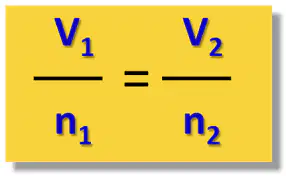
Solve the following word problem using Avogadro’s Law: A 6.0 L sample at 25°C and 2.00 atm of pressure contains 0.5 mole of a gas. If an additional 0.25 mole of gas at the same pressure and temperature are added, what is the final total volume of the gas?
3.0 L
7.5 L
12.0 L
8.0 L

Solve the following word problem using the Ideal Gas Law: If I have an unknown quantity of gas at a pressure of 1.2 atm, a volume of 31 liters, and a temperature of 87°C, how many moles of gas do I have?
1.25 moles
10.4 moles
22.8 moles
5.7 moles
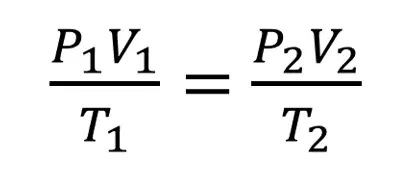
Solve the following word problem using the Combined Gas Law: A gas balloon has a volume of 106.0 liters when the temperature is 45.0 °C and the pressure is 740.0 atm of mercury. What will its volume be at 20.0 °C and 780.0 atm of mercury pressure?
92.6 L
110.5 L
85.7 L
120.0 L

The data table below shows that as the pressure of a gas sample was changed, the volume of the gas changed. The pressure was measured in atmospheres (atm) and the volume was measured in milliliters (mL).
According to the data table, as the pressure of the gas increases, the volume of the gas:
decreases
increases
remains the same

