
 Worksheets
USG Honors: Unit 1 Review
Total questions: 97
Worksheet time: 2hrs 52mins
What is the definition of government?
A system of social control under which the right to make laws and the right to enforce them is vested in a particular group in society.
A group of people who organize events in a community.
A system where everyone in society has equal power to make laws.
A process of electing leaders for entertainment purposes.
Which of the following best describes the main function of a government?
Organizing social events
Making and enforcing laws
Teaching in schools
Running businesses
Why is the right to make and enforce laws typically given to a particular group in society?
To ensure social control and order
To allow everyone to have equal power
To promote only economic growth
To entertain the public
Which of the following is a type of government where power is held by the people, often through elected representatives?
Democracy
Dictatorship
Theocracy
Anarchy
What is the term for a government ruled by a king or queen?
Monarchy
Oligarchy
Theocracy
Democracy
Which type of government is characterized by the absence of any governing authority?
Anarchy
Monarchy
Dictatorship
Democracy
If a country is ruled by a small group of people, which type of government does it have?
Oligarchy
Theocracy
Monarchy
Anarchy
Which type of government is based on religious authority?
Theocracy
Democracy
Dictatorship
Oligarchy
A country where one person has absolute power and control is an example of which type of government?
Dictatorship
Democracy
Monarchy
Theocracy
Compare and contrast anarchy and dictatorship in terms of the presence or absence of government authority.
Anarchy has no government authority, while dictatorship has absolute government authority under one person.
Both anarchy and dictatorship have no government authority.
Anarchy has a king or queen, while dictatorship is ruled by a group.
Dictatorship is based on religious authority, while anarchy is not.
What does it mean when a government is described as "federal"?
Power is held only by the national government.
Power is divided between the state and regional government.
Power is given to a king or queen.
Power is only in the hands of the military.
Which type of democratic government was practiced in Ancient Athens?
Direct
Representative
Monarchy
Oligarchy
How was the law-making body usually determined in Ancient Athens' direct democracy?
By inheritance
By lottery system
By military service
By wealth
What was a major problem with the direct democracy system in Ancient Athens?
It was too expensive
It proved to be ineffective
It excluded all citizens
It was controlled by a single ruler
Why might a lottery system for selecting lawmakers be considered both fair and problematic?
It gives everyone an equal chance but may select unqualified individuals
It always selects the most experienced people
It ensures only the wealthy are chosen
It prevents any laws from being made
Which of the following countries uses a parliamentary system of government?
United States
South Korea
Great Britain
Brazil
In a parliamentary system, from where is the executive branch drawn?
The judiciary
The legislature
The military
The public
What is a key difference between parliamentary and presidential systems of government?
The executive branch is always elected by the people in both systems
The executive branch is drawn from the legislature in a parliamentary system, but is separate in a presidential system
The legislative branch is more powerful in presidential systems
Both systems have the same structure
Why might a country choose a parliamentary system over a presidential system? Use evidence from the characteristics of each system to support your answer.
To ensure the executive is directly accountable to the legislature
To keep the executive and legislative branches completely separate
To allow the military to control the government
To avoid having a prime minister
Which of the following is necessary for establishing justice, as described in the material?
Laws should be enforced randomly
Laws should be enforced only for certain groups
Laws should be transparently, consistently enforced, and impartially judged
Laws should be ignored if inconvenient
Which system is mentioned as part of establishing justice?
Education System
Court System
Transportation System
Health System
Which of the following is a reason for establishing a strong military according to the concept of "Provide for the Common Defense"?
To increase international trade
To establish an army and navy (air force, space force)
To promote cultural exchange
To improve public transportation
Why is it important for a country to have a strong military, based on the information provided?
To ensure national security and defense
To increase tourism
To reduce taxes
To promote sports
How does the establishment of an air force and space force contribute to the common defense?
By providing entertainment for citizens
By protecting the nation from threats in the air and space
By improving agricultural production
By supporting local businesses
Which of the following is NOT listed as a basic need provided to promote the general welfare?
Transportation
Agriculture
Entertainment
Housing
What is one way the government can ensure equal opportunity according to the material?
By providing education
By limiting transportation
By reducing housing
By banning agriculture
Which of the following best describes the purpose of promoting the general welfare?
Providing basic needs and ensuring equal opportunity
Increasing government power
Limiting social programs
Reducing taxes for all citizens
How does the ability to tax contribute to promoting the general welfare?
It allows the government to fund services that provide basic needs and equal opportunities.
It reduces the need for education.
It limits access to transportation.
It prevents environmental protection.
Which country was John Locke from?
France
England
Germany
Italy
According to John Locke, what are the three natural rights?
Freedom, Justice, and Equality
Life, Liberty, and Property
Power, Wealth, and Status
Speech, Religion, and Assembly
What does the concept "Consent of the Governed" mean in John Locke's philosophy?
The government can rule without the people's approval.
The people must agree to be governed for the government to be legitimate.
Only kings have the right to rule.
Laws are made by the military.
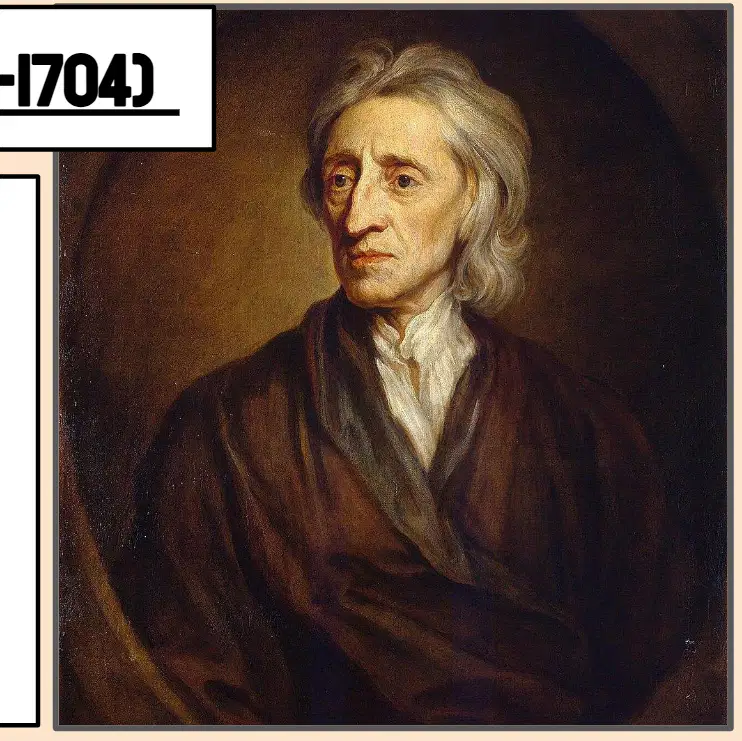
What is the significance of John Locke's ideas about natural rights in modern democracies?
They are mostly ignored in modern times.
They form the foundation for many democratic principles, such as individual freedoms and government accountability.
They only apply to monarchies.
They are only relevant to economic policies.
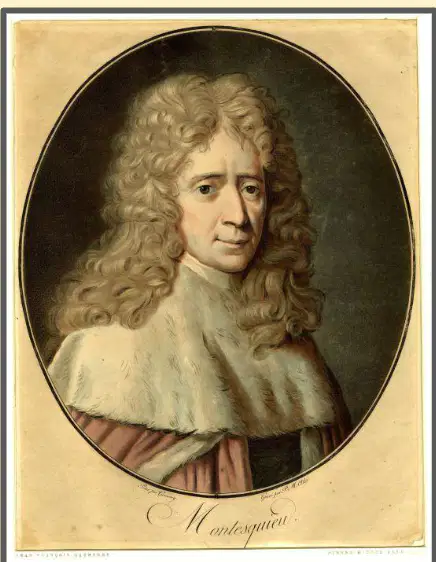
Which concept is Baron de Montesquieu most closely associated with?
Social contract
Separation of powers
Natural rights
Utilitarianism
What are the three main functions of government according to Montesquieu's idea of separation of powers?
To make laws, collect taxes, and declare war
To make laws, enforce laws, and interpret laws
To elect leaders, enforce laws, and collect taxes
To interpret laws, collect taxes, and declare war
What did Montesquieu argue was necessary for governments over large land areas?
Weak local leadership
Strong central leadership
No leadership at all
Only local leadership
Which book is Baron de Montesquieu best known for writing?
The Social Contract
The Spirit of Laws
Leviathan
Two Treatises of Government
Montesquieu was a judge from which country?
England
France
Germany
Italy
Which country was Voltaire from?
France
England
Germany
Italy
What key principle did Voltaire strongly advocate for?
Absolute monarchy
Freedom of speech/religion
Economic equality
Military expansion
Which event influenced Voltaire’s views on tolerance?
The French Revolution
The St Bartholomew Day Massacre
The American Revolution
The Glorious Revolution
What was the St Bartholomew Day Massacre?
A peace treaty between France and England
A series of targeted assassinations and mob violence against Huguenots
The start of the French Revolution
The signing of the Edict of Nantes
How did Voltaire’s experience with the St Bartholomew Day Massacre shape his beliefs?
It made him support absolute monarchy
It influenced his advocacy for tolerance and freedom of religion
It led him to reject all forms of government
It encouraged him to become a military leader
Who was the main author of the Declaration of Independence?
Benjamin Franklin
Thomas Jefferson
John Adams
George Washington
What was the primary purpose of the Declaration of Independence?
To create a new constitution
To declare colonies’ independence from Britain
To form a new government
To establish trade agreements
Which of the following is NOT listed as a key point in the Declaration of Independence?
Natural rights: life, liberty, and the pursuit of happiness
List of grievances against King George III
Assertion of the right to overthrow an oppressive government
Proposal for a new national currency
According to the Declaration of Independence, what are the natural rights mentioned?
Freedom of speech and religion
Life, liberty, and the pursuit of happiness
Right to bear arms
Right to vote
Why did the Declaration of Independence include a list of grievances against King George III?
To justify the colonies’ decision to seek independence
To request financial aid from Britain
To propose a peace treaty
To establish a monarchy in America
What was the main purpose of the Magna Carta when it was signed in 1215?
To increase the monarch's power
To limit the monarch's power
To abolish the monarchy
To create a new religion
Which principle was established by the Magna Carta?
Rule of law
Absolute monarchy
Universal suffrage
Religious freedom
Who specifically gained protection of certain rights under the Magna Carta?
All citizens
Nobles
Peasants
Merchants
How did the Magna Carta influence future legal systems?
It became the foundation for future constitutional law
It abolished all laws
It established a dictatorship
It created a new monarchy
Explain how the Magna Carta contributed to the development of constitutional law.
By establishing the rule of law and limiting the monarch’s power, it set a precedent for future legal systems to protect rights and create checks on authority.
By abolishing all previous laws and creating a new monarchy.
By giving all power to the nobles without any legal framework.
By establishing a dictatorship that ignored individual rights.
Which of the following was an early challenge faced by the government between 1781 and 1789?
Overpopulation
Financial hardships
Technological advancements
Territorial expansion
Why did the government face difficulties in making treaties during the period 1781-1789?
Treaties were too expensive
Treaties were not legitimized
Treaties were written in foreign languages
Treaties were not needed
What is one important factor that you think a government needs to be effective? (Choose the best answer based on reasoning.)
Unlimited power
Legitimacy and the ability to address financial issues
Isolation from other countries
Frequent changes in leadership
Which of the following was a weakness of the Articles of Confederation regarding taxation?
Congress could enforce tax payments directly
Congress had no power to tax and could only request money
States were not allowed to collect taxes
The president set all tax rates
What was the main problem caused by the lack of a national court system under the Articles of Confederation?
States could not collect taxes
There was no way to resolve disputes between states
The president could not enforce laws
Laws were easy to pass
Why was it difficult to pass laws under the Articles of Confederation?
Only the president could approve laws
Approval from all 13 states was needed
Approval from 9 of 13 states was needed
Congress could pass laws without any approval
Which of the following best describes the requirement for amending the Articles of Confederation?
Majority vote in Congress
Approval from the president
Unanimous consent from all states
Approval from the Supreme Court
How did the lack of an executive branch affect the government under the Articles of Confederation?
Laws were enforced by the president
There was no central leader to enforce laws
States could not act independently
Congress could enforce treaties
Explain how the independence of states under the Articles of Confederation impacted the effectiveness of federal laws or treaties. (DoK Level 3)
States always followed federal laws and treaties
States often ignored federal laws or treaties, weakening national unity
States had no say in federal matters
States enforced federal laws more strictly than Congress
Which of the following was a consequence of the weaknesses of the federal government?
The federal government was able to easily pay off war debts.
The federal government struggled to pay war debts and fund itself.
States eliminated all tariffs to encourage trade.
The federal government maintained strong national defense.
What was one economic consequence mentioned as a result of the weaknesses?
Economic stability and growth
Economic instability and inflation
Decrease in inflation
Increase in public spending
How did the states' actions affect trade according to the consequences listed?
States imposed tariffs on each other, harming trade.
States encouraged free trade among themselves.
States formed a single economic market.
States banned all forms of trade.
Which of the following best describes a national security issue caused by the weaknesses?
Strong national defense
Lack of national defense and inability to maintain public order
Increase in military spending
Formation of a national police force
Why did the federal government face difficulties in conducting foreign relations and enforcing treaties?
Because it had too much power over the states
Because of its weaknesses and lack of authority
Because it had a large standing army
Because it controlled all state governments
Suppose a country is unable to maintain public order and struggles to enforce treaties with other nations. Based on the consequences listed, what might be a likely cause?
Strong central government
Lack of national defense and weak federal authority
High economic growth
Unified trade policies among states
What economic challenges did farmers in Massachusetts face after the war, leading up to Shays' Rebellion?
Economic hardships, high taxes, and debt
Abundant harvests and low taxes
Government support and subsidies
Increased trade opportunities
Who was Daniel Shays in the context of Shays' Rebellion?
A former Revolutionary War captain and leader of the rebellion
The governor of Massachusetts
A wealthy landowner
A British general
What did the farmers demand during Shays' Rebellion?
Debt relief, tax reductions, and government reforms
More land for farming
Higher taxes on merchants
Military support from Britain
Explain why high taxes and debts were a significant problem for farmers in Massachusetts after the war.
They threatened farmers with losing their land
They increased the value of crops
They provided more government jobs
They improved trade with other states
Analyze how the demands of the farmers during Shays' Rebellion reflected their economic situation.
The demands for debt relief, tax reductions, and government reforms showed that farmers were struggling financially and needed changes to avoid losing their land.
The demands were unrelated to their economic situation and focused on political power.
The farmers wanted to increase taxes to support the government.
The demands were about expanding trade routes.
What did Shays' Rebellion expose about the federal government under the Articles of Confederation?
Its ability to maintain law and order
Its inability to maintain law and order
Its strong military power
Its economic prosperity
Which of the following was a reaction among elites to Shays' Rebellion?
Relief about the stability of the government
Fear about potential anarchy
Confidence in the Articles of Confederation
Support for weaker government
How did Shays' Rebellion influence debates about government structure in the United States?
It ended debates about government structure
It sparked debates on the need for a stronger central government
It led to support for a weaker central government
It encouraged the continuation of the Articles of Confederation
Based on the impacts of Shays' Rebellion, why might some people have argued for changes to the Articles of Confederation? (DoK Level 3: Strategic Thinking)
Because the Articles were too strong
Because the Articles failed to maintain law and order and sparked fears of anarchy
Because the Articles promoted economic growth
Because the Articles encouraged unity among all states
We supported removing power from states & giving more to a national government.
Federalists
Anti-Federalists
We wanted the legislative branch to have more power than the executive branch.
Federalists
Anti-Federalists
We did not want a single leader of the executive branch.
Federalists
Anti-Federalists
We opposed/were against the Constitution’s first draft, without a list of rights.
Federalists
Anti-Federalists
We wanted the Constitution's first draft approved, without a list of rights.
Federalists
Anti-Federalists

What does the political cartoon represent?
3/5 Compromise: every 5 slaves = 3 people for representation & taxation in Congress
5/3 Compromise: every 3 slaves = 5 people for representation & taxation in Congress
3/5 Compromise: every 3 slaves = 5 people for representation in the slave trade taxes
10/8 Compromise: every 10 slaves = 8 people for representation in the Appalachian Mountains
Which list is in order of when it occurred (earliest to most recent)?
Mayflower Compact, US Constitution, English Bill of Rights, Magna Carta
Fundamental Orders of Connecticut, Magna Carta, Articles of Confeeration, Declaration of Independence
Magna Carta, English Bill of Rights, Declaration of Independence, US Constitution
Articles of Confederation, US Constitution, Magna Carta, Declaration of Independence
True or False? The Articles of Confederation were discarded for the Constitution?
True
False

Which of the following should replace the question mark in this diagram?
Direct democracy
Great Compromise
Checks and Balances
Missouri Compromise
Who was the member keeping detailed notes at the Constitutional Convention?
Abraham Lincoln
George Washington
Benjamin Franklin
James Madison
Who was known as the father of the Constitution?
James Madison
Thomas Jefferson
George Washington
Abraham Lincoln
The representatives that attended the meeting for the Constitutional Convention were known as the what?
founders
farmers of america
presidents
framers
Who was the president of the Constitutional Convention?
James Madison
Abraham Lincoln
Benjamin Franklin
George Washington
Where did the Constitutional Convention take place?
St. Augustine, Florida
Delware
Washington DC
Philadelphia, Pennsylvania
Who introduced the New Jersey Plan?

