

wayground logo

Free Printable Worksheets

Font size

S
M
L
XL
Worksheets

WH Quarter 2 Standards

Total questions: 100

Worksheet time: 33mins

Name
Class
Date
1.
Which emperor made Christianity the official religion of Rome?
a)
Caesar
b)
Augustus
c)
Diocletian
d)
Constantine
2.
Which group most heavily influenced Roman art and architecture?
a)
Babylonians
b)
Greeks
c)
Egyptians
d)
Persians
3.

Why was Rome's geographic setting important?

a)

Strong winds brought heavy spring rains to the land.

b)

Its position was central to Italy and the known Western world.

c)

It was surrounded by deserts which kept is safe from invasion.

d)

Farmers depended on yearly flooding to plant crops.

4.
Early in the first century AD a new religion called ________________ appeared in Rome.
a)
stoics
b)
philosophy
c)
Augustus
d)
Christianity
5.
The Roman Empire survived for as long as it did, at least in part, because of its __________, which were written down and kept on public display.
a)
philosphy
b)
statues
c)
laws
d)
aqueducts
6.

After the collapse of the Western Roman Empire, the ________________ empire arose in what was Eastern Rome

a)

Ottoman

b)

Mongol

c)

Persian

d)

Byzantine

7.

As a result of the collapse of Roman rule in 476, western Europe experienced —

a)

a revolution in agriculture

b)

a rebirth of art and learning

c)

a shift to an urban population

d)

a lack of political unity and stability

8.
Rome is located on the Italian __________, an area of land surrounded by water on 3 sides. 
a)
peninsula 
b)
 island 
c)
 boot 
d)
mountain 
9.
At its largest, the Roman Empire extended from _________ in the West to modern-day Turkey in the East.
a)
France
b)
Germany
c)
Spain
d)
Belgium
10.

A Frank king who attempted to recreate the Roman Empire?

a)

Charlemagne

b)

Carolingian

c)

Admiral Zheng He

d)

Nasir al-Din al Tusi

11.

New form of the government used by Europeans following the fall of Western Rome.

a)

Tribute System

b)

Protectorate

c)

Maritime Trade Supervisorate

d)

Feudalism

12.

Emperor, Shogun, Daimyo, Samurai, Peasants and Merchants were

a)

Neoconfucianism hierarchy

b)

Japanese feudal hierarchy

c)

Islamic feudal hierarchy

d)

Holy Roman Empire feudal hierarchy

13.
Feudalism is a political and economic system. In the Middle Ages, it worked because it provided something that people needed. What did people need?
a)
Freedom
b)
Protection
c)
Rights
d)
Education
14.
A grant of land given by a lord to a vassal in exchange for loyalty and service is called...
a)
Convent
b)
Monastery
c)
Fief
d)
Divine Right of King
15.
Why were peasants considered the backbone of the feudal system?
a)
They did all the real work.
b)
There were more of them.
c)
They moved from manor to manor.
d)
They supervised all activities in the manor.
16.
What was a serf?
a)
the level you were before you could be a knight
b)
a servant in the manor house
c)
a peasant who couldn't leave the land
d)
a nobleman
17.
The term feudalism is best defined as a
a)
Division of power between branches of government
b)
Holy war between Christians and Muslims
c)
Process in which goods are traded for other goods
d)
System in which land is exchanged for military service or loyalty
18.
What were knights given in return for their service?
a)
A chance to marry the noble’s daughter.
b)
Peasants to serve him in every way.
c)
Money in the form of gold.
d)
A portion of land called a fief.
19.
Why did Feudalism develop in Europe?
a)
as a result of frequent invasions in western Europe
b)
As a result of a need of exchange of goods and services
c)
because it didn't occur in Japan
d)
Kings and Queens and every noble needed workers to help them maintain their kingdoms
20.
_____________________ is the name of the system in which politics, business, and social class were organized in Europe in the middle ages.
a)
Nobility
b)
Feudalism
c)
Fiefdom
d)
Democracy
21.
A ____________ consists of the castle and all the land around it where the peasants lived.
a)
Kings Court
b)
suburb
c)
monastery
d)
manor
22.
Who were the trained soldiers who kept the manor ad the people safe?
a)
Knights
b)
Ninjas
c)
Serfs
d)
Monks
23.
The plague came from Asia on ships that carried:
a)
cats
b)
bats
c)
hats
d)
rats
24.

What caused the end of the Aztec Empire?

a)

Disease killed most of the population

b)

Spanish soldiers(under Cortez) captured their capital city

c)

Loss of crops led to starvation

d)

The Incas invaded their land

25.
Why did the Aztecs sacrifice human beings?
a)
To scare neighboring tribes
b)
To punish people who’d fought against the Aztecs
c)
To appease their gods
d)
To prevent explosive population growth
26.
A method of growing crops on the sides of mountains.
a)
ziggurat
b)
terrace farming
c)
codex
d)
conquistador
27.
What farming method is this?
a)
slash and burn
b)
terrace farming
c)
irrigation
d)
chinampas
28.

Which early American civilization is represented by the white shaded area?

a)

Aztec

b)

Inca

c)

Maya

d)

Spain

29.

Which civilization lived on the Yucatan Peninsula?

a)

Inca

b)

Maya

c)

Aztec

30.

The ______________ Empire used chinampas to grow their crops.

a)

Aztec

b)

Inca

c)

Maya

d)

Maya and Inca

31.

Which empire had a centralized government and ruled between 5-15 million people?

a)

Aztec

b)

Maya

c)

Inca

d)

Aztec and Inca

32.

Which empire had city-states such as Tikal and Copan?

a)

Maya

b)

Aztec

c)

Inca

d)

Maya and Aztec

33.

Which empire had a government system where the chiefs ruled each family?

a)

Aztec

b)

Maya

c)

Inca

d)

All of the above

34.

Which empire was located in Mexico?

a)

Aztec

b)

Maya

c)

Inca

d)

None of the above

35.

This civilization used quipus, which are colored, knotted strings used to record information.

a)

Maya

b)

Aztec

c)

Inca

36.

This civilization lived in the Yucatan peninsula which includes parts of the present day countries of Mexico and Guatemala.

a)

Maya

b)

Aztec

c)

Inca

37.

This civilization settled in Western South America, mainly in the country of Peru.

a)

Maya

b)

Aztec

c)

Inca

38.

This civilization is credited with being one of the firsts to use the number zero.

a)

Maya

b)

Aztec

c)

Inca

39.

Which civilization built a 10,000 mile road system without using wheels or work animals?

a)

Maya

b)

Aztec

c)

Inca

40.

Which civilization built chinampas, or floating gardens?

a)

Maya

b)

Aztec

c)

Inca

41.

The ______________ Empire used chinampas to grow their crops.

a)

Aztec

b)

Inca

c)

Maya

d)

Maya and Inca

42.

People that ran the government in Italian city states tended to be?

a)

Clergy (religious officials)

b)

Soldiers and military officials

c)

People from leading merchant families

d)

Nobles and landowners

43.

How did Italian city states become wealthy and powerful?

a)

By conquering surrounding areas with new military inventions

b)

By developing improved agricultural techniques that allowed them to grow more crops and then trade those crops

c)

By dedicating themselves to education and the pursuit of knowledge

d)

By using their proximity to other wealthy societies to become centers of trade and exchange

44.

Which Italian city state was known for its work with textiles and banking?

a)

Milan

b)

Florence

c)

Venice

d)

Genoa

45.

The Medici family was a prominent family because of?

a)

Selling cloth and other goods

b)

Banking, eventually becoming the Pope's bankers

c)

Being influential government leaders in Florence

d)

All of the above

46.

The Medicis are well known for using their money to?

a)

Support art and artists

b)

Finance trips of exploration to new lands

c)

Provide for all the needs of the poor

d)

All of the above

47.

The Medicis were able to influence others and wield power by?

a)

Using military force

b)

Relying on support from the Catholic Church

c)

Using their banks to loan people money

d)

Inventing new technology that others wanted

48.

What does the word Renaissance mean?

a)

Resurrection

b)

Rebirth

c)

Rejuvenation

d)

Reformation

49.

In what country did the Renaissance start?

a)

Italy

b)

Greece

c)

France

d)

Germany

50.

Which of these was the PRIMARY intellectual movement of the Renaissance?

a)

Secularism

b)

Humanism

c)

McCarthyism

d)

Classicism

51.

Intellectual movement at the heart of the Renaissance that focused on education, arts and classics

a)

Humanism

b)

Stoicism

c)

Theism

d)

Realism

52.
Why was Italy able to afford the expenses that came along with the renaissance?
a)
Farming
b)
Banking
c)
Trading
d)
Industry
53.
The everyday language of ordinary people
a)
Slang
b)
Vernacular
c)
Shakespearian
d)
Nick Names
54.

Which Italian city is the BIRTHPLACE of the Renaissance

a)

Rome

b)

Florence

c)

Milan

d)

Naples

55.

Who was the founder of a powerful banking family

a)

Niccolo Machiavelli

b)

Lorenzo di Medici

c)

Galileo

d)

Queen Elizabeth

56.

What do we call a man (or woman) who excels in many aspects of life (academic, cultural, artistic, religious)?

a)

Renaissance Man

b)

Classical Man

c)

Jack of all Trades

d)

The Enlightened Man

57.

Which of these choices best describes Italy in the 15th century?

a)

A unified nation

b)

One large feudal estate

c)

A collection of small kingdoms and city-states

d)

A collection of Spanish and French colonies
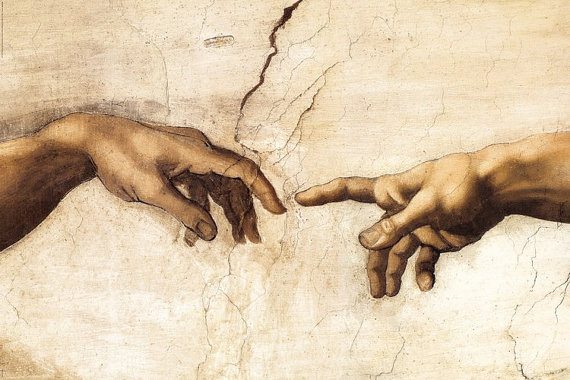
58.

You would find this painting by Michelangelo on the ceiling of which building?

a)

The Metropolitan Museum of Art

b)

The Louvre

c)

The US Capitol

d)

Sistine Chapel

59.

Using this helps artists create realistic drawings

a)

Humanism

b)

Perspective

c)

Supernaturalism

d)

Poetry

60.

How did Italy's location help make it the starting point of the Renaissance?

a)

Many libraries were located there.

b)

Leading Greek scholars moved there.

c)

As trade declined, people turned to the arts.

d)

Its location on the Mediterranean Sea allowed trade with the Muslim world.

61.
Who painted the Mona Lisa and The Last Supper?
a)
Raphael
b)
Leonardo da Vinci
c)
Splinter
d)
Michelangelo
62.
The Scientific Revolution challenged many medieval ideas about science. All of the following were astronomers during the Scientific Revolution except __.
a)
Nicolaus Copernicus
b)
Ptolemy
c)
Galileo Galilei
d)
Johannes Kepler
63.
 _____________________ was an Italian astronomer who developed the telescope, which then confirmed Copernicus’ Heliocentric Theory 
a)
a. Isaac Newton
b)
b. Galileo Galilei 
c)
c. Adam Smith
d)
d. Dennis Diderot
64.
During the scientific  revolution people started using experiments to test theories rather than just believing the ___________
a)
King
b)
Family
c)
Church
d)
Sir Salami 
65.
Galileo was tried for heresy because he argued  
a)
That heaven did not exist
b)
That Earth revolved around the sun
c)
Against the law of gravity
d)
That the sun revolved around the Earth
66.
What type of math was Newton known for developing?
a)
Geometry
b)
Trigonomety
c)
Calculus
d)
Addition
67.
Which scientist developed laws of motion?  
a)
Ptolemy
b)
Copernicus
c)
Galileo
d)
Newton
68.
The idea that people should use reason to understand the world.
a)
Johannes Kepler
b)
Scientific Revolution
c)
rationalism 
d)
Rene Descartes
69.
What is empirical evidence?
a)
Evidence based on observation and experimentation
b)
Evidence based on religious beliefs and faith
c)
Evidence based on common sense
d)
Evidence based on Ptolemy
70.
Which term best defines the concept that the sun is the center of the universe?
a)
heliocentric
b)
geocentric
c)
Ethnocentric
d)
Eurocentric
71.
The 6-step procedure based on observation and experimentation is called...  
a)
Planetary Model
b)
Philosophical Method
c)
Pavlov's Hierarchy of Needs
d)
the Scientific Method
72.

How did scientists begin challenging authority during the Scientific Revolution?

a)

By careful observation of nature and willingness to question old beliefs

b)

By reading classic literature

c)

By collecting samples of plant life

d)

By forming new government ideas

73.

Who proposed a mathematical system using REASON and LOGIC to find new truths through this type of scientific method.

a)

Bacon

b)

Newton

c)

Boyle

d)

Descartes

74.
Scientist began using _____________ and _______________ instead of placing their beliefs in faith.
a)
History and faith
b)
Math and Science
c)
Math and History
d)
reason and logic
75.
Bacon, Galileo, and Newton promoted the idea that knowledge should be based on experimentation & ________.
a)
observation
b)
guessing
c)
research
d)
what your friends say
76.
Which pair of ideas was central to the Scientific Revolution?
a)
Social stability and economic self-­‐sufficiency
b)
Observation and experimentation
c)
Technology and military expansion
d)
Scarcity and interdependence
77.
Which best describes the scientific method in the appropriate steps?
a)
Analyze data, research, and experiment
b)
Experiment, research, question, and analyze data
c)
Question, hypothesize, experiment, analyze data
d)
Research, analyze data, and experiment if needed
78.
According to Copernicus, the sun  
a)
Revolved around the earth
b)
Was the center of the Universe
c)
Was the biggest star
d)
 Had many moons
79.
The idea that the earth is the center of the universe is the ___________ theory.
a)
geocentric
b)
heliocentric
c)
earthcentric
d)
world's worst
80.
Which German priest started the Reformation?
a)
John Calvin
b)
Henry VIII
c)
Pope Paul III
d)
Martin Luther
81.
Luther was ___________ by Pope Leo III because of his criticisms.
a)
Promoted
b)
Excommunicated
c)
Killed
d)
Banished
82.
Luther's criticism of the Catholic Church was called what?
a)
Criticism of the Catholic Church
b)
95 Theses
c)
101 Problems with Catholics
d)
Chicken Soup for the Catholic Soul
83.
People who followed Luther were called Lutherans or _____________.
a)
Reformers
b)
Protestants
c)
Huguenots
d)
Calvinists
84.
Why did Henry VIII create the Church of England?
a)
Divorce his wife
b)
Start war with Pope
c)
Religious differences with Catholics
d)
Liked Lutheranism
85.
Which of Henry VIII'a daughters became a successful English queen?
a)
Elizabeth I
b)
Mary I
c)
Joanna I
d)
Victoria I
86.
What was the Catholic Church's response to the Reformation called?
a)
Counter Reformation
b)
Reconquista
c)
Council of Trent
d)
Thirty Years' War
87.
Which order of monks spread Catholicism around the world and built universities?
a)
Franciscan
b)
Jesuits
c)
Benedictine
d)
Augustine
88.
Which treaty marked the end of the Reformation?
a)
Peace of Westphalia
b)
Treaty of Paris
c)
Treaty of Nantes
d)
Council of Trent
89.
What did the Catholic Church sell to forgive sins?
a)
Forgiveness
b)
Sacraments
c)
Indulgences
d)
Confession
90.
Why was Luther disappointed after the church conference in Rome?
a)
He missed his classes
b)
He saw all the corruption among the priests and bishops
c)
He got a bad grade on a test
d)
Cassey was mean to him and made him cry
91.
What was Indulgences?
a)
a first church
b)
leaders
c)
pardons for sins sold by the Catholic Church
92.
What invention helped to spread the information of the Reformation?
a)
The Globe
b)
The Mona Lisa
c)
The Paint Brush
d)
The Printing Press
93.
What was the Protestant Reformation?
a)
an attempt to overthrow the Pope and replace him with a Frenchman.
b)
an attempt to reform the Catholic practices that were considered corrupt.
c)
a call for Christian Europe to reclaim the Holy Land from the Arabs.
94.
This was the Church practice of selling forgiveness for sin 
a)
Usury
b)
Tithe
c)
Sin Tax
d)
Indulgences
95.
Gutenberg invented the __________ that increased literacy rates and helped spread the ideas of the reformation 
a)
Bible
b)
Telescope
c)
Mass media
d)
Printing Press
96.
Martin Luther suggested which change to church practice?
a)
Printing the Bible in the vernacular so all could read it
b)
Installing statues of saints in churches.
c)
 Saying mass in Latin so the faithful would learn it.
d)
Increasing the sale of indulgences
97.
Humanism...
a)
emphasized the Bible
b)
leads to happier lives
c)
encourages people to learn Latin and Greek
d)
focuses on the potential of humans to achieve 
98.
What does writing in the vernacular mean?
a)
writing in a foreign language
b)
writing in first person voice 
c)
writing in Latin 
d)
writing in people's native language 
99.
What is the artistic technique that is used to show depth and distance on a flat surface?
a)
realism
b)
perspective
c)
idealism
d)
distancism
100.
Who wrote Romeo and Juliet?
a)
William Shakespeare
b)
Dante Allegheri
c)
Homer
d)
Bill Shakesapear
