wayground logo

Free Printable Worksheets

Font size

S
M
L
XL
Worksheets

Chemistry Basics - Intro Quiz

Total questions: 86

Worksheet time: 2hrs 40mins

Name
Class
Date
1.
What is the study of the composition, structure, and properties of MATTER?
a)
Chemistry
b)
Biology
c)
Geology
d)
Physics
2.
Anything that takes up space and has mass is known as _______________.
a)
Matter
b)
Molecules
c)
Compounds
d)
Stuff
3.
What are the building blocks of MATTER?
a)
Atoms
b)
Cells
c)
Protons
d)
Neutrons
4.
What are the positively charged particles in an atom?
a)
Protons
b)
Neutrons
c)
Electrons
5.
Electrons have what charge?
a)
Negative
b)
Positive
c)
Neutral
 (No Charge)
6.
Neutrons have what charge?
a)
Negative
b)
Positive
c)
Neutral
 (No Charge)
7.
The nucleus of an atom is made up of...
a)
Protons and Neutrons
b)
Neutrons and Electrons
c)
Protons and Electrons
8.
The image shows the periodic grid for POTASSIUM. What is Potassium's atomic number?
a)
19
b)
39
c)
20
d)
Impossible to tell
9.
The image shows the periodic grid for POTASSIUM. What is Potassium's atomic mass?
a)
19
b)
39
c)
20
d)
Impossible to tell
10.
The image shows the periodic grid for POTASSIUM. How many PROTONS are found in a potassium atom?
a)
19
b)
39
c)
20
d)
Impossible to tell
11.
The image shows the periodic grid for POTASSIUM. How many ELECTRONS are found in a potassium atom?
a)
19
b)
39
c)
20
d)
Impossible to tell
12.
The image shows the periodic grid for POTASSIUM. How many NEUTRONS are found in a potassium atom?
a)
19
b)
39
c)
20
d)
Impossible to tell
13.
A(n) ____________________ is a pure substance made of a single type of atom and cannot be broken down.
a)
Element
b)
Compound
c)
Molecule
d)
Mixture
14.
What does the ATOMIC MASS tell us about an atom?
a)
Protons + Neutrons
b)
Protons + Electrons
c)
Neutrons + Electrons
15.
What holds atoms, molecules, and compounds together?
a)
Chemical Bonds
b)
Electromagnetism
c)
Magnetism
d)
Electricity
16.
A molecule is formed when two or more ____________ chemically join together.
a)
Atoms
b)
Compounds
c)
Mixtures
d)
Solutions
17.
Which science examines the structure of living organisms at the atomic level?
a)
Biochemistry
b)
Geology
c)
Zoology
d)
Cytology
18.

The symbol Δ in a chemical equation means:

a)

heat is supplied to the reaction.

b)

a catalyst is needed.

c)

yields.

d)

precipitate.

19.

A catalyst is:

a)

a solid product of a reaction.

b)

one of the reactants in a single-replacement reaction.

c)

not used up in a reaction.

d)

the product of a combustion reaction.

20.

When the equation Fe + O₂ → Fe₂O₃ is balanced, the coefficient for O₂ is:

a)

4

b)

3

c)

2

d)

1

21.

The equation H₃PO₄ + 3KOH → K₃PO₄ + 3H₂O is an example of which type of reaction?

a)

double-replacement

b)

combination

c)

decomposition

d)

single-replacement

22.

In a double-replacement reaction:

a)

the reactants are usually a metal and a nonmetal.

b)

the reactants are generally two ionic compounds in aqueous solution.

c)

one of the reactants is often water.

d)

energy in the form of heat or light is always produced.

23.

In order for the reaction 2Al(s) + 6HCl(aq) → 2AlCl₃(aq) + 3H₂(g) to occur, which of the following must be true?

a)

Al must be above Cl on the activity series.

b)

Al must be above H on the activity series.

c)

Heat must be supplied for the reaction.

d)

AlCl₃ must be a precipitate.

24.

In a double-replacement reaction:

a)

one of the products is always a gas.

b)

one of the products must be an element.

c)

positive ions are exchanged between two compounds.

d)

all of the above

25.

When the following equation is balanced, the coefficient in front of HCl is: Ba(s) + HCl(aq) → BaCl₂(aq) + H₂(g)

a)

6

b)

3

c)

1

d)

2

26.

This symbol ⇌ indicates:

a)

that heat must be applied.

b)

an incomplete combustion reaction.

c)

that a gas is formed by the reaction.

d)

that the reaction is reversible.

27.

Which of the following statements is incorrect?

a)

Complete combustion has occurred when all the carbon in the product is in the form of carbon dioxide.

b)

A single reactant is the identifying characteristic of a decomposition reaction.

c)

The only way to determine the products of a reaction is to perform the reaction.

d)

All chemical reactions can be classified as one of four general types.

28.

A chemical formula written above or below the yield sign indicates:

a)

that a gas is formed.

b)

that the substance is used as a catalyst.

c)

that heat must be supplied.

d)

a reversible reaction.

29.

The equation 2C₂H₅OH(g) + 9O₂(g) → 6CO₂(g) + 8H₂O(g) is an example of which type of reaction?

a)

combustion

b)

combination

c)

double-replacement

d)

decomposition

30.

A double-replacement reaction takes place when aqueous K₂SO₄ reacts with aqueous Pb(NO₃)₂. You would expect one of the products of this reaction to be:

a)

K₂S

b)

NaPb

c)

PbSO₄

d)

CNO₃

31.

Balance the following equation: C₅H₁₀(g) + O₂(g) → CO(g) + H₂O(g). Indicate whether the combustion is complete or incomplete.

a)

2C₅H₁₀(g) + 15O₂(g) → 10CO₂(g) + 10H₂O(g), Complete

b)

C₅H₁₀(g) + 5O₂(g) → 5CO(g) + 5H₂O(g), Incomplete

c)

C₅H₁₀(g) + 10O₂(g) → 5CO₂(g) + 5H₂O(g), Complete

d)

2C₅H₁₀(g) + 10O₂(g) → 10CO(g) + 10H₂O(g), Incomplete

32.

Complete and balance the following equation: K₃PO₄(aq) + MgCl₂(aq) →

a)

2K₃PO₄(aq) + 3MgCl₂(aq) → 6KCl(aq) + Mg₃(PO₄)₂(s)

b)

K₃PO₄(aq) + MgCl₂(aq) → 3KCl(aq) + Mg₃(PO₄)₂(s)

c)

2K₃PO₄(aq) + 3MgCl₂(aq) → 3KCl(aq) + 2Mg₃(PO₄)₂(s)

d)

K₃PO₄(aq) + 2MgCl₂(aq) → 2KCl(aq) + Mg₃(PO₄)₂(s)

33.

What determines whether one metal will replace another metal from a compound in a single-replacement reaction?

a)

The atomic number of the metals

b)

The reactivity series of the metals

c)

The color of the metals

d)

The density of the metals

34.
What word describes when water is attracted to other substances?
a)
cohesion
b)
adhesion
c)
capillary action
d)
surface tension
35.
Which end of the water molecule has a slightly positive charge?
a)
the oxygen end
b)
the hydrogen end
c)
both ends are slightly positive
d)
neither end is positive
36.
Water is a universal solvent because it...
a)
It can be found anywhere
b)
It freezes when it gets cold
c)
floats when frozen
d)
Dissolves most substances
37.
Large bodies of water, such as lakes and oceans, do not quickly fluctuate in temperature. What is the reason for this phenomenon?
a)
Water is an acid.
b)
Water is a versatile solvent.
c)
Water has a high heat capacity.
d)
 Water acts as a buffer.
38.
 Small insects can walk across the surface of calm water. Their feet push the surface of the water down slightly, somewhat like a person walking across a trampoline, but they do not break the surface. What is the best explanation for why this happens?
a)
The insects are light enough so that they do not break the hydrogen bonds holding the water molecules together
b)
The insects actually use their wings to hover slightly above the water's surface and they only skim it with their feet
c)
The insects' feet are non-polar, so they are repelled by the polar water molecules and are pushed away from the water's surface
d)
The insects are small enough to see the individual water molecules, so they are able to step carefully from one molecule to the next
39.
The tightness across the surface of water that enables paper clips to float is ____________.
a)
adhesion
b)
capillary action
c)
surface tension
d)
polarity
40.
When a molecule has an opposite electrical charge on each end, it is known as what?
a)
cohesion
b)
polar molecule
c)
hydrogen bond
d)
solution
41.
When water molecules stick easily to other water molecules, this is called what?
a)
cohesion
b)
adhesion
c)
solution
d)
polar molecule
42.

The ability of water molecules to stick to each other, creating surface tension is called:

a)

Cohesion

b)

Adhesion

c)

Insulation

d)

Ph

43.

What property of water allows for water to act as a temperature regulator for the world?

a)

Cohesive Behavior

b)

Expansion Upon Freezing

c)

High Specific Heat

d)

Universal Solvent

44.

What property of water causes these Alka-Seltzer tablets to dissolve?

a)

Universal Solvent

b)

Expansion Upon Freezing

c)

Cohesive Behavior

d)

High Specific Heat

45.

An acid is a solution that contains __________ ions dissolved in water.

a)

positive

b)

negative

46.

The higher the concentration of negative (hydroxide) ions in the solution, the stronger the base is.

a)

True

b)

False

47.

Which of the following pH values represents a base?

a)

2.1

b)

4.6

c)

6.8

d)

8.1

48.

The strongest bases have pH values close to

a)

0

b)

14

c)

7

d)

5

49.
On the pH scale what numbers are acids?
a)
8-14
b)
0-7
c)
7
d)
1
50.
On the pH scale what numbers are neutrals?
a)
8-14
b)
0-7
c)
7
d)
1
51.
The pH scale measures...
a)
...the strength of an acid.
b)
...the strength of hydrogen ions.
c)
...the concentration of hydrogen ions.
d)
...the concentration of an acid
52.
Which food is the most acidic?
a)
bananas
b)
lemon juice
c)
orange juice
53.
A hydrogen ion, H+, is the same as a(n):
a)
neutron
b)
electron
c)
proton
d)
hydroxide ion
54.
Which type of ion does a base produce when it is dissolved in water?
a)
oxide
b)
oxygen
c)
hydrogen
d)
hydroxide
55.
When dissolved in water, acids produce:
a)
bases
b)
salts
c)
hydrogen ions
d)
hydroxide ions
56.

The number of protons in the nucleus of an atom is called the --

a)

atom

b)

proton

c)

atomic mass number

d)

atomic number

57.

A subatomic particle that has a negative charge is called --

a)

a proton

b)

a neutron

c)

an electron

d)

the nucleus

58.

A neutron is ---

a)

a subatomic particle with a negative charge.

b)

a subatomic particle with a neutral charge.

c)

the center of the atom where subatomic particles are found.

d)

a subatomic particle with a positive charge.

59.

A subatomic particle with a positive charge is called --

a)

a proton

b)

a neutron

c)

an electron

d)

a nucleus

60.

An atom's central region, which is made up of protons and neutrons is called--

a)

Electron Cloud

b)

Nucleolus

c)

Nucleus

d)

Atomic Number

61.

What is the label A?

a)

protons

b)

neutrons

c)

electrons

d)

nucleus

62.

What is label E?

a)

protons

b)

neutrons

c)

electrons

d)

nucleus

63.

How many electrons does Potassium (K) have?

a)

19

b)

39

c)

20

d)

58

64.

The number of protons in an atom is called the .....

a)

Mass

b)

Atomic Number

c)

Nucleus

d)

Orbital

65.

How many neutrons does Sodium (Na) have?

a)

11

b)

23

c)

12

d)

22.98977

66.

Ions are particles with a neutral charge.

a)

True

b)

False

67.

Ions are formed when protons are gained or lost by an atom.

a)

True

b)

False

68.

An atom that gains an electron will form a negatively charged ion.

a)

True

b)

False

69.

An atom that loses an electron will form a positively charged ion.

a)

True

b)

False

70.

What must happen to an oxygen atom form an O2- ion.

a)

It has lost an electron.

b)

It has gained an electron.

c)

It has lost two electrons.

d)

It has gained two electrons.

71.

What must happen to a sodium atom form an Na+ ion.

a)

It has lost an electron.

b)

It has gained an electron.

c)

It has lost two electrons.

d)

It has gained two electrons.

72.
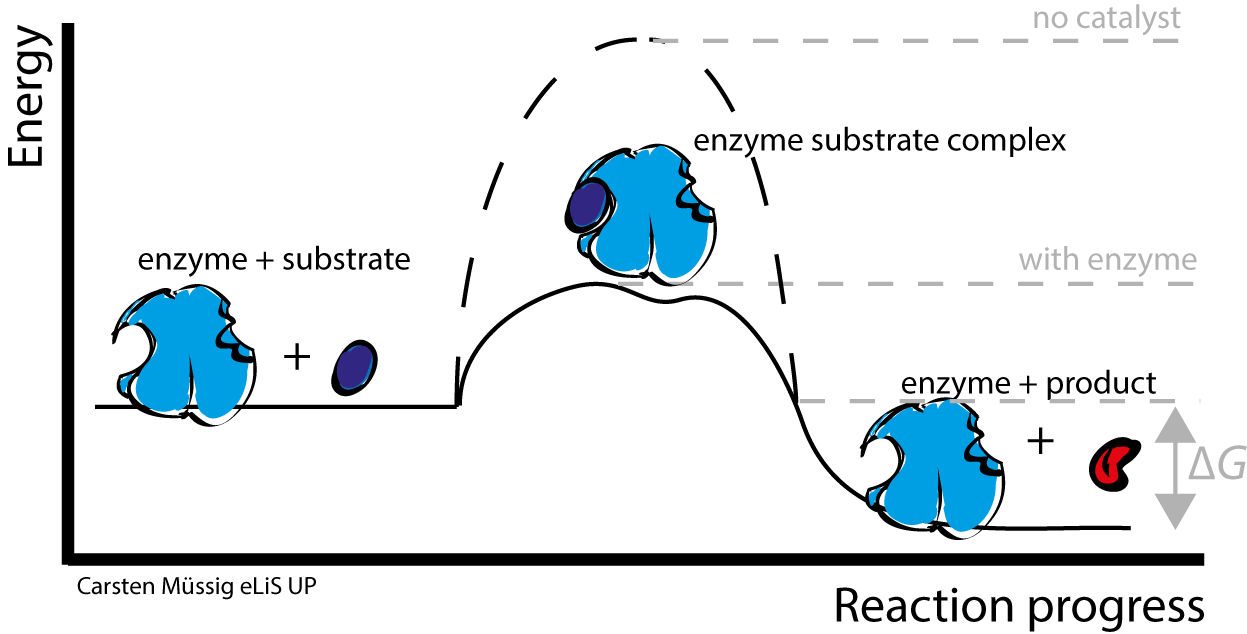
An enzyme speeds up a reaction by
a)
lowering the activation energy.
b)
raising the activation energy.
c)
releasing energy.
d)
absorbing energy.
73.

An enzyme acts as a catalyst to speed up chemical reactions.

a)

True

b)

False

74.

Cooking an egg is an example of...

a)

A chemical change

b)

A physical change

c)

Melting

d)

Dissolving

75.

Melting ice is an example of...

a)

A physical change

b)

A chemical change

c)

Purification

d)

Magic

76.
Which of the following is a sign that a chemical reaction has occurred?
a)
change in shape
b)
melting
c)
formation of a gas
d)
dissolving
77.
Is melting butter for popcorn a chemical or physical change?
a)
chemical
b)
physical
78.
A change where one or more new substances are created.
a)
Physical Change 
b)
Chemical Change 
79.
Fizzing, foaming, and burning are all examples of
a)
Chemical change
b)
Physical change
80.
Wood burned in a fireplace
a)
Chemical Change
b)
Physical Change
81.
Causes a change in temperature ...
a)
Chemical Reaction
b)
Physical Reaction
82.
Causes a change in odor ...
a)
Chemical Reaction 
b)
Physical Reaction
83.

By definition the term "cation" means ​ (a)  

Choose from the below words
positively charged (+1,+2, +3)
negatively charged (-1,-2,-3)
84.

Match the following

a)

AlP

1.

Aluminum phosphide

b)

Ba(CN)2

2.

Barium cyanide

c)

Rb2O

3.

Rubidium oxide

d)

Ca3P2

4.

Calcium phosphide

e)

BaSO4

5.

Barium sulfate

85.

Match the charge with the groups.

a)

-1

1.

Group 17

b)

-3

2.

Group 15

c)

-2

3.

Group 16

86.

Match the following to form true statements:

a)

When solid, ionic compounds

1.

cannot conduct electricity

b)

When melted ionic compounds

2.

can conduct electricity

c)

Ionic compounds have

3.

high melting and high boiling points

d)

There are many strong bonds

4.

between ions in an ionic compound.

e)

Elements in group 1 of the periodic table form ions

5.

with a charge of 1+