wayground logo

Free Printable Worksheets

Font size

S
M
L
XL
Worksheets

Returning Period Unit 1 Quiz

Total questions: 140

Worksheet time: 8hrs 15mins

Name
Class
Date
1.

Inductive reasoning is

a)

When you move from specific observations to a general conclusion.

b)

When you move from a general principle to a specific conclusion.

c)

A logical fallacy

2.

Which of these is an example of inductive reasoning?

a)

Gossip is wrong, so you shouldn't talk about me behind my back.

b)

I've never met a cat who liked being pet on its stomach. Cats must just not like that.

c)

No palm tree loses its leaves in the fall. It is fall. The palm tree will keep its leaves.

d)

Cheating is always wrong. Copying your essay from AI is cheating. Therefore, you should be punished if you do so.

3.

Deductive reasoning moves from

a)

A general principle to a specific conclusion

b)

Specific observations to a general principle

c)

A valid conclusion to an invalid one.

d)

A true conclusion to an untrue one,

4.

How can I make an inductive conclusion convincing?

a)

Have sufficient evidence.

b)

Establish credibility.

c)

Don't try to conclude too much from the evidence.

d)

Only present the evidence that makes the conclusion look right.

5.

Because an inductive conclusion is based on inference,

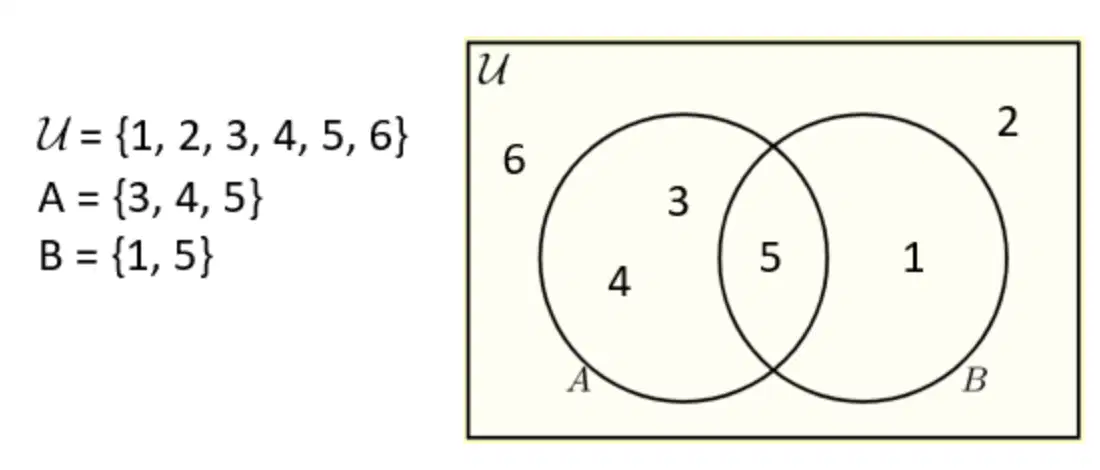
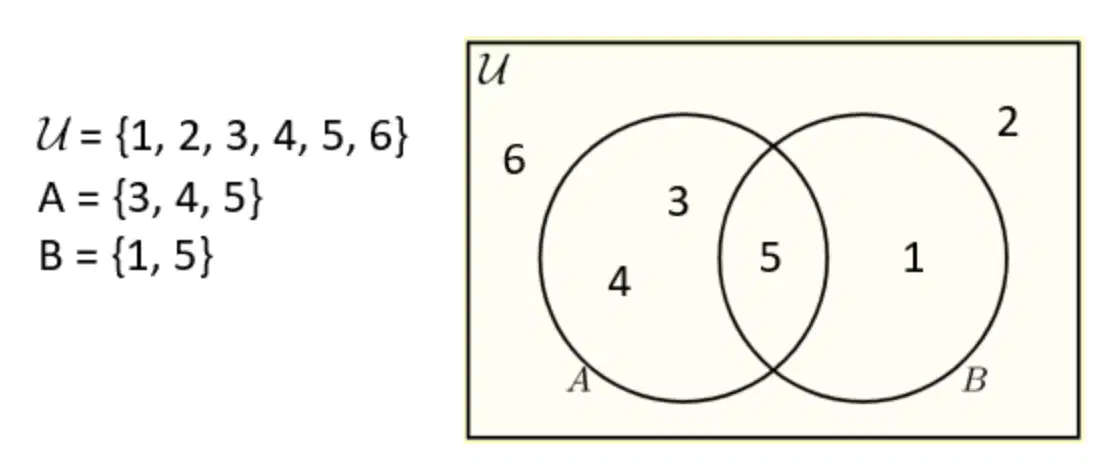
a)

the conclusion is never guarenteed.

b)

the conclusion is always valid.

c)

the conclusion is always true.

d)

the conclusion is never correct.

6.

Choose the statements that describe a syllogism.

a)

A form of deductive reasoning.

b)

A form of inductive reasoning.

c)

It has a major and minor premise and a conclusion.

d)

It can be as long as you want.

7.

Which of these should be the CONCLUSION of the syllogism?

Gavin is a living person.

All living people can breathe.

a)

Gavin can breathe.

b)

Gavin has lungs.

c)

Gavin is not a zombie.

d)

Gavin hates pizza.

8.

What is the fallacy? "People named Lilly are the best!" said Lilly.

a)

Circular reasoning

b)

Slippery slope

c)

Straw man

d)

Non sequitur

9.

What is the fallacy? "Mrs. Barden eats gluten free. I should do that too."

a)

Appeal to a doubtful authority

b)

Bandwagon

c)

Ad hominem

d)

You also

10.

What is the fallacy? "What do you mean you don't like donuts? Everyone does."

a)

Bandwagon

b)

Ad hominem

c)

False dilemma

d)

You also

11.

What is the fallacy? "Everyone celebrates Christmas, Kwanzaa, or Chanukah."

a)

False dilemma

b)

Non sequitur

c)

Appeal to a doubtful authority

d)

Ad hominem

12.

What is the fallacy? "Don't listen to Mrs. Wilkeson. She likes cats and went to IU. Only crazy people do those things."

a)

Slippery slope

b)

Straw man

c)

Ad hominem

d)

Weak analogy

13.

What is the fallacy? "I can't believe you're giving us a quiz tomorrow. Don't you know testing students all the time is bad for them?"

a)

Straw man

b)

Appeal to a doubtful authority

c)

Equivocation

d)

False dilemma

14.

What is the fallacy? "Every time Ben goes to the beach, the weather is great. Ben is good luck."

a)

Not a cause for a cause

b)

Appeal to fear

c)

Appeal to ignorance

d)

No true Scotsman

15.

What is the fallacy? "How dare you suggest that we spend more on education. Putin also did that!"

a)

Guilt by assocation

b)

Slippery slope

c)

Bandwagon

d)

Circular reasoning

16.
Write the following statement in if-then form.
All vertical angles are congruent.
a)
If two angles are vertical, then they are congruent.
b)
If two angles are congruent, then they are vertical.
17.
Given, "If I have a Siberian Husky, then I have a dog." Identify the converse.
a)
If I do not have a Siberian Husky, then I do not have a dog.
b)
If I have a dog, then I have a Siberian Husky.
c)
If I do not have a dog, then I do not have a Siberian Husky.
d)
If I do not have a Siberian Husky, then I have a dog. 
18.
Given, "If I have a Siberian Husky, then I have a dog." Identify the inverse.
a)
If I do not have a Siberian Husky, then I do not have a dog.
b)
If I have a dog, then I have a Siberian Husky.
c)
If I do not have a dog, then I do not have a Siberian Husky.
d)
If I do not have a Siberian Husky, then I have a dog. 
19.
Given, "If I have a Siberian Husky, then I have a dog." Identify the contrapositive.
a)
If I do not have a Siberian Husky, then I do not have a dog.
b)
If I have a dog, then I have a Siberian Husky.
c)
If I do not have a dog, then I do not have a Siberian Husky.
d)
If I do not have a Siberian Husky, then I have a dog. 
20.

Which of the following is true about the conditional statement below?

If a man is 7 feet tall, then he plays basketball.

a)

Hypothesis: a man is 7 feet tall

Conclusion: he plays basketball

b)

Hypothesis: IF a man is 7 feet tall

Conclusion: THEN he plays basketball

c)

Hypothesis: THEN he plays basketball

Conclusion: IF a man is 7 feet tall

d)

Hypothesis: he plays basketball

Conclusion: a man is 7 feet tall

21.

Which of the following is the CONVERSE of the statement below AND is it TRUE or FALSE?

If you play football, then you wear

a uniform.

a)

If you wear a uniform, then you play football.

TRUE

b)

If you do not play football, then you do not wear a uniform.

FALSE

c)

If you wear a uniform, then you play football.

FALSE

d)

If you do not play football, then you do not wear a uniform.

TRUE

22.

Which of the following is the CONTRAPOSITIVE of the statement below?

If a species walks on two feet, then

it is human.

a)

If a species is not human, then it does not walk on two feet.

b)

If a species is human, then it walks on two feet.

c)

If a species does not walk on two feet, then it is not human.

d)

There is no contrapositive of the statement.

23.
Identify the conclusion to the following:
If Spencer wins his soccer game, then he will be happy.
a)

he will be happy

b)

he will not be happy

c)

Spencer wins his soccer game.

d)
Spencer is not happy if he does not win his soccer game.
24.

When writing a biconditional statement, we use the phrase ___ between the hypothesis and conclusion.

a)

if

b)

then

c)

if and only if

d)

always

25.

Select the conditional statement of the biconditional statement.

Points are collinear if and only if they all lie in one line.

a)

If collinear points lie in one line, then they are a line.

b)

If points all lie in one line, then they are collinear.

c)

Collinear points lie in one line.

d)

If points are collinear, then they all lie in one line.

26.

Write the conditional statements as a biconditional statement:

1) If B is between A and C, then AB+BC=AC.

a)

Segment Addition Postulate

b)

B is between A and C when AB+BC=AC if and only if Segment Addition Postulate.

c)

B is between A and C if and only if AB+BC=AC.

27.
When can a biconditional statement be true?
a)
When the inverse and the converse are both true
b)
When the original statement (conditional statement) & the contrapositive are both true.
c)
When the converse is true.
d)
When the original statement (conditional statement) and the converse are both true.
28.
What is the biconditional that matches the statement: "A right angle is an angle with 90 degrees."
a)
If an angle has 90 degrees, then it is a right angle.
b)
If an angle is a right angle, then it has 90 degrees.
c)
An angle is a right angle if and only if it has 90 degrees.
29.
What is the biconditional statement of the following conditional statement?
“If Shelly lives in Texas, then she lives in the United States.”
a)
If Shelly lives in Texas, then she lives in the United States.
b)
If Shelly lives in the United States, then she lives in Texas.
c)
Shelly lives in Texas if and only if she lives in the United States.
d)
If Shelly does not live in Texas, then she does not live in the United States.
30.
The type of reasoning where a person makes  conclusions based on observations and patterns is called...
a)
Inductive reasoning
b)
Deductive reasoning
c)
Conjecture
d)
Experiments
31.
What is a conjecture?
a)
A statement believed to be true based on observations.
b)
An example which disproves an hypothesis.
c)
the performance of tricks that are seemingly magical
32.
Complete the conjecture.  Think of examples to help.
The product of any two odd numbers is _____________
a)
even
b)
odd
c)
zero
d)
positive
33.
What are the next two numbers in this pattern?
12, 17, 22, 27, ___, ___
a)
32, 37
b)
30, 37
c)
30, 33
d)
32, 35
34.

A type of reasoning that uses general facts, definitions, and accepted properties in a logical order to write a logical argument.

a)

Inductive

b)

Deductive

c)

Logic

d)

Reasoning

35.
Used to prove that a conjecture is false.
a)
Counterexample
b)
Inductive Reasoning
c)
Concluding statement
d)
Conjecture
36.

p: all dogs bark

q: all flowers are yellow


Translate to symbolic notation:

Not all dogs bark and all flowers are yellow.

a)

~p V q

b)

~p /\ q

c)

~p /\ ~q

d)

~p V ~q

37.

This symbol, V, means?

a)

AND

b)

NOT

c)

OR

d)

IF AND ONLY IF

38.

This symbol, → , means?

a)

AND

b)

NOT

c)

IF/ THEN

d)

IF AND ONLY IF

39.
Using the Law of Syllogism, which of the following completes the statement to form a valid conclusion?
If it is snowing heavily, then school will be canceled.
If school is canceled, the big test will not be given today.
It is snowing heavily, therefore
a)
look out for the snowplows while driving to school.
b)
the big test will not be given today.
c)
the roads will be hard to drive on.
d)
you should call the school to see if school is canceled.
40.
Given, "If I have a Siberian Husky, then I have a dog." Identify the contrapositive.
a)
If I do not have a Siberian Husky, then I do not have a dog.
b)
If I have a dog, then I have a Siberian Husky.
c)
If I do not have a dog, then I do not have a Siberian Husky.
d)
If I do not have a Siberian Husky, then I have a dog. 
41.
Given, "If I have a Siberian Husky, then I have a dog." Identify the inverse.
a)
If I do not have a Siberian Husky, then I do not have a dog.
b)
If I have a dog, then I have a Siberian Husky.
c)
If I do not have a dog, then I do not have a Siberian Husky.
d)
If I do not have a Siberian Husky, then I have a dog. 
42.
Let V represent Vehicles. Let M represent motorized vehicles, and let A represent automobiles.
Which is not a valid conclusion?
a)
Not all motorized vehicles are automobiles.
b)
Not all automobiles are motorized vehicles
c)
Some motorized vehicles are not automobiles.
d)
Automobiles are motorized vehicles.
43.
This symbol, ↔, means?
a)
and
b)
or 
c)
if and only if
d)
implies
44.
Which statement is the converse of the given statement?
If you make an insurance claim, then your rates will go up.
a)
If your insurance rates do not go up , then you have not maid a claim.
b)
If you do not make an insurance claim, then your rates will not go up.
c)
If your insurance rates go up, then you have made an insurance claim.
d)
If you make an insurance claim, then your rates will not go up.
45.
Which law of logic is this:
If I buy a dress, then I won't get chips.
I bought a dress.
Therefore, I won't get chips.
a)
Law of Detachment
b)
Law of Contrapositive
c)
Law of Syllogism
d)
Law of Biconditional
46.
Conditional: If it does not rain today, then we will have practice.
What is this statement called: If it rains today, then we will not have practice.
a)
Converse
b)
Inverse
c)
Contrapositive
d)
Negation
47.
Conditional: If Maria gets married, then the reception will be at the country club.
What is this statement: If the reception is at the country club, then Maria will be getting married.
a)
Converse
b)
Inverse
c)
Contrapositive
d)
Negation
48.

What are the truth values for ~(p ∨ q)

a)

T T T F

b)

F F F T

c)

T F T F

d)

F T F T

49.

p: the wind is blowing


q: the air is hazy


r: the weather is dry


Which of the following represents


"If the wind is blowing then, the air is hazy or the weather is dry"

a)

p ^ (q v r)

b)

p ^ (q ^ r)

c)

p ---> (r ^ q)

d)

p ----> (q v r)

50.

What will be the negation of the following statement?

Alee is a good guy

a)

Not Alee is a good guy

b)

Alee is a bad guy

c)

Alee is not a good guy

d)

Alee is not a guy

51.

What will be the negation of the following statement?

All the integers are positive

a)

All the integers are negative

b)

All the integers are not positive

c)

There is at least one integer which is negative

d)

There is at least one integer which is not positive

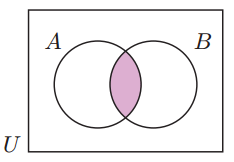
52.

Identify the shaded area...

a)

A'∩B

b)

A∩B'

c)

A∪B'

d)

A'∪B

53.

Identify the shaded area...

a)

A∩B

b)

A∪B

c)

A'∩B'

d)

A'∪B'

54.

List the elements (members) in the following:

A U B

a)

{ 1, 3, 4 }

b)

{ 5 }

c)

{ 2, 6 }

d)

{ 1, 3, 4, 5 }

55.

List the elements (members) of the following:

A ∩ B

a)

{ 3, 4 }

b)

{ 5 }

c)

{ 1, 3, 4, 5}

d)

{ 2, 6 }

56.
If
A = {1, 3, 5, 15},
B = {2, 3, 5, 7}
C = {2, 4, 6, 8}
then what is (A U B) ∩ C ?
 
a)
{1,3,5}
b)
{1,2,3}
c)
{2,3,5}
d)
{2}
57.
The Universal Set = { -4, 3, -2, -1, 0, 1, 2, 3 ,4} and A = {0}.
What is the complement of A?
a)
{-4, -3, -2, -1, 0, 1, 2, 3}
b)
{-3, -2, -1, 1, 2, 3}
c)
{-4, -3, -2, -1, 1, 2, 3, 4}
d)
{-4, -3, -2, -1, 1, 2, 3}
58.

If

U (the universal set) = {1, 3, 5, 7, 9, 11, 13, 15, 17} and W = {5, 7, 9, 11}, then W' = . . ..

a)

{1, 3, 13, 15, 17}

b)

{1, 3}

c)

{2, 4, 6, 8, 10, 12, 14, 16}

d)

{1, 3, 5, 7, 9, 11, 13, 15, 17}

59.

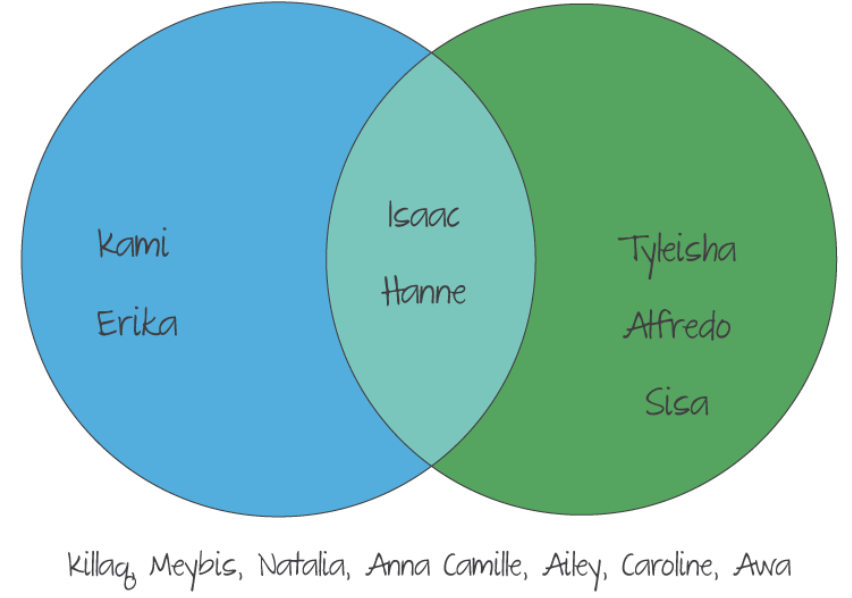
Given the following Venn diagram, let blue represent the students taking drama (D) and green represent the students taking math (M).

What is n(D ⋃ M)?

a)

5

b)

7

c)

2

d)

4

60.

Which of the following is logically equivalent to ~ (p --> q)?


a)

p ∧ q

b)

p ∧ ~ q

c)

~ p ∧ q

d)

~ p ∧ ~ q

61.

If something is an angle, then it is acute. What is an appropriate counter-example?

a)

70⁰

b)

45⁰

c)

120⁰

d)

True. There is no counterexample.

62.

A conjecture is:

a)

a false example in a compound statement

b)

a compound statement using and or nor

c)

a concluding statement reached during inductive reasoning

d)

an educated guess based on empirical data, collected by a calculator

63.

Inductive Reasoning means...

a)

Guessing

b)

Testing and observing patterns to make conjectures

c)

Explaining why

d)

Adding numbers together

64.
Which number is a counterexample to the following statement? : 
All numbers that are divisible by 2 are divisible by 4
a)
0
b)
12
c)
28
d)
42
65.
Used to prove that a conjecture is false.
a)
Counterexample
b)
Inductive Reasoning
c)
Concluding statement
d)
Conjecture
66.
Identify the hypothesis and conclusion of the conditional statement:
If you give me twenty dollars, then I will be your best friend.
a)
Hypothesis: I will be your best friend
Conclusion: you give me twenty dollars
b)
Hypothesis: you give me twenty dollars
Conclusion: I will be your best friend
c)
Hypothesis: if you have to pay for friends
Conclusion: then you probably should reevaluate your life
d)
Hypothesis: you will not have to pay twenty dollars
Conclusion: if you have lots of friends
67.
If something is a vehicle, then it is a Ford. What is an appropriate counterexample?
a)
Ford Mustang
b)
Dodge Charger
c)
Ford F150
d)
Both A and C are counterexamples.
68.
If an animal is furry, then it is a hamster. What would be an appropriate counterexample?
a)
goldfish
b)
frog
c)
elephant
d)
cat
69.
When taking the converse we ___________ the hypothesis and conculsion
a)
negate
b)
switch
c)
highlight
d)
switch and negate
70.
Original: If Emily is not late to class, then she will not be marked tardy.
What is this? If Emily is late to class, then she will be marked tardy.
a)
Converse
b)
Inverse
c)
Contrapositive
d)
Negation
71.
Which of the following is the inverse to the statement: 
"If you diet and exercise, then you will lose weight."
a)
If you don't diet and exercise, then you will not lose weight.
b)
If you don't diet and exercise, then you will lose weight.
c)
If you lose weight, then you dieted and exercised.
d)
If you don't lose weight, then you diet and exercise. 
72.
What is the converse to this statement?
a)
If it isn't dark outside, then it is not night.
b)
If it is night, then it is dark outside
c)
If it is not night, then it is not dark outside.
d)
It is night.
73.
What is this mean?
a)
Conditional Statement
b)
Converse
c)
Inverse
d)
Contrapositive
74.
What does this mean?
a)
Conditional Statement
b)
Inverse Statement
c)
Converse Statement
d)
Contrapositive Statement
75.
What is this?
a)
Conditional Statement
b)
Inverse
c)
Converse
d)
THIS IS A GEOMETRY CLASS!!! GIVE ME NUMBERS!
76.
What is the contrapositive to this?
a)
If the food is not cooked, then it is not in the oven.
b)
If the food is not in the oven, then it is not cooked.
c)
If the food is cooked, then its in the oven.
d)
If food is not in the oven, then its cooked.
77.
To write the converse you negate both the hypothesis and the conclusion.
a)
False
b)
True
78.
p → q
a)
conditional 
b)
converse
c)
inverse 
d)
contrapositive
79.
~p → ~q
a)
conditional
b)
converse
c)
inverse
d)
contrapositive
80.
q → p
a)
conditional
b)
converse
c)
inverse
d)
contrapositive
81.
~q → ~p
a)
conditional
b)
converse
c)
inverse
d)
contrapositive
82.
This symbol, ↔, means?
a)
and
b)
or 
c)
if and only if
d)
implies
83.

The statement "an angle is a right angle if and only if its measure is 90o" is an example of what type of statement?

a)

Conditional

b)

Conjecture

c)

Biconditional

84.

How are you feeling today?

a)

I'm feeling great 😃

b)

I'm good 🙂

c)

I'm doing fine but could be better 😕

d)

I'm struggling 😔

e)

I don't know 😐

85.
What type of set is denoted as either { } or ∅?
a)
Universal Set
b)
Empty (or Null) Set
c)
Disjointed Set
d)
Complement of a Set
86.
What does this symbol mean?
a)
Is not a member of
b)
Is not an intersection
c)
Not the universal set
d)
Empty set
87.

What does this symbol ( ∪ ) represent in set theory?

a)

Union

b)

Intersection

c)

Disjointed

d)

Subset

88.
What does this symbol ( ∩ ) represent in set theory?
a)
Union
b)
Intersection
c)
Disjointed
d)
Subset
89.
A = {1, 3, 5, 7, 9}
B = {2, 3, 5, 7}
What is A ∩ B ?
a)
{3, 5, 7}
b)
{2, 3, 5, 7}
c)
{2, 3, 5, 7, 9}
d)
{1, 2, 3, 5, 7, 9}
90.

Which is the correct set notation for A intersection B ?

a)

{12, 14, 15, 18, 21}

b)

{10, 11, 12, 14, 15, 18, 21}

c)

{10, 11, 13, 16, 17, 19, 20}

d)

{21}

91.
Which is the correct set notation for A U B?
a)
{12, 14, 15, 18, 21}
b)
{10, 11, 12, 14, 15, 18, 21}
c)
{10, 11, 13, 16, 17, 19, 20}
d)
{12, 14, 15}
92.

Identify the shaded area...

a)

A

b)

B

c)

A'

d)

B'

93.

Identify the shaded area...

a)

A

b)

B

c)

A'

d)

B'

94.

Identify the shaded area...

a)

A

b)

B

c)

A'

d)

B'

95.

Identify the shaded area...

a)

A

b)

B

c)

A'

d)

B'

96.

Identify the shaded area...

a)

A∩B

b)

A∪B

c)

A'∩B'

d)

A'∪B'

97.

Identify the shaded area...

a)

A∩B

b)

A∪B

c)

A'∩B'

d)

A'∪B'

98.

Identify the shaded area...

a)

A∩B

b)

A∪B

c)

A'∩B'

d)

A'∪B'

99.

Identify the shaded area...

a)

A'∩B

b)

A∩B'

c)

A∪B'

d)

A'∪B

100.

Identify the shaded area...

a)

A'∩B

b)

A∩B'

c)

A∪B'

d)

A'∪B

101.

Shade the appropriate area.

B ∪ C

102.

Shade the appropriate area.

A' ∩ C

103.

Shade the appropriate area.

A ∪ B ∪ C

104.

Shade the appropriate area.

A ∪ B ∩ C

105.
How many senior boys play football and wrestle?
a)
9
b)
12
c)
18
d)
39
106.
How many senior boys play football but do not wrestle?
a)
9
b)
12
c)
18
d)
104
107.
How many senior boys play football or wrestle?
a)
9
b)
21
c)
30
d)
39
108.
How many students took the survey?
a)
32
b)
47
c)
53
d)
56
109.

How many students chose only Spanish?

a)

3

b)

18

c)

104

d)

89

110.

How many students took French and Spanish?

a)

18

b)

3

c)

15

d)

104

111.

How many students dive?

a)

4

b)

7

c)

18

d)

12

112.

How many students have Netflix or Prime?

a)

330

b)

60

c)

190

d)

20

113.

How many students have all 3 streaming services?

a)

40

b)

360

c)

10

d)

140

114.

How many students only have Hulu?

a)

30

b)

80

c)

150

d)

220

115.

How many students prefer country?

a)

12

b)

22

c)

10

d)

22

116.

How many students like country or rap but not rock?

a)

46

b)

23

c)

46

d)

5

117.

How many students like rap and rock but not country?

a)

18

b)

20

c)

46

d)

53

118.
What statement does the shaded region represent
a)
A or B
b)
Not A
c)
A and B
d)
Not B
119.
What statement does the shaded region represent?
a)
A or B
b)
Not B
c)
Not A
d)
Not A or B
120.

The Purpose of Venn Diagrams is to.....

a)

show an overlap in data

b)

confuse the reader

c)

show the frequency of one object

d)

find the angles in a circle

121.
How many senior boys play football but do not wrestle?
a)
9
b)
12
c)
18
d)
104
122.
How many senior boys play football or wrestle?
a)
9
b)
21
c)
30
d)
39
123.
How many students took the survey?
a)
32
b)
47
c)
53
d)
56
124.
How many students do not snowboard?
a)
21
b)
22
c)
28
d)
29
125.
How many students only ski & snowboard?
a)
3
b)
8
c)
11
d)
23
126.
How many students only do one activity?
a)
3
b)
8
c)
17
d)
30
127.
How many students down ski?
a)
4
b)
17
c)
21
d)
27
128.
What does the shaded portion of the Venn diagram represent?
a)
Band and Art
b)
Only Art
c)
Band or Art
d)
Neither
129.
Answer the question in the image
a)
10
b)
14
c)
21
d)
17
130.
What is the answer to the question in the image?
a)
18
b)
20
c)
29
d)
25
131.
What statement does the shaded region represent?
a)
A' ∩ B
b)
A ∩ B'
c)
A' ∪ B
d)
A ∪ B'
132.
What statement does the shaded region represent?
a)
A' ∩ B
b)
A ∩ B'
c)
A ∩ B
d)
A' ∩ B'
133.
Find n(A ∪ B)
a)
3
b)
13
c)
17
d)
20
134.
Find n(A' ∩ B)
a)
4
b)
6
c)
10
d)
9
135.
A particular state has three professional basketball teams; Team A, B, & C.  In the last season, 20% of the state went to see Team A play, 24% saw team B, and 28% saw Team C. Of these, 4% saw both A &B, 5% saw both A & C, and 6% saw both B & C. 1% saw all three teams play.
Make a Venn diagram to answer the next 5 questions.
a)
Click here when you have the diagram drawn
b)
DO NOT
CLICK HERE
or you will
miss this!!!
136.
Use the Basketball Venn Diagram to find:
What percent only saw
Team A play?
a)
12%
b)
15%
c)
18%
d)
8%
137.
Use the Basketball Venn Diagram to find:
What percent only saw
Team B play?
a)
12%
b)
15%
c)
18%
d)
8%
138.
Use the Basketball Venn Diagram to find:
What percent only saw
Team B & C play?
a)
5%
b)
38%
c)
23%
d)
46%
139.
Use the Basketball Venn Diagram to find:
What percent watched exactly
two Teams play?
a)
8%
b)
12%
c)
13%
d)
42%
140.
Use the Basketball Venn Diagram to find:
What percent did not watch any of the teams play?

a)
18%
b)
36%
c)
38%
d)
42%