
 Worksheets
9th Eng Mdm Part 1 quiz
Total questions: 123
Worksheet time: 1hrs 2mins
During his reign Christianity became the state religion of Rome.
Constantine
The successor of Prophet Muhammed are called.
Pope
Khalif
The religion, closely related to Vedic rituals and practices is:
Islam
Chrstianity
Zorastraianism
Judaism
The nation established for the Jews After World War II is.
The poetic literature found in the Zoroastrian scripture “Avesta” is called.
Gatha
Baraha
Kitab
Granitha
The founder of the Gurjara-Pratiharas was.
Harichandra
Muhammad-bin-Tughlaq shifted his capital from Delhi to this city.
Devagiri
The first woman to rule among the Delhi Sultans was.
One who was defeated by Prithviraj Chauhan in the First Battle of Tarain was.
The work that describes the bravery and valor of Prithviraj Chauhan was.
The Officer appointed by Alauddin Khilji to regulate the market was.
Shahna-i-Mandi
“The world is an illusion, only Brahma is real.” This was propounded by.
Shankaracharya
Basaveshwara
Rmanujacharya
Madhvacharya
The Anubhava Mantapa at Basavakalyan in Bidar district was established by.
Basaveshwara
Ramanujacharya
Shankaracharya
Madvacharya
The Hoysala king who provided shelter to Ramanujacharya was.
The philosophy propounded by Madhvacharya is
Shakti Vishishtadvaita
Vishishtadvaita
Advaita
Dvaita
Sri Vaishnavas are the disciples of
Ramanujacharya
Shankaracharya
Madhvacharya
The one who is called the “Cultural Leader of Karnataka” is.
Ramanuja
Basaveshwara
Shankaracharya
Madhvacharya
The Vijayanagara Empire was established in the year.
The book, which is a testimony to the wisdom, generosity, and religious tolerance of Ibrahim II was.
Kitab-e-Navras
Tarikh-e-hind
Fatuh-us-Salatin
Manazi-ul-Insha
The Persian ambassador who visited Vijayanagara was.
Abdur Razak
Alberuni
Megastanese
The battle that led to the fall of the Vijayanagara Empire was.
The Vijayanagara king who had earned the title “Gaja Bhentekara” was.
The work of Krishna Devaraya that reflects his practical knowledge of administration was.
Amukta Malyada
The chairman of the Constituent Assembly was.
Babu Rajendra Prasad
The one who called as the "Architect of the Indian Constitution" is.
“India formulates its domestic and foreign policies independently without pressure from other nations.” The aspect of the preamble of the constitution that affirms this is.
The political system where the head of the nation is elected directly or indirectly is.
Republic
The Fundamental Rights are incorporated in this part of our Constitution.
Part 2
Part 4
Part 3
Part 5
In India the “Guardian of Fundamental Rights” is.
The meaning of universal adult franchise is.
Voting rights for all Indian citizens above 18 Years.
The one among the following which doesn’t come under the scope of Public Interest Litigations (PILs) is.
Right to access essential services
Economic Justice issues
Right to information about Govt Employees salaries
The Directive Principles of State Policy in the Indian Constitution were adopted from the constitution of this country.
The Fundamental Right which Dr. B.R. Ambedkar called as the “heart and soul” of the Constitution is.
The total number of members in the Rajya Sabha is.
250
Members of the Rajya Sabha are nominated by.
The ex-officio Chairman of the Rajya Sabha is.
The percentage of seats reserved for women in the Lok Sabha under the Nari Shakti Vandan Adhiniyam is.
The one who is not a part of the electoral college for the President election is.
Members of the central Parliament
Members of all state legislative Assemblies
Members of all state legislative Assemblies of Delhi and Pandicherry
All members of Legislattive Councils
The lower house of the state legislature among these is.
legislative Council
loka Sabha
Rajya Sabha
legislative Assembly
The number of members in the current Karnataka Legislative Assembly is.
The number of seats reserved for Scheduled Castes in the Karnataka Legislative Assembly is.
The resignation of a Legislative Assembly member is to be submitted to.
The Speaker of the Legislative Assembly
What is the minimum age to become a member of the Legislative Assembly?
Types of writs that can be issued According to the Article 32 of the Constitution are.
5
4
6
7
The Criminal Court came into existence in the year.
April 1, 1974
April 1, 1948
April 1, 1935
April 1, 1985
The basic unit of society is.
The nuclear family consists of.
Parents and their unmarried children
The head of the patriarchal family is.
Father
Mother
If the mother is the head of the family, then it is a.
patriarchal Family
Joint Family
Nuclear Family
matriarchal Family
A key feature of a joint family is.
Sharing of property and responsibilities
The main reason for the increase in nuclear families in modern times is.
Industrialization and urbanization
The family system prevalent in ancient India, China, and Egypt was.
Extended family
Nuclear family
Patriarchal family
Matriarchal family
This factor influences a child's social behaviour during childhood the most.
In this community the matriarchal family system is found.
Nair
Brahmin
Elava
Tamil
The key feature of a modern nuclear family is.
Relaxed social control
Family which include father, mother, children and their grandchildren is.
Undivided family
Modern family
The impact of industrialization on the family system is.
Increase in Modern families
decrease in Modern families
decrease in nuclear families
Increase in nuclear families
The third generation in a family system includes.
children
Prior to 1956, Kannada-speaking people were spread across.
Bombay, Hyderabad, Madras, Coorg
Kerala and Telangana Coorg
Tamil Nadu and Andhra Pradesh Coorg
Maharashtra and Goa Coorg
The Ghat that connects Hassan, Sakleshpur, and Mangalore is.
Malnad is also known as.
Karnataka’s Kashmir
Coffee Land
Orange Land
Biodiversity Zone
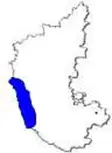
The natural division identified in the given map is.
Northern Plain
Malenadu
Coastal Plain
Southern Plain
The highest peak in Karnataka is.
Gateway of Karnataka is.
Bangalore
New Mangalore
The place which receives the least rainfall in Karnataka is.
Nayakanahatti
Hulikal
Bhagamandala
Agumbe
The reason for southwest monsoon winds to move from northeast to southwest is.
Decrease in pressure and increase in temperature
Decrease in temperature and increase in pressure
Winds blowing towards the northeast
Influence of cyclones
The soil with the least capacity to retain moisture is.
Red Soil
Black Soil
Coastal Soil
laterite Soil
Mangrove vegetation is found in.
the Malnad
the Inland
the Desert
the Coast
The district with the least forest cover in Karnataka is.
Vijayapura
Statement: A) Malnad is covered with evergreen forests.
R) It receives heavy rainfall. Assertion:
The summer rain is called ‘coffee blossom rain’ in Karnataka, because.
It is convective rain
It brings hailstones
It is accompanied by thunder and lightning
It helps coffee plants bloom
The district with the highest canal irrigation in the state is.
Raichur
Bidar
Mandya
The main purpose of first hydroelectric project of Karnataka was.
Suppply to Kolar Gold Mines
Road Electrification
Railway
The river that forms the Chaya Bhagavathi waterfall is.
doni
Netraathi
Ghataprabha
Papanashini
The ancient irrigation method of Karnataka is.
Tube Wells
Canals
Tanks
Wells
The Rivers with high hydroelectric potential in Karnataka are.
North Flowing Rivers
South Flowing Rivers
Eest Flowing Rivers
West Flowing Rivers
The district with the highest cultivated land in the state is.
Vijayapura
Tumakuru
Kalaburgi
Belagavi
Cotton is an example for this type of agriculture.
Mixed Crop
Food Crop
Plantation Crop
Commerciaal Crop
The period of Rabi Crop is.
November -December
March - May
January - December
April - September
The grain known as the ‘Queen of Grains’ is.
Maize
Ragi
Wheat
Recently people are increasingly using ragi because.
it is available at a low a price
it is available everywhere
it is grown Extensively
it is highly nutritious
The three major sectors of the economy are.
Trade, Commerce, Finance
agricultural, BAnking, Health
Industry,finance, Retail
agricultural, Industry, Service
The economic system prevalent in ancient India was.
Banking System
Digital System
Barter System
Open Market System
The main reason for the transformation of an agriculture-based economy to an industry-based economy is.
Population Growth
Foreign Investments
Govt. Policies
Industrial Revolution
The major factor that influenced the transformation of the economic structure is.
Climatic Cahnges
Traditional Industries
technological Changes
Traditional Agrcultural practices
The economic sector that contributes the most to the national income of India is.
Service sector
The main reason for the commercialization of Indian agriculture is:
Increased self-reliance in agriculture
Farmers not using technology
Farmers starting to grow commercial crops
Not growing traditional crops
The main sources of income in a simple economy are:
Banking and investment sectors
Industry and service sectors
Government and agricultural sectors
Household and business units
The key feature of pre-independent Indian economy was:
Dynamic economy
Static economy
Industry-based economy
Trade and commerce-based economy
A negative aspect found in the modern agricultural system of India is:
Increased rural employment
Decreased agricultural production
Environmental pollution and soil erosion
Increased groundwater levels
The one which is not a factor of production among these is
Land
Tax
Labor
Capital
The main barrier for the transfer of agricultural workers to the industrial sector is:
Low industrial production
Strict government policies
Lack of land for industries
Lack of skills and training
The country where the industrial revolution began for the first is:
America
Britain
France
China
An example for the commercial crop is:
Ragi
Jowar
Pulses
Sugarcane
occupation among these which is not included in the primary sector is:
Agriculture
Forestry
Construction
Fishing
An occupation that does not come under the primary sector is:
Sericulture
Poultry Farming
Banking
Floriculture
The secondary sector is also called as
Agricultural Sector
Manufacturing Sector
Service Sector
Trade Sector
An example for the tertiary sector among the following is:
Construction
Industry
Electricity Production
Transport-Communication
The successors of Prophet Muhammad was
Abraham
Peter
Paul
David
The largest monolithic hill in Asia is:
Skandagiri
Madhugiri
Nandi Hills
Malemahadeshwara Hill
Among these a forest-based industry is:
Cotton Textile Manufacturing
Paper Manufacturing
Iron and Steel Manufacturing
Sugar Manufacturing
Public Sector industries are owned by
Private Individuals
Foreign Investors
Non-Government Organizations
Government
An example for the public sector company is:
Infosys
Tata Motors
BHEL
Reliance
The industrial policy that led to the large-scale expansion of public sector industries was implemented in
1947
1956
1991
2001
An enterprises managed from home country and has operational branches in different countries are called:
Private Companies
Government Companies
Multinational Companies
International Companies
A major multinational company operating in India is:
BHEL
BSNL
SONY
HMT
The economic reforms of 1991 have emphasized:
Privatization
Nationalization
Government Control
Regulation of Foreign Investment
The tertiary sector is also called as:
Manufacturing Sector
Industrial Sector
Agricultural Sector
Service Sector
Banks facilitate connections between these:
Producers and Consumers
Investors and Savers
Government and People
Farmers and Entrepreneurs
According to the 2011 Census, the expected life expectancy of Indians is:
55.4
60.1
66.9
75.3
The Sarva Shiksha Abhiyan was launched in the year:
1995
2018
2001
2009
According to the 2011 Census, literacy rate of Karnataka is:
65.4%
72.3%
75.36%
80.1%
The major commercial crop of Karnataka is:
Wheat
Coffee
Maize
Ragi
In Karnataka, the percentage of Population dependent on agriculture is:
25%
35%
52%
65%
The length of the coastline of Karnataka is:
270 kilometers
300 kilometers
320 kilometers
350 kilometers
The largest public sector enterprise is:
Infosys
BHEL
HAL
ITI
The districts in Karnataka known as the ‘cradles of banking’ are:
Davanagere and Chitradurga
Chikkamagaluru and Shivamogga
Dakshina Kannada and Udupi
Belagavi and Raichur
The headquarters of the South Western Railway Zone in Karnataka is located in:
Bengaluru
Mangaluru
Mysuru
Hubli
The sector that provides the major income to the economy of Karnataka is:
Agricultural Sector
Industrial Sector
Service Sector
Mining Sector.
The systematic division of work is called:
Management
Planning
Division of Work
Supervision
Determining future operations in advance is called:
Organization
Management
Coordination
Planning
Directing the basic arrangements of management in a specific direction is:
Order
Leadership
Chain of Command
Management
“Management is an art of getting things done through other people” This is stated by:
Henry Fayol
J.L. Haynes
Adam Smith
Marshall

