
 Worksheets
Age of Exploration Quiz
Total questions: 89
Worksheet time: 45mins
Which centuries are known as the Age of Exploration?
10th to 12th centuries
15th to 17th centuries
18th to 20th centuries
12th to 14th centuries
Which of the following was NOT a reason Europeans began exploring during the Age of Exploration?
To find trade routes to Asia
To discover valuable spices and silk
To search for gold and other treasures
To build pyramids
Which countries were involved in the Age of Exploration according to the material?
Spain, Britain, Netherlands, Portugal, and France
China, India, Egypt, and Greece
Russia, Germany, Italy, and Sweden
Australia, Canada, Mexico, and Japan
Why did Europeans want to find new trade routes to Asia during the Age of Exploration?
To avoid land travel and find faster sea routes
To escape from Europe
To build new cities in Asia
To learn new languages
How might the search for gold and other treasures have affected the places Europeans explored?
It led to peaceful trade and cooperation everywhere
It sometimes caused conflict and competition for resources
It made Europeans uninterested in exploration
It stopped all exploration activities
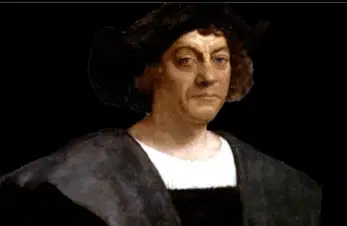
Who are two famous explorers from the Age of Exploration shown in the material?
Christopher Columbus and Vasco de Gama
Marco Polo and Julius Caesar
Ferdinand Magellan and Alexander the Great
Neil Armstrong and Galileo Galilei
What was the Silk Road?
A trade route that connects Europe to Asia by road
A river that flows through Europe
A mountain range in Asia
A famous city in Africa
Why was the Silk Road important during the Age of Exploration?
It allowed people to travel by sea only
It connected Europe to Asia for trade
It was used for farming
It was a place for building castles
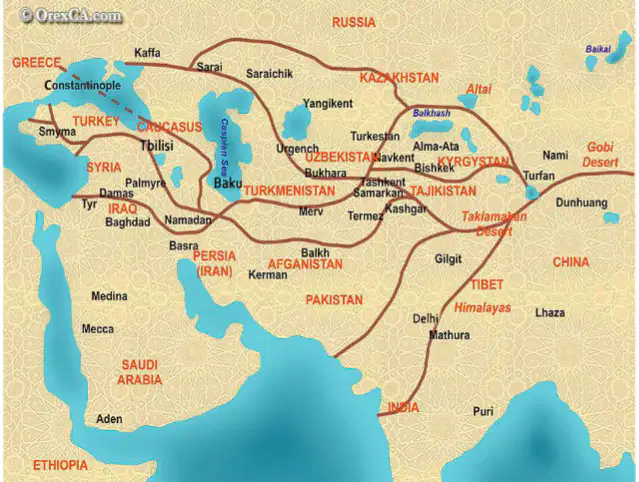
Look at the map of the Silk Road. What continents did the Silk Road connect?
Europe and Asia
Africa and Australia
North America and South America
Antarctica and Europe
If you were a merchant in Europe during the Age of Exploration, how might the Silk Road have helped your business?
By providing a route to trade goods with Asia
By giving you a place to build a house
By teaching you how to farm
By helping you find gold in Africa
What does the term "maritime trade routes" refer to?
Trade by land
Trade by air
Trade by sea
Trade by rail
Why did people start relying more on maritime trade routes during the Age of Exploration?
To avoid traveling by land
To save money, get rich, and increase trade
To explore new animals
To escape from wars
Which of the following was an important maritime trade route during the Age of Exploration?
Sailing around Africa to reach India
Walking across Europe to Asia
Riding horses across the Sahara Desert
Flying across the Atlantic Ocean
Which ocean did explorers cross to reach America during the Age of Exploration?
Indian Ocean
Pacific Ocean
Atlantic Ocean
Arctic Ocean
If you were a trader wanting to reach Asia from Europe by sea, which ocean would you most likely cross?
Atlantic Ocean
Pacific Ocean
Arctic Ocean
Southern Ocean
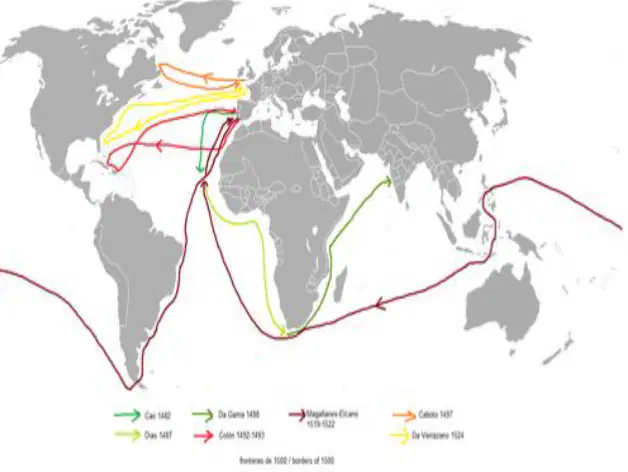
Look at the map showing the different colored lines representing trade routes. What does this map help us understand about the Age of Exploration?
The locations of ancient cities
The different sea routes explorers used to connect continents for trade
The weather patterns of the world
The locations of famous battles
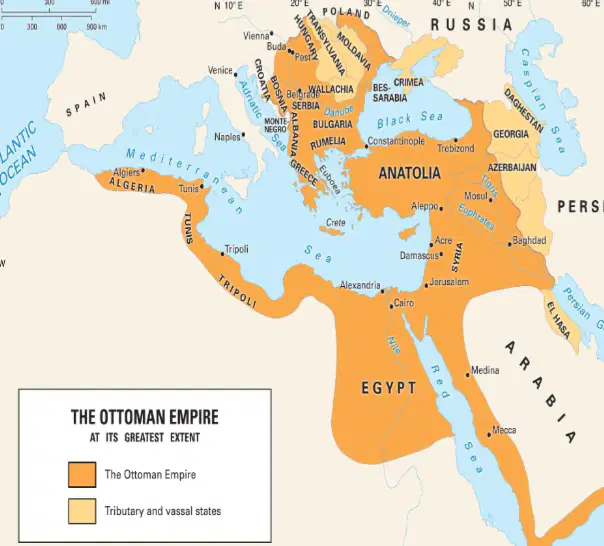
Which empire controlled important areas between Europe and Asia during the Age of Exploration?
Ottoman Empire
Roman Empire
British Empire
Mongol Empire
What did the Ottoman Empire do that affected European traders?
Made them pay high taxes
Gave them free goods
Allowed them to travel for free
Helped them find new trade routes
Why did Europeans start looking for new ways to reach Asia during the Age of Exploration?
The Ottoman Empire blocked some trade routes
Asia was too far away
They wanted to avoid the Atlantic Ocean
The weather was too dangerous
How did the actions of the Ottoman Empire influence European exploration? (DoK Level 2)
Europeans searched for new trade routes to Asia
Europeans stopped trading completely
Europeans moved to Africa
Europeans joined the Ottoman Empire
Imagine you are a European trader during the Age of Exploration. What problem would you face because of the Ottoman Empire, and what might you do to solve it? (DoK Level 3)
Face high taxes and blocked routes, so look for new sea routes to Asia
Get free goods, so trade more with the Ottomans
Have no problems, so continue as usual
Move to America to avoid trading
Which of the following is a PUSH reason for leaving European cities during the Age of Exploration?
Stories of riches in new lands
Overcrowding in European cities
Adventure and fame
New trade opportunities
Which of the following is a PULL reason that attracted people to explore new lands?
Religious persecution
Limited land ownership opportunities
Chance to own land
Political conflicts
What is one reason people were pushed to leave their homes during the Age of Exploration?
Better life opportunities
Religious persecution
Adventure and fame
New trade opportunities
Which of the following best explains why someone might be pulled to explore new lands?
Poverty and lack of jobs
Overcrowding in cities
Stories of riches in new lands
Political conflicts
Compare PUSH and PULL factors from the Age of Exploration. Which factor would be considered a PUSH factor and which would be a PULL factor: "Political conflicts" and "Adventure and fame"?
Both are PUSH factors
Both are PULL factors
Political conflicts is PUSH, Adventure and fame is PULL
Political conflicts is PULL, Adventure and fame is PUSH
Why might someone have left Europe during the Age of Exploration due to limited land ownership opportunities? Explain how this PUSH factor could influence a person's decision.
They wanted to escape adventure and fame.
They were looking for new trade opportunities.
They hoped to find a place where they could own land.
They wanted to avoid stories of riches in new lands.
Which topic is the main focus of this part of the unit?
European Powers & Exploration Goals
Ancient Civilizations
Modern Technology
American History
What were the three main goals of European exploration, often summarized as "God, Gold, and Glory"?
To spread religion, gain wealth, and achieve fame
To build schools, plant trees, and make friends
To learn new languages, write books, and paint pictures
To create new sports, invent machines, and cook food
Why did European powers want to explore new lands during the Age of Exploration?
To spread their religion, find gold and other riches, and gain glory for their country
To escape from their families and find new places to live
To learn how to swim and sail better
To find new types of food to eat
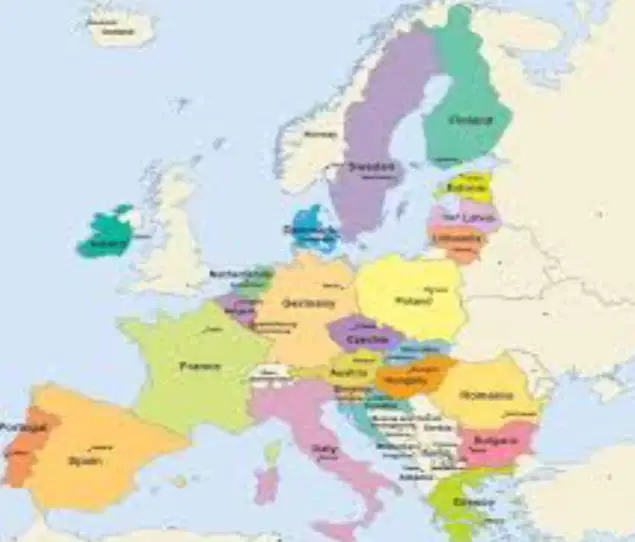
Which continent is shown in the map, and why is it important in the context of exploration?
Europe; it was home to many countries that led exploration efforts
Asia; it was the main destination for explorers
Africa; it was the only continent explored
Australia; it was the starting point for all explorers

What were two main religious reasons that motivated European powers to explore new lands?
To spread their religion and to escape religious persecution
To find gold and to build new cities
To learn new languages and to make friends
To escape from wild animals and to find better weather

Which of the following best describes why some Europeans wanted to escape to new lands?
They wanted to escape religious persecution and worship freely
They wanted to become famous explorers
They wanted to find new types of food
They wanted to learn how to sail ships

Why did some European explorers want to spread their religion to new places?
They believed their religion was important and wanted others to follow it
They wanted to become rich quickly
They were looking for new animals to study
They wanted to build new schools
Which European countries saw colonizing new areas as a chance to spread Catholicism throughout the world?
Spain, Portugal, and France
England, Germany, and Italy
Russia, Sweden, and Norway
Netherlands, Belgium, and Denmark
Why did English groups like the Puritans want to leave England?
To find gold and riches
To worship more freely
To become famous explorers
To spread Catholicism
Which religion did Spain, Portugal, and France aim to spread through colonization?
Protestantism
Buddhism
Catholicism
Judaism

What does the image most likely represent in the context of European exploration?
The search for gold
Religious motivations for colonization
Building new cities
Trading with Native Americans
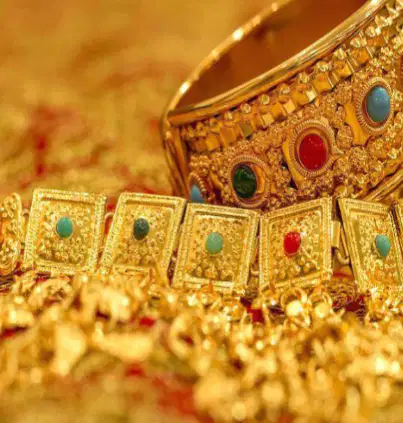
What was a major motivator for European countries during their exploration efforts?
Gold and increasing economic power
Spreading religion
Building new cities
Learning new languages
Explain how the desire for gold influenced the actions of European powers during exploration. Use evidence from the material to support your answer.
Gold was a major motivator because it could increase a country’s economic power.
Gold was not important to European countries.
European countries wanted gold to make jewelry for their leaders.
Gold was only used for trading with other countries.
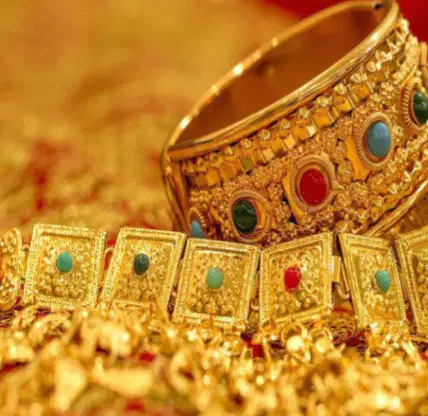
Which two European countries are mentioned as having found and conquered nations to take their gold?
Spain and Portugal
France and England
Italy and Germany
Russia and Greece
From which regions did Portugal find and conquer nations to take their gold?
America
India, Asia, and West Africa
Australia and Antarctica
North and South Pole
Which European country tried to get in on the gold during the age of exploration but was less strong in the navy and slower to colonize America?
England
Spain
France
Portugal
Based on the information, what can you infer about the relationship between naval strength and colonization success during the European exploration period?
Stronger navies helped countries colonize more quickly
Weaker navies always found more gold
Naval strength was not important for colonization
Only land armies mattered for colonization
Which two European countries joined the race for exploration but found more economic success with the fur trade?
France and the Netherlands
Spain and Portugal
England and Italy
Germany and Russia
Why did France and the Netherlands join the race for exploration?
To find gold and gain economic success
To spread religion
To build new cities
To escape war
What is the main idea of mercantilism?
A smaller nation benefits from helping larger nations.
A larger nation benefits from the successes of those exploring new territories.
All nations benefit equally from exploration.
Only colonies benefit from exploration.
Which of the following best describes the relationship between a mother country and its colonies under mercantilism?
The colonies control the mother country.
The mother country benefits from the colonies' successes.
The colonies and mother country are completely independent.
The mother country and colonies share equal power.
Why did European powers support exploration according to the idea of mercantilism?
To help other countries become stronger.
To benefit their own nation by gaining resources and wealth from new territories.
To make travel easier for everyone.
To create equal partnerships with other nations.
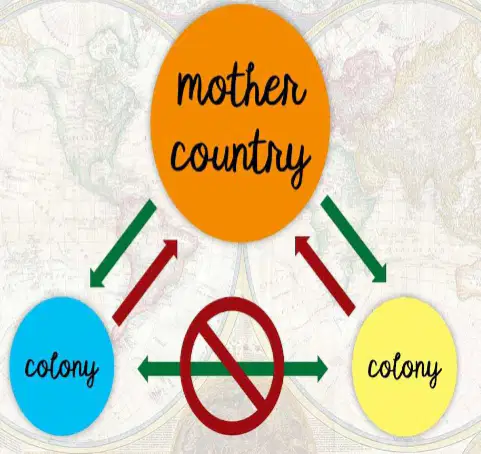
Based on the diagram, what does the blocked arrow between the two colonies suggest?
Colonies could freely trade with each other.
Colonies were not allowed to trade with each other.
Colonies were more powerful than the mother country.
Colonies controlled the mother country.
What was one of the main goals of European countries during the Age of Exploration?
To seek glory in the form of prestige
To avoid contact with other countries
To destroy their own empires
To stop all trade with other nations
What does the word "prestige" mean in the context of European exploration?
Having something other countries had not accomplished
Losing power to other countries
Trading with every country
Avoiding new discoveries
Why did European countries want to develop and expand their empires during the Age of Exploration?
To gain glory and prestige over other countries
To become isolated from the world
To reduce their land and resources
To stop learning about new places
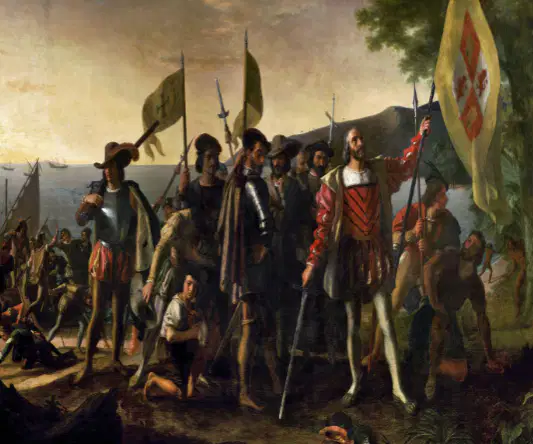
Which historical event is most likely depicted in the image described above?
European explorers arriving in a new land to claim it for their country
A group of farmers planting crops
A peaceful meeting between two local villages
A celebration of a local festival
What was one of the main reasons European countries wanted to explore new lands during the Age of Exploration?
To escape from their own countries
To seek glory through competition
To find new friends
To avoid bad weather
Why did European countries want to be the first to discover new lands?
So they could avoid war
So they could decide what to do with what was discovered
So they could make new maps
So they could build new cities
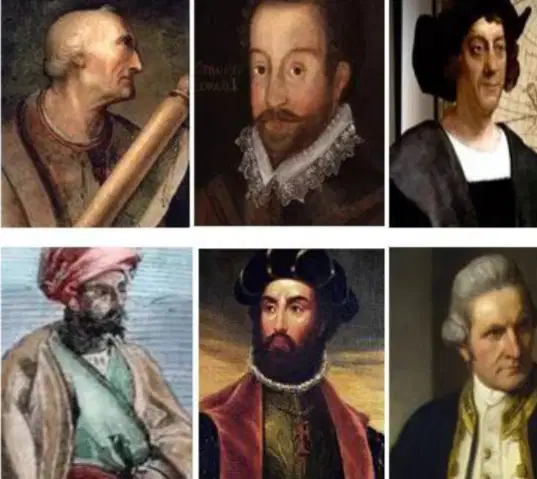
What was one of the main reasons European countries wanted to explore new lands during the Age of Exploration?
To seek glory and become famous
To escape from their own countries
To avoid paying taxes
To find new types of food
Why did European explorers want their names in the history books?
They wanted to be remembered and gain fame
They wanted to become kings
They wanted to build new cities
They wanted to learn new languages
Imagine you are a European explorer during the Age of Exploration. What might motivate you to take risks and travel to unknown places?
The desire for glory and to be remembered in history
The need to find a new home
The wish to avoid school
The hope to become a farmer
What is the main purpose of a compass for explorers?
To determine direction and maintain a consistent course
To measure time
To find food
To communicate with others
Why was the compass especially important for explorers at sea?
It helped them find treasure
It allowed them to determine direction when landmarks were not visible
It was used to catch fish
It made their ships go faster
Which tool allowed explorers to maintain a consistent course during their journeys?
Telescope
Compass
Map
Anchor

What is the object shown in the image used for?
Determining direction
Cooking food
Writing letters
Building shelters
What was the main purpose of the astrolabe for sailors during the Age of Exploration?
To determine latitude by measuring the altitude of the sun or stars
To measure the depth of the ocean
To predict the weather
To communicate with other ships
Which navigational tool enabled sailors to calculate their latitude by observing the sun or stars?
Compass
Astrolabe
Telescope
Sextant
Why was determining latitude important for sailors during the Age of Exploration?
It helped them find their position at sea
It allowed them to catch more fish
It made their ships go faster
It helped them talk to people on land
Imagine you are a sailor during the Age of Exploration. How would you use an astrolabe to help you on your journey?
By measuring the altitude of the sun or stars to find my latitude
By using it to cook food
By using it to steer the ship
By using it to store maps
What was a key feature of the caravel ship that made it important for exploration?
It could carry more cargo than any other ship
Its sails allowed it to sail against the wind
It was the fastest ship ever built
It was made entirely of metal
Why was the caravel useful for exploring new territories?
It could only travel in calm weather
It could navigate in unpredictable conditions
It was used only for fishing
It was too small for long journeys
How did the caravel contribute to the Age of Discovery?
By being the first ship to use steam power
By allowing sailors to explore new territories
By being used only for battles
By staying close to the shore at all times
What was a significant improvement over earlier instruments like the astrolabe for measuring the stars?
Sextant
Compass
Telescope
Barometer
Why was the sextant considered better than the astrolabe for navigation?
It was more accurate, especially in rough waters.
It was smaller and easier to carry.
It could be used to find treasure.
It was made of gold.
Imagine you are a sailor in rough waters. Which tool would help you measure the stars more accurately?
Astrolabe
Sextant
Compass
Map
Who was Christopher Columbus?
An explorer who sailed across the Atlantic Ocean
A famous artist from Italy
A scientist who invented the telephone
A king of Spain
What is one thing you might remember about Christopher Columbus?
He discovered new lands for Europe
He built the first airplane
He wrote famous plays
He was a famous chef
In what year did Christopher Columbus sail on his first voyage across the ocean?
1776
1620
1492
1812
Which three ships did Columbus use on his first voyage?
Mayflower, Titanic, Santa Maria
Nina, Pinta, Santa Maria
Nina, Mayflower, Titanic
Pinta, Santa Maria, Titanic
Who funded Columbus' journey to look for Asia?
The president of the United States
The queen and king of Spain
The emperor of China
The governor of Florida
Why did Columbus sail across the ocean on his first voyage?
To find a new continent
To look for Asia
To escape from Spain
To find gold in Africa
Imagine you are a sailor on Columbus' first voyage. What challenges might you face while searching for Asia with the Nina, Pinta, and Santa Maria?
Getting lost at sea and running out of supplies
Finding a shortcut to Asia by land
Meeting friendly animals on the way
Traveling by airplane
What was the Columbian Exchange?
The movement of people, animals, plants, and diseases between the Old World and the New World after Columbus arrived in 1492.
The trade of gold and silver between Europe and Africa.
The migration of Native Americans to Europe.
The exchange of languages between Asia and North America.
Which year did Columbus arrive, starting the Columbian Exchange?
1776
1620
1492
1812
Why is the Columbian Exchange considered important in world history?
It led to the movement of people, animals, plants, and diseases between continents, changing societies forever.
It was the first time gold was discovered in America.
It marked the end of the American Revolution.
It was when the first map of the world was created.
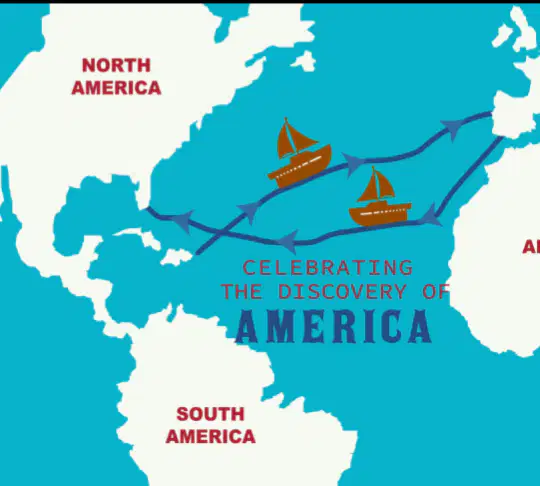
Based on the map, which continents were involved in the Columbian Exchange?
North America, South America, Europe, and Africa
Asia and Australia only
Antarctica and Europe only
North America and Asia only
Which of the following crops was brought from the Old World (Europe) to the New World (America) during the Columbian Exchange?
Wheat
Corn
Potatoes
Tomatoes
Which animals were introduced to the New World from Europe as part of the Columbian Exchange?
Horses, Cattle, Pig, Sheep
Llamas, Alpacas, Guinea Pigs, Turkeys
Elephants, Tigers, Lions, Bears
Kangaroos, Koalas, Emus, Dingoes
What is one example of a disease that was brought from the Old World to the New World during the Columbian Exchange?
Smallpox
Malaria
Chickenpox
Polio
Why was the introduction of diseases like smallpox and measles significant during the Columbian Exchange?
They caused many deaths among the native populations in the New World
They helped improve health in the New World
They were used as medicine
They made crops grow faster
If you were a farmer in the New World after the Columbian Exchange, which new animals might you have started raising?
Cattle and sheep
Llamas and alpacas
Elephants and tigers
Kangaroos and koalas

