
 Worksheets
Venous WK 2
Total questions: 126
Worksheet time: 2hrs 47mins
Transporting blood toward the heart and carrying away the waste products of cellular activity
(a)
functional changes that are associated with or result from disease or injury
(a)
Venous duplex ultrasonography has become the standard for the detection of
Detecting chronic venous obstruction
Arterial clogging
Valvular incompetence
Acute deep venous thrombosis
The venous system in the trunk initially appears bilateral but the (a) structures can degenerate
The venous system in the trunk initially appears bilaterally but the (a) develop as the inferior and superior vena cava
What is the percentage of people born with a double IVC?
1-2%
2-3%
3-4%
4-5%
(a) after birth are linked w venous malformations of the LE and pelvis
The failure of valve leaflets to develop
(a)
Which of the following re developmental anomalies of the venous system
valvular agenesis
congenital venous aneurysms
primary valvular insufficiency
double aorta
How many layers does the veins compose of?
1
2
3
4
Inner layer of single endothelial cells
(a)
Middle layer, a thicker layer of smooth muscles and collagen fiber
(a)
Outer layer, a thin fibrous layer surrounding elastic tissue, contains vasa vasorum
(a)
a network of small blood vessels that supply oxygen and nutrients to the walls of larger blood vessels, such as arteries and veins.
(a)
Superficial femoral vein is also called
(a)
Greater or long saphenous vein is also called
(a)
Smaller or short saphenous vein is also called
(a)
Giacomini’s vein is also called
(a)
Posterior arch vein is also called
(a)
Cockett perforators (I, II, II) also =
(a)
Boyd’s perforator
(a)
Sherman’s perforators
(a)
Hunter’s and Dodd’s perforators also =
(a)
Mays or kusters perforators also =
(a)
The primary veins of the medial superficial system include:
Anterior accessory saphenous vein
Great saphenous vein
Posterior accessory saphenous vein
Saphenous small
The superficial veins assist with the recognition of the (a) and fascia
The (a) covers the saphenous compartment
What does the saphenous fascia separate?
The small saphenous vein from other veins of the superficial compartment
The great saphneous vein from the other veins in the superficial compartment
The accessory saphenous vein from other veins in the saphenous compartment
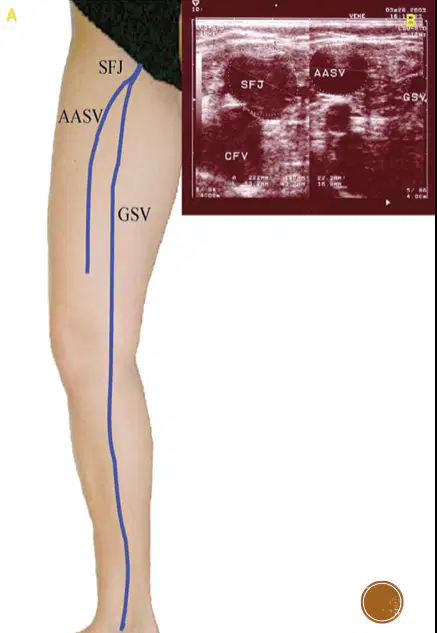
SFJ
(a)
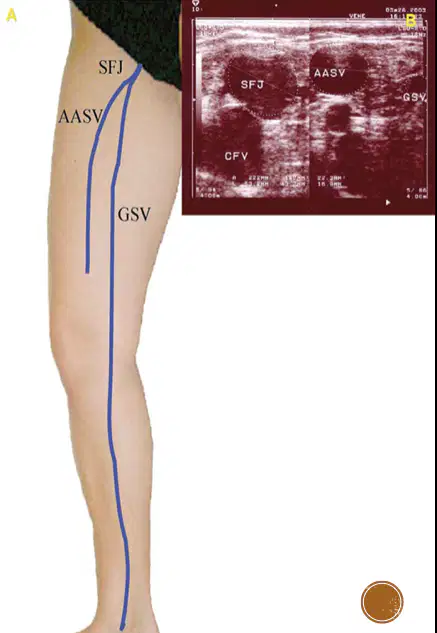
AASV
(a)
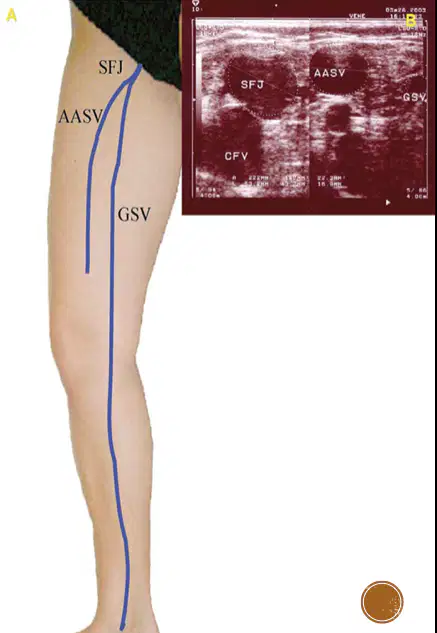
GSV
(a)
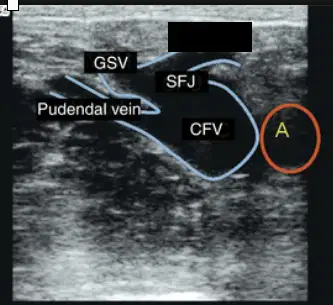
The black box at the top of this image shows the
(a)
Courses along the anterior surface of the thigh.
(a)
Lies between a superficial fascial layer and the deep fascia on the anterior surface of the thigh muscles.
(a)
It joins the deep system at the sapheno-femoral junction (SFJ).
(a)
What does the AASV lie between on the anterior surface of the thigh?
deep and peroneal layer
superficial and deep layer
Superficial fascial and deep fascia

These images show the
(a)
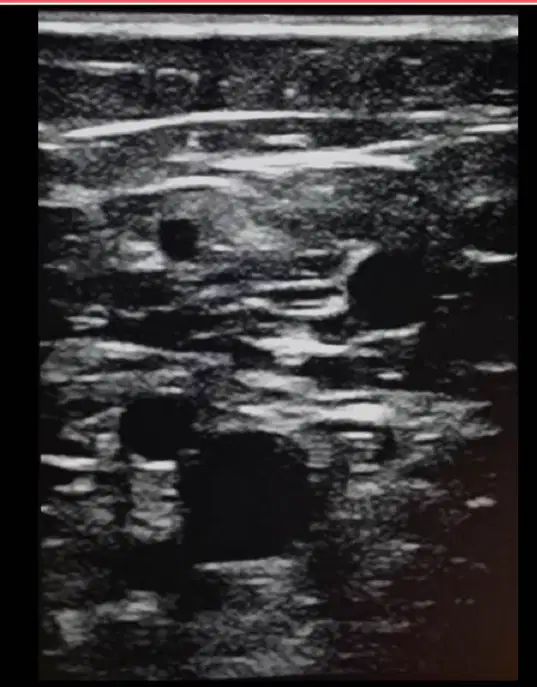
This image shows the
(a)
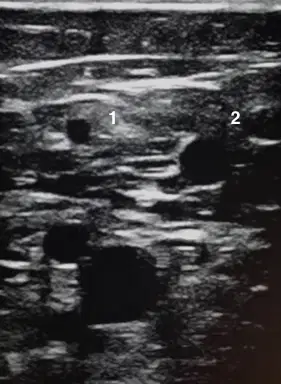
1
(a)
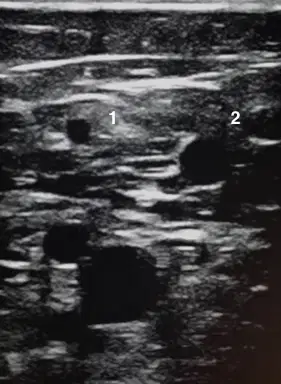
2
(a)
Sometimes there may be multiple AASV’s visualized
True
False
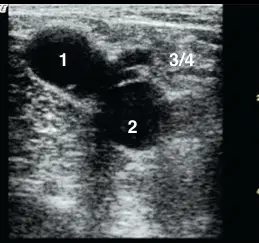
1
(a)
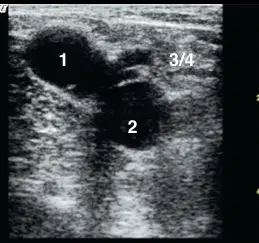
2
(a)
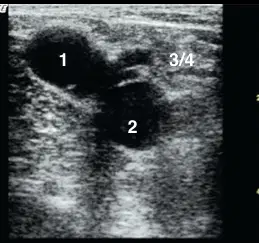
3/4
(a)
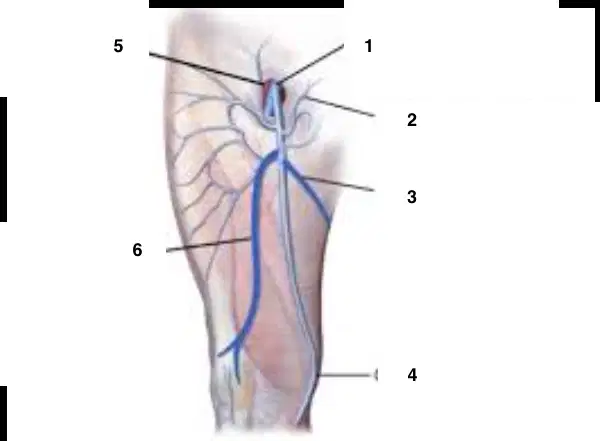
1
(a)
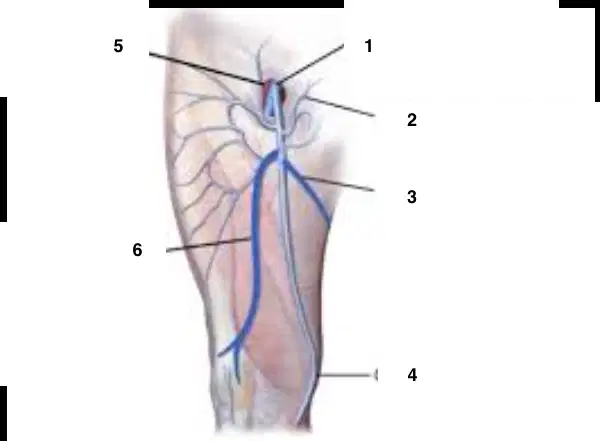
2
(a)
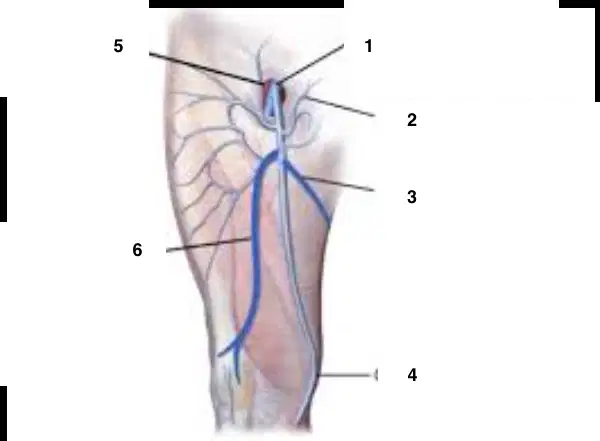
3
(a)
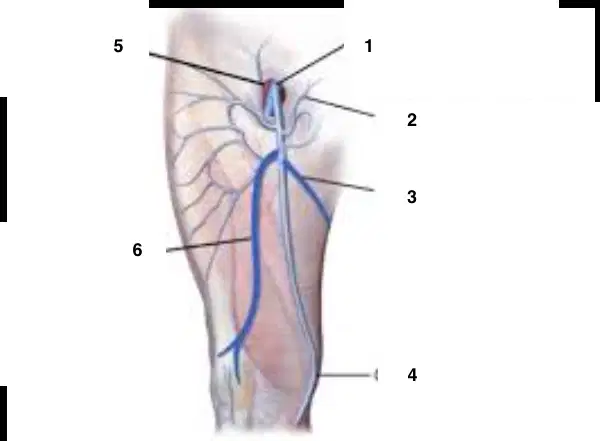
4
(a)
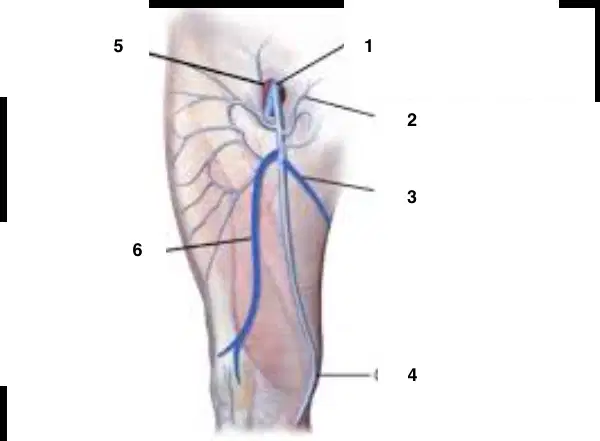
5
(a)
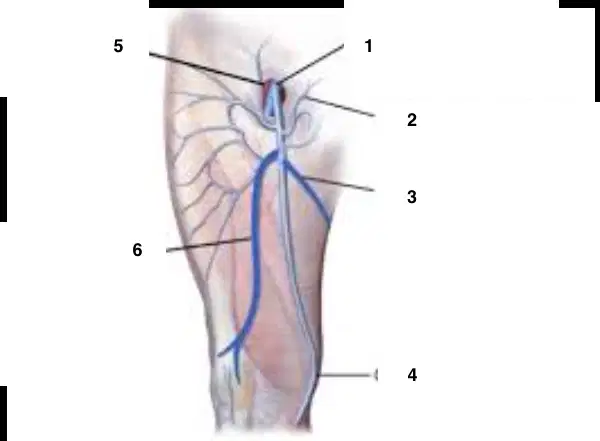
6
(a)
What are the 3 compartments of the superficial and deep veins?
Superficial, saphenous, peroneal
Peroneal, deep, saphenous
Superficial, saphenous, deep
Deep, posterior, anterior
The superficial compartment includes the __ and __
(a)
The saphenous compartment includes the __ and __
(a)
The deep compartment includes the (a)
in the venous system are utilized to allow blood to flow in one direction
(a)
The bicuspid valves have (a) flaps
When do the bicuspid valves close?
after blood is propelled
no where
after blood is propelled
away from the heart
after blood is propelled
backward
after blood is propelled
forward
Venous valves Prone to incur disease in the lower extremity due to
Venous thrombosis
Venous malformation
Increased venous pressure due to
gravity
Increased intra-abdominal pressure
Venous obstruction
How many valves does the GSV have?
6
6-12
12
14
How many valves does the SSV have (small saphenous vein)
6
6-12
12
24
Perforators may contain __ valve, but the larger ones may have __
1 ; 3
2 ; 5
6 ; 7
6 ; 12
How many valves does the infrapopliteal vein contain?
6-10
7-29
7-12
6-8
How many valves does the popliteal and femoral veins have?
1-2
1-3
2-8
6-12
External iliac veins may have valves __ of the time
80%
90%
25%
27%
How many valves does the CFV have?
12
7
2
1
How many valves does the IJV have?
1
2
3
4
How many valves does the axillary veins have?
1
2
3
4
Soleal sinuses, Internal/common iliac, IVC, SVC, and subclavian veins all have (a)
Which of the following veins does NOT contain any number of valves?
External iliac veins
Internal iliac veins
Popliteal veins
Axillary vein
What is the main function of the venous system?
Return blood to the aorta
Return blood to the heart
Return blood to the IVC
Return blood to the brain
he main function of the venous system is to return blood
back to the heart and act as a reservoir to maintain
(a)
an organism’s ability to regulate and maintain stable internal conditions, keeping conditions relatively constant, despite any changes within the external environment
(a)
What is the Blood flow to the tissues in the upper and lower extremities is governed by?
Extraluminal blood pressure
Contractility of the heart
Intraluminal blood pressure
peripheral resistance in the distal end of the arterial “tree”, the capillary bed
What percentage of resting blood volume resides in the venous system?
60-70%
60-65%
60-80%
60-100%
Which of the following corresponds with the resting blood volume typically found in men?
50 ml/kg
70 ml/kg
65 ml/kg
55 ml/kg
Which of the following corresponds with the resting blood volume typically found in women?
65 ml/kg
75 ml/kg
70 ml/kg
45 ml/kg
What percent resides in the smaller postcapillary venules and their collecting systems?
35%
45%
55%
25%
What percent resides in the splanchnic network?
100%
75%
55%
25%
Mechanisms in the veins prevent (a) and assist in the return of blood through the veins against gravitational force
Skeletal muscle contraction
(a)
Venous valves
(a)
Compliance
(a)
Respiratory function
(a)
Pressure gradients
(a)
Motor tone
(a)
Cardiac function
(a)
When the left ventricle contracts, it sends the blood through the (a)
When the left ventricle contracts, it sends the
blood through the arteries: As a (a) pressure, pulsatile stream
As the blood flows through the high resistance arterioles and capillaries, what happens to the pressure?
It gains pressure
It stays the same
It loses pressure
It changes pressures
Low pressure is in (a)
High pressure is in (a)
After the blood leaves the capillaries and enters the venules, its pressure has been reduced to about
10 mmHg11
11 mmHg
14 mmHg
15 mmHg
A reservoir from which blood is pumped by the heart
(a)
Pressure at the central end of the venous reservoir
(a)
What is central venous pressure an important factor in determining?
Cardiac filling
Systolic input
Ejection fraction
Cardiac output
pressure of the heart at the end of diastole
(a)
the amount of blood pumped by the heart per minute
(a)
Determined by the balance between the amount of blood in the veins
(a)
The capacity of the venous system
(a)
Active changes of venous smooth muscle tone can alter
ejection fraction
Venous capacity
Blood volume
cardiac output
The pressure exerted by a fluid at equilibrium, at a given point in time, due to the force of gravity
(a)
In other words, it is the pressure of the blood against the vessel walls
(a)
Hydrostatic pressure: In other words, it is the pressure of the blood (a) the vessel walls
It’s equivalent to the weight of a column of blood extending from the heart to the level where it’s being measured
(a)
HP = PGH
(a)
HP = PGH
P =
(a)
HP = PGH
G =
(a)
HP = PGH
H =
(a)
is related to gravity and distance from the heart.
(a)
Pressure decreases if the upper extremity is raised (a) the level of the heart
Pressure (a) if the upper extremity is raised above the level of the heart
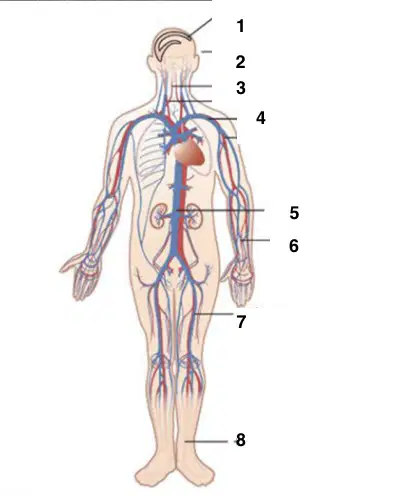
1
(a)
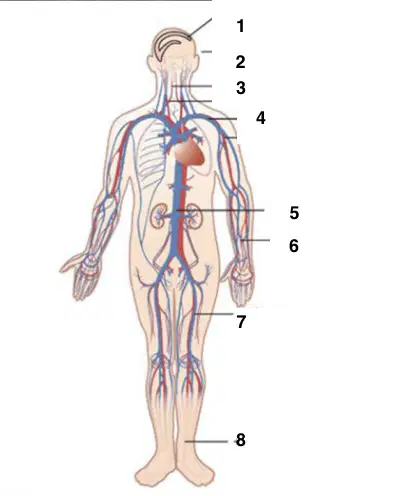
Hydrostatic pressure at 2
0mm
10mm
+6mm
+8mm
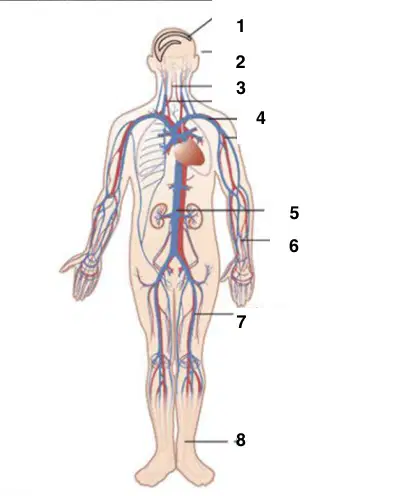
Hydrostatic pressure at 3/4
0mm
10mm
+6mm+
+40mm
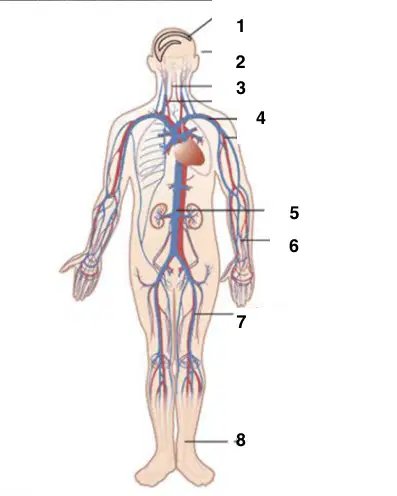
Hydrostatic pressure at 5
0mm
10mm
+22mm
+40mm
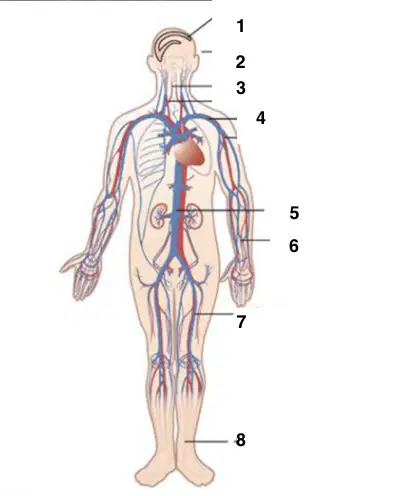
Hydrostatic pressure at 6
0mm
+22mm
+35mm
+66mm
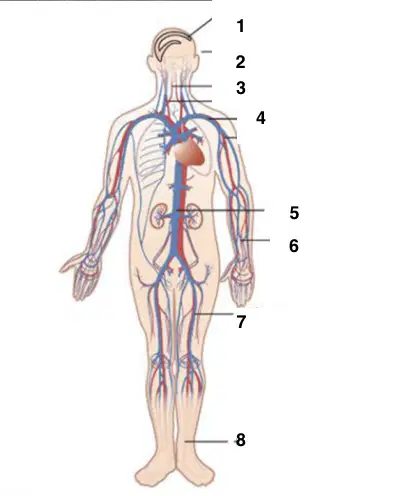
Hydrostatic pressure at 7
+22mm
+40mm
+90mm
+65mm
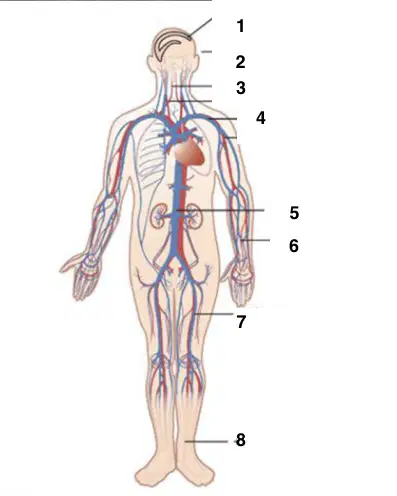
Hydrostatic pressure at 8
+90mm
+66mm
+22m
0mm
Which of the following properly describes venous pressure when the patient supine?
13-30mmHg
50-80mmHg
30-40mmHg
10-15mmHg
Fluids need a (a) to flow through the body
Pressure in the capillaries is typically:
10mmHg
14mmHg
15mmHg
19mmHg
Central venous pressure in the right atrium of the heart is (a) and needs a pressure gradient to exist
In standing position gravity resists the flow of blood from the (a)
In standing position gravity resists the flow of blood from the (a)
What would be the venous pressure in a 6ft tall person?
118mmHg
117mmHg
105mmHg
100mmHg
Hydrostatic pressure is caused by the weight of the column of blood from the ankle to the heart, where the hydrostatic pressure is zero
True
False

