
 Worksheets
Canon t8i DSLR camera
Total questions: 48
Worksheet time: 24mins
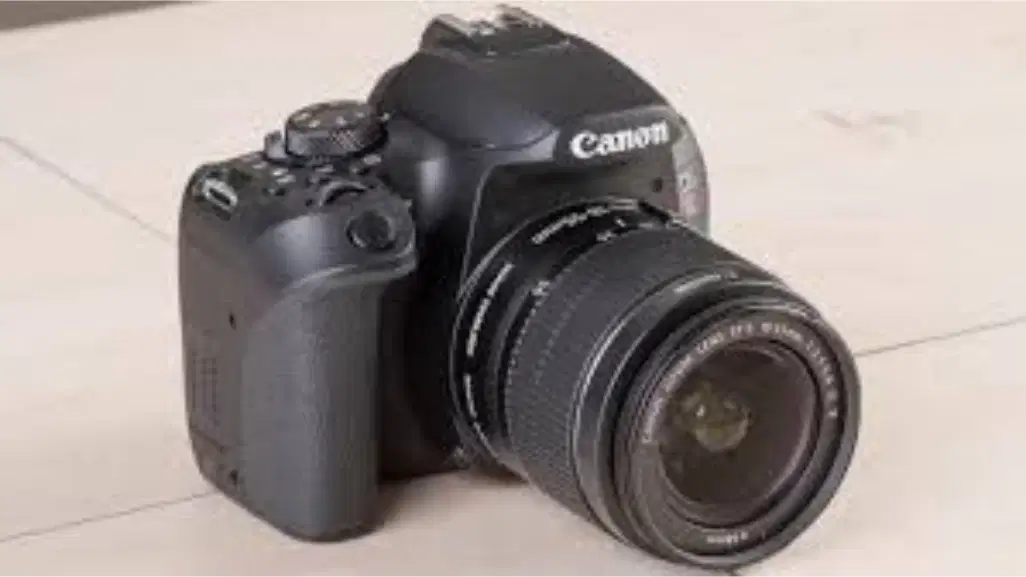
What is the object shown in the image?
Smartphone
Canon t8i DSLR camera
Laptop
Printer
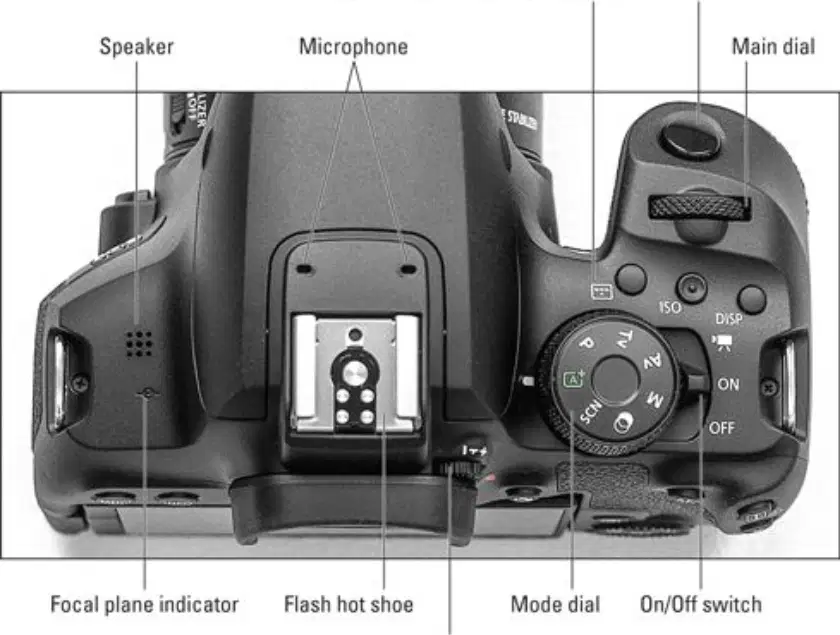
What is the name of the part labeled as 'I' in the Canon t8i camera diagram?
On/Off switch
Shutter button
Mode dial
Flash button
According to the passage, the main camera mode we will use is _______.
manual
automatic
portrait
night
Canon t8i Power Switch: How many components does the On/Off switch have?
One
Two
Three
Four
Canon t8i Power Switch: When the On/Off switch is flipped to the on position, it goes into ______ mode.
picture
video
playback
sleep
Canon t8i Power Switch: When the On/Off switch is flipped up to the camera icon, it goes into which mode?
Picture mode
Video mode
Playback mode
Off mode
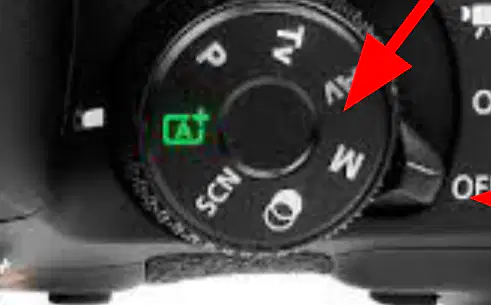
What is the function of the Mode Ring on the Canon t8i camera?
To turn the camera on and off
To select different shooting modes
To adjust the ISO
To activate the flash
Which switch on the Canon t8i camera is used to turn the camera on or off?
Mode Ring
Power switch
Video mode
DISP button
Fill in the blank: The ________ mode on the Canon t8i camera is used for recording videos.
Video
Portrait
Landscape
Macro
Fill in the blank: The ON position on the Canon t8i camera is also known as the ________ mode.
picture
video
manual
auto
What does the Exposure Triangle refer to?
The relationship between three settings on the camera, primarily dealing with light
The relationship between three colors in a photograph
The relationship between three types of cameras
The relationship between three types of lenses
Which of the following are the three settings in the Exposure Triangle?
ISO, Aperture, and Shutter Speed
ISO, White Balance, and Focus
Aperture, Zoom, and Flash
Shutter Speed, Focus, and Zoom
Fill in the blank: The Exposure Triangle mainly controls how a _______ or _______ is created.
photograph, video
painting, sculpture
song, melody
recipe, dish
ISO, Aperture, and Shutter Speed do not work together to give proper lighting for adequate exposure, balancing light and content.
True
False

What are the three main components of the Exposure Triangle in photography?
A) Aperture, Shutter, ISO
B) Brightness, Contrast, Saturation
C) Lens, Sensor, Flash
D) Focus, Zoom, White Balance
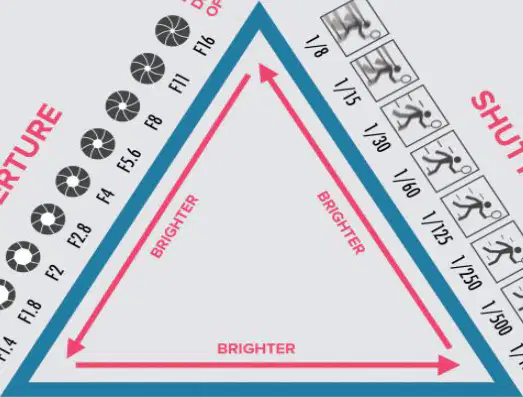
Which aperture value provides a deeper depth of field?
f/1.4
f/2.8
f/8
f/16
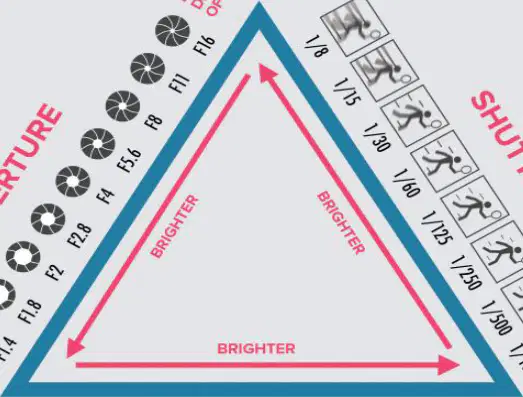
Fill in the blank: Increasing the ISO value in the Exposure Triangle results in ______ grain in the image.
more
less
no
softer
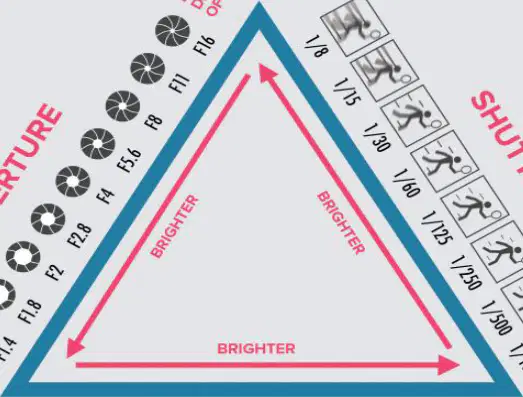
Which shutter speed will result in more motion blur?
1/8
1/60
1/250
1/1000
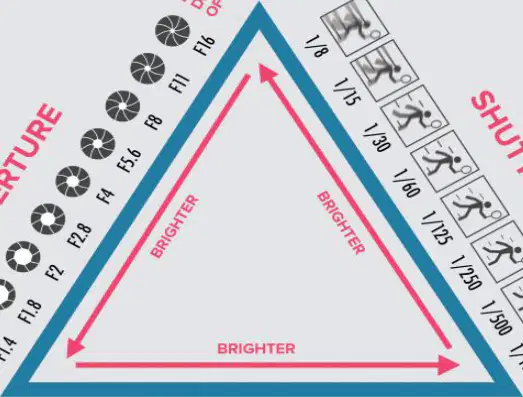
A lower ISO value results in less grain in the image.
True
False
What does ISO control in photography?
A) The color of the image
B) The amount of light that your camera lets in
C) The camera's focus
D) The camera's zoom
ISO values are numerical and increase as the camera’s ______ increases.
light sensitivity
shutter speed
aperture size
focal length
Low ISO values are better in which type of places?
Well-lit places
Dimly lit places
Underwater
At night
If you are outside in sunlight, what ISO value might you use?
1600 or higher
100 or 200
800
3200
High ISO is better in more brighter lit places or places with enough light.
True
False
If you are in a room with dim lighting or shooting outside and it is dark, what ISO value might you use?
100
200
1600 or higher
400
ISO can be adjusted for which reasons?
Technically
Artistically
Both technically and artistically
Neither
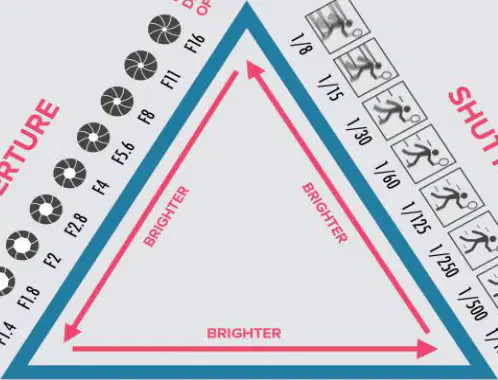
In the Exposure Triangle, increasing the ISO value results in:
Less grain
More grain
Deeper depth of field
Less motion blur
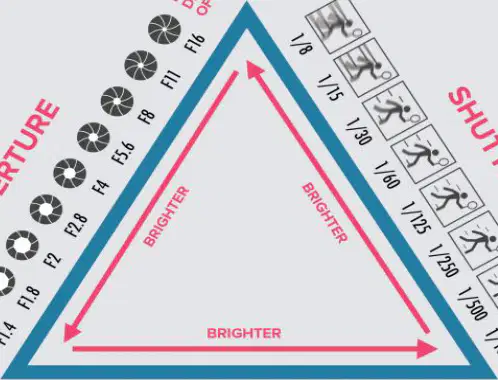
In the Exposure Triangle, a wider aperture (e.g., f/1.4) results in a ______ depth of field.
shallow
deep
infinite
medium
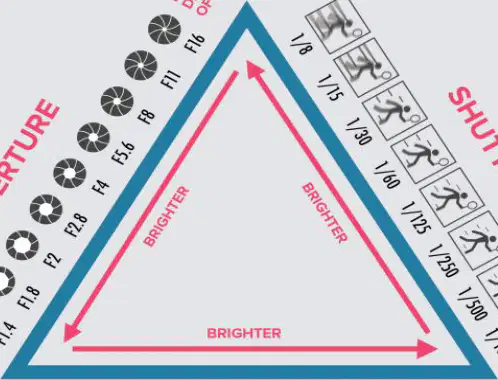
In the Exposure Triangle, a faster shutter speed (e.g., 1/1000) results in:
More motion blur
Less motion blur
More grain
Deeper depth of field
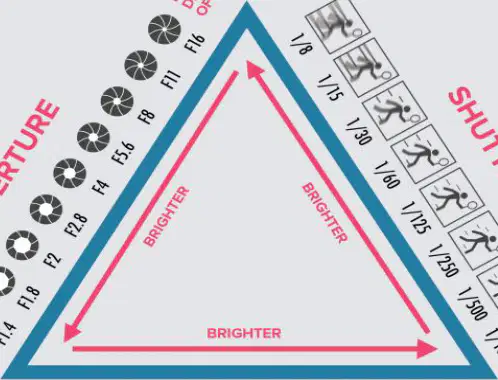
Which component of the Exposure Triangle controls the amount of light entering the lens and affects depth of field?
ISO
Shutter
Aperture
White Balance
What is shutter speed?
The speed at which the camera lens focuses
The speed at which the shutter of the camera closes
The speed at which the camera takes pictures
The speed at which the camera processes images
How is shutter speed usually displayed on the camera screen?
As a decimal
As a whole number
As a fraction
As a percentage
A fast shutter speed creates a shorter exposure, often making an image _______.
darker
brighter
blurrier
sharper
A slower shutter speed causes the camera to take in more light, resulting in a more _______ image.
blurred
sharp
dark
colorful
If your lens focal length is 55 mm, what should your shutter speed be?
1/30
1/55
1/110 or close
1/500
Aperture is the ______ of the lens through which light passes to enter into the camera.
opening
cover
sensor
shutter
Aperture is also known as the ______ of the lens.
pupil
iris
retina
cornea
Aperture is identified on the camera using the ______.
f-numbers
ISO values
shutter speed
white balance
The larger the f stop number, the smaller the hole in the lens.
True
False
What is the effect of a larger f stop number (e.g., f20) on depth of field?
Greater depth of field, with subject and background in focus
Narrow area of focus, more background blurred
No effect on focus
Increases camera shake
The lowest aperture on the cameras we use is ______.
4.8
2.0
5.6
8.0
What does FPS stand for in video terminology?
A) Frames per second
B) Footage per second
C) Film per second
D) Frequency per second
If your frame rate is 24 fps (frames per second), how many frames of video are there in one second?
24 frames
12 frames
48 frames
60 frames
What is the industry standard frame rate for the most natural look to what our eyes see?
24 FPS
30 FPS
60 FPS
120 FPS
35 frames per second is also common as well.
True
False
If you want a slow motion look, you can shoot at which of the following frame rates?
24 FPS
30 FPS
60 FPS or 120 FPS
15 FPS
Fill in the blank: The ________ is used to turn the camera on and off.
On/Off switch
Shutter button
Zoom ring
Flash button
Which part is responsible for capturing audio in the camera?
Microphone
Speaker
Main dial
Focal plane indicator

