
NEW
Font size
 Worksheets
How to Use Markers Quiz
Total questions: 20
Worksheet time: 10mins
How many primary teeth are there in total?
32
24
20
16
At what age do primary teeth typically start to appear?
3 months
6 months
12 months
18 months
At what age does the first molar typically appear in humans?
6 years old
12 years old
18 years old
10 years old
Which of the following is a characteristic of adult teeth?
Smaller size and whiter
Larger size and not as white
Same size and whiter
Smaller size and not as white
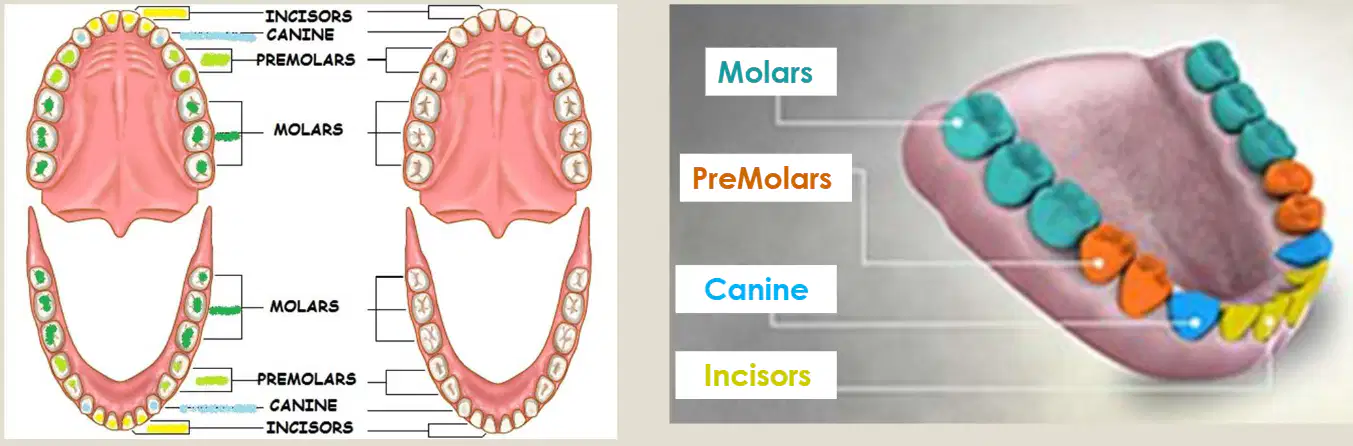
Which type of teeth are primarily used for grinding food?
Incisors
Canine
Molars
PreMolars
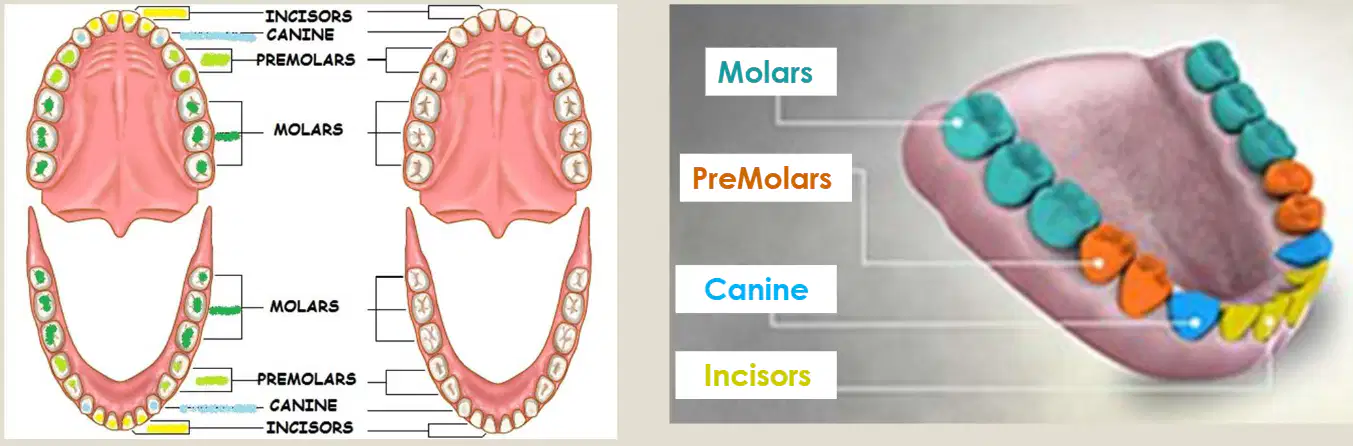
What type of teeth are located at the front of the mouth and are used for cutting?
Molars
PreMolars
Canine
Incisors
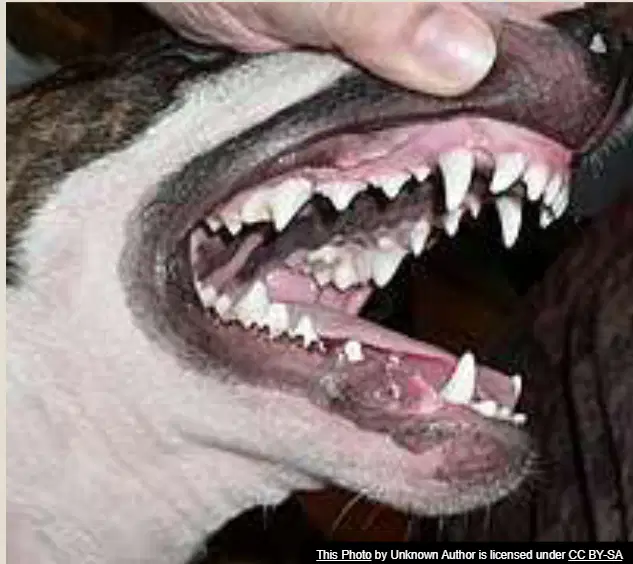
What is a characteristic of canine/cuspid teeth?
They have multiple roots.
They are the shortest teeth.
They are single rooted teeth.
They are located at the back of the mouth.
Which statement is true about canine/cuspid teeth?
They are the shortest and least stable teeth.
They are the longest and most stable teeth.
They are located in the middle of the mouth.
They are the first teeth to be lost.
What is the function of the pointed buccal cusps of premolars?
Grind the food
Hold the food
Tear the food
Cut the food
How many cusp tips do premolars typically have?
1-2
2-3
3-4
4-5
Which of the following is a characteristic of molars compared to premolars?
Narrower
Broader
Longer
Shorter
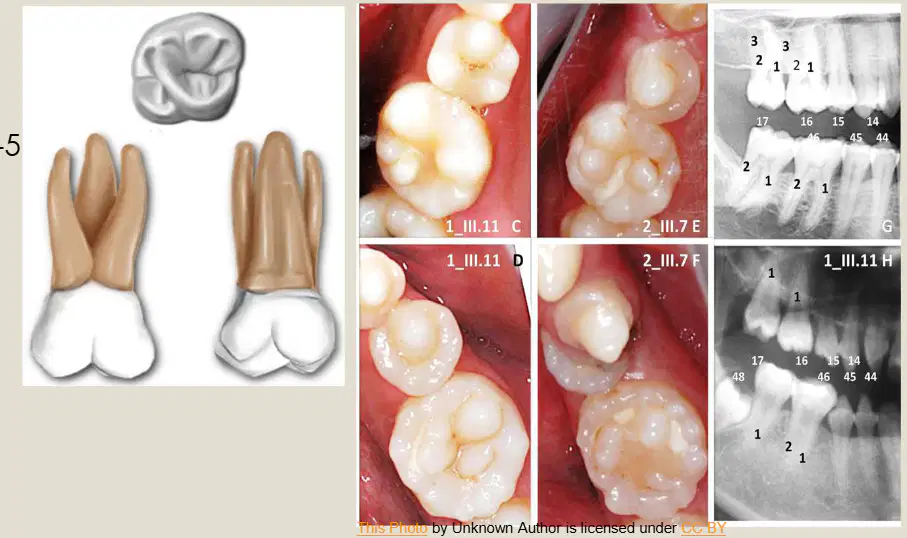
In what ways do maxillary and mandibular molars differ from each other?
Color
Shape, size, number of cusps, and number of roots
Only in size
Only in shape
What are the posterior teeth?
Incisors and canines
Premolars and molars
Canines and molars
Incisors and premolars
How are the posterior teeth aligned?
With significant curvature
In a zigzag pattern
With little or no curvature
In a circular pattern
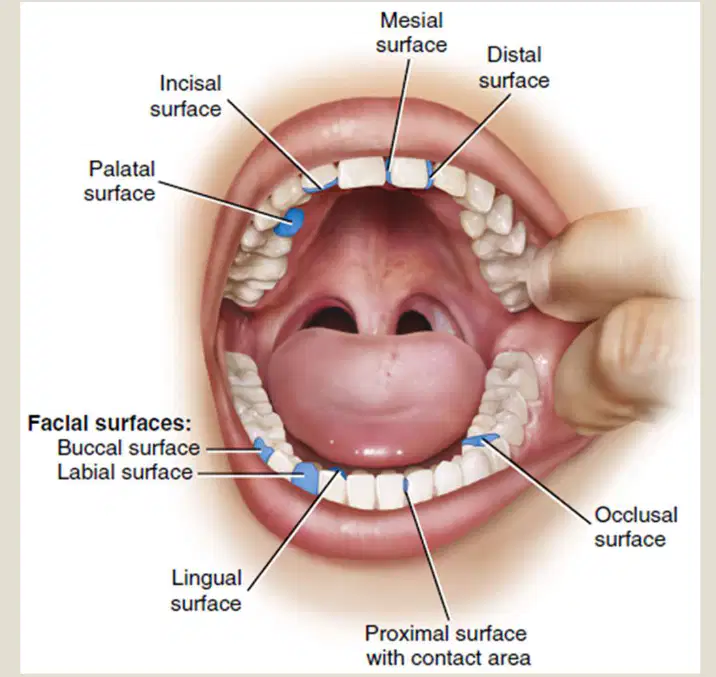
Which surface of the tooth is closest to the face, lips, or cheeks?
Lingual Surface
Mesial Surface
Facial Surface
Distal Surface
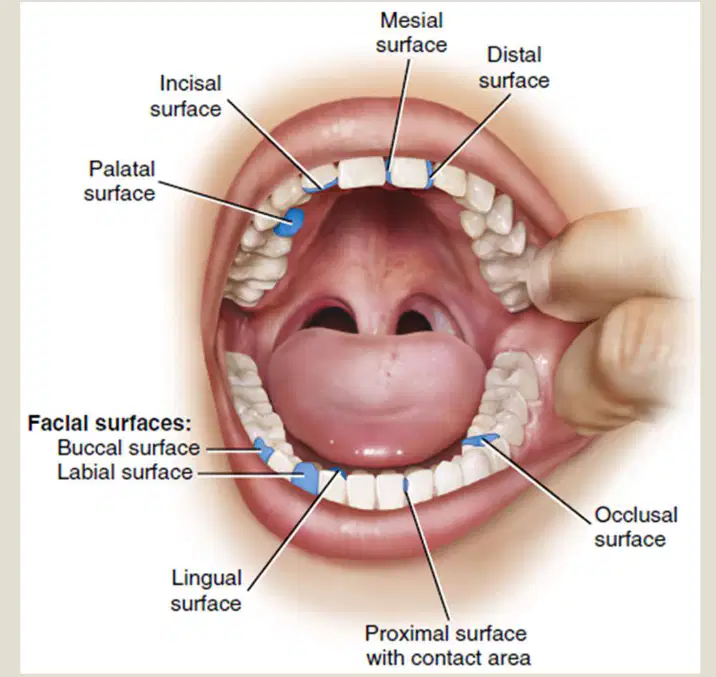
What is the surface of the tooth called that is closest to the tongue?
Occlusal Surface
Lingual Surface
Mesial Surface
Buccal Surface
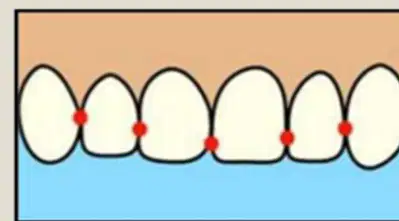
What is the function of the contact points between teeth?
They help in the digestion of food.
They prevent food from being trapped between the teeth.
They assist in the production of saliva.
They enhance the taste of food.
Which of the following is a purpose of embrasures?
To enhance tooth color
To prevent food from being forced into the contact area
To increase tooth length
To support the tooth root
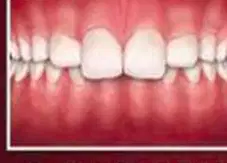
What is the term for a dental occlusion where the upper teeth significantly overlap the lower teeth vertically?
Overbite (Deep Bite)
Crossbite (Front Teeth)
Open Bite
Overjet (Protrusion)

Which class in Angle's Classification is characterized by a normal molar relationship?
Class 1
Class 2
Class 3
Class 4

