
NEW
Font size
 Worksheets
ETL Module 1: Alphabetic and Print Knowledge
Total questions: 68
Worksheet time: 34mins
What is alphabetic knowledge?
The knowledge of numbers and their values
The knowledge about the letters in our alphabet, what the letters look like, what the names of the letters are, and what sounds go with each letter
The knowledge of how to write essays
The knowledge of different languages
What is print knowledge?
The knowledge of the nature and uses of print
The knowledge of how to print documents
The knowledge of numbers
The knowledge of colors
Children with strong alphabetic and print knowledge skills are more likely to be ______ in their early reading efforts.
successful
confused
distracted
hesitant
What is decoding in the context of reading?
Writing stories
Using knowledge of the correspondence between letters and their sounds to translate print to speech
Memorizing words
Drawing pictures
Dr. Piasta described the connection between alphabetic knowledge and phonological awareness as important for emergent literacy. Why is it important to regularly incorporate both aspects into your lessons?
Because both are essential components of emergent literacy development.
Because only alphabetic knowledge matters for reading.
Because phonological awareness is unrelated to literacy.
Because neither impacts student learning.
The alphabetic principle refers to:
The skill of reading words backwards.
The ability to write in alphabetical order.
The knowledge of all the letters in the alphabet.
The understanding that letters and letter patterns represent the sounds of spoken language.
Children who know many or all of the letters of the alphabet before kindergarten are more likely to succeed in early reading.
True
False
What does print knowledge help children recognize?
That print is colorful
That print conveys meaning
That print is only for adults
That print is always in books
Fill in the blank: Print knowledge is a child's understanding that written language has a direct connection to ________ language.
oral
visual
sign
body
Which of the following is a nonverbal cue for teaching print knowledge mentioned in the worksheet?
Explaining the meaning of words
Pointing to the top of the page as you begin reading a story
Asking children to write their names
Reading aloud to children
The worksheet states that understanding print has many different forms and uses is included in print knowledge.
True
False
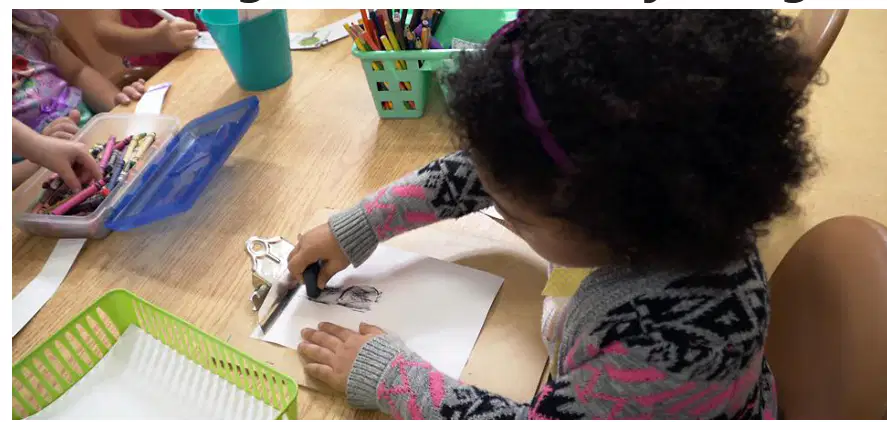
As a prekindergarten teacher, what is a good place to start when helping children learn to recognize and name individual letters?
Teach children to chant or sing an alphabet song
Teach children to write sentences
Teach children to read stories
Teach children to count numbers
Why is it important to choose an alphabet song or chant that clearly pauses between L, M, N, O, and P?
It helps children distinguish the names of each letter rather than running these letter names together.
It makes the song more entertaining for adults.
It shortens the time needed to sing the alphabet.
It helps children memorize the tune more easily.
According to the passage, what can be easily incorporated into circle time and transition times to help children learn the alphabet?
Alphabet songs and games
Math games
Storybooks
Drawing activities
Why is learning an alphabet song not sufficient to teach alphabetic knowledge?
Because alphabet songs only introduce children to the names of the letters, but do not explicitly connect the name of a letter to its shape or help children recognize and produce the sounds that go with individual letters.
Because alphabet songs are too difficult for most children to memorize.
Because alphabet songs focus only on uppercase letters and ignore lowercase letters.
Because alphabet songs teach children to read words instead of individual letters.
What is one way children can use their familiarity with letter names, as described in the passage?
Children can use their familiarity with letter names to recognize and produce the sounds that go with individual letters.
Children can use their familiarity with letter names to memorize entire books.
Children can use their familiarity with letter names to skip learning letter sounds.
Children can use their familiarity with letter names to write full sentences without help.
What are the three main steps for teaching letters of the alphabet according to Dr. Shayne Piasta's plan described in the video?
1. Teacher explicitly teaches the new concept. 2. Teacher invites the child to apply their new knowledge alongside the teacher. 3. Child practices the new concept on their own while the teacher monitors and provides support as needed.
1. Child learns the alphabet through songs only. 2. Teacher gives a test immediately. 3. Students memorize without practice.
1. Teacher assigns homework first. 2. Students practice at home. 3. Teacher reviews the homework in class.
1. Teacher reads a story. 2. Students draw pictures. 3. Teacher asks students to guess the letters.
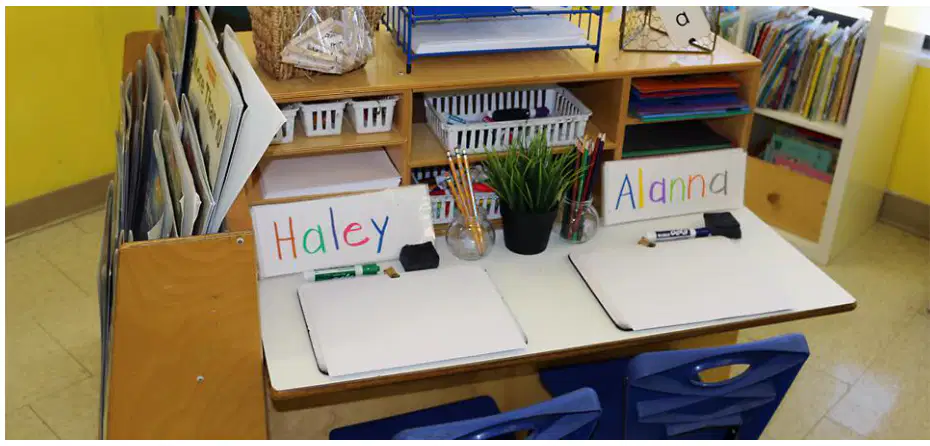
What is a good practice to incorporate into your classroom to teach the letters of the alphabet?
Using children’s names
Using numbers
Using animal pictures
Using colors
What should teachers do to help children become familiar with the letters in their names, according to the passage?
Ignore the names
Call attention to name labels regularly
Only use numbers
Remove all labels
Fill in the blank: Using children’s names to introduce and teach the letters of the _______ is a great practice to incorporate into your classroom.
alphabet
calendar
classroom
playground
According to the passage, what can children use as anchors to help remember the names and shapes of the letters?
Children can use important words such as their names as anchors to help remember the names and shapes of the letters.
Children can use numbers as anchors to help remember the names and shapes of the letters.
Children can use colors as anchors to help remember the names and shapes of the letters.
Children can use animal sounds as anchors to help remember the names and shapes of the letters.

What activity introduces the concept of alphabetic knowledge to children?
Asking children to sing alphabet songs and learn the letters of their names introduces the concept of alphabetic knowledge.
Encouraging children to draw pictures of animals introduces the concept of alphabetic knowledge.
Teaching children to count numbers introduces the concept of alphabetic knowledge.
Letting children play with building blocks introduces the concept of alphabetic knowledge.
There is a systematic relationship between the name of a letter and its appearance.
True
False
Why is repetition of the letter name – letter shape link important for children?
Repetition of the letter name – letter shape link is important to help children solidify their knowledge of the alphabet.
It helps children memorize unrelated words quickly.
It encourages children to skip learning letter sounds.
It allows children to focus only on writing numbers.
Teachers need to pronounce the letter name in a clear manner when introducing letters to children because:
It helps children learn and recognize the letter correctly.
It makes the lesson longer and more complicated.
It is not important for children's understanding.
It confuses children about the letter's sound.
Review the emergent reading standards in the Companion Guide. Which standards were demonstrated during the Letter Bracelets Activity video?
The standards related to letter recognition and phonemic awareness were demonstrated.
The standards related to advanced reading comprehension were demonstrated.
The standards related to writing full sentences were demonstrated.
The standards related to independent book analysis were demonstrated.
What is a useful way to begin teaching letter names to children?
Using number books
Using alphabet books
Using storybooks
Using picture books
Fill in the blank: Alphabet books provide children the opportunity to learn about the visual appearance of letters, the association between the appearance of the letter and its sound, and ________ that use a particular letter.
common words
musical notes
mathematical symbols
historical dates
Classic alphabet books, such as Chicka Chicka Boom Boom, can prompt many activities for learning letter names.
True
False
According to the passage, a teacher might avoid introducing letters that share the same visual features all at once because:
it can help prevent confusion among students learning to recognize different letters.
it makes the lesson more entertaining for students.
it allows students to learn faster by grouping similar letters.
it is required by most school curriculums.
Some ways a teacher can blend individual and group instruction in this context are:
Using a mix of solo assignments and collaborative projects.
Focusing only on group activities.
Assigning only individual work without collaboration.
Allowing students to choose between group or individual work without guidance.
Which of the following is an appropriate time during the day to support children in reviewing letter names?
During transitions between activities
Only at the end of the school day
While children are eating lunch
After children have gone home
It is important to monitor each child's progress in recognizing and naming individual letters throughout the year because:
it helps identify students who need additional support early on.
it is not necessary for effective teaching.
all children learn at the same pace.
letter recognition is only important at the end of the year.
The Zone of Proximal Development refers to:
the resources available to a student in a classroom
the physical area where learning takes place
the amount of time needed to master a skill
the difference between what a learner can do without help and what they can do with guidance
Small group activities allow children to receive extra practice and allow teachers to monitor each child’s progress.
True
False
A logistical challenge for teachers when it comes to individual instruction and interaction with each child every day is:
Limited time available for each student
Lack of classroom materials
Too many field trips
Excessive homework assignments
Which of the following is NOT a category in the Zone of Proximal Development diagram?
A) Can Do Independently
B) Can Do If Guided
C) Cannot Do Even If Guided
D) Can Do Without Practice
Cumulative practice activities are lessons involving both ________ and previously taught letters.
punctuation marks
mathematical symbols
newly introduced letters
numbers
Children typically learn to recognize and name which type of letters more readily during the year?
Uppercase letters
Lowercase letters
Cursive letters
Greek letters
By the end of the year, children should be able to recognize and name some lowercase letters.
True
False
According to Shayne Piasta, Ph.D., a child's writing can tell us about their development in which of the following ways?
It shows their preference for certain colors.
It provides insight into their literacy and cognitive growth.
It reveals their favorite foods.
It indicates their athletic abilities.
It is helpful for children to learn the name of a letter before they learn the sound of the letter because:
knowing the letter name helps them connect the symbol to its sound more easily.
the letter name is always the same as the sound it makes.
children can skip learning the sound if they know the name.
letter names are more important than letter sounds.
In addition to being able to recognize each letter, children need to know the most common sound each letter makes. Which of the following letters is more difficult for children to master the sound of?
S
M
W
N
In addition to being able to recognize each letter, children need to know the most common sound each letter makes. Fill in the blank: When you say the name of the letter 'm', you can hear the ____ sound.
m
s
t
b
It is important that the key word for each letter reinforces the most common sound for that letter because:
it encourages students to use less common sounds first.
it makes learning the alphabet more entertaining.
it ensures students memorize the alphabet order.
it helps students associate the letter with its most frequent sound.
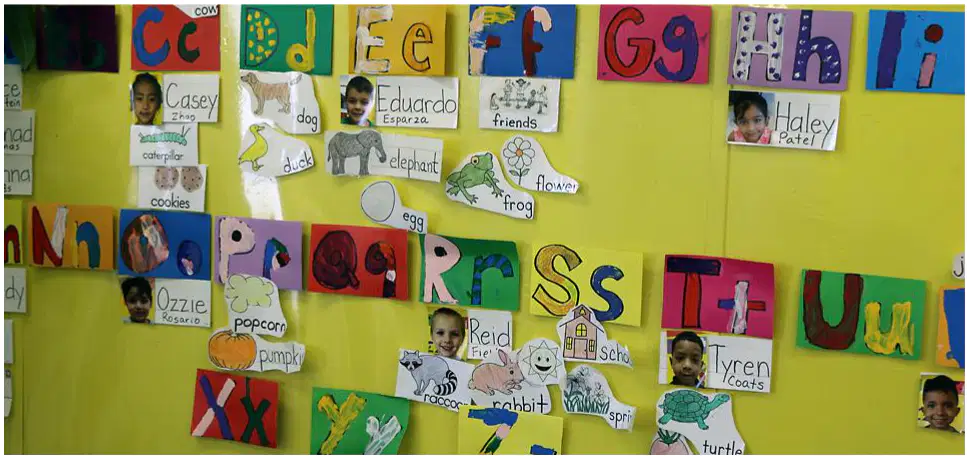
To meet the relevant Standards, what do children in your classroom need to know about alphabetic and print knowledge skills?
They need to understand letter names, letter sounds, and how print works.
They need to memorize only the alphabet song.
They need to focus only on writing their names.
They need to skip learning about print concepts.
Meeting all children where they are in their alphabetic and print knowledge skills involves:
Focusing only on advanced learners.
Teaching all children the same skills at the same pace.
Assessing each child's current skills and providing targeted instruction.
Ignoring individual differences in skill levels.
According to the passage, why is it important for teachers to continuously monitor the progress of each child?
To ensure all children learn at the same rate
To help teachers adapt instruction to meet the needs of each child
To compare children with each other
To reduce the amount of instruction needed
Fill in the blank: An example of this is when a teacher joins children in the sandbox and models writing various _______ in the sand with her finger.
letters
numbers
shapes
animals
According to the passage, what should teachers look for when grouping children for instruction?
Group children randomly
Group children according to ability for both remediation and mastery
Group children by age only
Group children based on their favorite color
Differentiated instruction applies only to children who have already achieved mastery.
True
False
During small group time, what is one activity a teacher might assign to a more advanced group of children, according to the print example?
A more advanced group may be asked to match the letters to a picture that begins with the corresponding sounds.
A more advanced group may be asked to draw pictures of their favorite animals.
A more advanced group may be asked to listen to a story without participating.
A more advanced group may be asked to play outside during small group time.
According to the passage, how can more advanced children assist those who are not as advanced?
More advanced children can compete with less advanced children to motivate them.
More advanced children should ignore those who are not as advanced.
More advanced children can model for, and even assist, children who are not as advanced.
More advanced children should be separated from less advanced children.
English language learners come from one of three language backgrounds: alphabetic writing systems, logographic writing systems, or ______ writing systems.
syllabic
phonetic
morphemic
semantic
Which of the following is an example of a language with an alphabetic writing system?
A) Chinese
B) Japanese
C) English
D) None of the above
Read the passage below and fill in the blank: In logographic writing systems such as Chinese, each character represents a unit of ______.
alphabet
sound
grammar
meaning
Why is it helpful for teachers to know about a child's native language?
It helps them teach math better
It helps them teach letters and sounds more effectively
It helps them with classroom management
It is not helpful at all

When modifying instruction, why might it be useful to focus on one letter at a time for a child with cognitive or language delays?
To avoid overwhelming the child
To speed up learning
To teach all letters at once
To avoid repetition
When modifying instruction, what might a child with physical disabilities need in order to participate in some activities?
A) A change of pacing
B) Accommodations for physically participating
C) More homework
D) Less practice
Fill in the blank: For children with varying special needs, it can be beneficial to explicitly teach each ______ of the alphabet receptively first.
letter
color
sound
shape
Science or social studies lessons can be adapted to incorporate which of the following activities?
Physical education drills
Mathematics problem-solving
Alphabet knowledge activities
Art history analysis
A change of scenery can enhance children's engagement with a lesson by:
making the learning environment more stimulating and interesting
increasing the difficulty of the lesson
reducing the need for teacher involvement
making students less focused on the lesson
Planning for Literacy in my Classroom Worksheet can help teachers use their curriculum and other resources to plan for systematic instruction of Alphabetic and Print Knowledge throughout the year by:
Ignoring the curriculum and using random resources each week.
Focusing only on spontaneous teaching moments without planning.
Relying solely on student-led activities for instruction.
Integrating curriculum resources to create a year-long plan for systematic instruction.
Maximizing children’s opportunity for learning Alphabetic and Print Knowledge can be achieved by:
Using teachable moments throughout the day
Limiting literacy activities to scheduled times only
Focusing only on letter recognition worksheets
Waiting for children to ask about letters
Some ways to augment your curriculum planning and weekly scheduling to ensure a systematic plan to teach all letter names and many letter sounds throughout the school year include:
Focusing solely on reading comprehension strategies
Teaching letters only when students ask about them
Creating a year-long scope and sequence for letter instruction
Introducing all letters in a single week
What is one way to make daily letter activities playful and play-based in the classroom?
Incorporate games and hands-on activities
Assign only worksheets for practice
Limit activities to silent reading
Focus solely on memorization drills
Key opportunities for practicing letter names and letter sounds with children throughout the day include which of the following?
Exclusively during outdoor playtime
Only at the end of the school day
During morning meeting and small group activities
Only during snack time
Some of the ideas you have seen that you intend to incorporate into your classroom are:
Avoiding the use of technology in lessons
Ignoring student feedback
Focusing only on lectures without engagement
Collaborative group work and interactive activities

