
 Worksheets
Regulator and Torch Flame Quiz
Total questions: 27
Worksheet time: 14mins

What is the purpose of a check valve in a regulator's outlet?
To increase the pressure of the gas
To prevent flashback from traveling through the supply hose
To decrease the temperature of the gas
To mix oxygen and acetylene
What is a characteristic of a carburizing flame?
It has too much oxygen
It has a single blue cone
It generates a lot of smoke
It has a short, sharp flame
How can a technician tell when the torch flame is properly adjusted?
By the sound of the flame
By the appearance of the torch flame
By the temperature of the flame
By the color of the gas
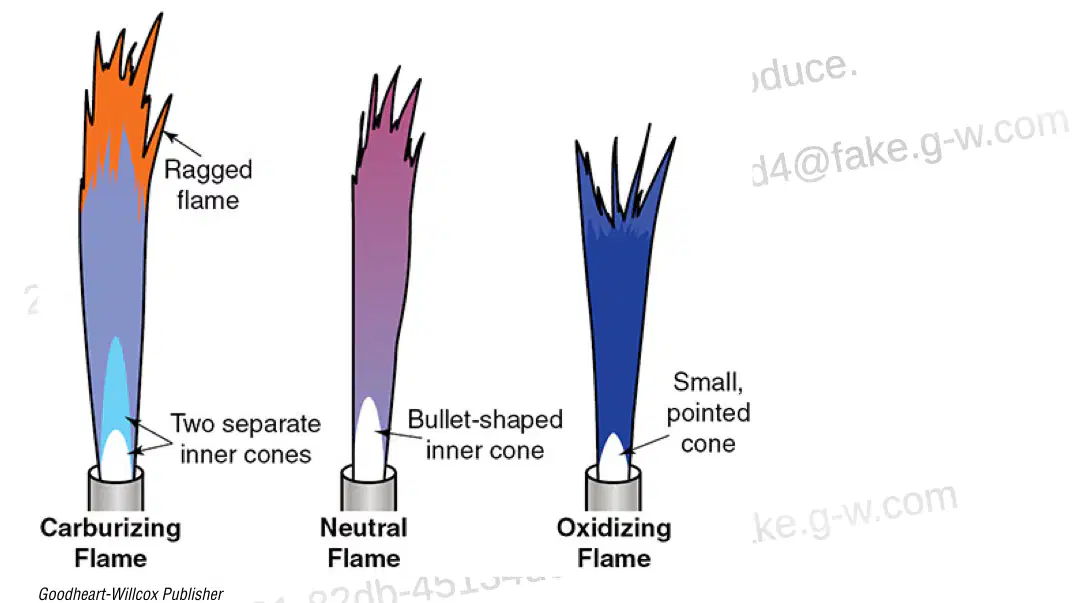
What is a characteristic of an oxidizing flame?
It has a ragged flame.
It has a bullet-shaped inner cone.
It has a small, sharply pointed, white inner cone.
It has two separate inner cones.
Which type of flame is most efficient for brazing and soldering joints?
Carburizing flame
Neutral flame
Oxidizing flame
Ragged flame
What is the process of joining metal objects by heating them and applying a filler metal called?
Welding
Soldering
Brazing
Melting
What is capillary action in the context of soldering?
The movement of a liquid substance between two solid substances.
The melting of metals at high temperatures.
The cooling of metals after heating.
The separation of metals during soldering.
What is the melting point of a tin-lead solder?
360°F
420°F
460°F
375°F
Which solder composition is recommended for soldered joints subjected to very low temperatures?
50/50 tin-lead
95/5 tin-antimony
60/40 tin-lead
96/4 tin-silver
What safety equipment should be worn when soldering?
Gloves
No. 2 filter lens or darker eye protection
Earplugs
Hard hat
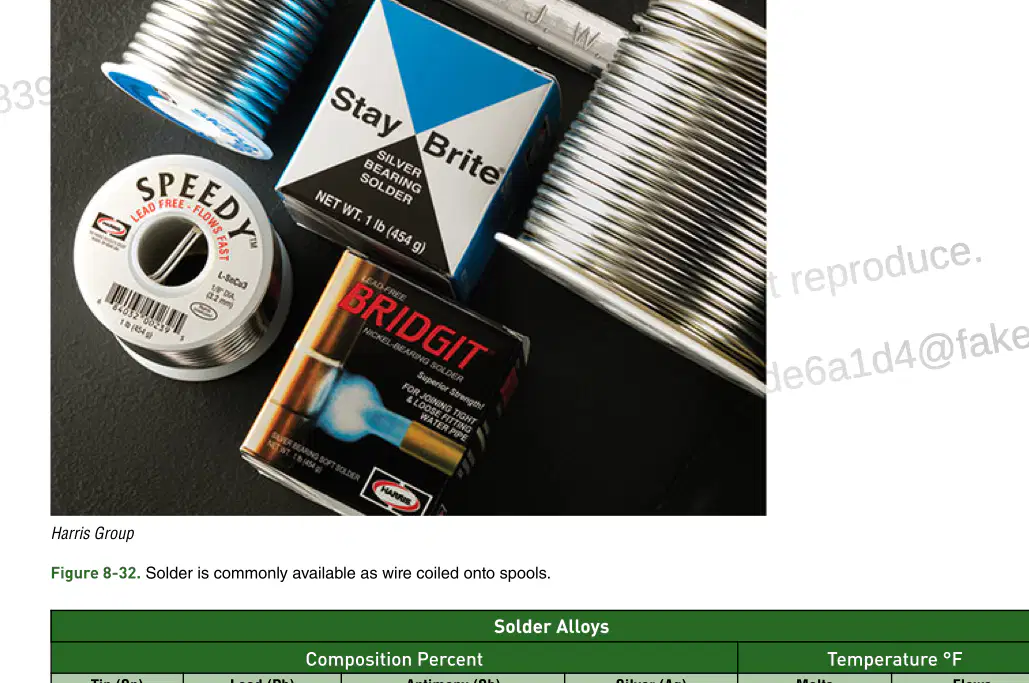
Why should you not solder with 100% tin?
It melts too quickly
It may slowly disintegrate when exposed to cold
It is too expensive
It is not conductive
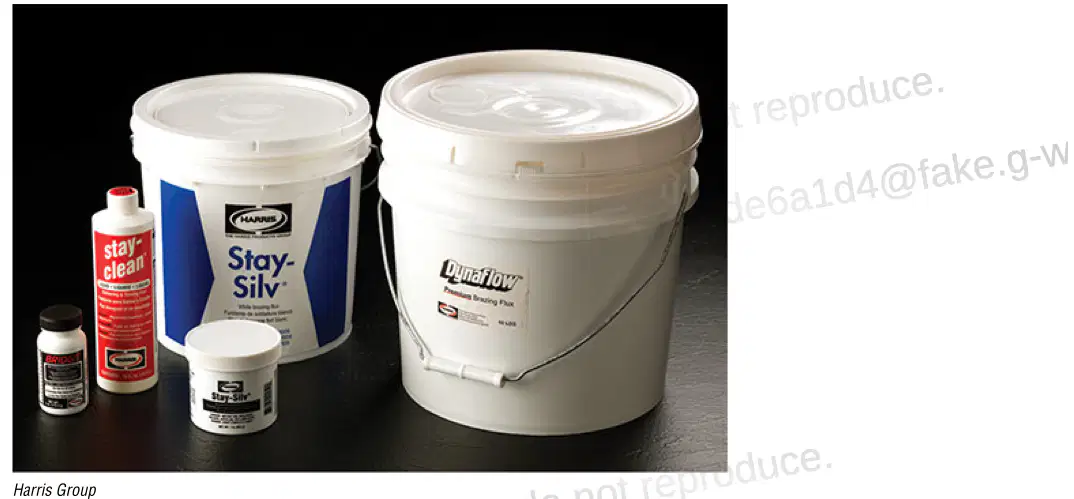
What is the purpose of flux in creating a solder joint?
To cool the solder joint
To prevent oxide formation and aid solder flow
To heat the solder joint
To remove excess solder
What is the first step in the soldering procedure?
Apply flux to the tubing
Heat the tubing and fitting
Make sure the tubing and fittings being connected are dry
Assemble the tubing and fitting together
Why should the torch flame be directed at the tubing during soldering?
To cool the tubing
To clean the tubing
To heat the joint and surrounding area to a temperature above the melting point of the solder
To apply flux to the tubing
What is the primary purpose of brazing in metalwork?
To melt metals completely
To join metal objects by heating them above their melting point
To join metal objects by heating them below their melting point
To cool metals rapidly
Which of the following is a characteristic of brazing filler metals compared to solder?
Lower melting point
Higher melting point
Same melting point
No melting point
What is a safety precaution to take when using brazing alloys containing cadmium?
Use in a closed space
Ensure the area is well ventilated
Use without any protective gear
Mix with other metals
What is the typical melting temperature range for brazing filler metals used in refrigeration work?
500°F to 800°F
1000°F to 1500°F
1500°F to 2000°F
2000°F to 2500°F
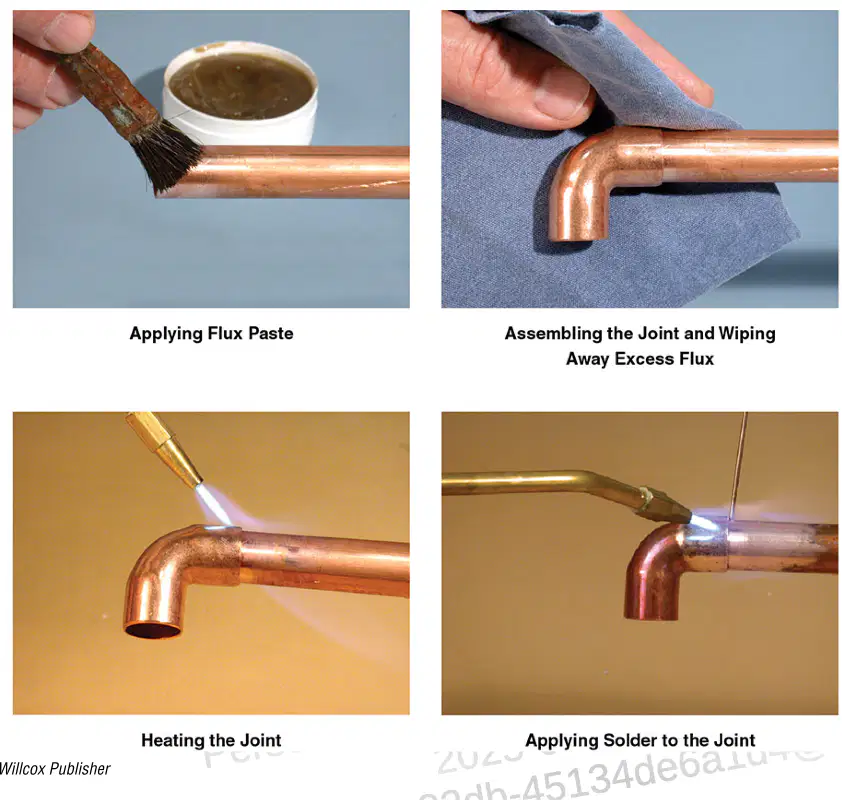
What is the purpose of applying flux paste in soldering?
To clean the joint
To cool the joint
To prevent oxidation
To add color to the joint

Which step is essential for creating a leakproof joint in soldering?
Applying excess flux
Heating the tubing properly
Using a large amount of solder
Cooling the joint quickly
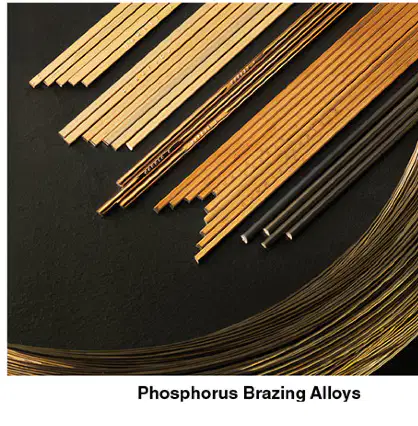
What type of brazing alloys are shown in the image?
Copper and zinc alloys
Silver and phosphorus alloys
Iron and nickel alloys
Aluminum and tin alloys
What is the recommended eye protection when performing brazing procedures?
No. 2 filter lens
No. 4 or darker filter lens
No. 1 filter lens
No. 3 filter lens
What is the purpose of purging in the brazing process?
To add moisture to the tubing
To remove unwanted air, vapors, dirt, and moisture
To increase the temperature of the tubing
To add oxygen to the tubing
Which gases are recommended for purging during brazing?
Refrigerant and oxygen
Compressed air and nitrogen
Nitrogen and carbon dioxide
Oxygen and carbon dioxide
What should never be used for purging in brazing?
Nitrogen
Oxygen
Carbon dioxide
Argon
When brazing a copper-to-steel joint, which part should be heated first?
Steel part
Copper part
Both parts simultaneously
Neither part
What is a pro tip for brazing a capillary tube?
Use excess brazing material
Allow brazing material to run into the end of the tube
Avoid letting too much brazing material run into the end of the tube
Use a larger flame

