Wayground logo

Free Printable Worksheets

Font size

S
M
L
XL
Worksheets

Quiz#1

Total questions: 41

Worksheet time: 38mins

Name
Class
Date
1.
When you step out into the cold, your body shivers in order to keep its temperature at 98.6F.
a)
All living things use energy
b)
All living things contain cells
c)
All living things maintain homeostasis
d)
All living things grow
2.
Green plants produce their own food through the process of photosynthesis.
a)
All living things use energy
b)
All living things contain cells
c)
All living things maintain homeostasis
d)
All living things grow
3.
A camel has eyelashes that work to keep the dust and sand out of its eyes.
a)
All living things adapt to their environment
b)
All living things grow
c)
All living things have cells
d)
All living things use energy
4.
Over three years, Tim's height has increased from 5'4" to 5'11".
a)
All living things contain cells
b)
All living things maintain homeostasis
c)
All living things use energy
d)
All living things grow
5.
The roots of a plant grow towards a source of ground water.
a)
All living things use energy
b)
All living things reproduce
c)
All living things respond to their environment
d)
All living things grow
6.
YOU are a multi-celled organism but an amoeba is a single celled organism.
a)
All living things have cells
b)
All living things grow
c)
All living things use energy
d)
All living things respond to their environment
7.

Living things are made up of units called

a)

DNA

b)

Cells

c)

Homeostasis

d)

Seeds

8.
Rocks are not living because
a)
they never move
b)
they aren't needed for humans
c)
they are not made of cells
d)
they don't break down
9.
In order for something to be considered a living organism, it must display _____ of the eight characteristics of living things.
a)
one
b)
some
c)
all
d)
more than half
10.
The basic unit of structure and function in the human body is the....
a)
organ
b)
organ system
c)
cell
d)
tissue
11.
A group of similar cells that come together to perform a specific function is a/an
a)
organ
b)
organism
c)
organ system
d)
tissue
12.
When many organ systems work together it can form...
a)
organ
b)
cells
c)
organ system
d)
organism 
13.
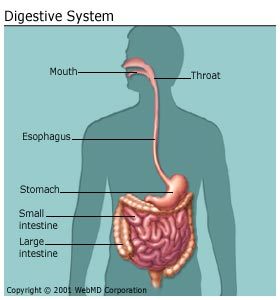
This is a example of........ 
a)
organ system
b)
cells
c)
organ
d)
tissue
14.
Which is an example of an organism?
a)
a beetle
b)
a lake
c)
a rock
d)
a shell
15.
The "cause" for something to happen is the
a)
response
b)
effect
c)
stimulus
d)
homeostasis
16.

What is the stimulus in the blood clotting model?

a)

Clotting occurs from platelets

b)

Break or tear in blood vessel wall

c)

Clotting proceeds until break is sealed by clot

d)

Released chemicals attract more platelets.

17.

What is the response in the blood clotting model?

a)

Clotting occurs from platelets

b)

Break or tear in blood vessel wall

c)

Clotting proceeds until break is sealed by clot

d)

Released chemicals attract more platelets.

18.

What type of feedback is shown in the blood clotting model?

a)

Positive

b)

Negative

19.

When you are hungry, you eat.

What is the response?

a)

hunger

b)

eating

c)

stomach

d)

nerves

20.

According to the model, what is a normal blood glucose (sugar) level?

a)

270 mg/100mL

b)

180 mg/100 mL

c)

45 mg/100 mL

d)

90 mg/100 mL

21.

According to the model, what is the response to HIGH blood glucose (sugar)?

a)

Pancreas releases insulin into blood

b)

Pancreas releases glucagon into blood

22.

According to the model, what is the response to LOW blood glucose (sugar)?

a)

Pancreas releases insulin into blood

b)

Pancreas releases glucagon into blood

23.

According to the model, what would happen if the pancreas did NOT detect rising blood glucose (sugar) level?

a)

Blood sugar would return to normal

b)

Most body cells would take up more glucose

c)

Blood sugar would stay above normal

d)

The liver would get the message to store glucose as glycogen

24.
Homeostasis
a)
allows for a wildly fluctuating internal environment
b)
is impossible in vertebrates
c)

is the maintenance of a relatively stable internal environment

d)

is the maintenance of a relatively stable external environment

25.
Homeostasis in the human body is often maintained by a: 
a)

the brain only

b)
solar feedback loop
c)

the muscles

d)
negative feedback loop
26.

Your body is too hot. What senses your body temperature?

a)

nerve cells

b)

sweat cells

c)

blood cells

d)

muscle cells

27.

With low oxygen levels, your breathing rate will increase. When your oxygen levels rise, what is the appropriate response?

a)

stop breathing

b)

increase heart rate

c)

keep breathing rate high

d)

return breathing rate to baseline

28.

When you exercise, what gas does your body NEED more of?

a)

Blood

b)

Carbon dioxide

c)

Hydrogen

d)

Oxygen

29.

How does the body respond when more oxygen is required?

a)

Decreasing heart rate

b)

Increasing heart rate

c)

Decreasing blood pressure

d)

Increasing blood pressure

30.
Which of the following represents a correct hierarchy of life?
a)
cell--> tissue--> organ--> organism--> organ system
b)
cell--> organelle--> tissue--> organ--> organ system--> organism
c)
cell--> tissue --> organ --> organ system --> organism
d)
organelle --> cell --> organ system --> organ --> organism
31.
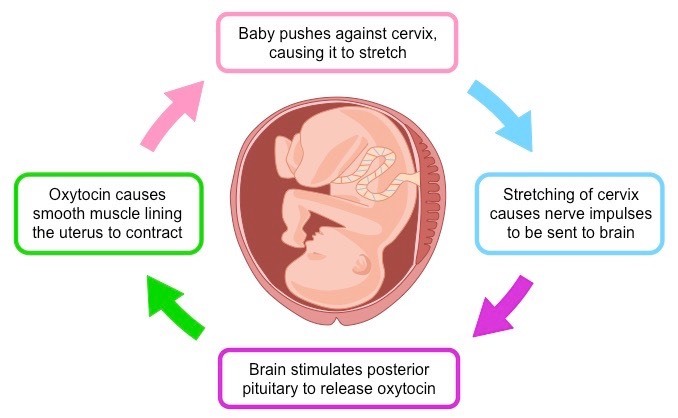
What type of feedback is demonstrated in the image?
a)
positive
b)
negative
c)
this is not feedback
32.
What is one conclusion we can make from the heart rate lab?
a)
Breathing rate changed more than heart rate when exercising.
b)
Exercising does not affect heart rate.
c)
Heart rate increased more than breathing rate when exercising.
d)
Everyone's heart rate is almost the same.
33.
If the environment gets cold, we will often shiver in order to:
a)
keep body temperature the same as the external temperature
b)
decrease body temperature
c)
increase body temperature
d)
regulate blood pressure
34.
The "cause" for something to happen is the
a)
response
b)
effect
c)
stimulus
d)
homeostasis
35.
The "effect" of a given stimulus is the...
a)
response
b)
stimulus
c)
cause
d)
result
36.
The two types of feedback systems that help organisms maintain homeostasis are:
a)
positive and negative 
b)
receptor and effector
c)
static and dynamic
d)
minor and major
37.
Maintaining body temperature is an example of a:
a)
negative feedback loop
b)
positive feedback loop
38.
When glucose levels in the blood rise, your brain sends a signal to your pancreas. The pancreas releases insulin, which opens channels in cell membranes to allow glucose to enter the cell, lowering blood sugar levels. 
a)
Positive Feedback Response
b)
Negative Feedback Loop 
39.

What is the point of a feedback loop?

a)

To provide the body with more energy

b)

To provide the body with more food

c)

To make sure the conditions in the body are always changing

d)

To make sure the conditions in the body remain stable
40.

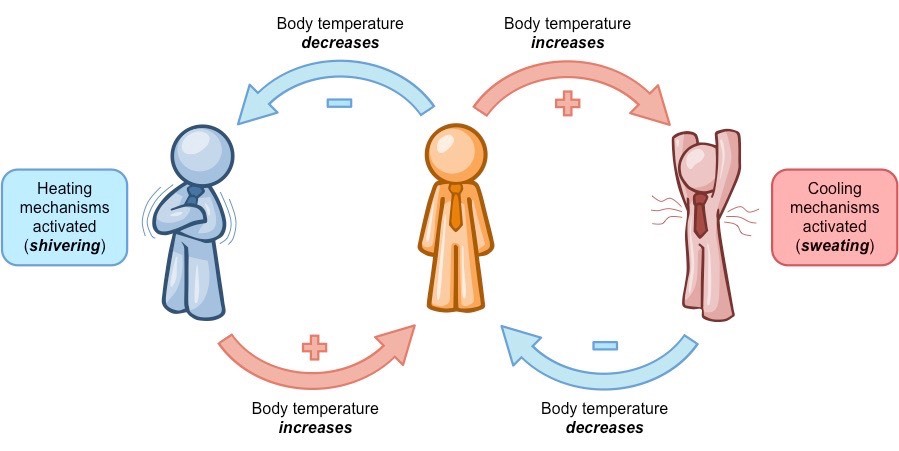
In this body temperature feedback loop, predict what would happen if cooling mechanisms were NOT activated?

a)

The body would not warm up.

b)

The body would not cool down.

c)

Your body would get colder and colder.

d)

Your body would release lots of heat.

41.

What type of feedback loop is shown?

a)

negative

b)

neutral

c)

positive