
 Worksheets
Theatre Spaces and History Quiz
Total questions: 99
Worksheet time: 50mins
Which of the following is an objective for students in today's lesson?
To memorize famous actors' names
To recognize various types of theatre spaces by reviewing the history of the stage and exploring them in different cultures
To write a play script
To design costumes for a play
What is one of the teacher's objectives for today's lesson?
Discuss how theatre spaces have evolved throughout the ages
List the most popular plays of the 20th century
Describe the process of auditioning for a play
Explain how to build stage props
Which skill will students develop according to today's objectives?
Recognizing types of theatre spaces in different cultures
Memorizing lines from a play
Painting stage backgrounds
Singing in a musical
Why is it important to review the history of the stage when learning about theatre spaces?
It helps understand how theatre spaces have evolved in different cultures
It allows students to memorize more facts
It teaches students how to act on stage
It helps students write their own plays
Which of the following is considered a technical element of theatre?
Types of stages
Scriptwriting
Audience participation
Ticket pricing
What is the function of technical elements in various theatrical styles and genres?
To enhance the storytelling and support the production
To replace the actors on stage
To determine the ticket prices
To write the script
Understanding the cultural heritage of world drama and theatre involves identifying which of the following?
Key figures, works, and trends in dramatic literature
Only the stage design
The number of seats in a theatre
The cost of costumes
Which of the following is NOT one of the basic elements of theatre mentioned in the material?
Script
Performance
Audience
Lighting
According to the material, what does the "script" in theatre refer to?
The audience's reaction
The stage design
What is performed
The lighting setup
Which statement best describes the "performance" element in theatre as outlined in the material?
It is the written text of the play.
It is the process of watching a play.
It includes all processes involved in the creation and presentation of a production.
It is the design of the costumes.
Peter Brook is quoted as saying, "The only thing that all forms of theatre have in common is the need for an audience." What does this suggest about the role of the audience in theatre?
The audience is optional in theatre.
The audience is necessary for theatre to exist.
The audience writes the script.
The audience creates the costumes.
Given the three basic elements of theatre (script, performance, audience), which element would be most directly affected if a play were performed without anyone watching?
Script
Performance
Audience
Stage

Where did modern theatre originate?
Greece
China
United States
India
Which ancient civilization is credited with the origins of modern theatre?
Ancient Rome
Ancient Egypt
Ancient Greece
Ancient China
What significant political system did the Athenians invent?
Monarchy
Democracy
Oligarchy
Theocracy
In Ancient Greek theatre, who was allowed to perform female roles on stage?
Only women
Both men and women
Only men
Children
Why were all female roles in Ancient Greek theatre played by men?
Women were not interested in acting
Women were not allowed to perform on stage
There were not enough women in society
It was a tradition to use puppets instead
How did the invention of democracy by the Athenians impact their society?
It allowed only the king to make laws
It let citizens participate in making laws
It banned all forms of theatre
It required everyone to be equal
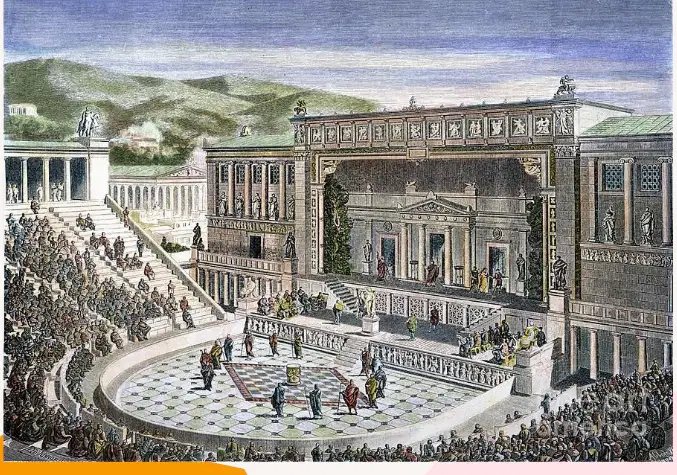
What does the image most likely represent about Ancient Greek society?
Their interest in sports
Their architectural skills and public gatherings for theatre
Their focus on agriculture
Their military parades
What were Greek theatre performances often based around?
The relationships between humans and the gods and goddesses
The daily lives of farmers
Political debates
Scientific discoveries
Which of the following was commonly included in Greek theatre performances as offerings?
Singing, dancing, and animal sacrifices
Painting and sculpture
Athletic competitions
Cooking contests
Who is considered the first actor to portray a character on stage in Greek theatre?
Thespis
Sophocles
Aristotle
Homer
Why is the word "Thespian" used to refer to actors?
It is derived from the name of Thespis, the first actor to portray a character on stage
It was the name of the first Greek theatre
It refers to the god of theatre
It was a term for ancient Greek playwrights
In 534 B.C., what event did Athens hold that contributed to the development of Greek theatre?
A contest for the best tragedy
The first Olympic Games
A festival for the goddess Athena
A poetry reading competition
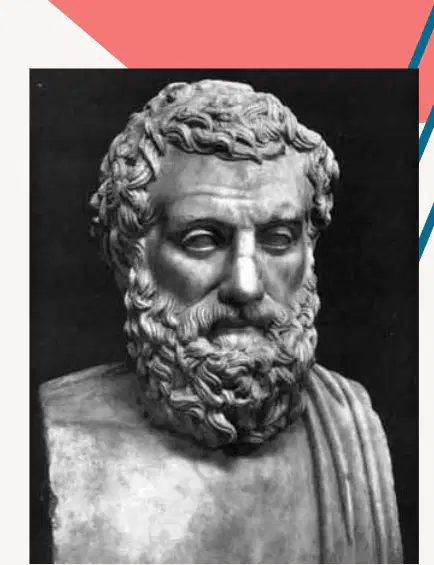
What does the image most likely represent in the context of Greek theatre?
A famous Greek actor or playwright, possibly Thespis
A Roman emperor
A modern theatre director
A Greek philosopher
Which culture did Roman Theatre borrow performance ideas from and improve upon?
Egyptian
Greek
Persian
Indian
What was a key difference between Roman Theatre performances and earlier Greek performances?
Roman performances were more religious-based
Roman performances were less philosophical and religious-based
Roman performances focused only on tragedy
Roman performances excluded entertainment acts
Which of the following was NOT typically included in Roman Theatre entertainment?
Acrobats
Chariot races
Animal battles
Poetry readings
What were actors in Roman Theatre commonly called?
Thespians
Histriones or mimes
Playwrights
Orators
How were actors often viewed in Roman society?
As highly respected citizens
As political leaders
As inferior, sometimes slaves
As religious figures
Analyze how the shift from philosophical and religious-based performances to more entertainment-focused acts in Roman Theatre might have influenced Roman society’s perception of theatre.
It made theatre more exclusive and intellectual
It broadened the appeal of theatre to a wider audience
It limited the types of performances allowed
It increased the religious significance of theatre
Which of the following is a characteristic of pantomime in Roman theatre?
No masks were used
Women could perform
Usually a solo dance with music and a chorus
Was sometimes violent
What distinguishes mime from pantomime in Roman theatre?
Mime used masks
Mime was usually a solo dance
Mime allowed women to perform
Mime focused on mythology
Which format of Roman theatre was sometimes violent and usually short?
Pantomime
Mime
Tragedy
Comedy
In Roman theatre, what was the primary purpose of masks in pantomime?
To hide the identity of the performer
For the storytelling of mythology
To allow women to perform
To make the performance violent
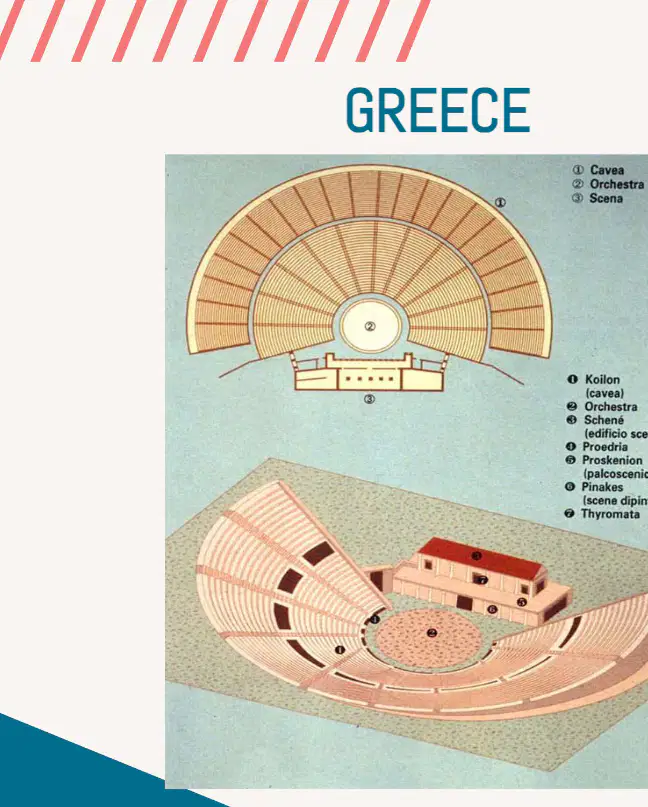
Which of the following terms refers to the seating area in both Greek and Roman theaters?
Cavea
Proedria
Thyromata
Pulpito
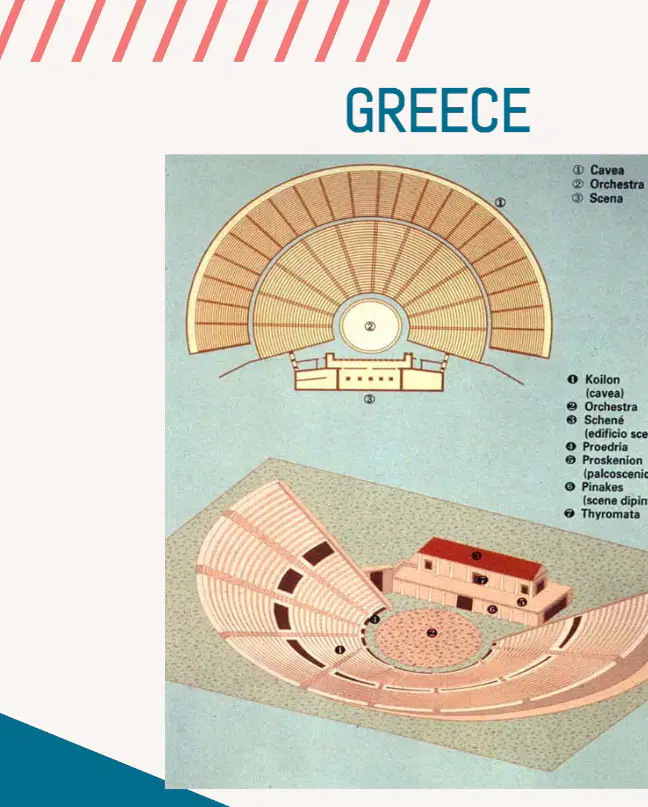
In Greek theater architecture, what is the function of the "Orchestra"?
The stage building
The circular space for the chorus
The main entrance
The painted scenery
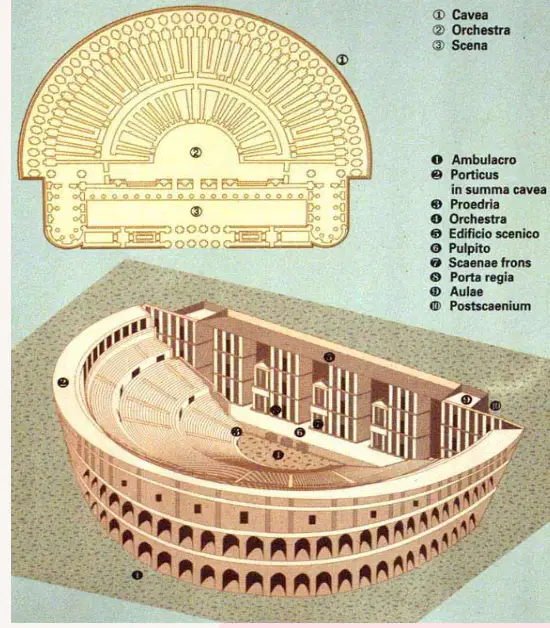
Which architectural feature is unique to Roman theaters and not found in Greek theaters, according to the diagram?
Thyromata
Porticus
Proedria
Koilon
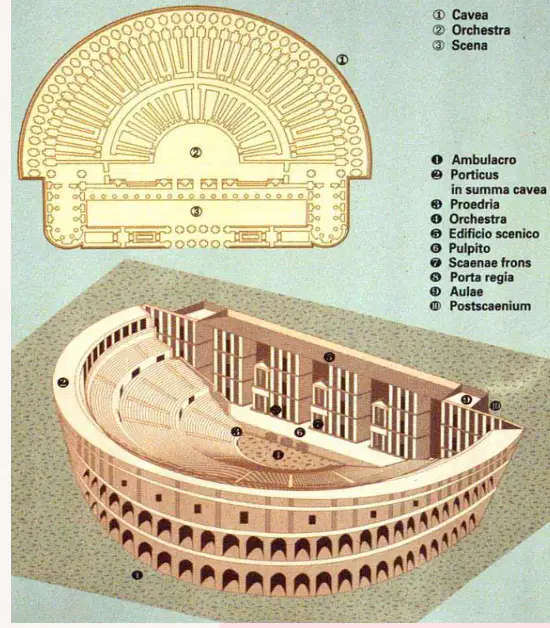
Compare the layout of the stage area (Scena/Scenae frons) in Greek and Roman theaters. What is a key difference in their design and function?
Greek theaters have a more elaborate stage building than Roman theaters
Roman theaters have a more elaborate and permanent stage building (Scenae frons) than Greek theaters
Both have identical stage areas
Greek theaters have a circular stage, while Roman theaters have a square stage
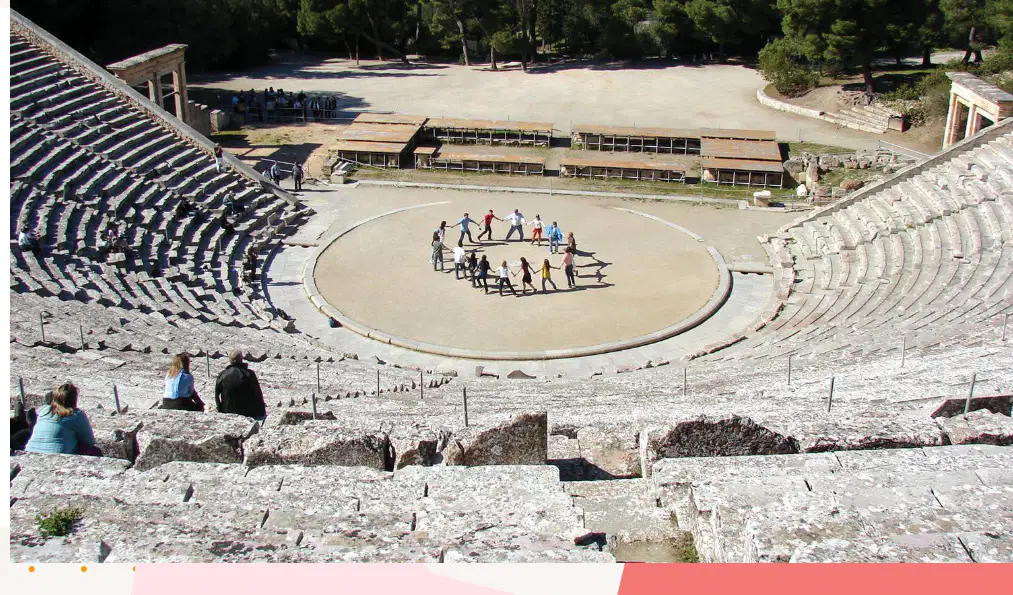
Where is the Theater at Epidaurus located?
On the Peloponnese in Greece
In Rome, Italy
In Athens, Greece
On the island of Crete

What is the main feature shown in the image related to ancient Greek culture?
An ancient Greek theater
A Roman colosseum
A medieval castle
An Egyptian pyramid
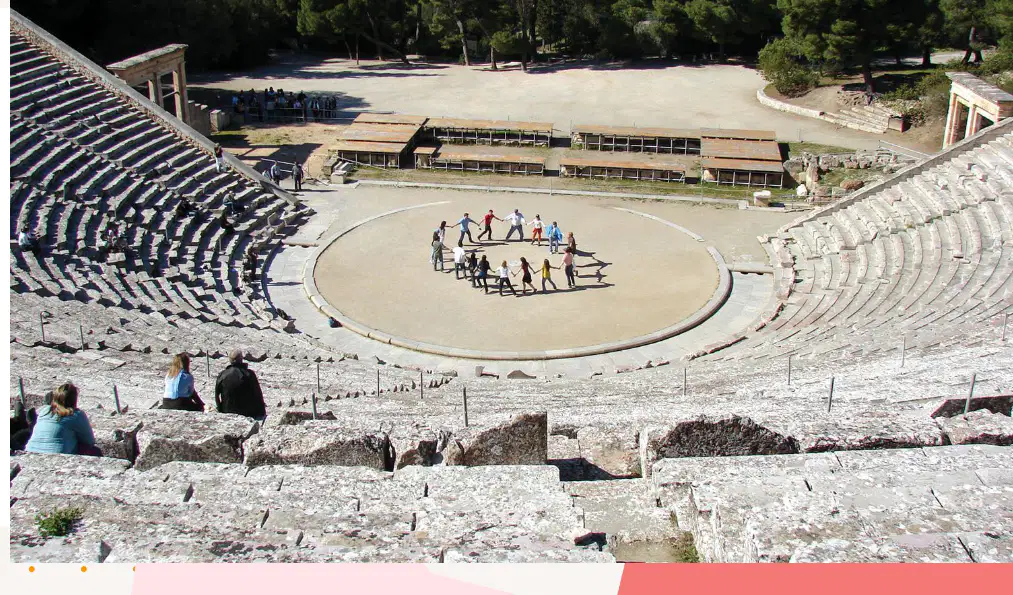
Why might the Theater at Epidaurus be considered significant in the study of ancient architecture?
It is a well-preserved example of ancient Greek theater design.
It was the first theater ever built in the world.
It was used as a palace for Greek kings.
It is located underwater.
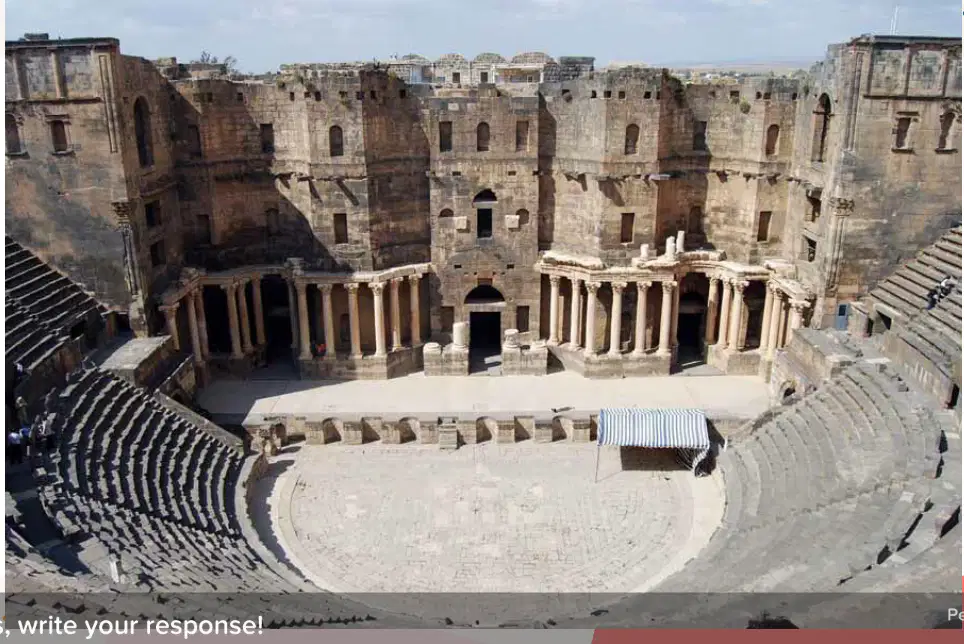
What is the name of the ancient structure shown in the image?
Roman Theater of Bosra
Colosseum
Parthenon
Theater of Epidaurus
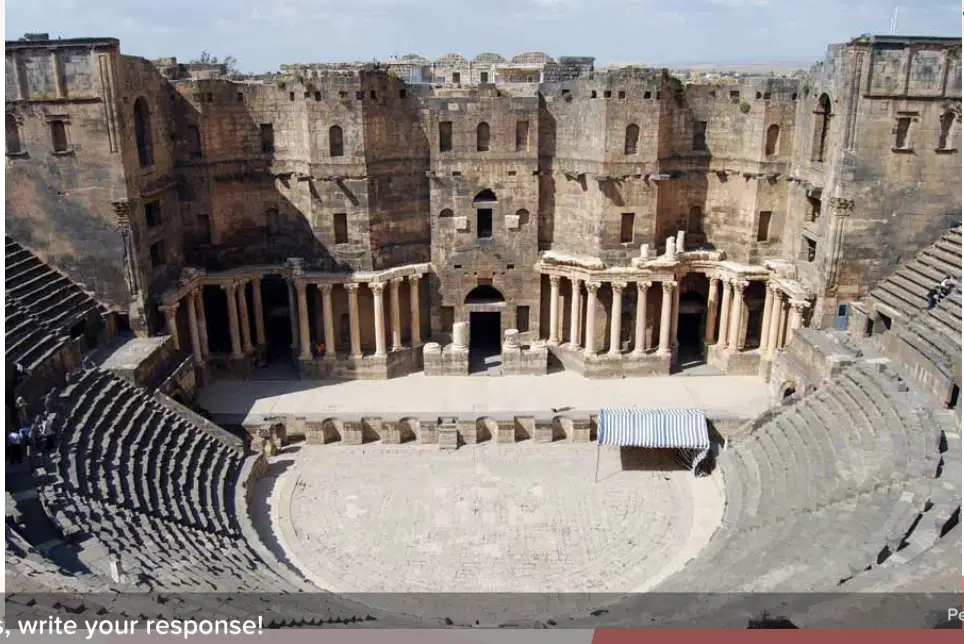
Which civilization is responsible for building the theater shown in the image?
Roman
Greek
Egyptian
Persian
What does the Latin phrase "Deus Ex Machina" mean?
God from the machine.
Man from the sea.
Hero from the sky.
Fate from the stars.
In Greek tragedy, what was the purpose of using a "machina"?
To create special effects for the audience.
To lower a "god" into the action to solve the character's problem.
To signal the end of the play.
To introduce a new character.
What is a "machina" as described in the context of Greek tragedy?
A type of musical instrument.
A crane-like device used in theater.
A costume worn by actors.
A script for the play.
Why would a playwright in Greek tragedy use the device known as "Deus Ex Machina"?
To add humor to the play.
To resolve a problem in the plot that seemed unsolvable.
To introduce a new setting.
To lengthen the performance.
Based on the information provided, how does the use of "Deus Ex Machina" affect the resolution of a Greek tragedy?
It complicates the plot further.
It provides a sudden and unexpected solution to the characters' problems.
It removes the main character from the story.
It changes the genre of the play.
Which of the following theaters had the largest audience capacity?
A large broadway musical theatre
A Roman theater
The Greek Theatre of Dionysus in Athens
A small traveling band of players
Approximately how many people could a Roman theater seat?
1,200
12,000
15,000
16,000
What was a consequence for theatrical performers during the rise of Christianity?
They performed in larger theaters
They were denounced by the church and many became traveling performers
They received more support from the church
They only performed in the Greek Theatre of Dionysus
Compare the audience capacities: Which theater could seat about 1,200 people?
A Roman theater
The Greek Theatre of Dionysus in Athens
A large broadway musical theatre
A small medieval church
Based on the information, what trend can be observed about the size of audiences in ancient versus modern theaters?
Modern theaters are generally larger than ancient theaters
Ancient theaters could seat more people than most modern theaters
Both ancient and modern theaters have the same capacity
Modern theaters always seat more than 20,000 people
What is another term for the Medieval period?
The Renaissance
The Middle Ages
The Enlightenment
The Industrial Age
What was the most influential power during the time of medieval theatre?
The monarchy
The Christian church
The merchants
The military
Where were medieval dramas mostly performed?
In public squares
In royal palaces
In churches on platforms (mansions)
In outdoor amphitheaters
Which of the following best describes the seating arrangement in medieval churches during performances?
Fixed seating like modern pews
No fixed seating
Tiered seating
Balcony seating
What was the primary source of stories for medieval theatre performances?
Greek mythology
Local legends
The Bible
Roman history
Who typically acted in the dramatizations performed in medieval churches?
Professional actors
Townspeople
Priests and important church members
Traveling performers
How did the audience experience a medieval church drama performance?
By sitting in one place for the entire show
By moving from one platform (scene) to the next
By watching from outside the church
By listening to a narrator only
Why might the use of multiple platforms (mansions) in medieval theatre be considered an innovative approach to staging?
It allowed for more elaborate costumes
It enabled both actors and audience to engage with different scenes in sequence
It reduced the need for actors
It made performances shorter
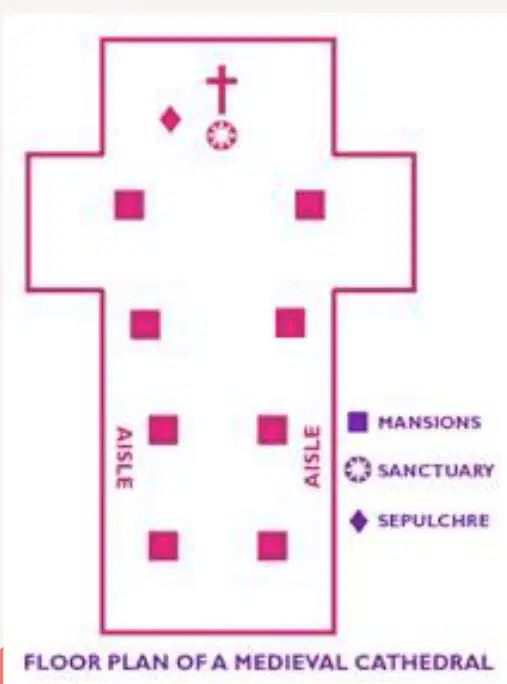
What does the floor plan of a medieval cathedral illustrate about the staging of medieval theatre?
Performances were held outdoors only
Multiple platforms (mansions) were set up in different areas for different scenes
Only one stage was used for all performances
The audience was separated from the actors by a wall
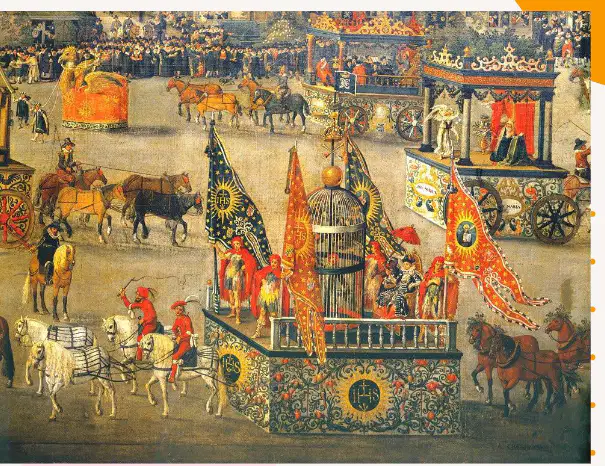
What was a "Pageant Wagon" in early theatre history?
A movable stage that could travel from one location to another
A permanent theatre building
A type of costume used in plays
A musical instrument used in performances
Why were theatrical spaces improvised in the early days of theatre?
Permanent theaters did not exist
There were too many actors
The audience preferred outdoor performances
The government banned permanent theaters
What challenge did early theatre productions face regarding their audience?
Having sufficient space for a large audience was difficult
Finding enough actors was impossible
Lighting was too advanced
Costumes were not available
How did the formation of guilds and troupes contribute to the development of theatre technicians?
They needed someone to oversee the production
They wanted to write new plays
They focused only on acting
They banned the use of pageant wagons
Explain how the use of pageant wagons influenced the evolution of theatre technicians. (DoK Level 3)
The need to move and manage complex productions led to the creation of roles for overseeing technical aspects, marking the early stages of theatre technicians
Pageant wagons made acting easier, so technicians were not needed
The wagons were only used for transportation, not for performances
Theatre technicians were responsible for writing scripts
What is the primary structure shown in the image?
A model of a mobile house or wagon
A model of a train engine
A model of a boat
A model of a skyscraper
Which feature is NOT present in the structure shown in the image?
Stairs
Wheels
A chimney
A door

Based on the image, what is the likely purpose of the stairs attached to the structure?
To provide access to the elevated entrance
To support the roof
To store supplies
To attach wheels
What kind of modern entertainment event travels with a variety of different acts?
Circus
Concert
Movie screening
Art exhibition
Which of the following was a factor in the decline of medieval theatre?
Increased interest in classical learning
Decreased interest in literature
Rise of religious plays
Decline in professional actors
Who most often performed secular plays during the decline of medieval theatre?
Professional actors attached to noble houses
Local villagers
Traveling merchants
Religious leaders
How did the rise of professional theatre contribute to the decline of medieval theatre?
It became more commercial and was no longer a community venue
It focused more on religious themes
It reduced the number of actors
It increased the use of outdoor stages
Why did actors return to the classics during the decline of medieval theatre?
To find new ideas for stories
To avoid censorship
To increase ticket prices
To perform only for royalty
Explain how the increased interest in classical learning affected medieval theatre.
It influenced staging and playwriting, leading to changes in the types of stories told.
It caused a decline in the number of theatres.
It led to the banning of all secular plays.
It made theatre more accessible to peasants.
Evaluate the impact of professional theatre becoming more commercial on the community aspect of medieval theatre.
It reduced the role of community participation and shifted focus to profit and professional actors.
It increased community involvement in playwriting.
It led to more religious plays being performed.
It made theatre less popular overall.

What is the primary function of the structure shown in the image?
It is a model of a stage set used in theater productions.
It is a model of a residential house.
It is a model of a storage shed.
It is a model of a classroom.

Which feature is most likely designed to allow actors to enter and exit the stage set easily?
The stairs on either side of the platform
The roof of the structure
The barrel on the side
The wheels underneath the platform

If you were tasked with improving the accessibility of this stage set for performers with mobility challenges, which modification would be most effective?
Adding a ramp in addition to the stairs
Painting the stairs a different color
Removing the barrel from the side
Making the roof taller
Who built the first theater in 1576 and what was it named?
James Burbage; The Theater
William Shakespeare; The Globe
Christopher Marlowe; The Swan
Ben Jonson; The Red Bull
Before the construction of dedicated theaters, where were plays typically performed?
In the courtyard of an inn or tavern
In royal palaces
In public parks
In private homes
Which of the following was NOT a name of an Elizabethan theater?
The Curtain
The Rose
The Swan
The Tower
Who was the most famous contributor of plays and a part owner of the Globe Theatre after 1599?
William Shakespeare
James Burbage
Christopher Marlowe
Ben Jonson
Why did playwrights in the Elizabethan era need to frequently come up with new material?
To be competitive and attract audiences
To please the monarchy
To avoid censorship
To travel to different countries
How did the naming of Elizabethan theaters reflect their characteristics or locations?
They were named based on their location
They were named after famous playwrights
They were named after the reigning monarch
They were named after animals
Analyze how competition among theatre companies might have influenced the development of new plays during the Elizabethan era.
It encouraged playwrights to create new material to attract audiences
It led to fewer plays being written
It caused theaters to close down
It made playwrights focus only on historical events
Which of the following best describes William Shakespeare's professions?
Actor, director, and playwright
Scientist, poet, and mathematician
Painter, sculptor, and architect
Philosopher, engineer, and novelist
How many plays did William Shakespeare write?
25
38
50
12
Which of the following is a tragedy written by William Shakespeare?
Twelfth Night
King Lear
King John
Comedy of Errors
Which play is NOT listed as one of Shakespeare's comedies in the material?
Much Ado
Midsummer
Macbeth
Twelfth Night
Some people doubt that William Shakespeare was:
The author of some plays
Born in England
A famous scientist
A painter
Which of the following is a history play by Shakespeare?
Hamlet
Richard III
Othello
Taming of the Shrew
Analyze the significance of the debate regarding Shakespeare's authorship and discuss how it might affect the interpretation of his works.
It raises questions about the authenticity and historical context of the plays.
It proves that Shakespeare was a scientist.
It shows that all plays were written in the 20th century.
It means that Shakespeare was not popular in his time.
Which of the following best categorizes "Romeo & Juliet"?
Comedy
Tragedy
History
Satire
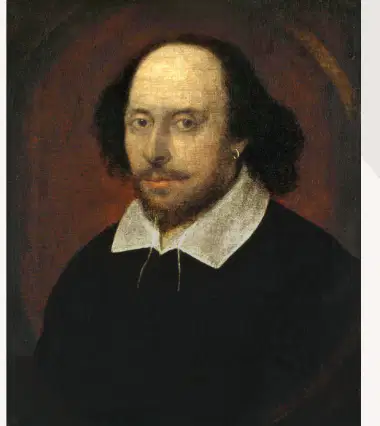
Who is depicted in the image shown in the learning material?
William Shakespeare
Leonardo da Vinci
Isaac Newton
Charles Dickens

Which of these is a Shakespeare adaptation?
The Lion King
West Side Story
10 Things I Hate About You
She's the Man
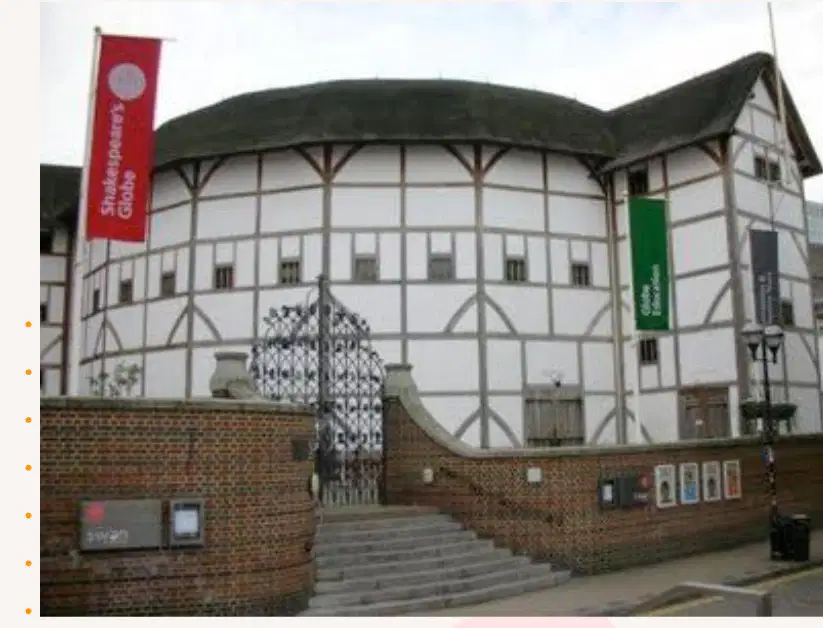
When did the original Globe Theater burn down?
June 29, 1613
July 4, 1600
May 1, 1620
December 25, 1615

