wayground logo

Free Printable Worksheets

Font size

S
M
L
XL
Worksheets

Honors Atoms and the PTable SPS1abc

Total questions: 126

Worksheet time: 3hrs 59mins

Name
Class
Date
1.
Atomic number is equal to the number of _______ in the atom.  It is also the atoms' identity ---  it's the small number of the periodic table.
a)
neutrons
b)
isotopes
c)
protons
2.
The electron cloud is divided in to energy levels or shells.  The first level will hold _____ electrons and the second level will hold ______ electrons.
a)
8, 2
b)
2,8
c)
1, 8
3.

Most noble gases have _______ valence electrons.

a)

1

b)

2

c)

7

d)

8

4.
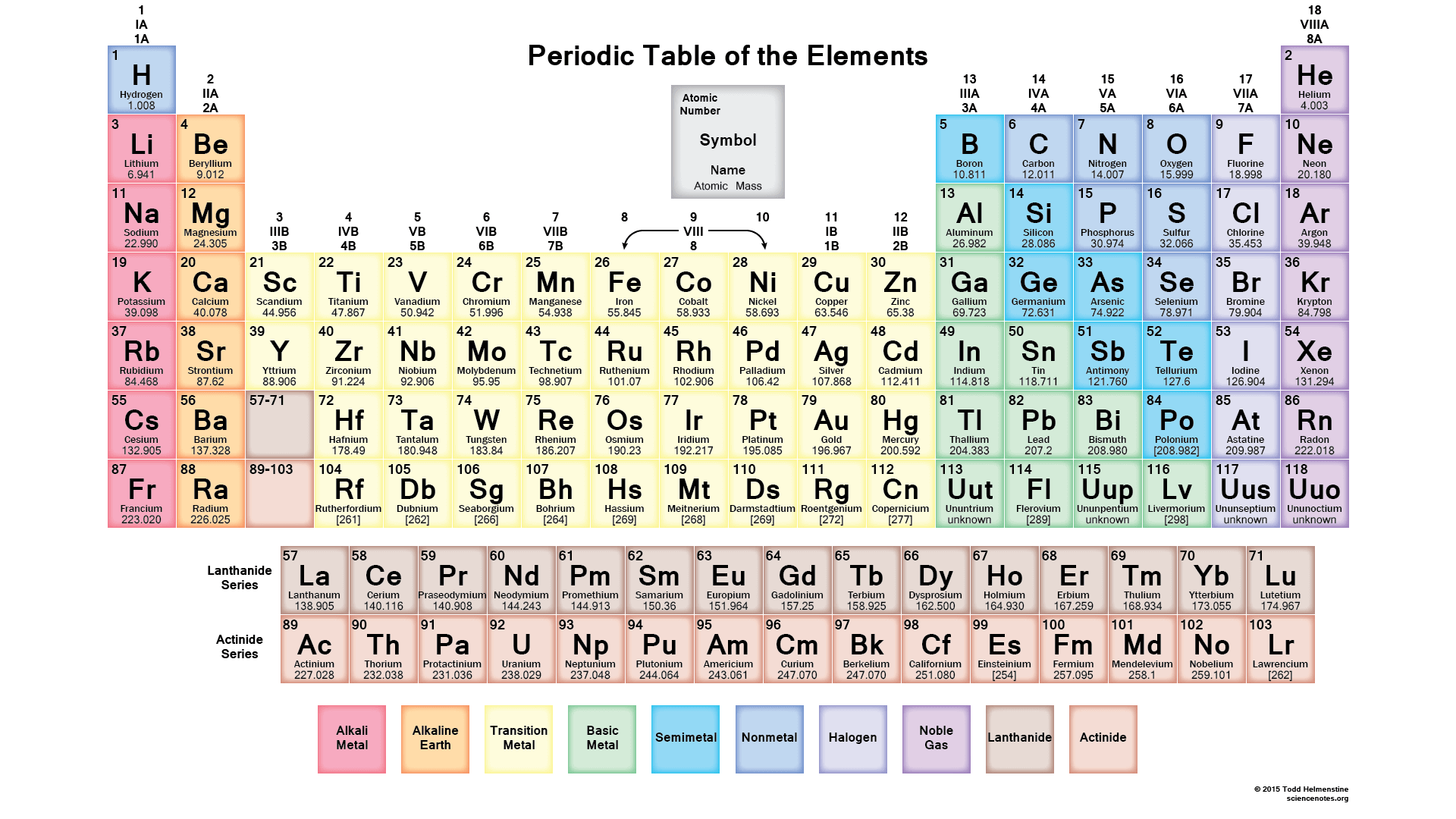
In what section would Noble Gases be found?
a)
white
b)
yellow
c)
blue
d)
red
5.
According to the Periodic Table of the Elements, which set of elements has similar properties?
a)
H, C, I
b)
He, H, Al
c)
He, Ne, Ar
d)
Na, Ca, Al
6.
All elements found on the left side of the Periodic Table of the Elements have what properties in common?
a)
They conduct heat and electricity 
b)
They are all gases 
c)
They are brittle and dull
d)
They are radioactive
7.
Is silicon a metal, nonmetal or metalloid?
a)
Metal
b)
NonMetal
c)
Metalloid
8.
Is this a metal, nonmetal or metalloid?
a)
Metal
b)
Nonmetal
c)
Metalloid
9.
In which group does this atom belong?
a)
1
b)
3
c)
13
d)
11
10.
The section labeled D is known as the?
a)
Electron cloud
b)
Neutron
c)
Nucleus
d)
Electron
11.

Which elements are to the right of the zig zag?

a)

metals

b)

nonmetals

c)

metalloids

12.
How would this element be classified?
a)
Metal
b)
Nonmetal
c)
Metalloid
d)
Metamorphic
13.
John was observing the physical properties of elements in order to classify them as either a metal, nonmetal, or metalloid. The first element was dull, brittle, and did not conduct heat. What would its classification be? 
a)
metal 
b)
nonmetal 
c)
metalloid
14.
Which answer choice describes the subatomic particles and their respective charges?
a)
p-    e+    n
b)
p+    e     n-
c)
p+    e-    n
d)
p-     e+    n
15.

Which elements have properties in common?

a)

elements in a group

b)

elements in a period

16.

The group number tells you the number of

a)

protons

b)

valence electrons

c)

energy levels

17.

The period number tells you the number of

a)

protons

b)

energy levels

c)

valence electrons

18.

Which two elements have properties in common?

a)

Nitrogen and Phosphorous

b)

Oxygen and Nitrogen

c)

Sulfur and Nitrogen

19.
What element is this?
a)
Helium
b)
Hydrogen
c)
Argon
d)
Silver
20.
Most of the elements on the periodic table are classified as _____.
a)
Metals
b)
Nonmetals
c)
Metalloids
d)
Periods
21.
Each column in the periodic table is called a 
a)
period
b)
group
c)
cluster
d)
unit
22.
Elements which are shiny, conduct electricity and heat are called
a)
metal
b)
nonmetal
c)
metalloid
d)
nonexistent
23.
The atoms along the staircase are called 
a)
metals
b)
nonmetals
c)
metalloids
d)
noble gases
24.
How many protons are in this element?
a)
79
b)
196
c)
117
d)
Cannot be determined
25.
What's a valence electron?
a)
electrons in the second energy level
b)
electrons in the outermost energy level
c)
the atomic number
d)
electrons in the first level
26.
The horizontal row on the periodic table is called a
a)
group
b)
family
c)
period
d)
atomic number
27.
What does the 1.00794 stand for?
a)
Hydrogen
b)
atomic number
c)
atomic mass
d)
atomic explosion
28.
The atomic number tells you what?
a)
number of electrons
b)
number of protons
c)
number of neutrons
d)
both electrons and protons in an atom.
29.
Which is a halogen?
a)
Helium
b)
Chlorine
c)
Oxygen
d)
Neptune
30.
Which is an alkali metal?
a)
Magnesium
b)
Iron
c)
Sodium
d)
Europium
31.
An atom becomes _______ when it loses electrons.
a)
Positive
b)
Negative
c)
Neutral
d)
Invinsible
32.
What is the charge of an atom that has gained one electron?
a)
-1
b)
-2
c)
+1
d)
+2
33.

Be ionizes to a charge of ________.

a)

+1

b)

+2

c)

-1

d)

-2

34.

N ionizes to a charge of _______.

a)

+3

b)

-3

c)

+2

d)

-2

35.

Cl ionizes to a charge of _________.

a)

-2

b)

-1

c)

+1

d)

+2

36.

A cation is an ion with a positive charge.

a)

true

b)

false

37.

What group and period does this element belong in? *

a)

period 1 and group 3

b)

period 3 and group 1

c)

period 2 and group 3

d)

period 3 and group 2

38.

Which of the following elements is a noble gas?

a)

Magnesium

b)

Oxygen

c)

Neon

d)

Sodium

39.
Two atoms of different elements will definitely have different numbers_____
a)
Nuclei
b)
Protons
c)
Neutrons
d)
Electrons
40.
Although carbon's three isotopes are carbon-12, carbon-13, and carbon-14, its average atomic mass is 12.01 because
a)
Carbon-12 is the heaviest isotope
b)
Carbon-12 is the most useful to humans
c)
Carbon-12 is the most common isotope
41.
An ion forms when an atom gains or loses
a)
Protons
b)
Neutrons
c)
Electrons
42.
A neutral atom would become an ion that has a charge of 2+ by 
a)
Losing two protons
b)
Losing two neutrons
c)
Losing two electrons
43.
Two atoms that have different numbers of protons are 
a)
Different ions
b)
Different isotopes
c)
Different elements
44.
If neutral copper atom (atomic number 29) becomes an ion that has a charge of 2+, how many electrons does the resulting ion have?
a)
27
b)
28
c)
29
d)
31
45.
Two neutral atoms that have the same atomic number and different mass numbers are
a)
Ions
b)
Isotopes
c)
Alpha particles
d)
Different elements
46.
Which phrase describes two atoms that are isotopes
a)
Same mass number, same atomic number
b)
Same mass number, different atomic number
c)
Different mass number, same atomic number
d)
Different mass number, different atomic number
47.
An ion that has a negative charge is formed when an atom 
a)
Loses neutrons
b)
Loses electrons
c)
Gains neutrons
d)
Gains electrons
48.
What information would allow you to determine whether two atoms are of the same or different elements
a)
The charge on each atom
b)
The number of neutrons each has
c)
The number of protons in their nuclei
d)
The location of the electrons in their electron clouds
49.
Define Atom
a)
It is the smallest piece of an element that still represents that element
b)
Is an element has the electrons in their electron cloud
c)
A positively charged isotope
50.
How are Protons and Neutrons similar
a)
Both are in the nucleus of the atom and they both have the relative mass of 1
b)
They both have alpha particles and have the relative mass of 2
c)
They both have 1 high-energy electron and different elements
51.

A neutral atom has 8 electrons and 7 neutrons , so its atomic number is ____ and its mass number is ____

a)

8, 7

b)

7, 15

c)

8, 15

d)

15, 7

e)

8, 1

52.

A certain atom "X" has 17 protons and 18 neutrons.

Which is the correct nuclide symbol?

a)
b)
c)
d)
53.

An atom has 4 protons, 5 neutrons, and 4 electrons. What is its atomic mass?

a)

9

b)

8

c)

13

d)

1

54.
Negative ions are called
a)
Cations
b)
Electrons
c)
Anions
d)
Neutrons
55.
What charge does an atom have if it LOSES an electron? 
a)
Positive (+)
b)
Negative (-)
56.
What is the number of protons?
a)
34
b)
16
c)
18
d)
S
57.
What is the number of neutrons?
a)
34
b)
79
c)
45
d)
35
58.
What is the net charge on the element shown above? 
(Calcium - atomic number 20)
a)
cation +1 charge
b)
cation +2 charge
c)
anion -1 charge
d)
anion -2 charge
59.
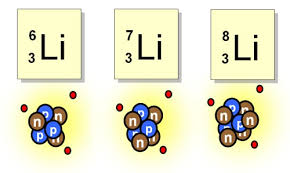
Which atom has  4 neutrons?
a)
Li-6
b)
Li-7
c)
Li-8
d)
they have the same # of neutrons
60.
Carbon has an atomic number of 6 and an atomic mass of 12. Which elements are considered isotopes of carbon?
a)
Carbon-12
b)
Carbon-13
c)
Carbon-14
d)
Both Carbon-13 and Carbon-14
61.

Cations have what charge?

a)

+

b)

-

62.

Noble gases are...

a)

Happy and stable because they have full valence electrons

b)

Happy BUT UNSTABLE because they are gases

c)

Not happy because they don't want to be noble

d)

Not happy but stable because they are group number 18

63.

Element Chlorine [Cl] at group #17 have how many valence electrons?

a)

6

b)

7

c)

17

d)

5

64.

Element Chlorine [Cl] will make a(n)...

a)

Cation

b)

Anion

65.

Anions will

a)

lose electrons

b)

gain electrons

66.

Cations will

a)

Lose electrons

b)

Gain electrons

67.

Isotopes behave chemically the same as other same elements

a)

True

b)

False

68.

Isotopes behave physically same with other same elements

a)

True

b)

False

69.

This isotope have how many neutrons?

a)

26

b)

12

c)

14

d)

16

70.

Which of the Chlorine [Cl] is heavier?

a)

Cl-37

b)

Cl-35

71.

What is Boron-10?

a)

Positive Ion (Cation)

b)

Negative Ion (Anion)

c)

Isotope

72.

An atom of Carbon has 6 protons, 6 neutrons, and 5 electrons. What is it?

a)

Negative Ion (Anion)

b)

Isotope

c)

Positive Ion (Cation)

73.

An atom of Carbon has 6 protons, 7 neutrons, and 6 electrons. What is it?

a)

Negative Ion (Anion)

b)

Isotope

c)

Positive Ion (Cation)

74.

A atom of Carbon has 6 protons, 6 neutrons, and 7 electrons. What is it?

a)

Negative Ion (Anion)

b)

Positive Ion (Cation)

c)

Isotope

75.

In order to form B2+ the Boron atom had to ​ (a)   two ​ (b)   .

Choose from the below words
gain
electrons
lose
protons
neutrons
76.
Adding or subtracting neutrons (charge = 0, mass = 1) makes the element change into an...
a)
ion
b)
mixture
c)
isotope
d)
neutral atom
77.
The atomic number is equal to _.
a)
the number of protons and electrons
b)
the number of neutrons only
c)
the total number of protons and neutrons
d)
the number of protons neutrons and electrons
78.

Atoms of the same element that have different mass than expected because they have a different number of neutrons.

a)

Neutral Atom

b)

Ion

c)

Isotope

d)

Cation

79.

If an atom has 9 protons and 10 electrons it has a charge of ____.

a)

0

b)

-1

c)

+1

d)

-2

80.

If an atom has 4 protons and 2 electrons it has a charge of ____.

a)

0

b)

-2

c)

+2

d)

+1

81.

If an atom has a charge of +3 and an atomic number of 5 it should have _______ electrons.

a)

1

b)

2

c)

3

d)

4

82.

If an atom has a charge of -2 and an atomic number of 16 it should have _______ electrons.

a)

14

b)

16

c)

18

d)

20

83.

If an atom has a charge of 0 (neutral) and an atomic number of 8 it should have ____ electrons.

a)

0

b)

8

c)

7

d)

9

84.

How many neutrons are in the given atom?

a)

92

b)

143

c)

235

d)

327

85.

What is the relationship between the given atoms?

a)

ions

b)

isotopes

c)

neutral atom

86.

How many electrons does this magnesium ion have?

a)

24

b)

12

c)

10

d)

14

87.

Which of the following is an ion?

a)

O-16

b)

O-18

c)

Carbon-12

d)

O-2

88.
Can an atom of Hydrogen have 2 protons?
a)
Yes, because it can be an ion
b)
No, because protons identify the atom
c)
Yes, because it can be an isotope
d)
No, because only neutral atoms exist
89.
Can an atom of Helium have 3 neutrons?
a)
Yes, because it can be an ion
b)
No, because protons identify the atom
c)
Yes, because it can be an isotope
d)
No, because only neutral atoms exist
90.
If an atom has an equal number of protons and electrons it is a...
a)
Positive ion
b)
Negative ion
c)
Isotope
d)
Neutral atom
91.
A neutral atom of Boron has 5 p+, 6 n, and 5 e-. The Boron atom pictured is a....
a)
Positive ion
b)
Negative ion
c)
Isotope
d)
Neutral atom
92.
Which of the following is a cation?
a)
Si4+
b)
Ti-48
c)
Co
d)
Ag-
93.
If you had an atom of Neon-11 and it suddenly lost a proton what would it become (ignore any charges)?
a)
Neon-10
b)
Fluorine-11
c)
Fluorine-10
d)
Neon-11
94.
You have an element with an atomic number of 15 and an atomic mass of 32, what isotope is it?
a)
Phosphorus-32
b)
Phosphorus-15
c)
Germanium-15
d)
Germanium-32
95.
Describe the number of protons and electrons in Fe2+.
a)
26 protons 24 electrons
b)
26 electrons 24 protons
c)
26 protons 28 electrons
d)
28 protons 26 electrons
96.
How many electrons does Si4+ have?
a)
4
b)
10
c)
14
d)
18
97.

How many electrons does Al3+ have?

a)
2
b)
3
c)
8
d)
10
98.
How many electrons can fit in the first and second energy levels?
a)
2 in the first and 2 in the second
b)
2 in the first and 8 in the second
c)
8 in the first and 8 in the second
d)
2 in the first and 10 in the second
99.

Elements in a ..................have similar chemical properties.

a)
b)
100.

What happens to the ATOMIC NUMBER as you move from left to right on the periodic table?

a)

Increase

b)

Decrease

c)

Stay the same

101.

Which of the following elements is most likely to have similar properties to those of sodium (Na)?

a)

Magnesium (Mg)

b)

Sulfur (S)

c)

Francium (Fr)

d)

Titanium (Ti)

102.

Which of the following elements is most likely a POOR conductor of electricity?

a)

Beryllium (Be)

b)

Gold (Ag)

c)

Phosphorus (P)

d)

Iron (Fe)

103.

The metals are located

a)

to the left of the stair step.

b)

to the right of the stair step.

c)

on and around the stair step.

104.

The non-metals are located

a)

to the LEFT of the stair step.

b)

to the RIGHT of the stair step.

c)

on and around the stair step.

105.

Metals are MOSTLY _____ at room temperature.

a)

solid

b)

liquid

c)

gas

106.

Non-Metals are MOSTLY _____ at room temperature.

a)

solid

b)

liquid

c)

gas

107.

Which element has the largest atomic mass?

Og- Ne- H- Ir

a)

Og

b)

Ne

c)

H

d)

Ir

108.

Which of these elements has the greatest atomic radius?

a)

H

b)

N

c)

Cl

d)

Cs

109.
The Periodic Table of the Elements is useful for revealing patterns and trends in the elements. Which statement accurately describes a pattern in the size of atomic radii in the Periodic Table of the Elements?
a)
Atomic radii decrease from left to right across a period and decrease from top to bottom in a group.
b)
Atomic radii increase from left to right across a period and increase from top to bottom in a group.
c)
Atomic radii decrease from left to right across a period and increase from top to bottom in a group.
d)
Atomic radii increase from left to right across a period and decrease from top to bottom in a group.
110.
The symbols W, X, Y, and Z represent four elements shown on the outline of a periodic table.
Which element has the highest electronegativity?

a)
W
b)
X
c)
Y
d)
Z
111.
Fluorine, chlorine, bromine, and iodine all have the same number of valence electrons and have a tendency to gain electrons. Which element has the greatest ionization energy and electronegativity?
a)
fluorine
b)
chlorine 
c)
bromine 
d)
iodine 
112.
Metals have the largest - 
a)
atomic radius and electronegativity
b)
electronegativity and ionization energy
c)
atomic radius only
d)
ionization energy and atomic radius
113.
As you move down the periodic table atoms get bigger.  This is because ____________.
a)
The atoms have more mass.
b)
The atoms have more protons.
c)
The atoms have more energy levels
d)
The atoms have more neutrons
114.
Ionization energy is...
a)
the energy required to add an electron to a specific atom
b)
how much energy it takes to remove an electron from an atom
c)
the energy required to shield the outer electrons from the nucleus
d)
a measure of the ability of an atom to attract electrons
115.

The common charge on an atom in group 17 would be....

a)

+1

b)

+7

c)

-7

d)

-1

e)

17

116.

What BEST DESCRIBES the process by which an atom or a molecule acquires a negative or positive charge by gaining or losing electrons?

a)

Polarity

b)

Affinity

c)

Ionization

d)

Discharge

117.

The distance between the center of the nucleus to the outer boundary of the highest energy level electron cloud is defined as...

a)

Atomic Radius

b)

Atomic Mass

c)

Atomic Number

d)

Electronegativity

118.

Why is the atomic radius of hydrogen is so much smaller than the atomic radius for potassium?

a)

Hydrogen pulls its electrons in tighter

b)

Hydrogen has less electrons than potassium

c)

Hydrogen has more protons than potassium

d)

Hydrogen has a higher ionization energy than potassium

119.

What best describes electronegativity?

a)

The shielding of valence electrons from the nucleus by inner shell electrons

b)

The amount of energy needed to remove an electron from an atom.

c)

The amount of energy released when an electron is added to an atom.

d)

A chemical property of an atom to attract electrons while bonded in a compound.

120.
The atom with the largest atomic radius in Group 18 is - 
a)
Ar
b)
He
c)
Kr
d)
Rn
121.

Which of the following will have a larger atomic radius than Zinc?

a)
Gallium
b)
Aluminum
c)

Beryllium

d)
Strontium
122.
Sodium (Na) is found in group 
a)
1
b)
2
c)
3
d)
4
123.
The Modern Periodic Table of Elements is arranged by
a)
atomic mass
b)
atomic number
c)
valence electrons
d)
number of isotopes
124.
Which group has the most reactive nonmetals?
a)
alkali metals
b)
noble gases
c)
metalloids
d)
halogens
125.

Which subatomic particle determines the identity of an element?

a)

Neutron

b)

Photon

c)

Electron

d)

Proton

126.

Which of the following is a property of nonmetals?

a)

Shiny appearance

b)

Malleable

c)

Good conductor of heat

d)

Brittle when solid