
 Worksheets
C1 and C2 revision
Total questions: 125
Worksheet time: 1hrs 21mins
Which statement describes the bonding in sodium chloride?
A shared pair of electrons between two atoms leading to a noble gas configuration.
A strong force of attraction between oppositely charged ions.
A strong force of attraction between two molecules.
A weak force of attraction between oppositely charged ions.
The ‘lead’ in a pencil is made of a mixture of graphite and clay.
When the percentage of graphite is increased, the pencil moves across the paper more easily. Which statement explains this observation?
Graphite has a high melting point
Graphite is a form of carbon.
Graphite is a lubricant.
Graphite is a non-metal.
Which statement about metals is not correct?
They conduct electricity because delocalised electrons can move throughout the metal.
They consist of layers of atoms that can slide over each other
They have a giant lattice of oppositely charged ions in a ‘sea’ of delocalised electrons
They have a giant lattice of positive ions in a ‘sea’ of delocalised electrons.
Chlorine, bromine and iodine are elements in Group VII of the Periodic Table. Which statement about these elements is correct?
The colour gets lighter down the group.
The density decreases down the group
They are all gases at room temperature and pressure.
They are all non-metals.

Which row describes the properties of a typical transition element?
A
B
C
D
Which statement about the noble gases is correct?
Noble gases are diatomic molecules.
Noble gases are reactive gases.
Noble gases have full outer electron shells.
The noble gases are found on the left-hand side of the Periodic Table.
What is a property of all metals?
conducts electricity
hard
low melting point
reacts with water
Which statement explains why aluminium is used in the manufacture of aircraft?
It conducts heat well
It has a low density.
It is a good insulator.
It is easy to recycle.
Sodium and rubidium are elements in Group I of the Periodic Table.
Which statement is correct?
Sodium atoms have more electrons than rubidium atoms.
Sodium has a lower density than rubidium.
Sodium has a lower melting point than rubidium.
Sodium is more reactive than rubidium.

Which diagram represents a solid alloy?
A
B
C
D

The diagram shows the structure of an atom.
Which diagram shows the structure of an isotope of this atom?


The table shows the structure of different atoms and ions.
What is the value of W?
10
11
12
13
The table shows the structure of different atoms and ions.
What is the value of Y?
10
11
12
13
The table shows the structure of different atoms and ions.
What is the value of Z?
10
11
12
13

Iron is a metal. The structure of iron is described as a lattice of positive ions in a sea of electrons. Which of the following statements about iron are correct?
1 only
1 and 3
1 and 4
2, 3 and 4

Which two elements react together to form an ionic compound?
R and T
T and X
X and Z
Z and R

Part of the Periodic Table is shown. The letters are not the chemical symbols of the elements.
Which statement about the elements is not correct.
W has two electrons in the outermost shell.
Y is in Group IV of the Periodic Table.
X and Y bond covalently to form a molecule XY4.
Z has more metallic character than Y.

Astatine is an element in Group VII of the Periodic Table. It has only ever been produced in very small amounts. What are the likely properties of astatine?
A
B
C
D

Which structure represents a polymer?
A
B
C
D

X is a monatomic gas.
Which statement about gas X is correct?
X burns in air.
X is coloured.
X is unreactive.
X will displace iodine from potassium iodide.

Which diagram could represent the structure of an alloy?
A
B
C
D

Which statement about an atom of fluorine, is correct?
It contains more protons than neutrons.
It contains a total of 28 protons, neutrons and electrons.
Its isotopes contain different numbers of protons.
Its nucleus contains 9 neutrons.

Which row describes the formation of single covalent bonds in methane (CH4)?
A
B
C
D
Which statement describes the structure of an ionic compound?
It is a giant lattice of oppositely charged ions.
It is a giant lattice of positive ions in a ‘sea’ of electrons.
It is a giant molecule of oppositely charged ions.
It is a simple molecule of oppositely charged ions.
Which statement about elements in Group 7 of the Periodic Table is correct?
They all have a full outer shell of electrons.
They all react with Group I elements to form ionic compounds.
They are all diatomic molecules.
They are all liquids at room temperature.

The diagrams show the structure of two substances used to make electrical conductors.
Which statement correctly describes X and Y?
X is a pure metal and Y is a compound.
X is a pure metal and Y is an alloy.
X is a solid and Y is a liquid.
X is harder and stronger than Y.

Sodium chloride is a liquid at 900 °C. How are the particles arranged and how do the particles move in sodium chloride at 900 °C?
A
B
C
D

Rock salt is a mixture of sand and sodium chloride. Sodium chloride is soluble in water but not in hexane. Sand is insoluble in both water and hexane. What is required to separate the sand from the sodium chloride?
1 and 3
1 and 4
2 and 3
2 and 4
Diamond and graphite have giant covalent structures of carbon atoms. Which statement describes graphite?
It has a strong, rigid three-dimensional structure.
It has four strong covalent bonds between each carbon atom.
It has layers, which can slide over each other.
It has no free electrons, so does not conduct electricity
The equation shows how sodium reacts with water.
2Na + 2H2O → 2NaOH + H2
2Na represents two . . . . . . of sodium.
atoms
compounds
elements
molecules
The equation shows how sodium reacts with water.
2Na + 2H2O → 2NaOH + H2
2H2O represents two . . . . . . of water.
atoms
compounds
elements
molecules
The equation shows how sodium reacts with water.
2Na + 2H2O → 2NaOH + H2
Water and sodium hydroxide are . . . . . . .
atoms
compounds
elements
molecules
The equation shows how sodium reacts with water.
2Na + 2H2O → 2NaOH + H2
Sodium and hydrogen are . . . . . . .
atoms
compounds
elements
molecules

Which is the metal with the lowest density
A
B
C
D
Which is the non-metal that is a gas at 20 °C.
A
B
C
D
Which is the metal with the highest melting point.
A
B
C
D
Which is the non-metal with the highest boiling point
A
B
C
D

The diagrams show the numbers and different types of atoms in four compounds.
Which is CH4?
A
B
C
D
The diagrams show the numbers and different types of atoms in four compounds.
Which is CO2?
A
B
C
D
The diagrams show the numbers and different types of atoms in four compounds.
Which is CH3OH?
A
B
C
D
The diagrams show the numbers and different types of atoms in four compounds.
Which is C2H4?
A
B
C
D
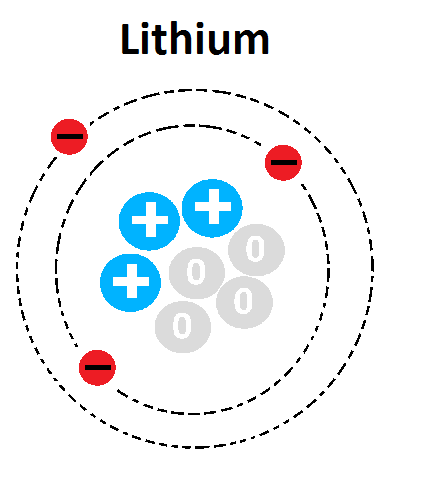
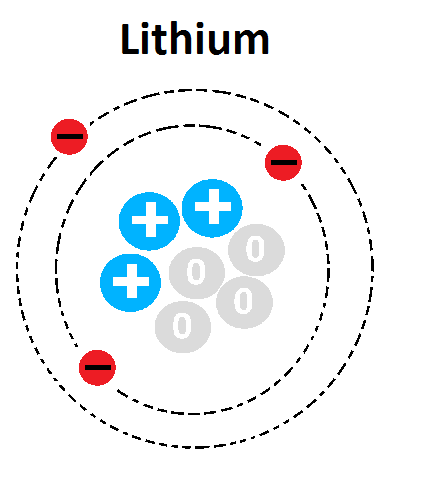
What is the mass number of this atom?
1
3
4
7

The fluorine atom has an atomic number of
19
9

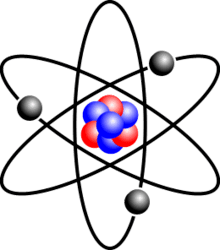
Which subatomic particle has a negative charge in the atom?
proton
neutron
electron
quark
A substance that cannot be broken down any further without losing its properties.
Compound
Mixture
Element
Suspension
The subatomic particle(s) found in the nucleus of an atom
Proton
Neutron
Electron
Subatomic particle(s) located in the shells outside the nucleus
Proton
Neutron
Electron
Atoms are mostly...
Tightly packed
Empty space
The mass number of an atom is found by adding which subatomic particles?
Protons
Neutrons
Electrons
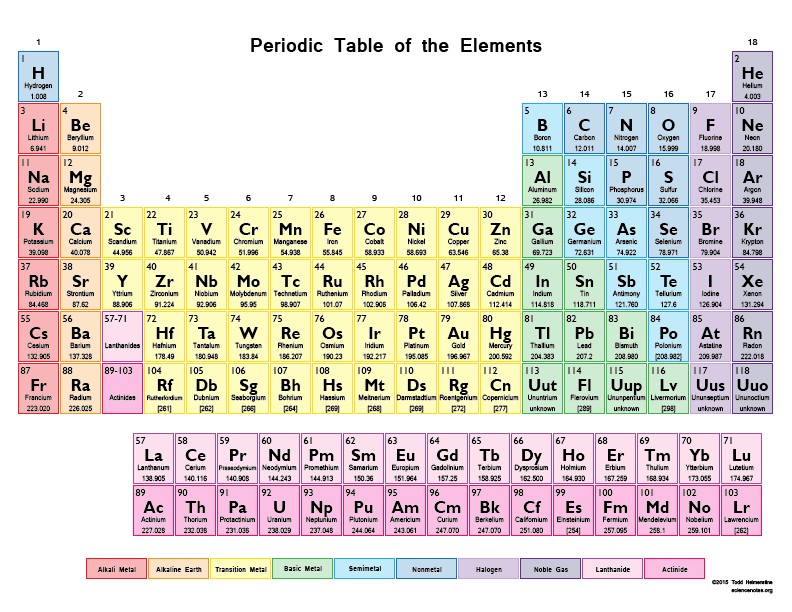
How many protons are in a sodium atom, Na? (tap to enlarge the periodic table)
Sodium has 1 proton.
Sodium has 3 protons.
Sodium has 11 protons
An element has the mass number 12 and atomic number 6. The number of neutrons in it is:
6
10
4
8
Atoms of the same element which have a different number of neutrons are called _________________.
ions
isotopes
quarks
molecules
If an atom has 10 electrons, how many protons does it have?
0
1
10
5
A covalent bond forms when atoms ___________ electrons.
gain
share
increase
transfer
CaCl2 is an example of what type of bond?
Covalent
Metallic
Ionic
Which category of elements usually form negative ions?
metals
nonmetals
metalloids
noble gases
Predict the bond between Mg and Cl
covalent
ionic
metallic
none of the above

13. What elements generally make a covalent bond?
metal and nonmetal
2 or more nonmetals
metal
none of the above
What usually forms the positive ion?
Metal
Nonmetals
None
Allows heat or electricity to go through
insulator
conductor
luster
ductile
Able to be drawn into wire is
malleable
insulator
luster
ductile
Able to be beaten or hammered into shapes
luster
malleable
brittle
insulator
Which properties of metal makes it a good choice to make a cooking pot out of? Choose TWO
it has luster - it is shiny
it is a good conductor of heat
it is ductile - able to be made into a wire
it has a high melting point
Which property of metal makes it a good choice to make a car engine from?
it has luster
it has a high melting point
it conducts electricity
it has magnetism
Why wouldn't you want a coffee cup to be made from metal?
metal conducts electricity
metal conducts heat
metals have luster
metals can be made into a wire; they are ductile
What does the word "thermal" mean?
metal
heat
electric
shiny
Why are cords for toasters, televisions, and phone chargers made of metal wires?
metals are shiny
metals are good conductors of heat
metals are good conductors of electricity
metals are magnetic
ALL metals are magnetic.
true
false
Which statement about metals is true?
most metals have a VERY high melting point
most metals can float in water
most metals are not shiny
most metals can melt in your oven


Who arranged the known elements into horizontal rows of increasing atomic mass leaving gaps for as yet undiscovered elements?
Mendeleev
Meyer
Newlands
Moseley
In the modern periodic table elements are arranged by:
atomic mass
atomic number
valence electrons
number of isotopes
Who proposed the 'plum pudding' model of the atom?
o Dalton
o Thomson
o Rutherford
o Bohr
Who first came up with the idea of an atom and called them "atomos"?
o Democritus
o Thomson
o Rutherford
o Bohr


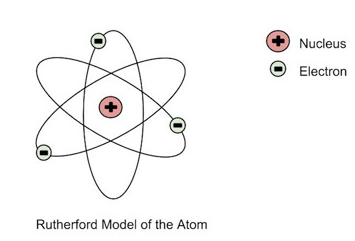

Proposed that electrons move around the nucleus in specific layers, or shells.
Bohr
Rutherford
Chadwick
Thomson


JJ Thomson discovered the
nucleus
proton
neutron
electron

What did Rutherford EXPECT to happen in the gold foil experiment?
all alpha particles pass through the gold foil
All alpha particles deflected by gold foil

What did Ernest Rutherford fire at the gold foil?
radioactive particles
particles
subatomic particles
alpha particles

