wayground logo

Free Printable Worksheets

Font size

S
M
L
XL
Worksheets

Chemistry Spring 2022 Final Exam Review2

Total questions: 130

Worksheet time: 11hrs 50mins

Name
Class
Date
1.

One mole of Chrominum contains:

a)

51.97x10^23 atoms

b)

2.06x10^23atoms

c)

6.02x10^23atoms

d)

12.04x10^23atoms

2.

The % of Aluminum found in Al2(SO4)3 is:

a)

7.89%

b)

15.77%

c)

84.23%

d)

92.11%

3.

The mole is based on 12 grams of:

a)

Hydrogen

b)

Oxygen

c)

Nitrogen

d)

Carbon

4.

36.0 g of Be contains how many moles?

a)

.25 moles

b)

4.0 moles

c)

45.0 moles

d)

320 moles

5.

In which of the following molar quantities of Sulfur would 8.13x10^23 atoms of sulfur be present?

a)

1.15 moles S

b)

1.25 moles S

c)

1.35 Moles S

d)

1.45 moles S

6.

Avogadro's number of P atoms would have a mass of

a)

6.02x10^-23 grams

b)

6.02x10^23 grams

c)

15.0 grams

d)

31 grams

7.

How many moles are present in 19.82 g Mg?

a)

.8156moles

b)

1.000 moles

c)

1.226 moles

d)

481.7 moles

8.

What is the mole ratio from O2 to H20?

2H2 + O2 ---> 2H2O

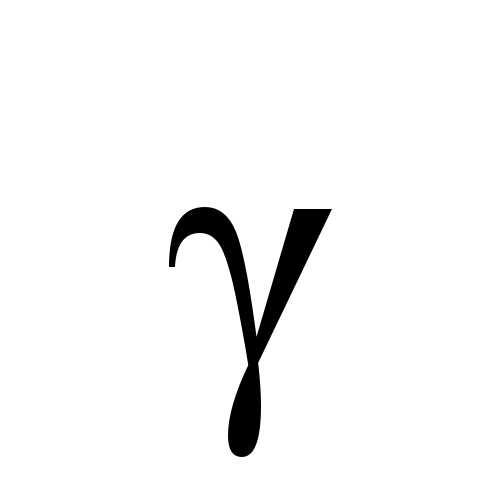
a)

2:2

b)

1:2

c)

1:1

d)

3:1

9.

What is the mole ratio from Hydrogen to Oxygen?

2H2 + O2 ---> 2H2O

a)

2:2

b)

1:2

c)

2:1

d)

1:1

10.

How many moles of Oxygen are required to produce 13 moles of H2O?

2H2 + O2 ---> 2H2O

a)

6.5 moles O2

b)

35 moles O2

c)

3.5 moles O2

d)

3.25 moles O2

11.

What is the molar mass of H2O?

a)

2.016 g/mole

b)

15.999 g/mole

c)

18.015g/mole

d)

33.006 g/mole

12.

IF 5 grams of compound A produces 20 grams of compound C, and 5 grams of compound B produces 10 grams of compound C, what is the limiting reactant?

a)

A

b)

B

c)

C

d)

D

13.

If you have an actual yield of 20 g and a theoretical yield of 40 g, what is the % yield?

a)

20%

b)

40%

c)

50%

d)

100%

14.

How much of a limiting reactant is used in a reaction?

a)

None

b)

Half

c)

All

d)

Depends

15.

What is an excess reactant?

a)

the reactant that has some left when the reaction stops

b)

reactant that is used up completely

c)

reactant that limits the amount of product

d)

reactant that produces the least amount of product

16.

Kinetic molecular theory states that gas particles are always

a)

reacting

b)

moving

c)

still

d)

bonded

17.

Gas Pressure is caused by

a)

collisions between particles or objects

b)

decrease in temperature

c)

particles condesning inyo liquid

d)

motionless particles in space

18.

In an elastic collision there is no change in _______ between the particles

a)

size

b)

position

c)

energy

d)

direction

19.

Kinetic energy is the energy of _____

a)

bonding

b)

position

c)

moles

d)

motion

20.

When gas particles are heated, they move:

a)

rapidly

b)

slowly

c)

smoothly

d)

unexpectedly

21.

Boyles Law states that at a constant temperature, pressure is ______volume

a)

directly proportional

b)

inverse1y proportiona1

c)

unrelated to

d)

equal to

22.

What is the volume of a gas at 10 atm that was initially at 2 atm and had a volume of 5 L?

a)

1 Liter

b)

5 Liters

c)

10 Liters

d)

20 Liters

23.

Charles Law states that at a constant pressure, temperature and volume are ______

a)

directly proportional

b)

inversely proportional

c)

unrelated

d)

the same

24.

What was the initial temperature of a gas that had an initial volume of 10L if it has a final temperature of 150 K and a final volume of 5L?

a)

50 K

b)

100 K

c)

200 K

d)

300 K

25.

For Avogadro's law ______ and _______ are constant

a)

volume and moles

b)

pressure and moles

c)

temperature and pressure

d)

temperature and volume

26.

Gay Lussac's law states that at a constant volume, _____ and ______ are constant

a)

volume and moles

b)

pressure and moles

c)

temperature and pressure

d)

temperature and volume

27.

The law in which moles of a gas are constant is called ______

a)

combined gas law

b)

ideal gas law

c)

Boyle's Law

d)

Charles Law

28.

Why does it hurt more if you hit a hard surface in your car as opposed to a safety air bag?

a)

particles in a gas are less massive than particles in a solid

b)

particles in a gas are smaller and more rigid than a solid

c)

particles in a gas are more spread out and compressible than in a solid

d)

particles in a gas are denser than particles in a solid

29.

If a gas in a rigid container is heated:

a)

kinetic energy of particles will decrease

b)

density will decrease

c)

moles of gas will increase

d)

pressure will increase

30.

An ideal gas has a pressure of 5 atm, a volume of 10 L, at a temperature of 200K. Given the constant R is 8.314 J/mol.K. How many moles of the gas are present?

a)

2 moles

b)

33 moles

c)

1204 moles

d)

83100 moles

31.
The faster molecules move, 
a)
the higher the temperature
b)
the less temperature
c)
the same temperature
d)
I don't know
32.

Temperature is a measure of the average _____________ energy of the particles of a substance.

a)

potential

b)

kinetic

c)

gravitational

d)

heat

33.
Which of the following terms identifies the change from a liquid to gas?
a)
Vaporization
b)
Condensation
c)
Deposition
d)
Sublimation
34.
Phase change from a solid to a gas.
a)
sublimation
b)
deposition
c)
condensation
d)
evaporation
35.
Phase change from a solid to a liquid.
a)
melting
b)
sublimation
c)
boiling
d)
condensation
36.
Phase change from a gas to a liquid.
a)
condensation
b)
evaporation
c)
melting
d)
deposition
37.

What is the molarity of a 0.5L sample of a solution that contains 60.0 g of sodium hydroxide (NaOH)

a)

0.8 M

b)

1.5M

c)

3.0M

d)

6.0M

38.

A student is preparing solutions for a laboratory experiment by dissolving solid solutes in liquid solvents. Which action will increase the rate of solubility

a)

lowering the temperature of the solvent

b)

stirring the solute in the solution

c)

increasing the pressure on the solution

d)

increasing the particle size of the solute

39.
Which of the following substances is a homogeneous solution?
a)
chocolate chip cookie
b)
italian dressing
c)
apple juice
d)
orange juice
40.

Which of the following is the correct formula for calculating molarity?

a)

moles/liters of solution

b)

moles/kg of solvent

c)

# particles/Avogadro's #

d)

theoretical yield/actual yield

41.

Which of the following types of solutions has more room to dissolve solute?

a)

supersaturated

b)

saturated

c)

unsaturated

42.
What is a solvent?
a)
The substance that does the dissolving in a solution.
b)
The substance that is being dissolved in a solution.
c)
The mixing of different substances.
d)
The process in which neutral molecules lose or gain electrons
43.
The concentration of a mixture can be increased in which of the following ways?
a)
Heating the mixture
b)
Adding more water “solvent”
c)
Adding more powder “solute”
d)
Stirring the mixture
44.
air is a 
a)
compound
b)
element
c)
heterogeneous mixture
d)
solution
45.
Another name for a homogeneous mixture is 
a)
an element.
b)
a solution.
c)
a compound.
46.

If water is a polar molecule, then which of the following must be nonpolar

a)

sugar

b)

salt

c)

oil

d)

juice

47.

Electrolytes

a)

don't conduct electricity

b)

conduct electricity

48.

Which of the following will produce crystals if cooled or disturbed?

a)

unsaturated solution

b)

saturated solution

c)

supersaturated solution

d)

all of the above

49.

Since "like dissolves like", water and oil will not mix because

a)

both of them are polar

b)

both of them are nonpolar

c)

oil is polar and water is nonpolar

d)

oil is nonpolar and water is polar

50.
Which sweet tea would you expect to taste the sweetest?
a)
1M
b)
3M
c)
3.1M
d)
2.5M
51.

What is a solvent?

a)

The substance that does the dissolving in a solution.

b)

The substance that is being dissolved in a solution.

c)

The mixing of different substances.

d)

The process in which neutral molecules lose or gain electrons.

52.
How many moles of NaCl are present in a solution with a molarity of 8.59 M and a volume of 125 mL?
a)
1074 mol
b)
0.069 mol
c)
1.07 mol
d)
62.7 mol
53.

What are the units of molarity?

a)

M

b)

m

c)

Ml

d)

Mr

54.
What is it about the water molecule that makes it a great solvent?
a)
water demonstrates polarity; a partial charge on each side of the molecule
b)
due to its molecular formula
c)
it has a liner molecular shape
d)
due to it's non-polar molecular structure
55.
Which of the following would result in being able to dissolve a greater amount of gas in a
solution?
a)
Heat the gas and solution
b)
Decrease the pressure of the solution
c)
Make the gas an electrolyte
d)
Cool the gas and solution
56.

A substance that conducts an electrical current when dissolved in water is called

a)

catalyst

b)

metalloid

c)

electrolyte

d)

nonelectrolyte

57.

What happens when BaF2(s) is dissolved in water?

a)

F- ions are attracted to the oxygen atoms of the water

b)

F- ions are attracted to the hydrogen atoms of the water

c)

Ba2+ ions are attracted to the hydrogen atoms of the water

d)

No attractions are involved, the crystal just falls apart

58.

Which of the following is not an electrolyte?

a)

KBr

b)

LiOH

c)

RbNO3

d)

CH4

59.
The chemical compound of water is
a)
HO
b)
H2O
c)
H3O
d)
HO2
60.
Water is a universal solvent
a)
True
b)
False
61.
A Compound that is being dissolved is called a
a)
Solution
b)
Solute
c)
Solvent
d)
Suspension
62.
A water strider can skate along the top of a pond because:
a)
covalent bonds result in water cohesion
b)
hydrogen bonds result in water cohesion (surface tension)
c)
water striders have adapted to take advantage of water cohesion
d)
low surface tension of water
63.
Why can water have no net charge but have slight charges in different parts of the molecule?
a)
The oxygen end is slightly negative and the hydrogen end is slightly positive
b)
The hydrogen end is slightly negative and the oxygen end is slightly positive
c)
The hydrogen and oxygen ends change in polarity
d)
Because it is hydrophobic
64.
Attractions between water molecules are called
a)
Covalent bonds
b)
Ionic bonds
c)
Polar bonds
d)
Hydrogen bonds
65.
When 20 grams of potassium chlorate, KClO3, is dissolved in 100 grams of water at 80 ºC, the solution can be correctly described as:
a)
supersaturated
b)
saturated
c)
unsaturated
66.
When 20 grams of KNO3 is dissolved in 100 grams of water at 80 ºC, the solution can be correctly described as:
a)
supersaturated
b)
saturated
c)
unsaturated
67.

Which of the following is a neutralization reaction?

a)

2Na + Cl2 → 2NaCl

b)

CH4 + 2O2 → CO2 + 2H2O

c)

HCl + KOH → KCl + H2O

d)

CaCO3 → CO2 + CaO

68.

What is the pH of a reaction between a strong acid and strong base?

a)

0

b)

5

c)

10

d)

7

69.

HNO3 + H2O → H3O+ + NO31-

NO31- is the conjugate base of

a)

H2O

b)

HNO3

c)

H3O+

d)

none of the above

70.

What is the conjugate base of H2SO4?

a)

SO42-

b)

H2SO3

c)

HSO31-

d)

HSO41-

71.

Which of the following is a strong base?

a)

NH3

b)

Zn(OH)2

c)

HCl

d)

CsOH

72.

Which of the following is a strong acid?

a)

NaOH

b)

HCl

c)

HF

d)

H2O

73.

Bases react with

a)

Acids to produce salts and water

b)

salts to produce acids and water

c)

water to produce acids and salts

d)

Neither acids, salts, nor water

74.

A substance that ionizes completely in water and produces H3O+ is a

a)

weak acid

b)

weak base

c)

strong acid

d)

strong base

75.

Strong acids are

a)

strong electrolytes

b)

weak electrolytes

c)

non electrolytes

d)

nonionized

76.

Which of the following is a strong base?

a)

NH3

b)

NaOH

c)

anline

d)

acetate ion

77.

The reaction HCl + KOH →  KCl + H2O is a

a)

single-replacement reaction.

b)

Neutralization reaction.

c)

Brønsted-Lowry acid-base reaction.

d)

Lewis acid-base reaction.

78.

An amphoteric species is one that reacts as a(n)

a)

acid only.

b)

base only.

c)

acid or base.

d)

None of the above

79.

If [H+] of a solution is greater than [OH–], the solution

is always acidic.

is always basic.

is always neutral.

a)

is always acidic.

b)

is always basic.

c)

is always neutral.

d)

might be acidic, basic, or neutral.

80.

If [H+] of a solution is less than [OH–], the solution

is always acidic.

is always basic.

is always neutral.

a)

is always acidic.

b)

is always basic.

c)

is always neutral.

d)

might be acidic, basic, or neutral.

81.

The pH scale in general use ranges from

a)

0-7

b)

0-14

c)

7-14

d)

0-7

82.

Oxidation and reduction

a)

always occur simultaneously.

b)

always occur at different times.

c)

do not occur in the same reaction.

d)

always occur with oxidation first, then reduction.
83.
Which of the following is an example of nuclear fusion? 
a)
A plutonium atom is used to start a chain reaction that detonates a nuclear weapon 
b)
A uranium atom is split apart into lighter elements
c)
 Two hydrogen atoms are combined to form a helium atom
d)
Two hydrogen atoms bond with an oxygen atom to form a water molecule 
84.
In what part of an atom can protons be found? 
a)
Inside the electrons
b)
Inside the neutrons 
c)
Inside the atomic nucleus 
d)
 Inside the electron shells
85.
What is NOT a characteristic of gamma radiation?
a)
Most dangerous type of radiation
b)
High energy, high penetration
c)
stopped by thin metal
d)
Stopped by several feet of concrete or several inches of lead
86.
What is NOT a characteristic of an alpha particle?
a)
A negatively charged electron
b)
Stopped by paper
c)
A positively charged particle
d)
Low penetration
87.
Has the symbol
a)
Alpha
b)
Beta 
c)
Gamma
d)
electron
88.
Has the symbol
a)
Alpha
b)
Beta
c)
Gamma
d)
proton
89.
Has the symbol
a)
Alpha
b)
Beta
c)
Gamma
d)
neutron
90.
In order of most to least penetrating radiation we have
a)
Alpha , Beta,  Gamma
b)
Beta , Gamma , Alpha
c)
Gamma, Beta, Alpha
d)
Gamma, Alpha, Beta
91.
Which type of nuclear radiation is being emitted here?
a)
Alpha
b)
Beta
c)
Gamma 
d)
none
92.
Has a mass of 4 and a charge of +2
a)
Alpha
b)
Beta
c)
Gamma
d)
neutron
93.
Which type of nuclear radiation is being emitted here along with Rn
a)
alpha
b)
beta
c)
gamma
d)
none
94.
How does nuclear fusion compare to nuclear fission? 
a)
Nuclear fusion produces no radioactive waste
b)
Nuclear fusion produces more radioactive waste
c)
. Nuclear fusion is cheaper and easier to produc
d)
Nuclear fusion requires rare, expensive elements to work
95.
Which of the following best describes the process of nuclear fission? 
a)
Splitting an atom's nucleus apart 
b)
Separating an atom's electrons from its nucleus 
c)
Fusing two atomic nuclei together 
d)
Splitting an atom's electrons in half 
96.
If Thorium-234 undergoes a beta decay, What element will be left in its place?
a)
Actinium-234
b)
Thorium-233
c)
Protactinium-234
d)
Radium-230
97.
If we start off with element 5024X after an gamma decay we get another element that looks like
a)
5224X
b)
5023X
c)
5024X
d)
5025X
98.
If we start off with element 5024X after an beta decay we get another element Y that looks like
a)
5023Y
b)
4622Y
c)
5025Y
d)
5024Y
99.
If we start off with element 5024X after an alpha decay we get another element Y that looks like
a)
5022Y
b)
 4622Y
c)
4820Y
d)
5426Y
100.

The mass of one mole of Ca(NO3)2 is:

a)

134 grams/mole

b)

199 grams/mole

c)

148 grams/mole

d)

164 grams/mole

101.

Avogadro's number of P atoms would have a mass of

a)

6.02x10^-23 grams

b)

6.02x10^23 grams

c)

15.0 grams

d)

31 grams

102.

The molecular formula of a compound is the:

a)

Formula showing the actual ratio of atoms in the compound

b)

Formula showing the most simplified ratio of atoms in the compound

c)

formula showing the ideal ratio of atoms in a compound

d)

Formula showing the theoretical ratio of atoms in the compound

103.

How many liters of O2 are required to produce 50L of H2O ?

2H2 + O2 -----> 2H2O

a)

2 L O2

b)

25L O2

c)

50 L O2

d)

100 L O2

104.

What is the molar mass of H2?

a)

1.008 g/mole

b)

2.016 g/mole

c)

3.024 g/mole

d)

4.032 g/mole

105.

What is the molarity of a 0.5L sample of a solution that contains 60.0 g of sodium hydroxide (NaOH)

a)

0.8 M

b)

1.5M

c)

3.0M

d)

6.0M

106.

Which of the following types of solutions has more room to dissolve solute?

a)

supersaturated

b)

saturated

c)

unsaturated

107.
What is a solvent?
a)
The substance that does the dissolving in a solution.
b)
The substance that is being dissolved in a solution.
c)
The mixing of different substances.
d)
The process in which neutral molecules lose or gain electrons
108.
Which temperature scale has no negative temperatures?
a)
Celsius
b)
Fahrenheit 
c)
Joule
d)
Kelvin
109.
This happens to water at 0 degrees Celsius.
a)
Boils
b)
Freezes
c)
Heats
d)
All of them
110.

The absolute coldest anything can get.

In Celsius it's -273.15 degrees. Or 0 degrees Kelvin.

a)

Absolute cold

b)

Kelvin

c)

Absolute zero

d)

I don't know

111.
The faster molecules move, 
a)
the higher the temperature
b)
the less temperature
c)
the same temperature
d)
I don't know
112.
Select the temperature in °F
a)
90°F
b)
100°F
c)
40°F
d)
30°F
113.
The slower molecules move, 
a)
the higher the temperature
b)
the less temperature
c)
the same temperature
d)
I don't know
114.

Temperature is a measure of the average _____________ energy of the particles of a substance.

a)

potential

b)

kinetic

c)

gravitational

d)

heat

115.
Which of the following terms identifies the change from a liquid to gas?
a)
Vaporization
b)
Condensation
c)
Deposition
d)
Sublimation
116.
Phase change from a solid to a gas.
a)
sublimation
b)
deposition
c)
condensation
d)
evaporation
117.
Phase change from a solid to a liquid.
a)
melting
b)
sublimation
c)
boiling
d)
condensation
118.
Phase change from a gas to a liquid.
a)
condensation
b)
evaporation
c)
melting
d)
deposition
119.
Change from Gas to Solid is called........
a)
Sublimation
b)
Deposition
c)
Fusion
d)
condensation
120.
What state of matter is Y?
a)
solid 
b)
liquid
c)
gas
d)
supercritical fluid
121.
What state of matter is Z?
a)
solid 
b)
liquid
c)
gas
d)
supercritical fluid
122.
What change occurs from F to E?
a)
sublimation
b)
deposition
c)
melting
d)
condensation
123.
What change occurs from E to C?
a)
sublimation
b)
freezing
c)
melting
d)
boiling
124.
What change occurs from C to D?
a)
condensation
b)
vaporization
c)
melting
d)
sublimation
125.
What is point A?
a)
triple point
b)
critical point
c)
equilibrium point
d)
normal melting point
126.
What is point B?
a)
triple point
b)
critical point
c)
equilibrium point
d)
normal melting point
127.
Below the temperature of point B, this substance can exist as a ____________.
a)
solid only
b)
liquid only
c)
gas only
d)
either a solid, liquid or gas
128.
How many moles of NaCl are present in a solution with a molarity of 8.59 M and a volume of 125 mL?
a)
1074 mol
b)
0.069 mol
c)
1.07 mol
d)
62.7 mol
129.
90 grams of sodium nitrate (NaNO3) are put into 100 grams of water and stirred. The final
mixture has a temperature of 20°C. About how many grams of the sodium nitrate dissolved?
a)
23
b)
73
c)
80
d)
88
130.

As water is added to a 0.10 M NaCl aqueous solution, the conductivity of the resulting solution

a)

decreases because the concentration of ions decreases

b)

decreases, but the concentration of ions remains the same

c)

increases because the concentration of ions decreases

d)

increases, but the concentration of ions remains the same