
 Worksheets
11 Triple Chemistry Paper 2 Revision 2021
Total questions: 130
Worksheet time: 1hrs 14mins
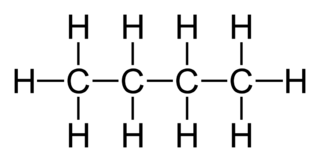
What is the general formula for Alkanes?
CnH2n+2
CnH2n
What is the general formula for Alkenes?
CnH2n+2
CnH2n
What Elements do Hydrocarbons Contain?
Hydrogen
Carbon
Oxygen
Which one is an Alkane?
Has a C--C Single Bond
Has a C==C Double Bond
Which one is an Alkene?
Has a C--C Single Bond
Has a C==C Double Bond
What does the Reaction of Alkenes and Steam form?
Alcohols
Carboxylic Acid
What is the general formula for Alcohols?
CnH2n+1OH
CnH2n
CnH2n+2
What is the Extra Molecule produced in Condensation Polymerisation?
Water
Hydrogen
Which of these are Naturally Occurring Polymers?
Amino Acids
Proteins
DNA
Sugars
What is the Functional Group for Alcohol?
'COO'
'COOH'
'OH'
What is the Functional Group for Carboxylic Acid?
'COO'
'COOH'
'OH'
What is the Functional Group for Esters?
'COO'
'COOH'
'OH'
In Chromatography which is the Moblie Phase?
Where the molecules can move. Always a gas or liquid
Where the molecules can't move. This can be a solid or a thick liquid
In Chromatography which is the Stationary Phase?
Where the molecules can move. Always a gas or liquid
Where the molecules can't move. This can be a solid or a thick liquid
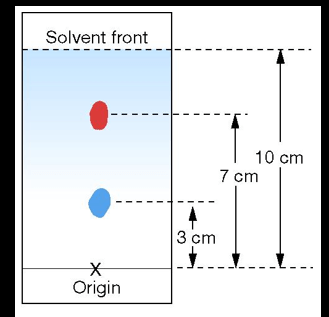
How do you Calculate RF Values?
Distance Travelled by substance/ Distance travelled by solvent
Distance Travelled by Solvent/ Distance travelled by Substance
Which one is the test for Chlorine gas?
Bleaches damp Litmus Paper
Relights a glowing splint
Turns Limewater Cloudy
Creates a Pop when you hold a lit Splint near it
Which one is the test for Oxygen gas?
Bleaches damp Litmus Paper
Relights a glowing splint
Turns Limewater Cloudy
Creates a Pop when you hold a lit Splint near it
Which one is the test for Carbon Dioxide gas?
Bleaches damp Litmus Paper
Relights a glowing splint
Turns Limewater Cloudy
Creates a Pop when you hold a lit Splint near it
Which one is the test for Hydrogen gas?
Bleaches damp Litmus Paper
Relights a glowing splint
Turns Limewater Cloudy
Creates a Pop when you hold a lit Splint near it
What is the test for a Carbonate?
Adding a few drops of dilute acid to the solution and bubbling the gas through limewater. It should go cloudy if present
Adding a few drops of dilute Hydrochloric acid followed by barium chloride solution. It should form a white precipitate if present
What is the test for a Sulfate?
Adding a few drops of dilute acid to the solution and bubbling the gas through limewater. It should go cloudy if present
Adding a few drops of dilute Hydrochloric acid followed by barium chloride solution. It should form a white precipitate if present
If you add dilute nitric acid and silver nitrate solution to Chloride what forms?
White Precipitate
Cream Precipitate
Yellow Precipitate
If you add dilute nitric acid and silver nitrate solution to Bromide what forms?
White Precipitate
Cream Precipitate
Yellow Precipitate
If you add dilute nitric acid and silver nitrate solution to Iodide what forms?
White Precipitate
Cream Precipitate
Yellow Precipitate
What is the colour that Lithium Ions burn?
Crimson
Yellow
Lilac
Orange-Red
Green
What is the colour that Sodium Ions burn?
Crimson
Yellow
Lilac
Orange-Red
Green
What is the colour that Potassium Ions burn?
Crimson
Yellow
Lilac
Orange-Red
Green
What is the colour that Calcium Ions burn?
Crimson
Yellow
Lilac
Orange-Red
Green
What is the colour that Copper Ions burn?
Crimson
Yellow
Lilac
Orange-Red
Green
What colour Precipitate does Calcium form when reacted with Sodium Hydroxide?
White
Blue
Green
Brown
White but colourless when added an excess
What colour Precipitate does Copper III form when reacted with Sodium Hydroxide?
White
Blue
Green
Brown
White but colourless when added an excess
What colour Precipitate does Iron II form when reacted with Sodium Hydroxide?
White
Blue
Green
Brown
White but colourless when added an excess
What colour Precipitate does Iron III form when reacted with Sodium Hydroxide?
White
Blue
Green
Brown
White but colourless when added an excess
What colour Precipitate does Aluminium form when reacted with Sodium Hydroxide?
White
Blue
Green
Brown
White but colourless when added an excess
What colour Precipitate does Magnesium form when reacted with Sodium Hydroxide?
White
Blue
Green
Brown
White but colourless when added an excess
What was the First Phase of the forming of Earth's Atmosphere?
Surface was covered with Volcanoes which released lots of gasses. The Atmosphere was mainly Carbon Dioxide with Little Oxygen. Nitrogen, Methane, Ammonia and Water Vapour were also present
Water Vapour Condensed to form Oceans. A lot of Carbon Dioxide dissolved in the Ocean forming Sediment. Green plants and Algea evolved which also absorbed the CO2 through Photosynthesis
The Algea also produced Oxygen allowing for more Complex Lifeforms to evolve. The atmosphere finally reached a point where it was 80% Nitrogen and 20% Oxygen
What was the Second Phase of the forming of Earth's Atmosphere?
Surface was covered with Volcanoes which released lots of gasses. The Atmosphere was mainly Carbon Dioxide with Little Oxygen. Nitrogen, Methane, Ammonia and Water Vapour were also present
Water Vapour Condensed to form Oceans. A lot of Carbon Dioxide dissolved in the Ocean forming Sediment. Green plants and Algea evolved which also absorbed the CO2 through Photosynthesis
The Algea also produced Oxygen allowing for more Complex Lifeforms to evolve. The atmosphere finally reached a point where it was 80% Nitrogen and 20% Oxygen
What was the Third Phase of the forming of Earth's Atmosphere?
Surface was covered with Volcanoes which released lots of gasses. The Atmosphere was mainly Carbon Dioxide with Little Oxygen. Nitrogen, Methane, Ammonia and Water Vapour were also present
Water Vapour Condensed to form Oceans. A lot of Carbon Dioxide dissolved in the Ocean forming Sediment. Green plants and Algea evolved which also absorbed the CO2 through Photosynthesis
The Algea also produced Oxygen allowing for more Complex Lifeforms to evolve. The atmosphere finally reached a point where it was 80% Nitrogen and 20% Oxygen
Which one are Thermosoftening Polymers?
Weak forces between chains. They can be melted and remoulded
Solid structure which doesn't soften when heated
Which one are Thermosetting Polymers?
Weak forces between chains. They can be melted and remoulded
Solid structure which doesn't soften when heated
What are the 2 processes used in making Potable Water?
Filtration
Sterilisation
Distillation
What do Rates of Reactions depend on?
Collision Frequency
Energy Transfered per Collision
Ammount of Reactants
What do Rates of Reactions depend on?
Temperature
Concentration
Pressure
Surface Area
Catalyst
When is Equilibrium met in a Reversible Reaction?
When the Masses of Products and Reactants are the same
When the Rates at which the Products and Reactants are made are the same
Which Part of a Graph shows the Rate of the reaction?
Gradient
Y-Intercept
What does it mean when the Equilibrium of a Reversible Reaction lies to the Left?
Concentration of Products is greater
Concentration of Reactants is greater
The rate of Forming Products is greater
The rate of Forming Reactants is greater
What does it mean when the Equilibrium of a Reversible Reaction lies to the Right?
Concentration of Products is greater
Concentration of Reactants is greater
The rate of Forming Products is greater
The rate of Forming Reactants is greater
If a Reversible Reaction is Exothermic one way what will it be the Other way?
Endothermic
Exothermic
If a Reversible Reaction is Endothermic one way what will it be the Other way?
Endothermic
Exothermic
What is Le Chatelier's Principle?
If you change the Conditions of a Reversible Reaction at Equilibrium the system will try to Counteract that change
If you change the Conditions of a Reversible Reaction at Equilibrium the system will Accelerate the Change
What happens to a Reversible Reaction when you increase the Temperature?
It Favours the Endothermic Reaction
It Favours the Exothermic Reaction
What happens to a Reversible Reaction when you decrease the Temperature?
It Favours the Endothermic Reaction
It Favours the Exothermic Reaction
What happens to a Reversible Reaction when you increase the Pressure?
It Favours the reaction with Fewer molecules of Gas
It Favours the reaction with More molecules of Gas
What happens to a Reversible Reaction when you decrease the Pressure?
It Favours the reaction with Fewer molecules of Gas
It Favours the reaction with More molecules of Gas
What happens to a Reversible Reaction when you Increase the Concentration of the Products
It Produces more Reactants
It Produces more Products
Which Hydrocarbon has a Higher Viscosity?
Longer Hydrocarbon Chain
Shorter Hydrocarbon Chain
Which Hydrocarbon is More Volatile?
Longer Hydrocarbon Chain
Shorter Hydrocarbon Chain
Which Hydrocarbon is More Volatile?
Longer Hydrocarbon Chain
Shorter Hydrocarbon Chain


Scientists think Earth formed _____________ ago.
100,000 years
4,600,000 years
4,600 years
4,600,000,000 years
What do greenhouse gases do?
absorb infrared energy
absorb ultraviolet energy
reflect radiation
produce acid rain


Positive result: 'pop' when lit with a flame

Positive result: relights a glowing splint

Positive result: turns limewater from colourless to milky white (cloudy)
Positive result: turns damp blue litmus paper to white (bleached)

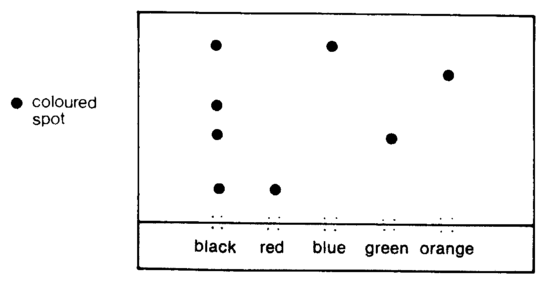
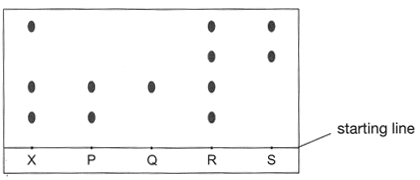
Ink can be separated by a method of -----------------------------------------------
distillation
filtration
chromatography
sedimentation


Where do short chain hydrocarbons collect?
At the top
In the middle
At the bottom
Which is the correct definition for the term 'polymer'?
a molecule containing only carbon and hydrogen
short molecule made of a few repeating units
long, chain-like molecule made of repeating units
chain-like molecule that contains hydrogen and oxygen

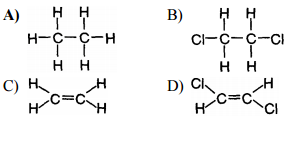
A
B
C
D


Silver nitrate and Nitric acid were mixed with an unknown solution. A cream ppt formed. The formula of the ion present is
I-
Cl-
Br-
Test for sulphate ions is...
Add HCl and barium chloride
Add dilute acid
Add nitric acid and silver nitrate

Starch is composed of what smaller monomer?
amino acids
nucleic acids
fatty acids
nucleotides
Glucose
Cellulose is composed of what smaller monomer?
amino acids
nucleic acids
fatty acids
nucleotides
Glucose
Bromine water with an alkene will
have no change
go clear
go orange to clear
go orange to colourless
fizz
Bromine water with an alkane will....
have no change/stay orange
go clear
go orange to clear
go orange to colourless
fizz
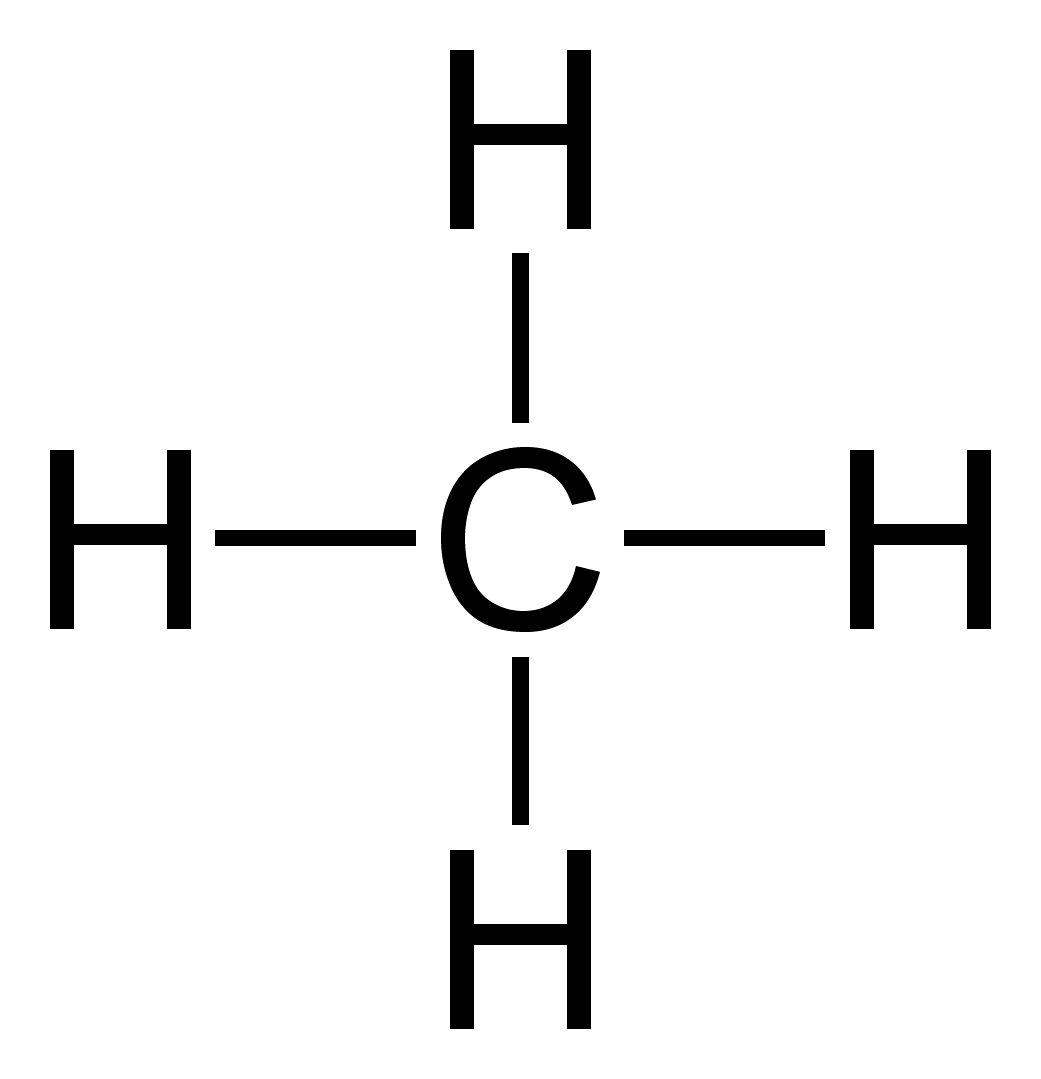
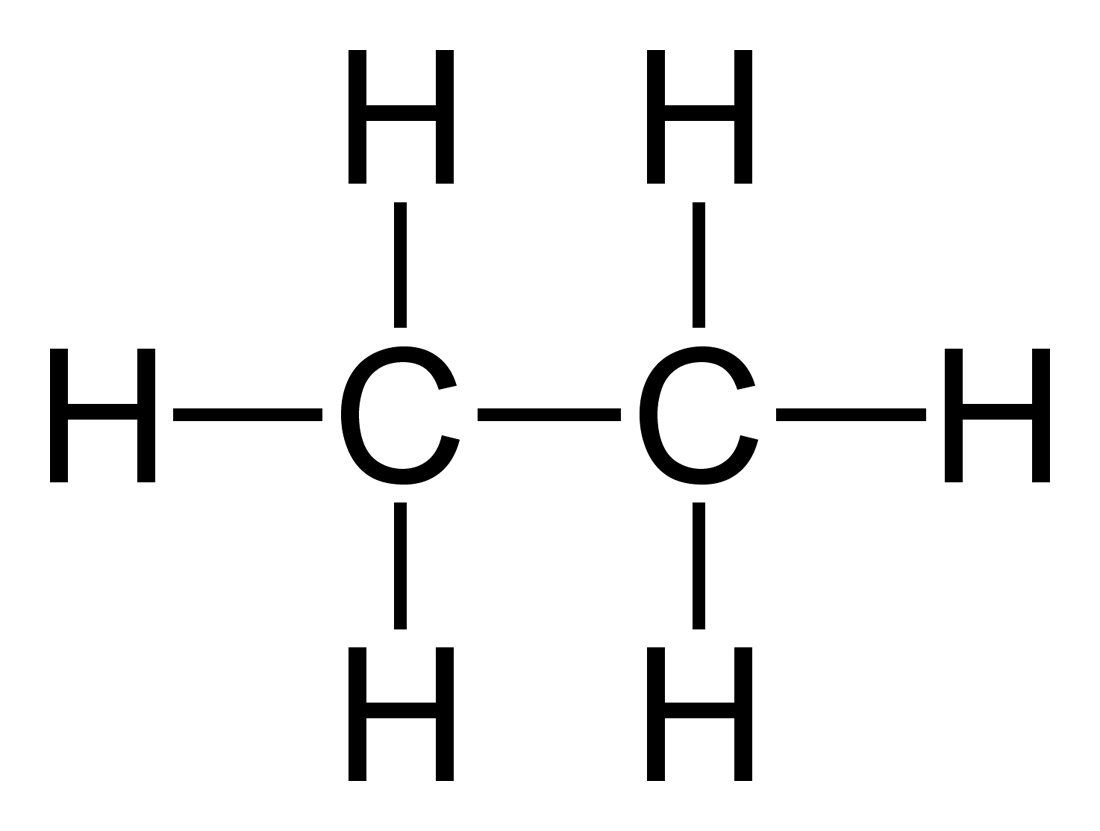
A Vapours condense when they become cool enough.
B This column is hot at the bottom and gets cooler towards the top.
C Vapours from the oil rise through the column.
D Liquids are led out of the column at different heights.
E Crude oil is heated and enters a tall fractionating column.
E B C A D
E B C D A`
B C A D E
What is potable water?
pure water
Water that has dissolved ions in but is safe to drink
Water from an underground source
Water that is safe to wash in
How is water sterilised?
Passing fresh water through filter beds and sterilising
Removal of salt from sea water
Reverse osmosis or distillation
Using chlorine, ozone or ultraviolet light
What is desalination?
Passing fresh water through filter beds and sterilising
Removal of salt from sea water
Reverse osmosis or distillation
Using chlorine, ozone or ultraviolet light
What is the main disadvantage of desalination?
It requires a large amount of energy
It is carried out at a high pressure
A low temperature is used
It has a low atom economy
What is the first step in the water treatment process?
coagulation
filtration
sterilisation
concentation

Which substances would you NOT find in pure water?
Bacteria
Minerals
Dirt
Acids
None of these
Boiling temperature of water is
10°C
110°C
100°C
0°C
In the UK how is potable water produced?
Passing fresh water through filter beds and sterilising
Removal of salt from sea water
Reverse osmosis or distillation
Evaporated from a mixture of impure water
In what kinds of locations is desalination carried out?
Ones where there is limited supply of fresh water
Where there is plenty of salt water
In dry, arid regions
In cold, icy regions

