wayground logo

Free Printable Worksheets

Font size

S
M
L
XL
Worksheets

Atomic Structure - Neutral Atoms, Ions

Total questions: 130

Worksheet time: 2hrs 12mins

Name
Class
Date
1.

What is the atomic number?

a)

the number of protons in the nucleus

b)

the number of protons and neutrons in the nucleus

c)

the number of neutrons in the nucleus

d)

the number of protons in the energy levels

2.

What is the mass number?

a)

the number of protons in the nucleus

b)

the number of protons and neutrons in the nucleus

c)

the number of neutrons in the nucleus

d)

the number of protons and electrons in the atom
3.

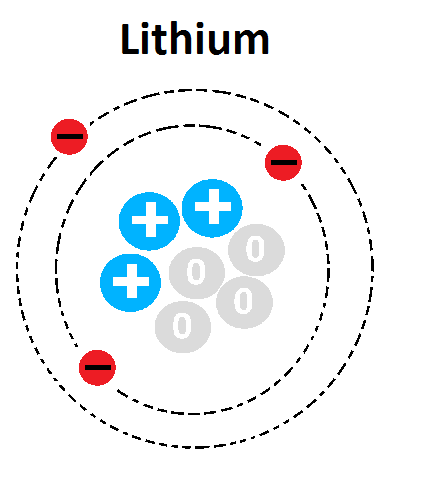
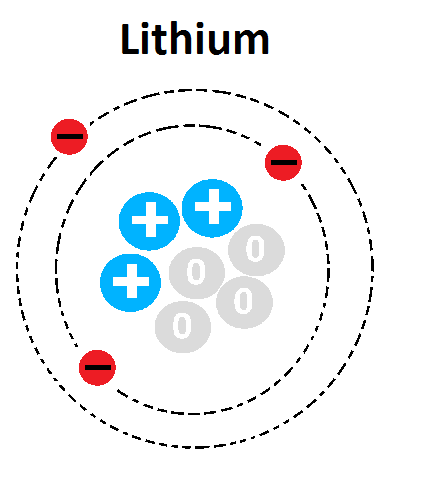
What is the atomic number of this atom?

a)

1

b)

3

c)

4

d)

7

4.

What is the mass number of this atom?

a)

1

b)

3

c)

4

d)

7

5.
Most of the mass in an atom is made up of _____________________?
a)
protons and electrons
b)
protons and neutrons
c)
neutrons and electrons
d)
electrons and quarks
6.
In order for an atom to be neutral what has to be true?
a)
The atom has more protons than neutrons
b)
The atom has more neutrons than protons
c)
The atom has the same number of protons and neutrons
d)
The atom has the same number of protons and electrons
7.
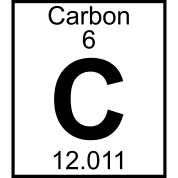
What does the C represent?
a)
atomic mass
b)
atomic number
c)
element name
d)
chemical symbol 
8.

What does the 6 represent?

a)

Atomic mass

b)

atomic number

c)

chemical symbol

d)

element name

9.
What subatomic particles would you find in the nucleus of an atom?
a)
Protons only
b)
Protons and Neutrons
c)
Neutrons and Electrons
d)
Protons and Electrons 
10.
Which subatomic particles contribute the most to the mass of an atom?
a)
Protons, Neutrons, Electrons
b)
Protons only
c)
Protons and Electrons
d)
Protons and Neutrons
11.
If an atom has 12 positively charged subatomic particles, which of the following must it also have to be considered a neutral atom?
a)
12 neutrons
b)
12 electrons
c)
12 protons
d)
24 protons and neutrons
12.

An atom has 10 protons, 15 neutrons and 10 electrons what is its mass number.

a)

20

b)

10

c)

35

d)

25

13.
The atomic number of an element that has 9 protons, 9 electrons, and 10 neutrons is _____.
a)
9
b)
10
c)
19
d)
28
14.
An element with a mass number of 11 and an atomic number of 5 has how many neutrons?
a)
11
b)
5
c)
6
d)
16
15.
Where is most of the mass in an atom located?
a)
in the nucleus
b)
in the protons
c)
in the neutrons
d)
in the electrons
16.
An atom has an atomic number of 15 and a mass number of 31. How many protons are there in the atom?
a)
15
b)
31
c)
16
d)
47
17.

Which of the following determines the identity of an element?

a)

number of protons

b)

atomic mass

c)

number of neutrons

d)

number of shells

18.

What is the atomic # of iron?

a)

55

b)

56

c)

26

d)

2

19.

How many protons does krypton have?

a)

84

b)

36

c)

48

d)

8

20.

How many electrons does oxygen have?

a)

8

b)

16

c)

2

d)

15

21.

How many neutrons does lithium have?

a)

3

b)

4

c)

6

d)

7

22.

How many neutrons are in magnesium?

a)

12

b)

24

c)

25

d)

36

23.

What is the atomic number of silicon?

a)

14

b)

28

c)

42

d)

7

24.

What is the best mass number for silver?

a)

47

b)

107

c)

108

d)

154

25.

What is the symbol for arsenic?

a)

A

b)

As

c)

33

d)

75

26.

How many neutrons does beryllium have?

a)

4

b)

5

c)

9

d)

13

27.

How do you find the number of neutrons in an atom?

a)

It's the same as the atomic #

b)

It's the same as the mass number

c)

Subtract the atomic # from the mass number

d)

Add the mass number and the atomic #

28.

What does the bottom most number (39.098) represent?

a)

Atomic number

b)

Atomic mass

c)

Number of protons

d)

Number of electrons

29.

How many neutrons are in Phosphorus?

a)

16

b)

15

c)

31

d)

46

30.

How many electrons are in Aluminium?

a)

40

b)

27

c)

13

d)

14

31.

How many protons are in Silicon?

a)

7

b)

42

c)

28

d)

14

32.

How many protons, neutrons, and electrons are in Oxygen?

a)

Protons = 8; Neutrons = 16; Electrons = 8

b)

Protons = 8; Neutrons = 8; Electrons = 8

c)

Protons = 16; Neutrons = 8; Electrons = 16

d)

Protons = 16; Neutrons = 24; Electrons = 16

33.
How many neutrons are in the Calcium-42 isotope?
a)
20
b)
40
c)
22
d)
42
34.

What distinguishes a neutral atom from an ion?

a)

A change in the number of protons.

b)

A change in the number of neutrons.

c)

A change in the number of electrons.

d)

A change in the number of quarks.

35.

What is the smallest particle of an element that still retains the properties of the element?

a)

A nucleus.

b)

A proton.

c)

A neutron.

d)

An atom.

36.

To determine what element an atom is, you must look at the number of ______________.

a)

Protons

b)

Neutrons

c)

Electrons

d)

Quarks

37.

The atomic number is equal to the number of _____________.

a)

Protons

b)

Neutrons

c)

Electrons

d)

Quarks

38.

What is the mass number of a Helium atom that has three neutrons?

a)

2

b)

3

c)

4

d)

5

39.

Isotopes are atoms of the same element that differ in their number of ______________.

a)

Protons

b)

Neutrons

c)

Electrons

d)

Quarks

40.

All atoms of the same element must contain the same number of _______________.

a)

Protons

b)

Neutrons

c)

Electrons and protons

d)

Protons and neutrons

41.

Isotopes of a given element contain _____________.

a)

The same number of neutrons but a different number of protons.

b)

The same number of neutrons and protons.

c)

The same number of protons but a different number of neutrons.

d)

The same number of protons but a different number of electrons.

42.

An atom with 16 protons and 18 neutrons is an isotope of which element?

a)

Cu

b)

P

c)

S

d)

Ar

43.

What is a negative ion called?

a)

Anion

b)

Cation

c)

Covalent

d)

Isotope

44.

What is a positive ion called?

a)

anion

b)

cation

c)

isotope

d)

covalent

45.

If an atom loses electrons, the charge will be positive.

a)

True

b)

False

46.

A Bromine ion gains 1 electron. Which of the following is the correct symbol for a Bromine ion?

a)

Br-1

b)

Br+1

c)

Br+7

d)

Br-7

47.

An atom becomes _________ when it gains electrons.

a)

Positive

b)

Negative

c)

Neutral

d)

Invisible

48.

Loss or gaining of an electron changes and atom into __________.

a)

isotopes

b)

valance electrons

c)

bohr models

d)

ions

49.

Is a substance made up of only one kind of atom.

a)

pure substance

b)

element

c)

compound

d)

mixture

50.

Why are ions formed?

a)

To make our lives difficult

b)

Because atoms want to be stable

c)

Because atoms have the same number of protons and electrons

d)

Because atoms gained neutrons

51.

An element has 25 protons and 22 electrons. It has a charge of...

a)

3+

b)

3-

c)

2+

d)

1-

52.

The area around the nucleus of an atom where the atom's electrons are most likely to be found is called

a)

electron cloud

b)

quark

c)

electron

d)

nucleus

53.
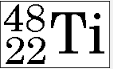
How many protons does this isotope of titanium have?
a)
48
b)
22
c)
26
d)
70
54.
In a correctly written symbol what would be located in the "A" position?
a)
number of neutrons
b)
atomic number
c)
number of electrons 
d)
mass number
55.
What quantities vary between isotopes of an element?
a)
protons, electrons, and atomic mass
b)
protons, electrons, and atomic number
c)
neutrons and electrons
d)
neutrons and atomic mass
56.
How many neutrons does the isotope below have?     89 36Kr
a)
53
b)
36
c)
89
d)
125
57.
Four isotopes of lead include lead-204, lead-206, lead-207, and lead-208.  The average atomic mass of lead is 207.2.  Which isotope of lead is likely to be the most abundant.
a)
204
b)
206
c)
207
d)
208
58.
What is the name of the pictured isotope?
a)
Chlorine-Schmorine
b)
Chlorine-17
c)
Chlorine-35
d)
Chlorine-18
59.
What is the name of the pictured isotope?
a)
Copper-29
b)
Copper-63
c)
Copper-34
d)
CopperWopperHopperBopper
60.
Ca+ is an example of a(n)
a)
Positive ion
b)
Negative ion
c)
Isotope
d)
Neutral Atom
61.

Two isotopes of carbon are carbon-12 and carbon-14. These isotopes differ from one another by two protons.

a)
true
b)
false
62.

If X is the symbol for an element, which of the following represent isotopes of the same element?

I. 7735

II. 7733

III. 8137X

IV. 8135 X

a)
I and II
b)
III and IV
c)
I and IV
d)
I and III
63.
24.1% of all the isotopes of a an element have a mass of 75.23 amu, 48.7% have a mass of 74.61 amu, and 27.2% have a mass of 75.20 amu.
What is the average mass of this element?
a)
74.92 amu
b)
24.97 amu
c)
75.01 amu
d)
74.51 amu
64.

The atomic mass of an element is the ___.

a)

average of the mass number and the atomic number for the element

b)

weighted average of the masses of the isotopes of the element

c)

total mass of the isotopes of the element

d)

total number of subatomic particles in the nucleus

65.

Calculate the average atomic mass of the element iron (Fe) using the following data:

[Isotope / % abundance]

[Iron 54 / 6% ] [Iron 56 / 92% ] [ Iron 57 / 2% ]

a)

53.7 amu

b)

54.9 amu

c)

5592.0 amu

d)

55.9 amu

66.
An isotope has three forms.  30% have a mass of 4 amu, 20% have a mass of 5 amu and 50% have a mass of 3 amu.  Average atomic mass will be closest to
a)
2 amu
b)
3 amu
c)
4 amu
d)
5 amu
67.
How many neutrons does an atom of the isotope Neon-22 have?
a)
12
b)
10
c)
22
d)
20
68.

Which is the best nuclear symbol for a potassium atom with 21 neutrons?

a)
b)
c)
d)
69.

The correct hyphen notation for the nuclear symbol given is

a)

chromium - 24

b)

chromium - 50

c)

chromium - 74

d)

chromium - 26

70.

The hyphen notation of an atom of calcium with 20 protons, 20 electrons, and 22 neutrons is

a)

calcium - 20

b)

calcium - 40

c)

calcium - 62

d)

calcium - 42

71.
A combination that can be separated by physical processes is a .....
a)
Atom
b)
Compound
c)
Element
d)
Mixture
72.
A mixture that is NOT evenly distributed is called ....
a)
Compounded
b)
Homogenous
c)
Heterogenous
d)
Salty
73.
What is a homogeneous mixture?
a)
a mixture that is the same throughout.
b)
a mixture that is made up of one type of atom.
c)
a mixture that is made up of one type of compound
d)
a mixture that cannot be separated through physical changes
74.
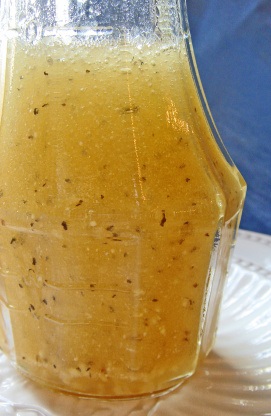
Italian Salad Dressing is a . . .
a)
heterogeneous mixture
b)
homogeneous mixture
c)
Pure Substance
d)
Compound
75.
Kool-Aid
a)
Element
b)
Compound
c)
Homogeneous Mixture
d)
Heterogeneous Mixture
76.
Carbon
a)
Element
b)
Compound
c)
Homogeneous Mixture
d)
Heterogeneous Mixture
77.
NaCl
a)
Element
b)
Compound
c)
Homogeneous Mixture
d)
Heterogeneous Mixture
78.
Sweet Tea
a)
Element
b)
Compound
c)
Homogeneous Mixture
d)
Heterogeneous Mixture
79.
Changing the phase, size or shape of something....
a)
Chemical change
b)
Physical Change
c)
Suspension
d)
Colloid
80.
If you change a substance into a new substance...
a)
Partial Change
b)
Physical Change
c)
Chemical Change
d)
Freezing
81.
Which is NOT a chemical change?
a)
Leaves changing colors in the fall
b)
Iron rusting
c)
Digesting Lunch
d)
Ice Melting
82.
Is burning wood a chemical or physical change?
a)
chemical
b)
physical
83.
An ______________ is the basic particle from which all elements are made. 
a)

compound

b)
atom
c)
molecule
d)

mixture

84.
Elements are represented by 1 or 2 letter symbols. 
True or False.
a)
True
b)
False
85.
A _________________ is a substance made of 2 or more elements that are chemically combined in a set ratio. 
a)
compound
b)
element
c)
atom
d)
chemical bond
86.
An element is made up of only one kind of _____.
a)

compound

b)

mixture

c)
atom
d)
metal
87.
Which among the following is an element?
a)
brass
b)
bronze
c)
silver
d)
stainless steel
88.

Physical or chemical change?
A solid is crushed into a powder.

a)
physical change 
b)
chemical change 
89.
The symbol of gold is _____
a)
Go 
b)
Au
c)
Gd
d)
A
90.
Define a liquid.
a)
Indefinite shape, indefinite volume
b)
Definite shape, definite volume
c)
Found in stars
d)
Definite volume, indefinite shape
91.

NH3 is a:

a)

Mixture

b)

Element

c)

Compound

d)

Particle

92.

Sugar dissolved in water is an example of:

a)

Compound

b)

Homogeneous mixture

c)

Substance

d)

Heterogeneous mixture

93.

Sugar dissolved in water is an example of:

a)

Compound

b)

Homogeneous mixture

c)

Substance

d)

Heterogeneous mixture

94.

A chocolate chip cookie is an example of:

a)

Substance

b)

Compound

c)

Homogeneous mixture

d)

Heterogeneous mixture

95.

What mixture is an heterogeneous mixture?

a)

Soluble coffee in water

b)

Sand and water

c)

Perfume

d)

Apple juice

96.
A substance in which all the atoms are the same
a)

compound

b)
homogeneous mixture
c)
solution
d)
element
97.

Anything that has mass and takes up space

a)

compound

b)

element

c)

matter

d)

substance

98.

Josh decided to mix some vinegar with baking soda. He knew that a reaction occurred because he made careful observations. He noted that the mixture started to foam up and bubble, and it was white in color. How did Josh know that a chemical reaction occurred?

He was sure a reaction occurred because of

a)

the color of the mixture

b)

the smell of the vinegar

c)

the volume of the mixture

d)

the formation of a gas

99.

Use the basic properties of solids, liquids, and gases to identify the correct state of matter in the image.

a)

(A) gas, (B) liquid, (C) solid

b)

(A) solid, (B) liquid, (C) gas

c)

(A) liquid, (B) solid, (C) gas

d)

(A) solid, (B) gas, (C) liquid

100.

a change in a substance that does not involve a change in the identity of the substance

a)

Physical change

b)

Chemical Change

101.

Which of the following is NOT a physical change?

a)

Crushing a can

b)

boiling water

c)

shredding paper

d)

burning paper

102.

Which of the following is NOT a sign of a chemical change?

a)

formation of a precipitate

b)

unexpected color change

c)

unexpected temperature change

d)

change in state of matter

103.

Is melting butter for popcorn a chemical or physical change?

a)

chemical

b)

physical

104.
Which of the following is NOT an example of a physical change?
a)
crumpled paper
b)
pencil sharpening
c)
shrunken clothing
d)
rust
105.
Freezing Juice?
a)
Physical Change
b)
Chemical Change
106.
Rotting bananas?
a)
Physical Change
b)
Chemical Change
107.
Melting a chocolate bar?
a)
Physical Change
b)
Chemical Change 
108.
Cutting your hair?
a)
Physical Change
b)
Chemical Change
109.

How many different elements are present in H2C2H3O2?

a)

1

b)

2

c)

3

d)

4

110.

Which of these elements is not present in NaNO3?

a)

sodium

b)

hydrogen

c)

oxygen

d)

nitrogen

111.

How many magnesium atoms are found in MgCl2?

a)

1

b)

2

c)

3

d)

4

112.

How many aluminum atoms are found in Al2O3?

a)

1

b)

2

c)

3

d)

4

113.

How many sulfur atoms are present in Al2(SO4)3

a)

1

b)

2

c)

3

d)

4

114.

A subscript will tell you the number of atoms of the element ___ it

a)

after

b)

before

115.

A subscript behind a set of parentheses belongs to

a)

the element right before it

b)

all the elements within the parentheses before it

c)

all the elements in the parenthese after it

d)

the element right after it

116.

If there is no subscript, how many atoms of that element are there?

a)

1

b)

2

c)

3

d)

0

117.

How many atoms of carbon are in this compound?

H2C3O4N5

a)

2

b)

3

c)

4

d)

5

118.

How many oxygen atoms are found here?

Mg(NO3)2

a)

2

b)

4

c)

6

d)

8

119.
How many atoms are there TOTAL in:
H2SO4
a)
6
b)
5
c)
7
d)
3
120.
How many Sodium (Na) are in 6NaCl?
a)
1
b)
12
c)
6
121.
How many Hydrogen are in 4H2O?
a)
6
b)
8
c)
2
d)
4
122.

4CF2Cl2

a)

C = 4, F = 4, Cl = 2

b)

C = 1, F = 8, Cl = 8

c)

C = 4, F = 8, Cl = 8

d)

C = 1, F = 4, Cl = 8

123.
How many total atoms are in the compound C2H8O ?
a)
11
b)
2
c)
8
d)
1
124.

This is energy that is stored for later use.

a)

kinetic energy

b)

potential energy

c)

motion/mechanical energy

d)

radiant energy

125.
Gas particles have the ________ kinetic energy because they move the fastest.
a)
least
b)
most
126.
Particles in a _____________ are tightly packed together.
a)
solid
b)
liquid
c)
gas
d)
plasma
127.
The energy an object has due to its motion
a)
potential energy
b)
kinetic energy
c)
thermal energy
d)
solar energy
128.
What kind of energy is in a moving skateboard?
a)
Potential
b)
Kinetic
129.
What kind of energy is in a rock at the edge of a cliff?
a)
Potential
b)
Kinetic
130.

Which state of matter has the most potential energy?

a)

solid

b)

liquid

c)

gas