wayground logo

Free Printable Worksheets

Font size

S
M
L
XL
Worksheets

Chemistry Midterm Review

Total questions: 130

Worksheet time: 2hrs 4mins

Name
Class
Date
1.
Which of the following is an example of a CHEMICAL change?
a)
Burning a marshmallow
b)
Melting a marshmallow
2.
When you put peroxide on a cut, it bubbles up. This is an example of a ______.
a)
chemical reaction
b)
physical change
3.
Solid
a)
A property that can be measured or observed without changing what it is
b)
A quality of characteristic of an object
c)
A state that has a fixed shape
d)
The decrease in the volume of matter with decreasing temperature
4.
Gas
a)
How much stuff there is in a sample of matter.
b)
A state that can flow from one place to another and will settle to the bottom of a container
c)
A state that has a fixed shape
d)
A state that has no shape or volume of its own
5.
Matter
a)
How much space matter takes up
b)
Substances that make up everything
c)
The change of matter from one state to another, such as solid to liquid
d)
A measure of how much stuff is crammed into a certain volume of space
6.
Physical Property
a)
A property that can be measured or observed without changing what it is
b)
A property of how matter behaves when it is brought into contact with other matter.
c)
A very small piece of matter
d)
Substances that make up everything
7.
Chemical Property
a)
A state that can flow from one place to another and will settle to the bottom of a container
b)
A property of how matter behaves when it is brought into contact with other matter.
c)
Extremely small particles; the smallest unit of matter.
d)
A property that can be measured or observed without changing what it is
8.
Volume
a)
How much stuff there is in a sample of matter.
b)
How much space matter takes up
c)
Extremely small particles; the smallest unit of matter.
d)
Two or more atoms connected by a chemical bond.
9.
Atoms
a)
Extremely small particles; the smallest unit of matter.
b)
Two or more atoms connected by a chemical bond.
c)
A property of how matter behaves when it is brought into contact with other matter.
d)
A measure of how much stuff is crammed into a certain volume of space
10.
Molecule
a)
Tools that scientist use to represent ideas
b)
Two or more atoms connected by a chemical bond.
c)
Extremely small particles; the smallest unit of matter.
d)
The increase in the volume of matter with increasing temperature.
11.
Blue Color: Chemical or Physical Property
a)
Chemical Property
b)
Physical Property
12.
Density: Chemical or Physical Property
a)
Chemical Property
b)
Physical Property
13.
Flammability (burns): Chemical or Physical Property
a)
Chemical Property
b)
Physical Property
14.
Reacts with Acid: Chemical or Physical Property
a)
Chemical Property
b)
Physical Property
15.
Sour Taste: Chemical or Physical Property
a)
Chemical Property
b)
Physical Property
16.
Melting Point: Chemical or Physical Property
a)
Chemical Property
b)
Physical Property
17.
Boiling Point: Chemical or Physical Property
a)
Chemical Property
b)
Physical Property
18.
Odor: Chemical or Physical Property
a)
Chemical Property
b)
Physical Property
19.
Ability to rust is this type of property:
a)
Physical property
b)
Chemical property
20.
This is an example of a
a)
physical change
b)
chemical change
21.
What kind of properties can only be observed when a substance changes into a different substance?
a)
physical properties
b)
chemical properties
c)
liquid properties
d)
real properties
22.
Write 7.113 x 10⁷ in standard form.
a)
71,130,00
b)
7,113,000
c)
0.0000007113
d)
7,113
23.
Write 0.00000707 in scientific notation.
a)
7.07 x 10⁻⁶
b)
7.07 x 10⁶
c)
707 x 108
d)
707 x 10-8
24.
How many sig figs are there?
100.00
a)
1
b)
3
c)
4
d)
5
25.
How many sig figs are there?
100000000
a)
1
b)
9
c)
10
26.
How many sig figs are there?
4004
a)
1
b)
2
c)
3
d)
4
27.
How many sig figs are there?
0.000008
a)
1
b)
2
c)
6
d)
7
28.
How many sig figs are there?
0.00400
a)
1
b)
3
c)
5
d)
6
29.
How many sig figs are there?
9009.00
a)
2
b)
4
c)
5
d)
6
30.
Jack has a rock. The rock has a mass of 14g and a volume of 2cm3. What is the density of the rock?
a)
7 mL
b)
7 g/cm3
c)
28 g/cm3
d)
1/7 g/cm3
31.
Frank has an eraser. It has a mass of 4g, and a volume of 2cm3. What is its density?
a)
8 g/cm3
b)
2 g/cm3
c)
1/2 g/cm3
d)
24 g/cm3
32.
What line segment represents only the solid state?
a)
A-B
b)
B-C
c)
C-D
d)
D-E
33.
What state(s) of matter are present at D-E?
a)
Solid-liquid
b)
Liquid
c)
Liquid-gas
d)
Gas-Solid
34.

You have 20 g of water. Specific heat (c) of water is 4.18. Temperature changes from 25° C to 20° C. How much heat energy (H) moves from the water to the surroundings?


Use the formula: Q=mc∆t

a)

-418 J

b)

209 J

c)

83 J

d)

4.18 J

35.
If 200 grams of water is to be heated from 24.0°C to 100.0°C to make a cup of tea, how much heat must be added?  The specific heat of water is 4.18 J/g∙C
a)
+ 63,536 J
b)
-63,536 J 
c)
- 6.35 J
d)
+ 6.35 J
36.
How many electrons does Barium (Ba) have?
a)
56
b)
81
c)
137
d)
218
37.
How many protons are in Carbon (C)?
a)
6
b)
12
c)
1
d)
18
38.
How many neutrons does Sodium (Na) have?
a)
11
b)
23
c)
34
d)
12
39.
Identify this atom: 
a)
Lithium
b)
Chlorine
c)
Phosphorus 
d)
Fluorine
40.

Using the Periodic Table, give the number of Neutrons for the element Arsenic.

a)

33

b)

42

c)

74

d)

34

41.

Using the Periodic Table, give the number of Neutrons for the element found at group 9 period 4.

a)

32

b)

59

c)

27

d)

86

42.

What is an anion's charge?

a)

positive

b)

negative

c)

neutral

d)

depends on the element's charge

43.

What is a cation's charge?

a)

positive

b)

negative

c)

neutral

d)

depends on the element

44.
If an atom of oxygen has a charge of -2, how many electrons does the atom have?
a)
18
b)
6
c)
8
d)
10
45.
If an atom of nickel has a charge of +3, how many electrons does the atom have?
a)
28
b)
25
c)
26
d)
31
46.
What charge does an atom have if it LOSES an electron? 
a)
Positive (+)
b)
Negative (-)
47.
What is an ion?
a)
A Charged Atom
b)
A Large Atom
c)
A Small Atom
d)
A Cute Atom
48.
An atom becomes _______ when it loses electrons.
a)
Positive
b)
Negative
c)
Neutral
d)
Invinsible
49.
An atom becomes _________ when it gains electrons.
a)
Positive
b)
Negative
c)
Neutral
d)
Invinsible
50.
How many neutrons in C-14?
a)
6
b)
7
c)
14
d)
8
51.
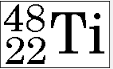
How many protons does this isotope of titanium have?
a)
48
b)
22
c)
26
d)
70
52.
What do these isotopes of carbon all have in common?
a)
neutrons & mass number
b)
atomic number and neutrons
c)
atomic number and electrons
d)
protons, atomic number, and mass number
53.
Which element is pictured?
a)
neon
b)
fluorine
c)
magnesium
d)
argon
54.
What is incorrect about this orbital diagram?
a)
Both arrows in the 2p box should be pointing up
b)
There is nothing incorrect with this diagram
c)
In the 2p box there should only be 1 electron in the first 2p box and one in the 2nd 2p box
d)
All the arrows should be pointing up.
55.
Electrons occupy orbitals of lowest energy first is part of what electron configuration rule?
a)
Hund’s Rule
b)
Aufbau Principle
c)
Pauli Exclusion Principle
56.
What is the Pauli Exclusion Principle?
a)
An atomic orbital can only hold a maximum of 2 electrons, each with opposite spins
b)
An atomic orbital can hold a minimum of 6 electrons, each with opposite spins
c)
An atomic orbital can hold a maximum of 6 electrons, each with the same spin
d)
An atomic orbital can hold a minimum of 2 electrons, each with opposite spins
57.
Which orbital shows a violation of Hund's Rule?
a)
A
b)
B
c)
C
d)
D
58.
Which orbital shows a violation of the Aufbau Principle?
a)
A
b)
B
c)
C
d)
D
59.
What atom matches this electron configuration?
1s22s22p63s2
a)
Neon
b)
Magnesium
c)
Aluminum
d)
Potassium
60.
What atom matches this electron configuration?
1s22s22p63s23p64s23d10
a)
Zinc
b)
Copper
c)
Nickel
d)
Germanium
61.
Identify the Electron Configuration for Aluminum (Al)
a)
1s2s2p3s3p1
b)
1s2s2p3s3p3
c)
1s2s2p3s4p1
62.
What is the shorthand electron configuration for Sulfur atom?
a)
[Ar] 3p4
b)
[He] 3s23p4
c)
[Ne] 3s23p4
d)
[Na] 3s23p3
63.

Which scientist proposed a new model of the atom after the discovery of the electron in 1897? His model consisted of electrons embedded in a sea of positive charge like seeds in a watermelon.

a)

J.J. Thomson

b)

Ernest Rutherford

c)

Niels Bohr

d)

Albert Einstein

64.
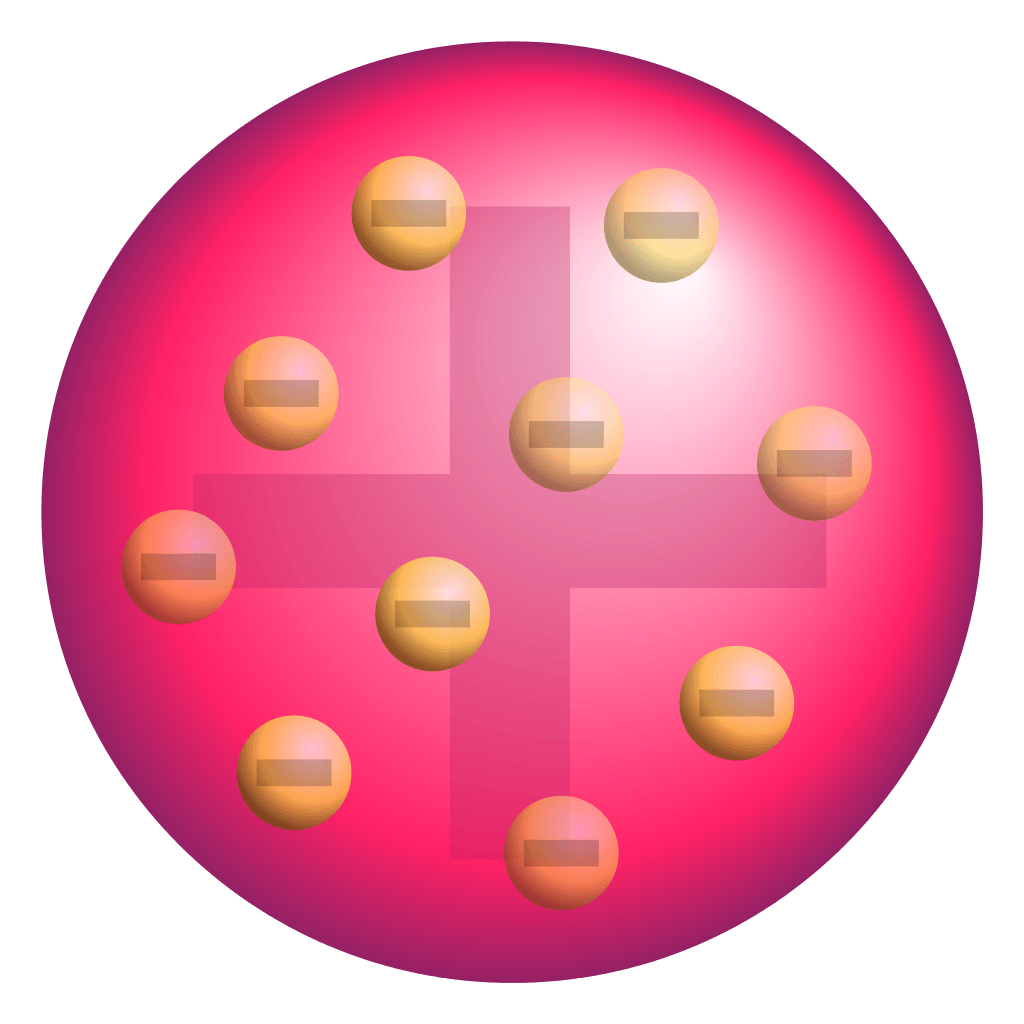
This model was developed after J.J. Thompson discovered electrons, a particle smaller than an atom. Is shows electrons floating freely in a positive space.
a)
The "Plum Pudding Model" of the atom
b)
The "Rutherford Model" of the atom
c)
Democritus's model of the atom
d)
The "Solar System Model" of the atom
65.
Proposed that the atom had a dense positively charge center which was extremely small but consisted of mostly empty space.
a)
Ernest Rutherford
b)
J.J Thomson
c)
Robert Millikan
d)
John Dalton
66.
During the thin foil experiment, it was seen that a______of alpha particles passed through the thin foil because the atom__________.
a)
majority; was dense
b)
few; was mostly empty space
c)
majority; was mostly empty space
d)
few; was dense
67.

Place the following scientists in order, from earliest to latest:


A) Ernest Rutherford B) J.J. Thomson C) John Dalton

a)

B, C, A

b)

C, A, B

c)

A, C, B

d)

C, B, A

68.
4.35% of all X atoms have a mass of 39.946 amu. 83.79% have a mass of 41.941 amu, 9.50% have a mass of 42.941 amu, and 2.36% have a mass of 43.939 amu. What is the average atomic mass of atom X?
a)
41.97 amu
b)
42.19 amu
c)
10.43 amu
d)
40.04 amu
69.
24.1% of all the isotopes of a an element have a mass of 75.23 amu, 48.7% have a mass of 74.61 amu, and 27.2% have a mass of 75.20 amu.
What is the average mass of this element?
a)
74.92 amu
b)
24.97 amu
c)
75.01 amu
d)
74.51 amu
70.
The atomic masses and the relative abundances of 2 naturally occurring isotopes of an unknown element X are as following: isotope X-7 has a relative abundance of 95% and isotope X-10 has a relative abundance of 5%. Which of the following is correct
a)
(7 x 95) + (10 x 5)
b)
(7 x 0.95) + (10 x 0.05)
c)
(7 x 0.95) + (10 x 0.5)
d)
(0.7 x 95) + (0.10 x 5)
71.
What is Half-life?
a)
The amount of time it takes for some of the nuclei in a sample of the isotope to decay
b)
The amount of time it takes for half the electrons in a sample of the isotope to decay
c)
The amount of time it takes for half the nuclei in a sample of the isotope to decay
d)
the amount of time it takes to double the nuclei in a sample of the isotope to decay
72.
Barium-122 has a half-life of 2 minutes. A fresh sample weighing 80 g was obtained. If it takes 10 minutes to set up an experiment using barium-122, how much barium-122 will be left when the experiment begins?
a)
0.25g
b)
2.5g
c)
25g
d)
80g
73.
The half-life of strontium-90 is 25 years. How much strontium-90 will remain after 100 years if the initial amount is 4.0 g?
a)
3.0g
b)
0.25mg
c)
0.3g
d)
0.25g
74.
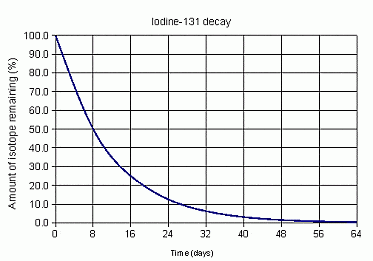
What is the half-life of iodine-131?
a)
32 days
b)
8 days
c)
16 days
d)
24 days
75.
What percent of carbon-14 would be left after 11,460 years?
a)
100%
b)
75%
c)
50%
d)
25%
76.

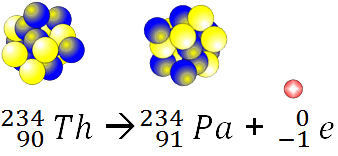
Which type of nuclear radiation is seen here?

a)

Alpha

b)

beta

c)

gamma

d)

none

77.
Which type of nuclear radiation is being emitted here?
a)
alpha
b)
beta
c)
gamma
d)
none
78.
Which of these elements has the greatest atomic radius? 
a)
H
b)
N
c)
Cl
d)
Cs
79.
The symbols W, X, Y, and Z represent four elements shown on the outline of a periodic table.
Which element has the highest electronegativity?

a)
W
b)
X
c)
Y
d)
Z
80.
Fluorine, chlorine, bromine, and iodine all have the same number of valence electrons and have a tendency to gain electrons. Which element has the greatest ionization energy and electronegativity?
a)
fluorine
b)
chlorine 
c)
bromine 
d)
iodine 
81.
According to the Periodic Table of the Elements, which set of elements has similar properties?
a)
H, C, I
b)
He, H, Al
c)
He, Ne, Ar
d)
Na, Ca, Al
82.
Electronegativity is...
a)
how good an atom is at attracting electrons
b)
the ability of an atom to lose electrons
c)
the energy required to remove an electron from a specific atom
d)
how easy it is to make friends. 
83.
As you move down the periodic table atoms get bigger.  This is because ____________.
a)
The atoms have more mass.
b)
The atoms have more protons.
c)
The atoms have more energy levels
d)
The atoms have more neutrons
84.

What is the name of the following compound: Ca(OH)2?

a)

calcium hydride

b)

calcium hydroxide

c)

calcium oxide

d)

calcium peroxide

85.

What is the name of HClO4 (aq)?

a)

chloric acid

b)

hydrochloric acid

c)

hypochlorous acid

d)

perchloric acid

86.

What is the name of N2O?

a)

dinitrogen monoxide

b)

nitrogen dioxide

c)

nitrogen monoxide

d)

nitrogen oxide

87.

What is the name of Na2O2?

a)

dinitrogen dioxide

b)

sodium oxide

c)

sodium (II) oxide

d)

sodium peroxide

88.
what is the name of CCl4?
a)
carbon tetrachloride
b)
monocarbon tetrachloride
c)
tetracarbon monochloride
d)
carbon chloride
89.
Phosphorous trichloride
a)
PCl3
b)
P3Cl
c)
P3Cl3
d)
PCL
90.
What is the name of the compound HgCl2
a)
mercury (II) chloride
b)
mercury chlorite
c)
Monomercury dichloride
91.
Naming a compound that starts with a transition metal requires us to use...
a)
Prefixes
b)
Roman Numeral
c)
Nothing, just name it
92.
Naming a compound of two non-metals requires us to use..
a)
Prefixes
b)
Roman Numerals
c)
Nothing, just name it
93.
Naming a compound that starts with elements from the first two groups (columns) of the periodic table requires us to use...
a)
Prefixes
b)
Roman Numeral
c)
Nothing, just name it
94.
Bromine monoflouride
a)
Br1F1
b)
BrF
c)
Br2F
d)
BrF2
95.
+  and  N-3
a)
KN
b)
KN3
c)
K3N3
d)
K3N
96.
Name this formula: 
KNO3
a)
Potassium Nitrogen Oxide
b)
Potassium Nitride
c)
Potassium Nitrate
d)
Potassium (I) Nitrite
97.
Name the following ionic compound: LiNO3
a)
lithium nitrate
b)
lithium III nitrate
c)
lithium nitride
d)
lithium oxide
98.
What is the correct formula for barium phosphate?
a)
BaPO4
b)
Ba2(PO4)3
c)
Ba3(PO4)2
d)
BaP
99.
How are covalent bonds formed?
a)
Sharing of electrons
b)
Transfer of electrons
100.
How are ionic bonds formed?
a)
Transfer of electrons
b)
Sharing of electrons
101.
Why do elements bond?
a)
To be friends
b)
To create a new element
c)
To become stable
102.
Hydrogen bonding occurs when hydrogen is bonded to N, O, or F.  Which of the following has hydrogen bonding?
a)
CBr4
b)
NO2
c)
H2S
d)
NH3
103.
Which is the second strongest intermolecular force, after hydrogen bonding?
a)
dipole-dipole attraction
b)
London forces
104.
All molecules have London forces between them, but dipole-dipole and hydrogen bonding are so much stronger that when they are present we can ignore London forces.  Which of these has ONLY London forces?
a)
I2
b)
NH3
c)
OCl2
d)
SH2
105.

Rank these in order of strength:

London forces

hydrogen bond

dipole-dipole attraction

a)

dipole-dipole>hydrogen bond>London

b)

London>dipole-diple>hydrogen bond

c)

hydrogen bond>dipole-dipole>London

d)

hydrogen bond>dipole-dipole>London

106.

Intermolecular forces for: NH3

a)

Dispersion Force

b)

Dipole dipole

c)

Hydrogen bonding

107.
Define electronegativity
a)
ability to donate electron
b)
tendency to lose electron
c)
tendency to lose electron to its neighbor
d)
tendency of atom to attract shared electron to itself
108.
Covalent bond is equal sharing of electron. Polar covelent bond is
a)
unequal sharing of electrons
b)
different distribution of electrons
c)
presence of hydrogen bonding
d)
presence of polar atoms
109.
Ions that are made of more than one atom are called...
a)
ionic compounds
b)
crystals
c)
polyatomic atoms
d)
ionic bonds
110.
Which of the following is NOT a property of ionic compounds?
a)
They have very high melting points
b)
They conduct electricity when in solution
c)
They have high boiling points
d)
They are insoluble in water
111.

Which structures conduct electricity as a liquid but not as a solid?

a)

Metallic

b)

Covalent

c)

Ionic

d)

All of the above

112.

Which structure has a sea of free electrons?

a)

Ionic

b)

Covalent

c)

Metallic

d)

All of the above

113.

Which of the following is NOT a property of Covalently bonded compounds?

a)

They are poor conductors of heat and electricity

b)

They are stronger than ionic bonds

c)

They have low melting points

d)

They are insoluble in water

114.

Which of the following is NOT a property of ionic compounds?

a)

They have very high melting points

b)

They conduct electricity as a solid, liquid, or gas

c)

Form into crystals

d)

Dissolve easily in water

115.
4Si + S8 --> 2Si2S4
a)
Synthesis
b)
Decomposition
c)
Single displacement
d)
Double displacement
116.
3Ca + 2AlCl3 --> 3CaCl2 + 2Al
a)
Synthesis
b)
Decomposition
c)
Single diplacement
d)
Double displacement
117.
3KOH + H3PO4 --> K3PO4 + 3H2O
a)
Synthesis 
b)
Decomposition
c)
Single displacement
d)
Double displacement
118.
2Pb(NO3)2 --> 2PbO + 4NO2 + O2
a)
Synthesis 
b)
Decomposition
c)
Single displacement
d)
Combustion
119.
3Mg + N2 --> Mg3N2
a)
Synthesis 
b)
Decomposition
c)
Single displacement
d)
Combustion
120.
2Fe + 3H2SO4 --> Fe2(SO4)3 + 2H2
a)
Synthesis 
b)
Decomposition
c)
Single displacement
d)
Combustion
121.
2NO2 --> N2 + 2O2
a)
Synthesis
b)
Decomposition
c)
Single displacement
d)
Combustion
122.
Which chemical reaction breaks down into 2 substances?
a)
Double Replacement
b)
Single Replacement
c)
Synthesis
d)
Decomposition
123.
Which chemical reaction switches 2 elements?
a)
Double Replacement
b)
Single Replacement
c)
Combustion
d)
Decomposition
124.
A + B = AB
a)
Double Replacement
b)
Synthesis
c)
Combustion
d)
Decomposition
125.
AB + CD = AD + CB
a)
Double Replacement
b)
Single Replacement
c)
Combustion
d)
Decomposition
126.
A + BC = B + AC
a)
Single Replacement
b)
Combustion
c)
Double Replacement
d)
Synthesis
127.
Which chemical reaction takes place when 2 substances react to form a single product?
a)
Decomposition
b)
Double Replacement
c)
Single Replacement
d)
Synthesis
128.
AB = A + B
a)
Decomposition
b)
Single Replacement
c)
Combustion
d)
Synthesis
129.
Is the equation balanced?: 2H2O + O2 --> 4MgO + 3Fe
a)
Yes
b)
No
130.
What is a precipitate?
a)
A solid formed from a single replacement reaction
b)
An aqueous compound formed from single replacement reaction 
c)
An aqueous compound formed from double replacement reaction
d)
A solid formed from a double replacement reaction