wayground logo

Free Printable Worksheets

Font size

S
M
L
XL
Worksheets

Unit 3 Review- The PT & Ions

Total questions: 120

Worksheet time: 3hrs 33mins

Name
Class
Date
1.

The periodic table is organized in horizontal rows called...

a)

Groups

b)

Periods

c)

Families

d)

Chemical Symbols

2.

The vertical columns of the periodic table are called...

a)

Periods

b)

Families

c)

Chemical Symbols

d)

Groups

3.

Which of the following are physical properties of metal?

a)

Luster

b)

Conductivity

c)

Malleability

d)

Ductility

4.

True or False: The reactivity of metals tends to decrease as you move from left to right across the periodic table.

a)

True

b)

False

5.

Name this group: These metals are the most reactive.

a)
b)
c)
d)
6.

Name this group: These metals are the second most reactive.

a)
b)
c)
d)
7.

Name this group: These metals contain familiar metals such as gold, iron, and copper.

a)
b)
c)
d)
8.

Find these groups: Locate Lanthanides and Actinides.

a)
b)
c)
d)
9.

Which of the following could be properties of nonmetals?

a)

Poor electrical conductivity

b)

Poor thermal conductivity

c)

Dullness

d)

Brittleness

10.

Find this family: This family contains nitrogen and phosphorus.

a)
b)
c)
d)
11.

Find this family: This family contains very reactive nonmetals like fluorine and chlorine.

a)
b)
c)
d)
12.

Name this group: These elements, also known as inert gases, tend to be nonreactive.

a)

Halogen family

b)

Noble gases

c)

Carbon family

d)

Nitrogen family

13.

The atomic number tells you what?  READ THE ANSWERS CAREFULLY

a)

only the number of electrons

b)

 only the number of protons

c)

only the number of neutrons

d)

the number of both electrons and protons in an atom.

14.

These are found on the Periodic Table.

a)

Compounds

b)

Elements

c)

Mixtures

15.

Which color on the image of the periodic table corresponds with the halogens?

a)

red

b)

black

c)

blue

d)

orange

16.

Which color on the image of the periodic table corresponds with the noble gases?

a)

red

b)

black

c)

blue

d)

orange

17.

Which color on the image of the periodic table corresponds with the transition metals?

a)

red

b)

black

c)

blue

d)

orange

18.

An ion is

a)

Also a compound

b)

An atom that has gained or lost an electron

c)

An atom that has only gained electrons

d)

An atom where the number of protons=electrons

19.

Cations

a)

Gain electrons, has an overall positive charge

b)

Lose electrons, has an overall positive charge

c)

Lose electrons, has an overall negative charge

d)

Gain electrons, has an overall negative charge

20.

Anions

a)

Gain electrons, has an overall positive charge

b)

Lose electrons, has an overall positive charge

c)

Lose electrons, has an overall negative charge

d)

Gain electrons, has an overall negative charge

21.

A Beryllium atom that has lost 2 electrons would look like

a)

Be2+

b)

B2-

c)

B2+

d)

Be2-

22.

The cation Rb+ has

a)

Had nothing happen to it

b)

Gained 1 electron

c)

Lost 1 electron

d)

Become negative

23.

Describe the anion S2-

a)

Silicon that gained 2 electrons

b)

Sulfide that gained 2 electrons

c)

Sulfur that gained 2 electrons

d)

Strontium that gained 2 electrons

24.

Monatomic ions, consist of a ............... atom

a)

More than two

b)

two

c)

single

25.

Name the ion formed by magnesium.

a)

Magnesium (II) ion

b)

Magnesium ion

c)

Magnesiumide ione

26.

The charges of the cations of many transition metal ions must be determined from the number of electrons lost.

a)

True

b)

False

27.

Name the ion formed by oxygen

a)

Oxide ion

b)

Oxygen (II) ion

c)

Oxygen ion

28.

A ..................... ion is composed of more than one atom and behaves as a unit and carries a charge.

a)

Monoatomic

b)

diatomic

c)

polyatomic

29.

How many electrons lost or gained to form O2- ion

a)

2

b)

-2

c)

0

30.

How many electrons lost or gained to form Fe3+ ion

a)

1

b)

3

c)

5

31.

Write the symbol for aluminum ion.

a)

Al3+

b)

Al3-

c)

Al5+

32.

Write the symbol for sulfur ion.

a)

S2-

b)

S2+

c)

S6+

33.

Name the ion formed by Lithium , 1 electron lost

a)

Lithium ion.

b)

Lithium (I) ion.

c)

Lithium (VII) ion.

34.

If an atom gains an electron to become an ion, it is a(n)....

a)

cation

b)

anion

c)

noble gas

d)

metal

35.

Cations are

a)

positive

b)

negative

c)

neutral

d)

nonmetals

36.

Ions are: 

a)

atoms with a positive or negative charge

b)

atoms with no charge

c)

atoms with ONLY a positive charge

d)

atoms with ONLY a negative charge

37.

Name the ion...  P3-

a)

Phosphorous

b)

Phosphide

c)

Phosphorous (III)

d)

Potassium 

38.

Name that Ion
Li+

a)

lithium (I)

b)

lithium ion

c)

lithide

d)

none of these

39.

Will Magnesium gain or lose electrons to become stable?

a)

gain

b)

lose

c)

neither

40.

Name the ion....  Ca2+

a)

Calcium ion

b)

Calcide

c)

Calcium (II)

d)

Calciumide

41.

Nitrogen will ____ valence electrons when forming an ionic bond.

a)

gain 1

b)

lose 1

c)

gain 3

d)

lose 3

42.

Br-

a)

bromide

b)

bromine

c)

boron

d)

barium

43.

What is the charge does a sodium ion have?

a)

+2

b)

+1

c)

-1

d)

-2

44.

How many electrons will sulfur gain to become stable?

a)

2

b)

6

c)

8

d)

3

45.

Value representing the number of protons in an element

a)

Atomic Mass

b)

Mass Number

c)

Valence Electrons

d)

Atomic Number

46.

What is the atomic number?

a)

35

b)

18

c)

17

d)

52

47.

Which is an electron?

a)

A

b)

B

c)

C

48.

Which is a proton?

a)

A

b)

B

c)

C

49.

Elements in the same group have the same

a)

Properties

b)

Number of electrons

c)

Number of protons

d)

Nucleus

50.

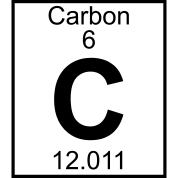
What does 12.011 represent?

a)

atomic mass

b)

atomic number

c)

element name

d)

chemical symbol 

51.

What is an isotope? 

a)

A charged atom

b)

An atom with different amounts of neutrons

c)

An atom with different amounts of protons

d)

A neutral atom

52.

What does the 6 represent?

a)

atomic mass

b)

atomic number

c)

element name

d)

chemical symbol 

53.

How many neutrons does a Sodium 24 isotope have?

a)

12

b)

13

c)

14

d)

15

54.

How many neutrons does a Sodium 24 isotope have?

a)

12

b)

13

c)

14

d)

15

55.

How many neutrons does a Carbon 13 atom have?

a)

6

b)

5

c)

7

d)

8

56.

An isotope has three forms.  30% have a mass of 4 amu, 20% have a mass of 5 amu and 50% have a mass of 3 amu.  Average atomic mass will be closest to

a)

2 amu

b)

3 amu

c)

4 amu

d)

5 amu

57.
Calculate the average atomic mass of silver.
a)
106.38649amu
b)
111.91896amu
c)
107.8677amu
d)
121
58.
An element has two naturally occurring isotopes. One is 10.013 amu and is 19.9% abundant. The other is 11.01 amu and is 80.1% abundant. What is the average atomic mass? What element is it?
a)
9.012, Beryllium
b)
12.011, Carbon
c)
6.941, Lithium
d)
10.812, Boron
59.
Isotopes are atoms of the same element that have the same number of __________ but different number of __________ . Therefore, isotopes of the same element have different masses. 
a)
protons, neutrons
b)
protons, electrons
c)
neutrons, protons
d)
electrons, protons
60.
Do the following atoms belong to the same element? Explain
       Aluminum-27
       An atom with 14 protons and 13 neutrons
a)
Yes because they have the same number of protons
b)
Yes because they have the same mass
c)
No because they have different number of protons
d)
No because they have different number of neutrons
61.
A neutral atom of the isotope 2612Mg would consist of
a)
12 protons, 26 neutrons, 26 electrons
b)
26 protons, 12 neutrons, 26 electrons
c)
26 protons, 14 neutrons, 14 electrons
d)
12 protons, 14 neutrons, 12 electrons
62.
A neutral atom would become an ion that has a charge of 2+ by 
a)
Losing two protons
b)
Losing two neutrons
c)
Losing two electrons
63.
If neutral copper atom (atomic number 29) becomes an ion that has a charge of 2+, how many electrons does the resulting ion have?
a)
27
b)
28
c)
29
d)
31
64.
If a hydrogen atom has 1 proton, 1 electron, and 1 neutron, its atomic number is:
a)
1
b)
2
c)
3
d)
4
65.
On the periodic table, how is atomic mass represented?
a)
As an average of the mass of different isotopes
b)
as the exact mass of every atom
c)
as the mass of the most common isotopes
d)
As the masses of all protons added together
66.
What is an ion?
a)
A Charged Atom
b)
A Large Atom
c)
A Small Atom
d)
A Cute Atom
67.
How many isotopes are shown in this mass spectrum?
a)
1
b)
84
c)
86
d)
4
68.
What do the peaks on the mass spectrum represent?
a)
anions
b)
different isotopes
c)
atoms with differing numbers of electrons
d)
numbers of electrons
69.
What do the heights of the peaks represent in the mass spectrum?
a)
number of isotopes
b)
relative abundance of each isotope
c)
average atomic mass
d)
charge:mass ratio
70.
What is the average atomic mass for this element?
a)
10 amu
b)
10.8 amu
c)
19.9 amu
d)
11 amu
71.

A mixture of 35Cl and 37Cl are analysed, which travels faster?

a)

35Cl

b)

37Cl

72.
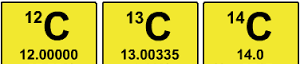
What do these isotopes of carbon all have in common?
a)
neutrons & mass number
b)
atomic number and neutrons
c)
atomic number and electrons
d)
protons, atomic number, and mass number
73.
Four isotopes of lead include lead-204, lead-206, lead-207, and lead-208.  The average atomic mass of lead is 207.2.  Which isotope of lead is likely to be the most abundant.
a)
204
b)
206
c)
207
d)
208
74.

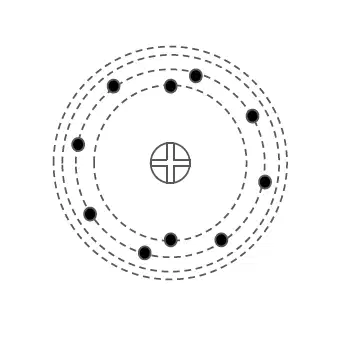
How many valence electrons are in this element?

a)

7

b)

6

c)

5

d)

2

75.

Which element has the same number of electrons in the outer energy level as Oxygen?

a)

Boron, B

b)

Carbon, C

c)

Neon, Ne

d)

Sulfur, S

76.

How many energy levels does this element have?

a)

2

b)

5

c)

3

d)

1

77.

How many energy levels are in an atom of Neon?

a)

8

b)

2

c)

3

d)

10

78.

What Period is Chlorine, Cl, located in?

a)

2

b)

3

c)

17

d)

7

79.

What group is this element located in?

a)

1

b)

2

c)

3

d)

4

80.
The "plum pudding" model was proposed by:
a)
Moseley
b)
Millikin
c)
Democritis
d)
JJ Thomson
81.
The scientist responsible for the oil drop experiment was:
a)
Democritis
b)
Dalton
c)
Millikin
d)
De Broglie
82.
"Everything is composed of atoms" was stated by:
a)
Democritis
b)
Dalton
c)
Moseley
d)
Einstein
83.
John Dalton stated:
a)
elements are made of atoms
b)
atoms of a given element are identical
c)
atoms cannot be subdivided, created, nor destroyed
d)
all of the above
84.
Moseley predicted:
a)
the end of the world
b)
elements that were later discovered
c)
the Donald Trump would be president
d)
electron clouds existed
85.
Schroedinger proposed that electrons have both wave and particle properties using his famous ______ in the box analogy.
a)
dog
b)
cat
c)
frog
d)
horse
86.

Bohr coined the term "valence electrons" which gave birth to:

a)

quantum chemistry, electrons are in quantized energy levels

b)

theory of relativity

c)

plum pudding model

d)

time travel

87.
The impossibility to know simultaneously the exact position and momentum of a particle is called the:
a)
Einstein Uncertainty Principle
b)
Moseley Uncertainty Principle
c)
Heisenburg Uncertainty Principle
d)
Bohr Uncertainty Principle
88.
The scientist responsible for "discovering" the nucleus is:
a)
Bohr
b)
Rutherford
c)
Schroedinger
d)
Einstein
89.

The scientist responsible for coining the term "electron" was

a)

Stoney

b)

Bohr

c)

Mosley

d)

Thomson

90.
The nucleus of an atom can be described as:
a)
spacious and negatively charged
b)
dense and positively charged
c)
spacious and positively charged
d)
dense and negatively charged
91.
The subatomic particles that factor into atomic mass are:
a)
protons and neutrons
b)
neutrons and electrons
c)
protons and electrons
d)
protons, neutrons, and electrons
92.
Electrons are not factored into atomic mass because:
a)
They are so small their mass is negligible
b)
They're not in the nucleus
c)
They're too big
d)
They move so quickly their mass is zero
93.
Which scientist developed the atomic theory?
a)
JJ Thomson
b)
Ernest Rutherford
c)
John Dalton
d)
James Chadwick
94.
JJ Thomson's theory was nicknamed _______.
a)
Billiard Ball Theory
b)
Solar System Theory
c)
Electron Cloud
d)
Plum Pudding
95.
The Billiard Ball is the nickname for ________ theory.
a)
Dalton
b)
Neils Bohr
c)
JJ Thomson
d)
Ernest Rutherford
96.
Electron cloud is based on
a)
Quantum Mechanics
b)
Gold Foil Experiment
c)
Matter is made up of small particles called atoms
d)
Nuclear Theory
97.
Who discovered the proton?
a)
Thomson
b)
Dalton
c)
Bohr
d)
Rutherford
98.
James Chadwick discovered the ________.
a)
proton
b)
neutron
c)
electron
d)
nucleus
99.
Who believed that all matter is made up of small particles called atoms?
a)
Dalton
b)
Rutherford
c)
Bohr
d)
Chadwick
100.
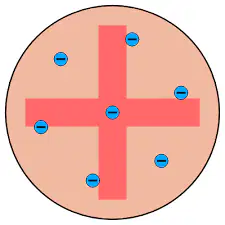
What does this image represent?
a)
Billiard Ball Model
b)
Plum Pudding
c)
Gold Foil
d)
Solar System Model
101.
What did Thomson discover?
a)
electron
b)
proton
c)
neutron
d)
electron cloud
102.
Who believed that all matter is made up of small particles called atoms?
a)
Dalton
b)
Rutherford
c)
Bohr
d)
Chadwick
103.
This scientist believed that electrons orbit the nucleus.
a)
Dalton
b)
Bohr
c)
Rutherford
d)
Chadwick
104.
The Gold Foil experiment was done by __________.
a)
Chadwick
b)
Bohr
c)
Rutherford
d)
Thomson
105.
What scientist first developed 4 rules for atomic theory, and helped kick start modern chemistry?
a)
Thomson
b)
Rutherford
c)
Dalton
d)
Democritus
106.
This scientist performed the Cathode Ray Tube experiment and proposed the Plum Pudding Model of the atom
a)
Dalton
b)
Chadwick
c)
Thomson
d)
Democritus
107.
His model of the atom is referred to as the Nuclear atom.
a)
Chadwick
b)
Dalton
c)
Rutherford
d)
Robert Millikan
108.
In the standard model, the particle considered to be an elementary particle is a(n)
a)
proton
b)
neutron
c)
electron
d)
alpha particle
109.

All of the following are quarks except

a)

strange

b)

bottom

c)

charmed

d)

spark

110.

Bonus: Which particle has electric charge of 2/3?

a)

up quark

b)

down quark

c)

strange

d)

kaon

111.

Name given for particles that have the same mass but all other properties are opposite.

a)

anti-matter

b)

anti-particles

c)

annihilate

d)

dark matter

112.

What is the electric charge of the proton?

a)

+ 1

b)

0

c)

- 1

d)

can’t tell

113.

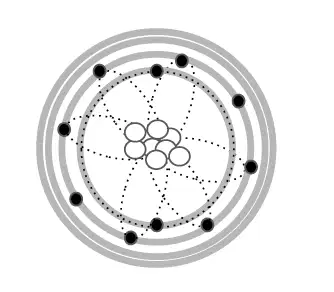
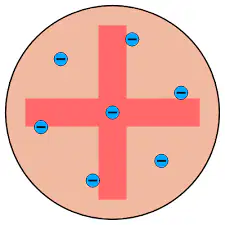
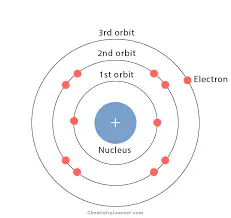
Match the following models to the Scienctists
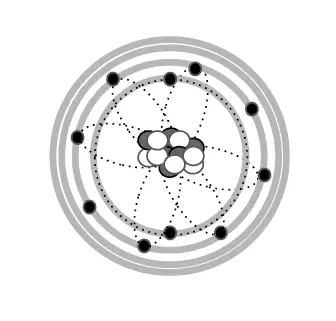
a)

1.

Chadwick

b)

2.

Bohr

c)

3.

Thomson

d)

4.

Rutherford

e)

5.

Schrodinger

114.

Order the following models by the order of discovery (1 earliest, 5 latest)
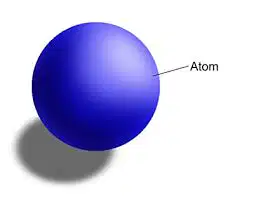
a)

Solid Sphere

b)

Divisible into parts

c)

Mostly space with a positive nucleus

d)

Electrons in energy levels or rings

e)

+ p and n in the nucleus. e- in orbitals

1)
2)
3)
4)
5)
115.

Identify a quark

116.
In the standard model, the particle considered to be an elementary particle is a(n)
a)
proton
b)
neutron
c)
electron
d)
alpha particle
117.
All atoms consist of mostly empty space.
a)
True
b)
False
118.

These are light, elementary particles that are not made up of quarks.

a)

Gluons

b)

Electrons

c)

Leptons

d)

Baryon

119.

What is the standard model?

a)

It explains how particles interact. The model divides all matter into fermions (quarks and leptons) and bosons (exchange particles).

b)

It explains how atoms interact. The model divides all matter into fermions (quarks and leptons) and bosons (exchange particles).

c)

It explains how nuclei interact. The model divides all matter into fermions (quarks and leptons) and bosons (exchange particles).

d)

It explains how molecules interact. The model divides all matter into fermions (quarks and leptons) and bosons (exchange particles).

120.

A particle that is made out of quarks is?

a)

hadron

b)

lepton

c)

boson

d)

meson