
NEW
Font size
 Worksheets
3007 LO4 28 Diode behaviour 12Q
Total questions: 13
Worksheet time: 10mins
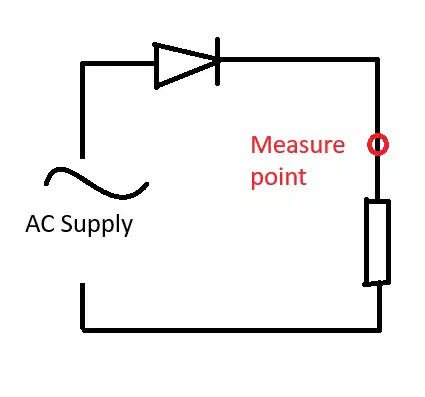
AC 230 Volts is supplied to this circuit. What waveform would we see at the measure point?


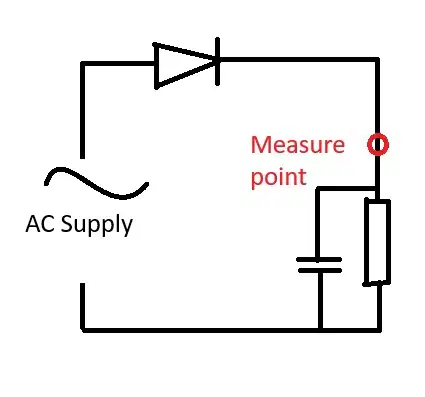
AC 230 Volts is supplied to this circuit. What waveform would we see at the measure point if I place a good capacitor across the load?
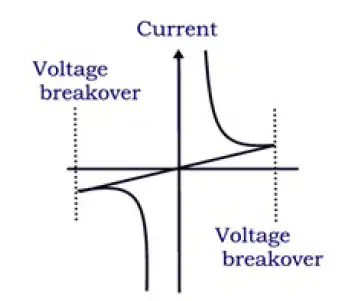
What is this graph of?
Diac
Triac
Capacitor
Coil
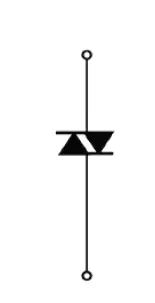
This is a diac. What does it do?
It is the same as 2 diodes, so it passes current in both directions, with a 0.7V drop each way
It is a diode that switches off when hot
It allows no current through either way, until around 30 volts, where it breaks down and conducts
It allows up down current, not sideways current
If I place 20 volts across a diac, what happens?
The diac will be in forward bias
The diac will be in reverse bias
The diac will break down and conduct current
The diac will NOT conduct current
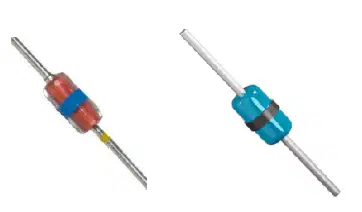
These are diacs. If I put more than 30 volts accross, what will it do?
It is the same as 2 diodes, so it passes current in both directions, with a 0.7V drop each way
It is a diode that switches off when hot
It will break down until it allows about 5 to 8 volts accross it.
It allows up down current, not sideways current
If I place 40 volts across a diac, what happens?
The diac will be in forward bias
The diac will be in reverse bias
The diac will break down and conduct current
The diac will NOT conduct current
I place 40 volts across a diac, it breaks down and conducts.
I then reverse the current, until I achieve a voltage of minus 20 volts, what happens?
The diac will be in forward bias
The diac will be in reverse bias
The diac will break down and conduct current
The diac will NOT conduct current
I place 40 volts across a diac, it breaks down and conducts.
I then reverse the current, until I achieve a voltage of minus 20 volts (1st part) and then increase the voltage to minus 40 volts, what happens?
The diac will be in forward bias
The diac will be in reverse bias
The diac will conduct current both ways
The diac will NOT conduct current either way
The diac will break down in forward bias, and then be open circuit at -20V, but break down before -40V

What the heck is this ?
Strong diode
Diac
SCR (Silicon controlled rectifier)
SCR (Slow Current Resistor)
What does this do ?
It is a diode with 2 outputs
It is a diode that only conducts if a small voltage is applied to the "Gate" to switch it on
It is a diode that only conducts until a small voltage is applied to the "Gate" to switch it off
If I apply 50 volts to V(ak) and 0 volts to V(gk), how much current flows through I(T)
No current
Enough current but will not short out the 50 volts
A lot of current, so even the 50 volts will be shorted down to 0.7 volts
If I apply 50 volts to V(ak) and 0.7 volts to V(gk), how much current flows through I(T)
No current
Enough current but will not short out the 50 volts
A lot of current, so even the 50 volts will be shorted down to 0.7 volts

