
 Worksheets
Unit 105 PP 1 Health and safety overview
Total questions: 20
Worksheet time: 10mins
Why should health and safety be at the top of everyone's priority list in the construction industry?
Because ensuring the safe welfare, wellbeing, condition, and physical performance of everyone is of paramount importance to employers and employees.
Because it helps to reduce the cost of construction materials.
Because it increases the speed of project completion regardless of risks.
Because it allows for shortcuts to be taken in construction processes.
Ensuring the safe welfare, wellbeing, condition, and physical performance of everyone is important only to employees.
True
False
Which of the following can affect the planning of construction projects?
Staff adapting to rules
Machinery failures
Material failures
Poorly maintained mechanisation
All of the above
In which year was the Health and Safety at Work Act (HSWA) enacted?
1974
1981
1967
1990
What does LOLER stand for in health and safety legislation?
Lifting Operations and Lifting Equipment Regulations
Lifting Operations and Loading Equipment Rules
Lifting Objects and Ladders Equipment Regulations
Loading Operations and Lifting Equipment Requirements
Which regulation was introduced in 1989 to address electrical safety at work?
Electricity at Work Regulations 1989
Control of Substances Hazardous to Health Regulations 2002
Health and Safety (Display Screen Equipment) Regulations 1992
Provision and Use of Work Equipment Regulations 1998
Which regulation covers working at height and was introduced in 2005?
Working at Height Regulations 2005
Control of Substances Hazardous to Health Regulations 2002
Personal Protective Equipment at Work Regulations 1992
Manual Handling Operations Regulations 1992
What does CDM stand for in the context of construction health and safety regulations?
Construction Design Management regulations
Certified Demolition Manager
Civil Development Manual
Contractor Duty Mandate
Which regulation, introduced in 1992, addresses manual handling in the workplace?
Manual Handling Regulations 1992
Health and Safety at Work Act 1974
Control of Substances Hazardous to Health Regulations 2002
Workplace (Health, Safety and Welfare) Regulations 1992
Which regulation, introduced in 2005, deals with noise control at work?
Control of Noise at Work Regulations 2005
Health and Safety (Display Screen Equipment) Regulations 1992
Control of Substances Hazardous to Health Regulations 2002
Work at Height Regulations 2005
Which regulation, introduced in 1998, covers the provision and use of work equipment?
The Provision and Use of Work Equipment Regulations (PUWER) 1998
The Control of Substances Hazardous to Health Regulations (COSHH) 2002
The Health and Safety (Display Screen Equipment) Regulations 1992
The Manual Handling Operations Regulations 1992
What does COSHH stand for in health and safety legislation?
The Control of Substances Hazardous to Health Regulations
The Control of Safety and Health Hazards
The Code of Safe Handling of Hazardous Substances
The Control of Occupational Safety and Health
Which regulation, introduced in 1996, covers health, safety, and welfare in construction?
The Construction (Health, Safety & Welfare) Regulations (HSW) 1996
The Control of Substances Hazardous to Health Regulations 2002
The Work at Height Regulations 2005
The Personal Protective Equipment at Work Regulations 1992
Which regulation, introduced in 2013, covers the reporting of injuries, diseases, and dangerous occurrences?
The Reporting of Injuries, Diseases and Dangerous Occurrences Regulations (RIDDOR) 2013
The Control of Substances Hazardous to Health Regulations (COSHH) 2002
The Health and Safety (First-Aid) Regulations 1981
The Provision and Use of Work Equipment Regulations (PUWER) 1998
According to the Management of Health and Safety at Work Regulations 1999 (MHSW), what is one of the key requirements?
Risk assessments
Financial audits
Marketing strategies
Product design

What do the Construction (Health, Safety and Welfare) Regulations 1996 (HSW) impose requirements on?
The design of buildings
The health, safety and welfare of persons at work carrying out construction work and others who may be affected by that work
The cost of construction projects
The color of safety helmets
According to the Provision and Use of Work Equipment Regulations 1998 (PUWER), what is the primary objective of these regulations?
To increase productivity
To provide safe equipment and ensure it is safe to use
To reduce costs
To improve aesthetics
Which of the following is NOT listed as equipment covered by PUWER?
Hammers
Portable drills
Televisions
Dumper trucks
Fill in the blank: Site inductions are designed to ensure that everyone who is working on the site has been briefed on the _______ and their own responsibilities within the workplace.
dangers
holidays
uniforms
lunch options
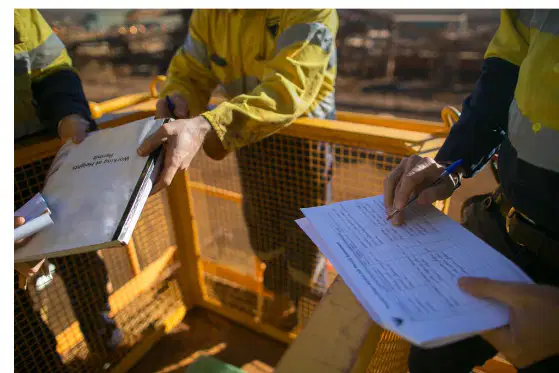
Site inductions can involve a test to check that the person entering the site is competent and aware of site dangers.
True
False

