
 Worksheets
Planning Instruction & UDL Part 1
Total questions: 25
Worksheet time: 25mins
A teacher notices that a student is struggling despite several adjustments. According to the INCLUDE Strategy, what should the teacher do next?
Ignore the issue and move on
Evaluate student progress to determine if further changes are needed
Only focus on the student’s strengths
Remove the student from the classroom
Which of the following best describes the purpose of Universal Design for Learning (UDL) as mentioned in the INCLUDE Strategy?
To create instructional materials that are only suitable for advanced learners
To intentionally design instructional materials, methods, and assessments with built-in supports for compatibility, accessibility, and usability for learners with special needs
To focus solely on standardized testing for all students
To provide the same materials to every student regardless of their needs
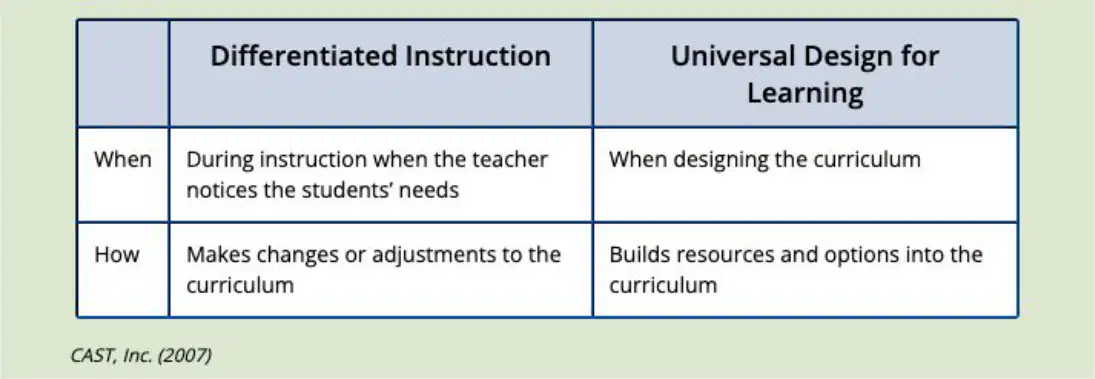
How does Universal Design for Learning (UDL) address student needs differently from Differentiated Instruction?
By making changes or adjustments to the curriculum during instruction
By building resources and options into the curriculum from the start
By only focusing on advanced students
By removing all resources from the curriculum
Which of the following best describes the primary goal when identifying classroom demands?
To increase the number of classroom rules
To maximize opportunities for positive behaviors and minimize opportunities for unwanted behaviors
To reduce the number of students in the classroom
To focus only on academic achievement
How might a teacher strategically use the concept of classroom demands to improve student behavior?
By randomly changing classroom rules each week
By planning classroom structure and instructional methods to support positive behaviors
By allowing students to choose all classroom activities
By focusing only on test scores
Which of the following best describes the three main categories to consider when noting student learning strengths and needs?
Academic skills, social-emotional skills, and physical development
Academic skills, artistic skills, and technological skills
Social-emotional skills, athletic skills, and language skills
Physical development, mathematical skills, and reading skills
If a student has difficulty with motivation and tolerances, which area of student needs should a teacher focus on to support this student?
Social-emotional skills
Academic skills
Physical development
Technological skills
When analyzing student needs, why is it important to check for potential paths to student success?
It helps in planning effective instructional strategies.
It ensures all students receive the same instruction.
It eliminates the need for classroom management.
It focuses only on students' weaknesses.
How does noting student learning strengths and needs contribute to the instructional process?
It allows for tailored support and targeted interventions.
It makes lesson planning unnecessary.
It encourages ignoring classroom demands.
It reduces the need for student assessment.
Why is it essential to adjust or modify instruction for students, according to the material?
To ensure student success by minimizing barriers
To make tasks easier for all students
To lower expectations for students with disabilities
To avoid setting any goals for learning tasks
How can teachers maintain the goal of a learning task while minimizing barriers for students?
By adjusting or modifying instruction as needed
By keeping the same instruction for all students
By removing learning goals entirely
By only focusing on students without disabilities
Which statement aligns with the expectations for students with and without disabilities as described in the material?
Expectations should be equal for all students
Expectations should be lower for students with disabilities
Only students without disabilities should be challenged
Students with disabilities should not participate in learning tasks
A teacher notices a student is struggling with a learning task. According to Step 5, what should the teacher do next?
Use information about the student to brainstorm ways to adjust instruction
Ignore the student's difficulties and continue as planned
Remove the student from the activity
Lower the learning goals for the entire class
A teacher notices that a student is struggling with a particular skill. According to Step 5, what is a recommended approach to help the student demonstrate mastery?
Use bypass strategies as alternate ways to demonstrate mastery
Assign additional unrelated homework
Ignore the issue and continue with the lesson plan
Reduce the overall curriculum content
How does the process of brainstorming ways to adjust instruction support students with significant disabilities?
By providing modifications tailored to their needs as determined by the IEP team
By removing all learning goals
By assigning the same tasks to every student
By focusing only on classroom demands
When monitoring student progress, what decision might an educator make based on the data collected?
Whether to continue, change, or discontinue an intervention
What textbook to use for the next semester
Which sports team the student should join
The color of classroom walls
How might effective use of time contribute to classroom management?
It helps ensure that lessons are completed efficiently and reduces opportunities for misbehavior.
It allows students to leave class early.
It increases the amount of homework assigned.
It eliminates the need for classroom rules.
A teacher wants to improve the classroom climate. Which strategy would best align with this area of classroom management?
Rearranging desks for better visibility
Establishing a positive and respectful environment
Creating a schedule for classroom chores
Timing student presentations
Why is it important to consider the attention of students with attention problems when organizing wall areas in a classroom?
Because too much decoration can distract these students
Because they need more homework
Because they should sit at the back of the class
Because they do not need any visual aids
A teacher wants to reduce discipline problems and maximize instructional time. Which strategy should they prioritize based on the information provided?
Establishing clear routines for classroom business.
Giving students more homework.
Allowing students to set their own schedules.
Reducing the number of classroom rules.
A student consistently struggles with transitions and staying organized. Based on the information provided, what classroom practice would best support this student?
Implementing structured routines for daily tasks.
Allowing the student to work independently at all times.
Reducing the number of classroom activities.
Giving the student extra homework.
Why is it important to teach rules early in the year and clarify expectations in a classroom setting?
It allows students to ignore the rules later
It helps set a clear standard for behavior from the beginning
It makes rules less important
It confuses students about what is expected
How should consequences for breaking classroom rules be communicated and applied?
Consequences should be kept secret from students
Consequences should be communicated and applied inconsistently
Consequences should be communicated clearly and applied consistently
Consequences should be ignored
Why is it important to manage transition time when changing activities or forming groups in a classroom?
It helps maintain student engagement and minimizes wasted time.
It allows students to socialize more.
It increases the length of the school day.
It reduces the need for classroom rules.
A teacher notices that students lose focus during transitions between group activities. Using strategic thinking, what plan could the teacher implement to address this issue?
Develop and consistently reinforce clear routines for transitions.
Allow students to decide when to transition.
Ignore the issue and continue with the lesson.
Only transition activities at the end of the day.

