
 Worksheets
Lesson 2 - European Exploration and Settlement Test
Total questions: 40
Worksheet time: 20mins
Which of these was a major motivation for European exploration?
profit
leisure
freedom
education
Which of these was a goal of the first European explorers?
to establish trading posts
to find a water route to Asia
to exchange ideas with native peoples
to explore North and South America
What was an effect of Christopher Columbus’s voyages to the Americas?
a reduction in the European population
a delay in future Spanish explorations
a war between the Spanish and the French
a transfer of foods between Europe and the Americas
How did the Columbian Exchange affect many American Indian groups?
They grew in number.
They died from diseases.
They became prosperous.
They were forced to move.
Which statement is true about slavery in North America?
Enslaved American Indians were treated with dignity.
European explorers rejected slavery in the Americas.
Slavery had not existed before the European discovery of America.
Enslaved Africans took the place of American Indian workers.
Which of these was a goal of the Spanish conquistadors who came to the Americas?
to trade with the native peoples
to conquer a large empire for Spain
to establish agricultural communities
to learn about the culture of the Aztec people
What was the main goal of the Spanish missionaries?
to protect the American Indians
to trade with the American Indians
to teach their religion to the American Indians
to learn about the customs of the American Indians
Which of these describes the experience of the first Jamestown colonists?
They were challenged by the environment.
They found the area already colonized by the Dutch.
They were welcomed by the American Indians.
They quickly established a prosperous colony.
Why did the London Company send colonists to Virginia?
to create maps of the area
to establish a trading post
to start a moneymaking colony
to make peace with American Indians
What event helped end conflict between the Jamestown colonists and the Powhatans?
the arrival of Captain John Smith
the marriage of John Rolfe to Pocahontas
the discovery of the lost colony of Roanoke
the success of the trade of weapons and food
What was an important economic activity of both the French and Dutch settlements?
fur trade
the trade of enslave people
tobacco farming
sugar cane farming
Which of these became the name of New Netherland after the English took it over in 1664?
New York
New Jersey
New England
New Hampshire
Who gave Florida its name?
Hernando Cortés
Bartolomé de Las Casas
Francisco Pizarro
Juan Ponce de León
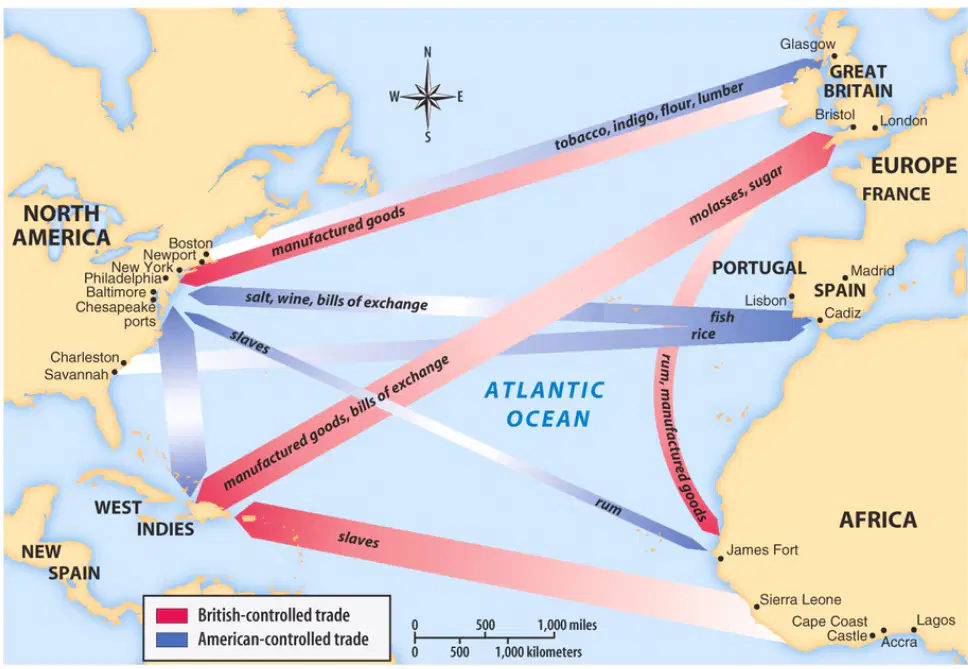
According to the map above, which of the items listed below did not travel in both directions in the Columbian Exchange?
disease
enslaved people
foodstuffs
none of the above
Who were the people Equiano mentions that "had been receiving their pay"?
Africans who were paid as guards on the slave ships
plantation overseers who had come to Africa to help find slaves
slave traders who had gone to Africa and now are returning to America
Africans who had sold other Africans to slave traders
What happened to the colonists at Jamestown when John Smith left?
The colonists prospered
Sir Walter Raleigh became their leader
Starving Time
Powhatan tribe continued to trade with colonists
Who introduced tobacco to Jamestown and saved the colony from ruin?
John Rolfe
John Smith
John White
King James I
Which explorer was looking for a "fountain of youth" in current day Florida?
Hernan Cortez
Juan Ponce de Leon
Francisco Pizarro
Christopher Columbus
The Jamestown settlers found a way to make a profit for their investors by planting
maize
cotton
tobacco
wheat
As yet we had no houses to cover us, our Tents were rotten and our Cabbins worse than nought: our best commoditie was Yron (iron) which we make into little chissels. The president and Captaine Martins sicknes, constryned me to be Cape Marchant, and yet to spare no paines in making houses for the company; who notwithstanding our misery, little ceased their mallice, grudging, and muttering. As at this time were most of our chiefest men either sicke or discontented, the rest being in such dispaire, as they would rather starve and rot with idlenes, then be perswaded to do any thing for their owne reliefe without contraint...
The colonists were tired, but worked hard to build houses
The colonists were farming and getting ready for winter.
The colonists were building a fort for defense against Native American attacks.
The colonists were, sick miserable, and unwilling to help themselves.
What are the four countries who are primarily responsible for exploring and colonizing North America?
Spain, France, England, Netherlands
France, United States, Spain, Portugal
Dutch, Spain, Netherlands, England
Sweden, Spain, England, France
For which country did Jacques Cartier claim land during his two trips to Canada in 1534 and 1535?
England
France
Italy
the Netherlands
What country explored modern day Florida, Mexico, the Caribbean, and Southwest portion of North America?
Netherlands
France
Portugal
Spain
Which of the following best describes the Columbian Exchange?
A. Plants and animals were transferred among Europe, Asia, Africa, and the Americas
B. Columbus discovered new animals in the Americas
C. New foods brought to Europe caused diseases
D. Explorers shipped Native Americans to Europe
The exchange of plants, animals, diseases, and people across the Atlantic Ocean between Europe and the Americas.
slavery
Columbian Exchange
conquistadors
missionaries
The treatment of people as property. People who are denied freedom in this way are said to be enslaved.
Columbian Exchange
slavery
Northwest Passage
conquistadors
Spanish soldier-explorers, especially those who conquered the native peoples of Mexico and Peru.
Columbian Exchange
slavery
Conquistadors
Explorers
A new settlement or territory, established and governed by a country in another land.
colony
Columbian Exchange
slavery
Northwest Passage
People who travel to a territory or community in order to make converts to their religion.
slaves
missionaries
Columbian Exchange
conquistadors
The business of capturing, transporting, and selling people as slaves.
mercantilism
slaves
slave trade
Columbian Exchange
___________ explored the entire length of the Mississippi River and claimed everything west of it for France.
Henry Hudson
Jacques Cartier
Robert Cavelier de La Salle
Samuel de Champlain
Which of the following statements about the Roanoke colony is FALSE?
When governor White returned he found the word CROATOAN carved into a post.
Only ten of the original settlers survived. They returned to England.
No one knows for sure what happened to the settlers.
It was England's first attempt at a permanent settlement.
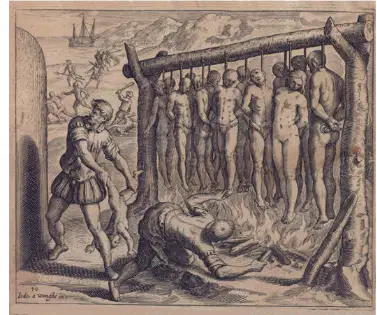
Which of these best describes the relationship between Native Americans and the Spanish explorers?
the Spanish treated the Native Americans well
the Spanish were business partners with the Native Americans
the Spanish made slaves of many Native Americans
Which of these best describes the relationship between Native Americans and the French explorers?
the French and Native Americans were always enemies
the French enslaved native americans
the French and Native Americans were sometimes business partners and sometimes enemies.
Which of these best describes the relationship between Native Americans and the English explorers?
The English and Native Americans were never friendly.
The English and Native Americans were not friendly but it changed and they became friendly.
The English and the Native Americans killed each other.
Which of the following people founded the settlement of Quebec?
La Salle
Champlain
Cartier
Joliet
Which European country established the first permanent settlement in what is now the United States?
Netherlands
Spain
France
England
Which of the following best describes the Columbian Exchange?
The transfer of plants, animals, and diseases between Europe and the Americas
The movement of people and goods between Africa and Asia
The migration of Native Americans to Europe
The trade of gold and silver between Europe and Africa
What was one negative consequence of the Columbian Exchange for Native Americans?
Increased trade with Europe
Access to new animals
Spread of deadly diseases
Introduction of new crops
Which country established colonies in present-day Canada and was heavily involved in the fur trade?
Netherlands
France
England
Spain

