
 Worksheets
Biology 02P CH 4
Total questions: 96
Worksheet time: 48mins
Who first observed cells using a microscope in 1665?
Mathias Schleiden
Theodor Schwann
Robert Hooke
Anton van Leeuwenhoek
In what year did Mathias Schleiden conduct early studies of cells?
1838
1851
1805
1862
Who conducted early studies of cells in 1839?
Mathias Schleiden
Theodor Schwann
Robert Hooke
Anton van Leeuwenhoek
Who proposed the Cell Theory?
Robert Hooke
Mathias Schleiden and Theodor Schwann
Anton van Leeuwenhoek
Louis Pasteur
Fill in the blank: Cells were first observed using a microscope in ____ by Robert Hooke.
1665
1674
1700
1600
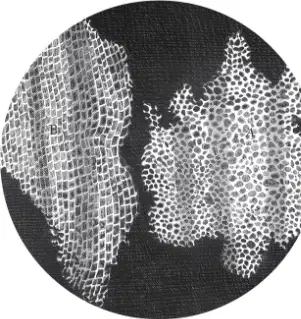
Which image shows the drawing by Hooke?
The left image shows the drawing by Hooke.
The right image shows the drawing by Hooke.
The center image shows the drawing by Hooke.
None of the images show the drawing by Hooke.
Cell Theory contains the following three principals: 1. ________ are composed of cells. 2. Cells are the ________ living things. 3. Cells arise only from ________ cells. Fill in the blanks with the correct words from the Cell Theory principles.
1. All organisms 2. smallest 3. pre-existing
1. All animals 2. largest 3. new
1. Some organisms 2. oldest 3. dead
1. All plants 2. biggest 3. ancient
According to Cell Theory, what are all organisms composed of?
Atoms
Molecules
Cells
Tissues
According to Cell Theory, cells arise only from ________.
Non-living matter
Pre-existing cells
Chemical reactions
Spontaneous generation
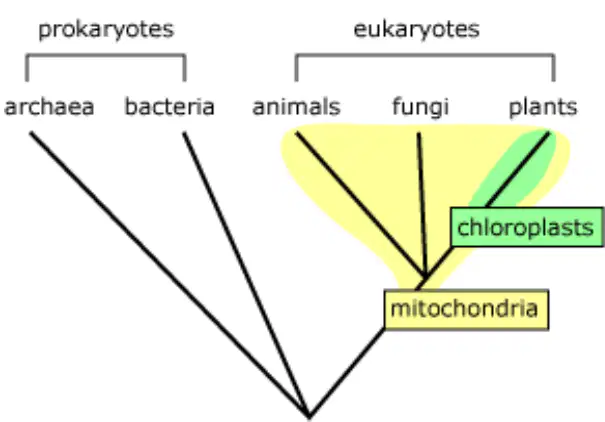
Which organelle is found only in plants among the eukaryotes?
Mitochondria
Chloroplasts
Nucleus
Ribosomes
What is diffusion? Fill in the blank: Diffusion is when molecules move from areas of _______ concentration to _______ concentration, essential for transporting nutrients, gases, and waste.
high; low
low; high
equal; equal
low; high pressure
According to the information provided, what happens to the efficiency of diffusion as cell size increases?
A) It increases
B) It decreases
C) It stays the same
D) It is not affected by cell size
According to the passage, cells rely on ______ to move substances (such as oxygen, nutrients, and waste) in and out of the cell.
diffusion
osmosis
active transport
filtration
Which of the following is NOT a factor that affects the rate of diffusion?
A) Surface area available
B) Temperature
C) Concentration gradient
D) Color of the cell
E) Distance
The rate of diffusion is affected by surface area available.
True
False
One factor that affects the rate of diffusion in cells is:
Temperature
Cell color
DNA sequence
Number of ribosomes
Which of the following is the surface where materials enter and exit a cell?
Nucleus
Cell membrane
Cytoplasm
Mitochondria
Larger cells have less _______ relative to their volume, slowing diffusion.
surface area
cytoplasm
nucleus
energy
What happens to the rate of diffusion when the temperature increases?
Molecules move slower, reducing diffusion
Molecules move faster, increasing diffusion
Molecules stop moving
Diffusion rate stays the same
Lower temperatures cause molecules to move slower, reducing diffusion.
True
False
The speed at which molecules diffuse in and out of a cell depends on which of the following factors?
Surface area available for diffusion
Temperature
Both A and B
None of the above
What is the advantage of small cell size according to the surface area-to-volume ratio?
Small cell size has a greater surface area-to-volume ratio, which is advantageous for the cell.
Small cell size has a lower surface area-to-volume ratio, which is advantageous for the cell.
Small cell size has no effect on the surface area-to-volume ratio.
Small cell size decreases the efficiency of material exchange due to the surface area-to-volume ratio.
If the radii of two cells differ by a factor of 10, how many times greater will the surface area of the larger cell be compared to the smaller cell?
100 times
10 times
1000 times
20 times
If the radii of two cells differ by a factor of 10, how many times greater will the volume of the larger cell be compared to the smaller cell?
1000 times
10 times
100 times
10000 times
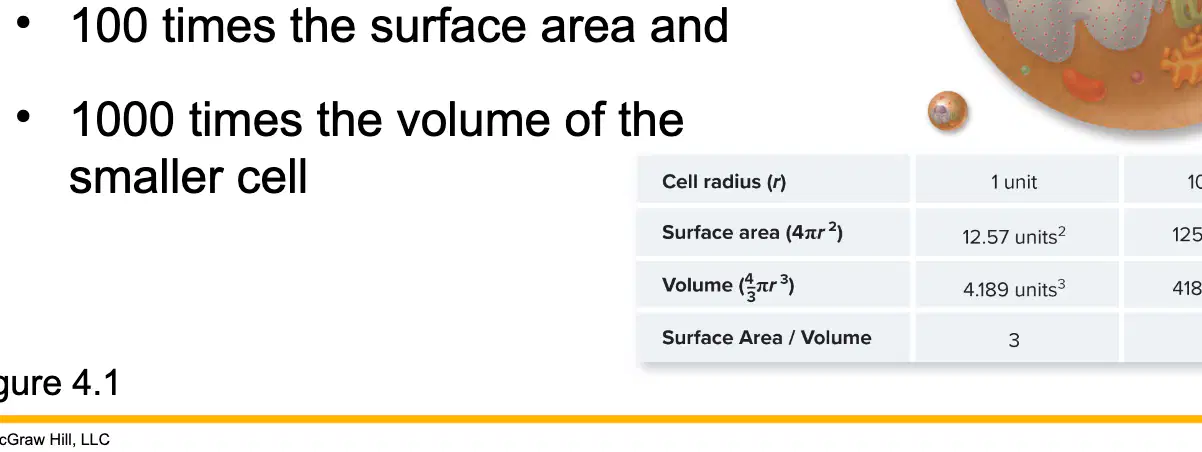
Based on the table, what is the surface area of a cell with a radius of 10 units?
1257 units^2
314 units^2
628 units^2
1000 units^2
As the cell radius increases, the surface area to volume ratio increases.
True
False
An organism made of many ______ cells has an advantage over an organism composed of fewer, larger cells.
small
giant
irregular
dead
As a cell’s size increases, its surface area increases much more rapidly than its volume.
True
False
Some cells overcome limitation by being ______ and ______ – like neurons.
long and narrow
short and wide
round and flat
thick and square
Which of the following statements is true about the concentration gradient of the diffusing substance?
The smaller the difference between the concentration inside and outside the cell, the faster diffusion occurs.
The greater the difference between the concentration inside and outside the cell, the faster diffusion occurs.
The concentration gradient does not affect diffusion rate.
Diffusion is always slow regardless of the gradient.
Fill in the blank: If the concentration gradient is small, diffusion is _______.
slower
faster
unchanged
impossible
Which type of cells allow molecules to diffuse across short distances, so nutrients and oxygen reach organelles quickly?
Small cells
Large cells
Both small and large cells
No cells
Fill in the blank: Larger cells have greater distances to cover, which _______ diffusion.
slows
speeds up
eliminates
ignores
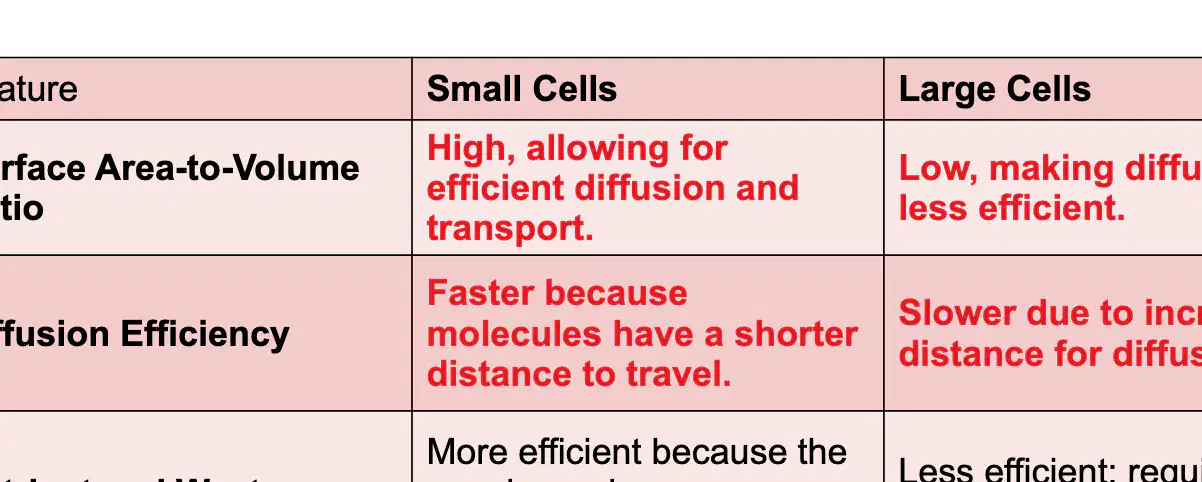
Which type of cell has a high surface area-to-volume ratio, allowing for efficient diffusion and transport?
Small cells
Large cells
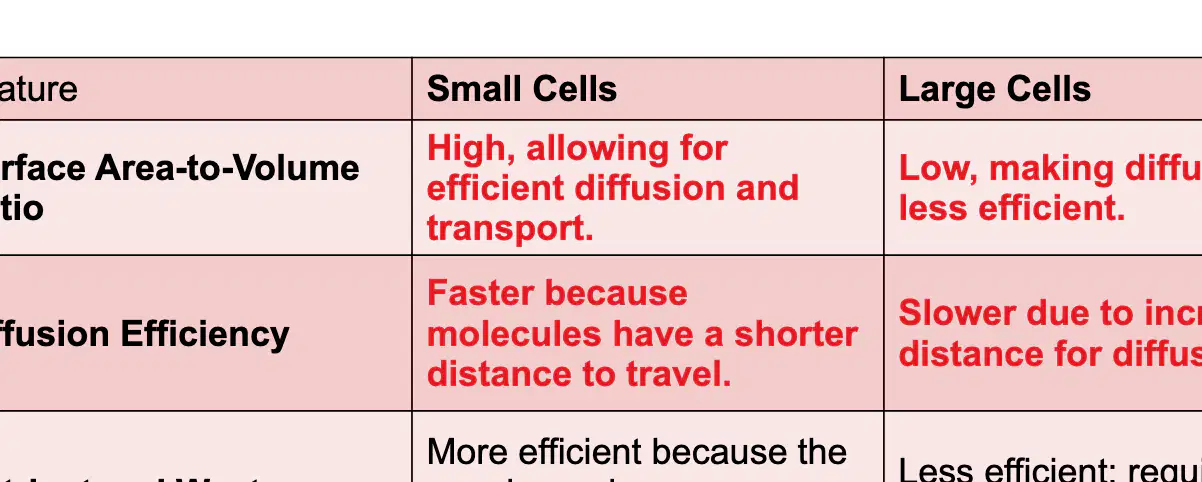
Diffusion is faster in which type of cell because molecules have a shorter distance to travel?
Small cells
Large cells
Nutrient and waste exchange is more efficient in small cells because the membrane has more surface area relative to volume.
True
False
Fill in the blank: Large cells have ______ energy demands due to larger volume and metabolic activity.
higher
lower
constant
minimal
What adaptation might large cells have to compensate for their size?
Large cells may have multiple nuclei (e.g., muscle cells) or an elongated shape (e.g., neurons) to compensate for size.
Large cells may reduce their surface area to volume ratio by becoming spherical.
Large cells may decrease the number of organelles to save space.
Large cells may stop dividing to maintain their structure.
What is the main reason why most cells are small?
To conserve energy
To maximize diffusion efficiency
To increase volume
To store more nutrients

Large cells have developed ________ to improve transport efficiency and maintain proper function.
adaptive strategies
thicker membranes
fewer organelles
slower metabolism
Large cells become long and narrow to:
Increase the distance nutrients must travel
Keep all parts of the cell close to the membrane for faster diffusion
Slow down communication across the cell
Make the cell bulky
Fill in the blank: Large cells reduce the distance nutrients and signals must travel by becoming ______ and ______.
long and narrow
round and thick
short and wide
flat and circular
Which of the following is a benefit of large cells being long and narrow?
Rapid communication and transport across the cell
Increased cell volume
Slower diffusion
Bulky structure
Neurons (nerve cells) are extremely long (up to 1 meter in humans). Instead of being bulky, neurons are thin, ensuring quick diffusion of oxygen, nutrients, and waste.
True
False
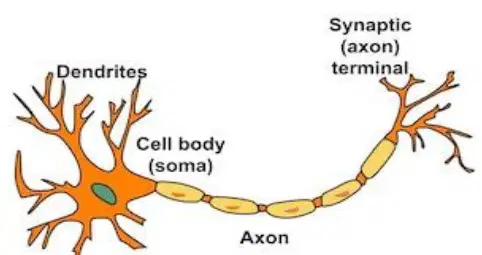
This shape allows electrical signals to travel quickly across the body. What cell type is being described?
Neuron (nerve cell)
Red blood cell
Muscle cell
Skin cell
According to the passage, most cells are:
Visible to the naked eye
Less than 50 μm in diameter
More than 100 μm in diameter
Easily seen without a microscope
Fill in the blank: Resolution is the minimum distance two points can be apart and still be distinguished as _________
two separate points
a single point
a blurred image
an overlapping object
If two objects are too close together, they may appear as one blurry object. Resolution improves when the microscope can distinguish the two objects as _________
separate points
blurry shapes
single lines
merged images
Objects must be _______ μm apart for the naked eye to resolve them as two objects rather than one.
100
1
10
0.1
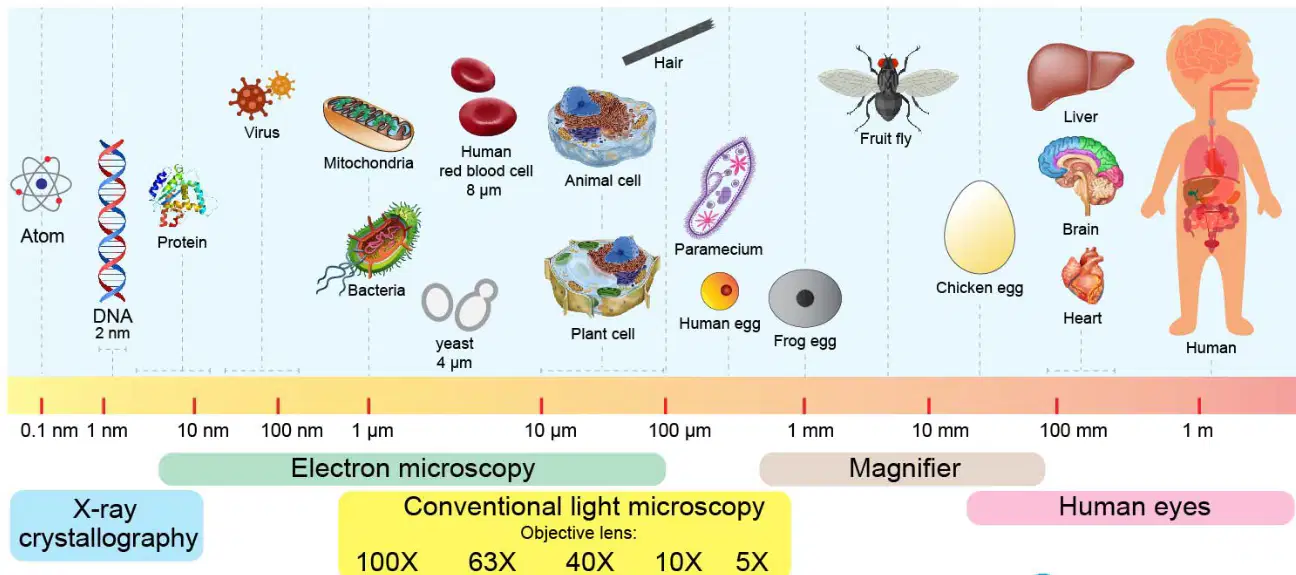
According to the diagram 'The Length Scale of Biology', which of the following is the smallest structure?
Atom
Virus
Mitochondria
Human red blood cell
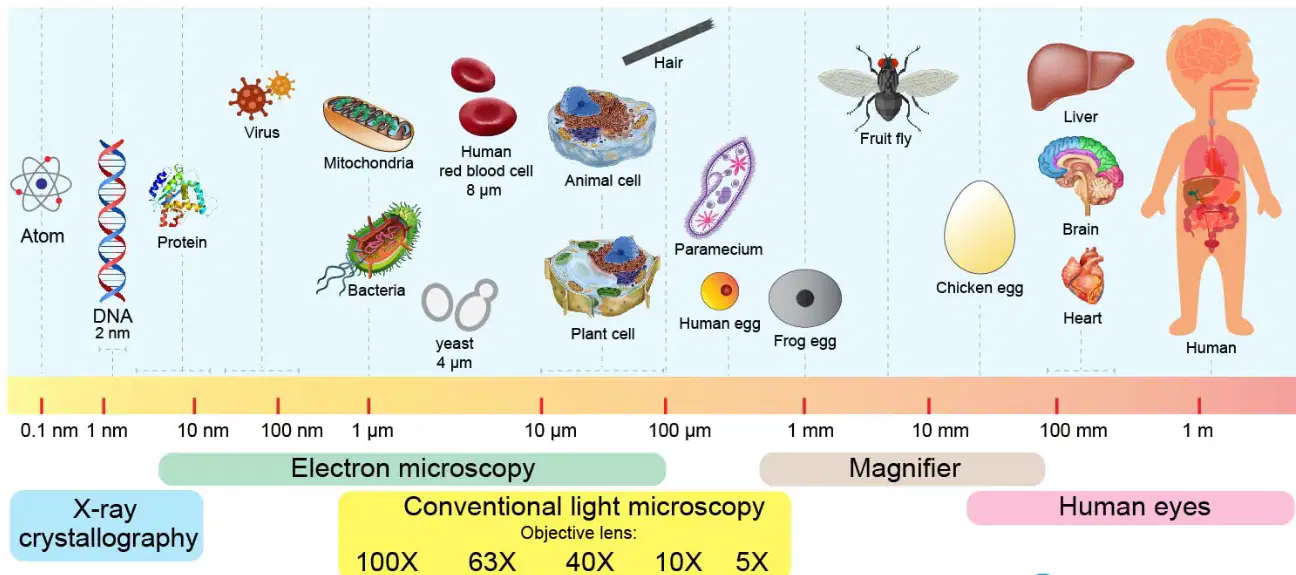
According to the diagram 'The Length Scale of Biology', what is the approximate size of a DNA molecule?
2 nm
20 µm
200 mm
0.2 m
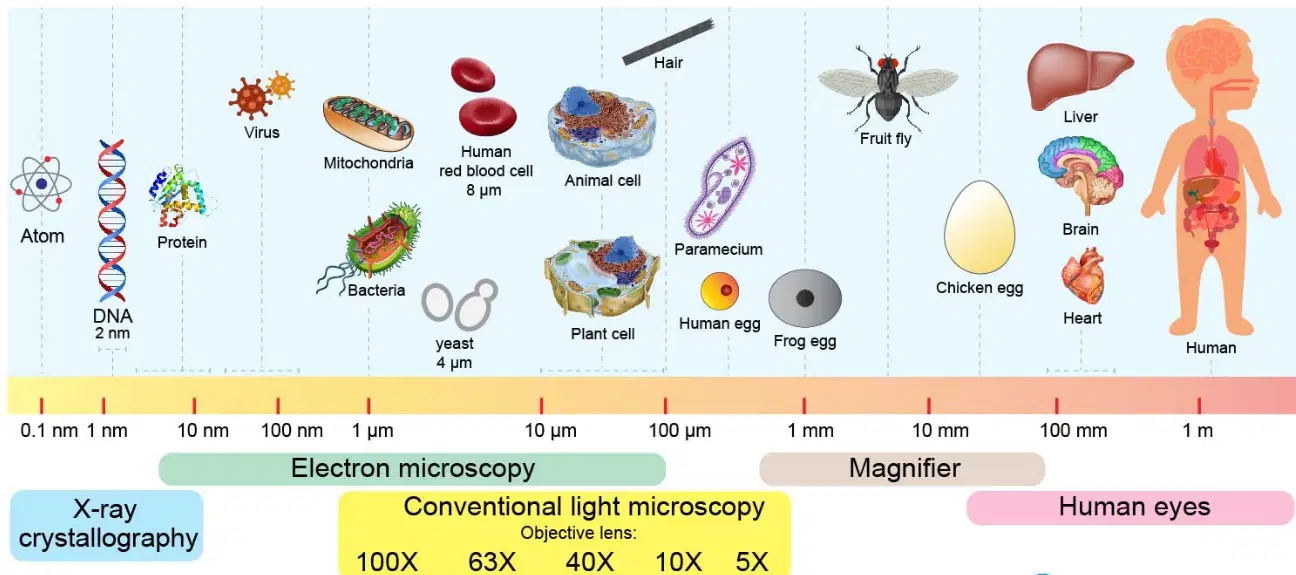
According to the diagram 'The Length Scale of Biology', which of the following can be seen using conventional light microscopy?
Atom
Human red blood cell
Virus
Protein
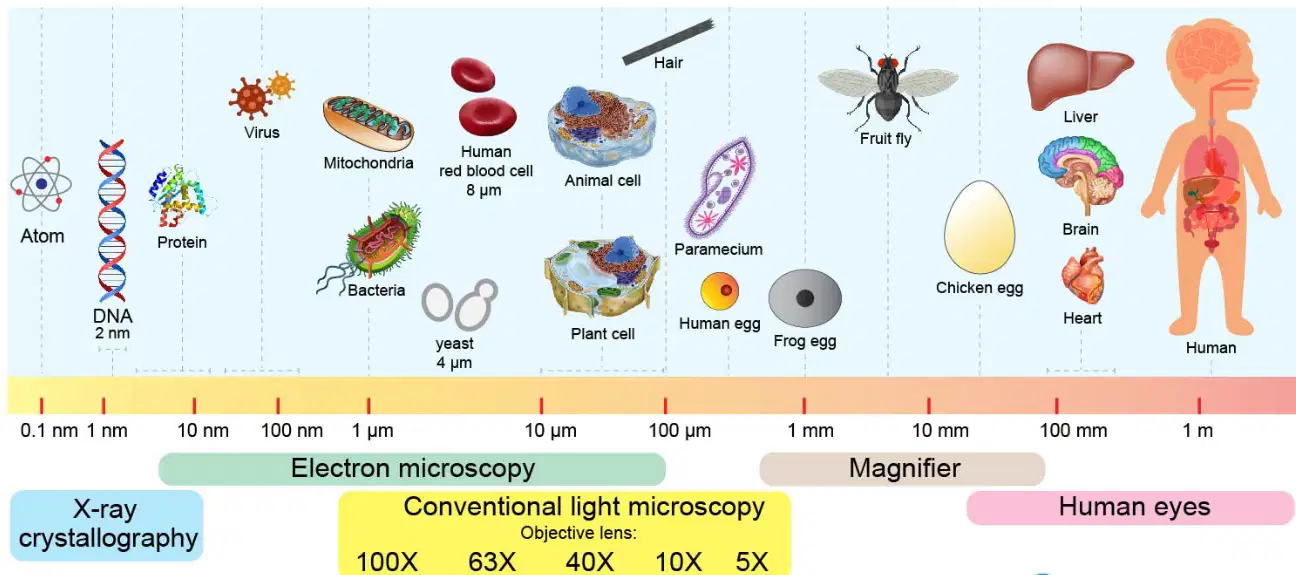
According to the diagram 'The Length Scale of Biology', which method would you use to observe a virus?
Human eyes
Magnifier
Electron microscopy
X-ray crystallography
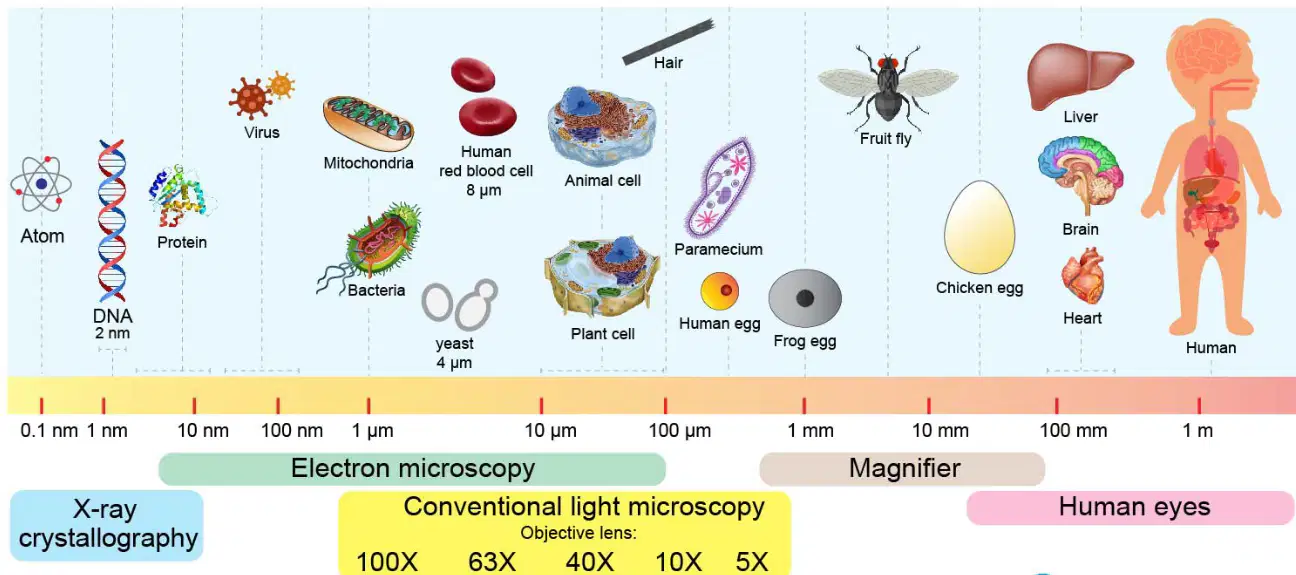
According to the diagram 'The Length Scale of Biology', which of the following is larger: a plant cell or a mitochondrion?
A plant cell is larger than a mitochondrion.
A mitochondrion is larger than a plant cell.
A plant cell and a mitochondrion are the same size.
Neither a plant cell nor a mitochondrion can be compared in size.
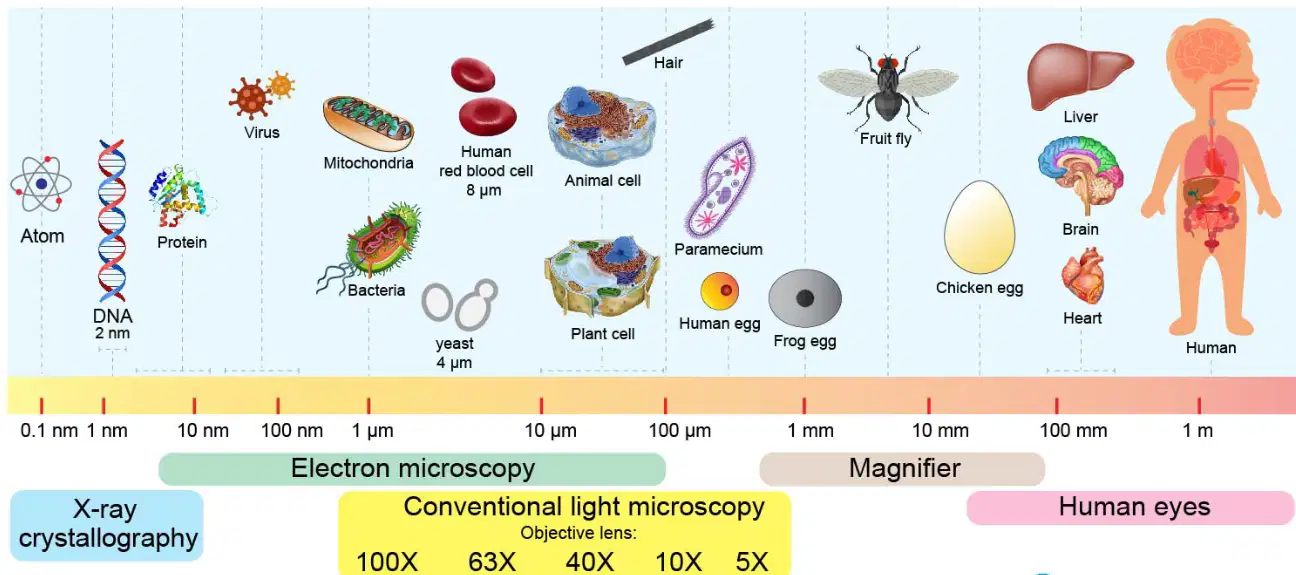
According to the diagram 'The Length Scale of Biology', which of the following can be seen with the human eye?
Protein
Fruit fly
Bacteria
Mitochondria
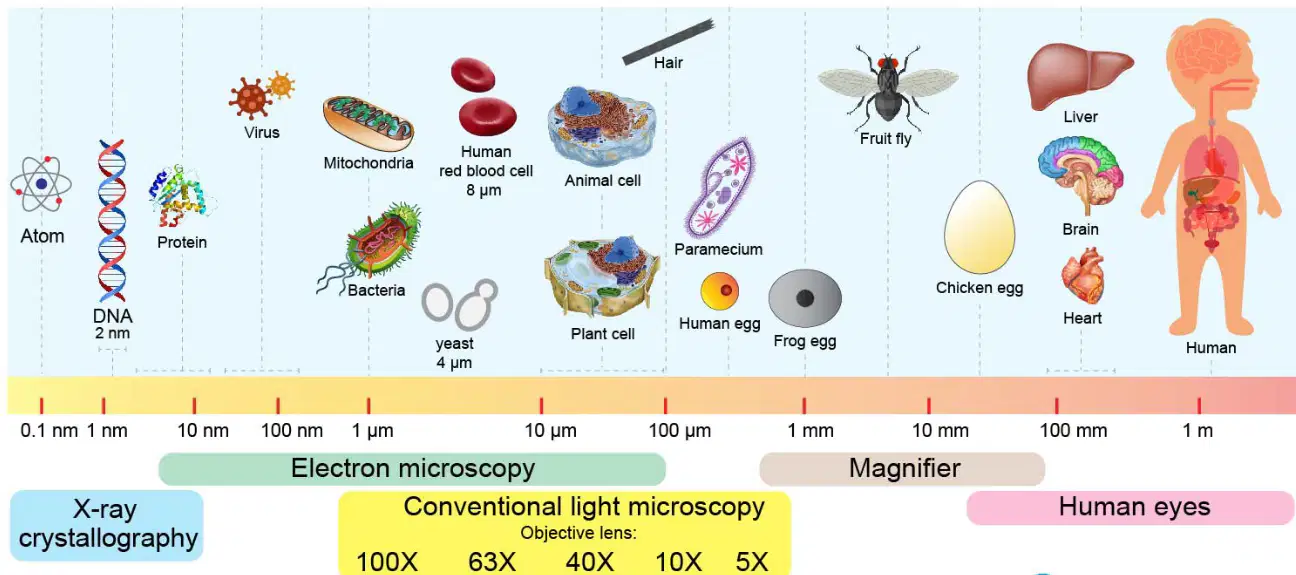
According to the diagram 'The Length Scale of Biology', what is the approximate size of a human red blood cell?
8 μm
0.08 μm
80 μm
0.8 mm
Which type of microscope uses magnifying lenses with visible light?
Light microscope
Electron microscope
Both
Neither
What is the minimum distance that light microscopes can resolve structures apart?
0.2 nm
200 nm
2 nm
20 nm
Light microscopes are limited to resolution using _____
light
sound
electrons
magnetism
Which type of microscope uses a beam of electrons?
Light microscope
Electron microscope
Both
Neither
Electron microscopes can resolve structures that are _____ nm apart.
0.2
2
20
200
Transmission electron microscopes transmit electrons through the material.
True
False
Scanning electron microscopes beam electrons onto the specimen surface.
True
False
Fill in the blank: The region or organelle where DNA is located in a cell is called the ________.
Nucleoid (region) or nucleus (organelle)
Mitochondria
Ribosome
Golgi apparatus
Fill in the blank: The semifluid matrix of organelles and cytosol in a cell is called the ________.
Cytoplasm
Nucleus
Mitochondria
Cell wall
Fill in the blank: The organelles that synthesize proteins in a cell are called ________.
Ribosomes
Mitochondria
Lysosomes
Chloroplasts
Fill in the blank: The phospholipid bilayer that surrounds the cell is called the ________.
Plasma membrane
Nucleus
Cell wall
Cytoplasm
Which of the following are the two domains of prokaryotes?
A) Archaea and Bacteria
B) Plants and Animals
C) Fungi and Protists
D) Viruses and Algae
Prokaryotic cells ______ a membrane-bound nucleus.
lack
contain
are surrounded by
are filled with
What type of DNA is present in the nucleoid of prokaryotic cells?
Linear DNA
Circular DNA
Double-stranded RNA
Single-stranded DNA
Prokaryotic cells have a cell wall outside of the plasma membrane.
True
False
Prokaryotic cells have ribosomes.
True
False
Prokaryotic cells are the ______ organisms.
simplest
largest
most complex
multicellular
Are there any organelles common to all prokaryotes?
Yes
No
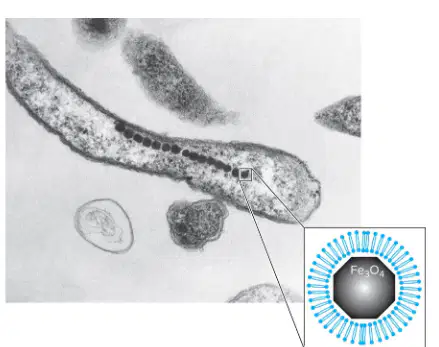
What is the function of magnetosomes in certain bacteria?
Allow the cell to align with a magnetic field
Help in photosynthesis
Store nutrients
Produce energy
Magnetosomes contain ________ crystals that allow the cell to align with a magnetic field.
Iron Oxide
Calcium Carbonate
Silicon Dioxide
Copper Sulfate
Certain bacteria can align with Earth's magnetic field, helping them navigate toward ________ conditions.
favorable
hostile
dry
acidic
Prokaryotes may also have infoldings of the ________ that aggregate reactions.
plasma membrane
nucleus
cell wall
mitochondria
What are Bacterial Microcompartments (BMCs) bounded by?
A semipermeable protein shell (40 to 400 nm)
A lipid bilayer membrane
A cellulose wall
A silica-based shell
Which of the following is a function of Bacterial Microcompartments (BMCs)?
DNA replication
Isolate-specific metabolic processes
Protein synthesis
Cell division
Bacterial Microcompartments (BMCs) are functional but not structural analogs of eukaryotic organelles.
True
False
Unlike eukaryotic organelles, Bacterial Microcompartments (BMCs) are ________-based compartments that lack a ________ membrane and specialize in ________ processes.
protein; lipid; metabolic
lipid; protein; genetic
carbohydrate; lipid; structural
nucleic acid; carbohydrate; signaling
Bacterial Microcompartments (BMCs) function like organelles but lack a lipid membrane.
True
False
Which molecules related to actin and tubulin do prokaryotes possess?
MreB and FtsZ
Myosin and Kinesin
Actin and Tubulin
Dynein and Nexin
What is the result of removing MreB from a prokaryotic cell?
The cell becomes rod-shaped
The cell becomes spiral-shaped
The cell becomes sphere-shaped
The cell dies
The strength and shape of a prokaryotic cell is still determined by the _________.
cell wall
nucleus
mitochondria
plasma membrane
Which of the following is a characteristic of prokaryotic cells?
Membrane-bound nucleus
Circular DNA
Mitochondria
Vacuoles
What are most bacterial cell walls composed of?
Cellulose
Peptidoglycan (Protein with Glucose)
Chitin
Lipids
What is the main function of bacterial cell walls?
To produce energy
To protect the cell, maintain its shape, and prevent excessive uptake or loss of water
To store nutrients
To aid in movement
Fill in the blank: The cell walls of plants, fungi, and most protists are ________ from those of bacteria.
different
identical
smaller
weaker
Susceptibility of bacteria to antibiotics often depends on the structure of their cell walls.
True
False
Which of the following do Archaean cell walls lack?
Peptidoglycan
Cellulose
Chitin
Lignin
Fill in the blank: Membrane lipid structure helps to distinguish ______ from bacteria.
archaea
viruses
fungi
plants
The lipid in archaeal membranes contains saturated hydrocarbons that are covalently attached to glycerol at both ends.
True
False
How do archaea differ from bacteria in terms of cell wall and membrane structure?
Archaea differ from bacteria in cell wall composition and membrane structure.
Archaea have the same cell wall and membrane structure as bacteria.
Archaea lack both cell walls and membranes.
Archaea have cell walls made of peptidoglycan like bacteria.
What allows archaea to thrive in extreme conditions?
Unique lipid structures allow them to thrive in extreme conditions.
They have chlorophyll for photosynthesis.
They possess a cell wall made of cellulose.
They use oxygen as their primary energy source.

