
 Worksheets
SM I Environmental Conditions Part I
Total questions: 41
Worksheet time: 21mins
The effects of environmental heat stress and heat illness include:
Dehydration, heat exhaustion, and heat stroke
Improved concentration and alertness
Lowered risk of sunburn
Increased cold tolerance
The environment can affect human health in which of the following ways?
By causing diseases through pollution and toxins
By improving immunity through exposure to nature
By guaranteeing complete protection from illnesses
By eliminating the need for medical care
During a summer soccer practice, Avery noticed that the hot and humid weather was making it difficult for some athletes to stay healthy and perform well. Could environmental conditions like these create health problems for athletes during routine practice or competitive play?
Yes
No
Dilation of the blood vessels increases the amount of heat lost through _______ and _______.
convection, radiation
conduction, evaporation
osmosis, diffusion
absorption, filtration
What is convection?
The transfer of heat through electromagnetic waves
The loss of heat through the movement of liquids or gases
The process of heat leaving the body as water vapor
The absorption of heat by the skin
What is radiation in the context of heat loss?
The loss of heat through the movement of liquids or gases
The transfer of heat through electromagnetic waves, such as infrared light, not requiring a medium to travel
The process of heat leaving the body as water vapor
The absorption of heat by the skin
Sweat glands stimulate perspiration, which leads to heat loss through _______ (heat leaving the body or surface as liquid water transforms into water vapor or gas).
evaporation
conduction
radiation
convection
Environmental Heat Stress: If eliminated fluid is not replaced, what will result?
Hydration
Dehydration
Perspiration
Humidity
The rate at which perspiration evaporates is strongly influenced by ________.
humidity
temperature
wind speed
air pressure
Humidity is the amount of _______ in the air.
moisture
dust
oxygen
light
When it is hot and humid, sweat does not evaporate as well, so you lose the ability to cool yourself.
True
False
Relative Humidity is based on the difference between the amount of water vapor in the air and the _______ amount the air could contain at the same temperature.
maximum
minimum
average
normal
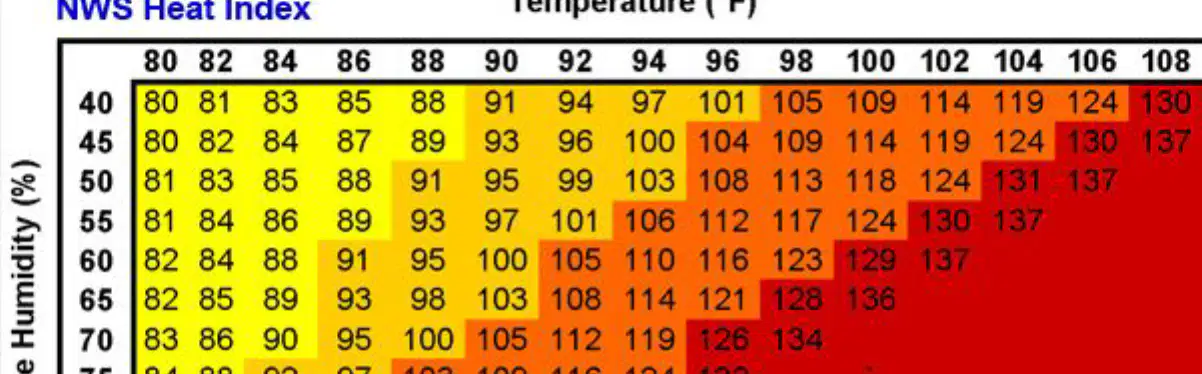
According to the NWS Heat Index chart, what is the heat index when the temperature is 90°F and the relative humidity is 70%?
105
95
115
85
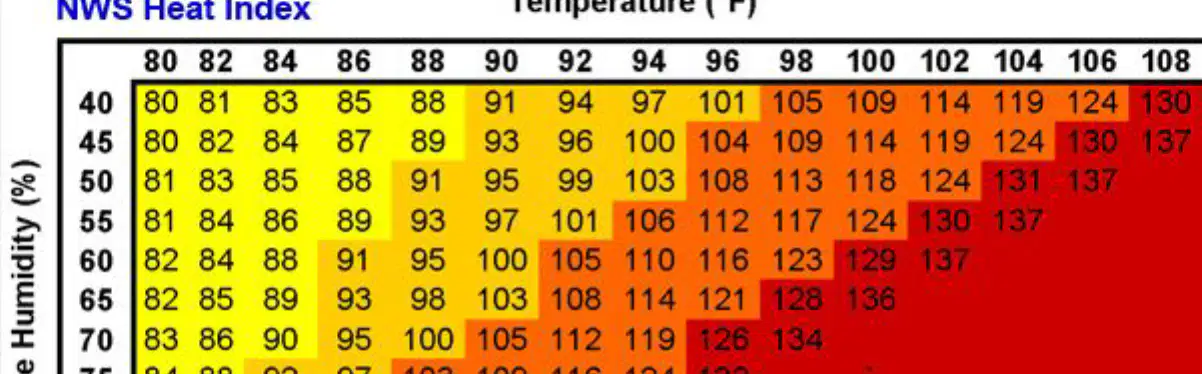
What does the orange color represent in the NWS Heat Index chart?
Caution
Extreme Caution
Danger
Extreme Danger

According to the NWS Heat Index chart, which of the following combinations would result in an 'Extreme Danger' level?
85°F and 50% humidity
100°F and 80% humidity
90°F and 40% humidity
88°F and 45% humidity
What does Wet Bulb Globe Temperature (WBGT) consider that the heat index does not?
Only temperature
Only humidity
Wind and clouds
None of the above
WBGT guidelines are established for different areas, so you should always check your specific area for guidelines.
True
False
What causes sunburns?
Sun ultraviolet (UV) rays cause sunburns.
Drinking too much water causes sunburns.
Cold weather causes sunburns.
Eating spicy food causes sunburns.
What is a recommended treatment for sunburn?
Apply topical cold compress, hydrocortisone, and aloe vera. Refer to a physician if needed.
Rub the affected area with ice directly for 30 minutes.
Apply butter or oil to the sunburned skin.
Expose the sunburned area to sunlight to help it heal faster.
Elijah is training for a marathon during the summer, but he hasn't spent much time getting used to the hot weather. Is inadequate heat acclimatization a possible cause of heat-related illness for Elijah?
True
False
Olivia is training for a summer marathon but has not been exercising regularly. Could her inadequate fitness level be a possible cause of heat-related illness?
True
False
Higher body fat is a possible cause of heat-related illness.
True
False
Presence of gastrointestinal distress is a possible cause of heat-related illness.
True
False
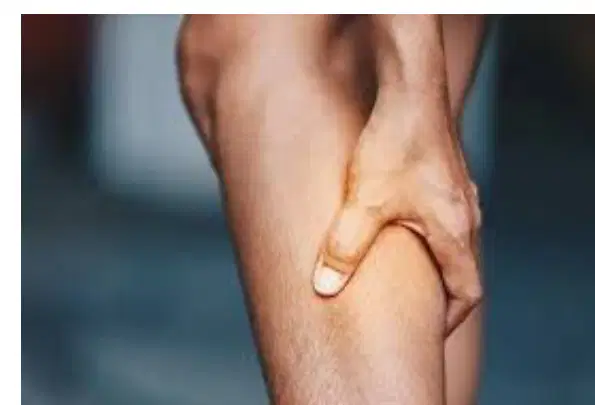
Heat cramps are painful spasms of _______ muscle, most commonly occurring in the gastrocnemius or calf muscle, but possibly in the abdominals as well.
skeletal
smooth
cardiac
connective
What is a recommended treatment for heat cramps? Stretch and _______ the area, keep the athlete hydrated.
massage
heat
bandage
elevate
What is heat exhaustion?
A) A condition in which the body becomes dehydrated from water and/or electrolyte loss
B) A condition caused by lack of sleep
C) A condition caused by eating too much
D) A condition caused by cold weather
Symptoms of heat exhaustion include headache, dizziness, hyperventilation, dilated pupils, nausea, vomiting, clammy skin, and _________?
profuse sweating
dry skin
chills
blurred vision
What is the first step in treating heat exhaustion?
Give the athlete food
Hydrate the athlete
Make the athlete run
Ignore the symptoms
If an athlete with heat exhaustion does not show signs of improvement within 30 minutes, what should you do?
Give them more water
Contact EMS
Make them exercise
Ignore the symptoms
Hannah has been working outside on a hot day and starts to feel dizzy and weak. Which of the following is a sign of heat exhaustion?
Raised body temperature
Low body temperature
Normal body temperature
Fluctuating body temperature
What should you do if someone is experiencing heat exhaustion? Lie down in ______ or air-conditioning.
shade
the sun
a hot tub
a sauna
What is heat stroke?
A) A mild illness that resolves on its own
B) A medical emergency that can lead to permanent brain damage or death
C) A type of cold-related injury
D) A minor skin irritation
Heat stroke may occur suddenly without any other symptoms, or it may arise from _________
heat exhaustion
cold exposure
dehydration from vomiting
bacterial infection
Which of the following is NOT a characteristic of heat stroke?
Hot, dry, flushed skin
High internal body temperature, usually above 104°F
Low body temperature
May occur suddenly
Which of the following are symptoms of heat stroke?
Confusion or disorientation
Hot, dry skin
Vomiting
Collapse or loss of consciousness
High body temperature
What is the first step in treating heat stroke?
Give the athlete water
Call 911 immediately
Wait for symptoms to improve
Apply sunscreen
Cooling the athlete by removing extra clothing and performing cold water immersion is part of the treatment for heat stroke.
True
False
According to the guidelines for preventing heat-related disorders, what should be done if an athlete loses more than 7% of their body weight during practice?
The athlete should drink more water
The athlete should see a physician
The athlete should rest for a day
The athlete should eat more food
Weight loss in excess of ___% of body weight from sweating should be noted.
3
1
5
10
Guidelines for Preventing Heat-Related Disorders: Athletes with a low percentage of body fat will be more likely to experience what?
Heat exhaustion
Heat cramps
Dehydration
Sunburn
Guidelines for Preventing Heat-Related Disorders: Observe for signs of heat exhaustion for those who lose more than ___% of their weight.
3
1
5
10

