
 Worksheets
Explore the Skeletal and Nervous Systems
Total questions: 85
Worksheet time: 53mins
What is one main function of the skeletal system?
Protection against diseases.
Regulating body temperature.
Facilitating digestion of food.
Support and structure for the body.
Name the longest bone in the human body.
tibia
radius
humerus
femur
What type of joint allows for rotation, like in the neck?
Saddle joint
Pivot joint
Ball-and-socket joint
Hinge joint
What is the primary function of the nervous system?
To digest food and absorb nutrients.
To provide structural support to the body.
To circulate blood throughout the body.
To coordinate and control body responses to stimuli.
What is the name of the bone that protects the brain?
femur
cranium
humerus
skull
How many bones are in an adult human body?
198
210
206
204
What type of joint is found in the knee?
Hinge joint
Pivot joint
Saddle joint
Ball-and-socket joint
What is the role of the spinal cord in the nervous system?
The spinal cord produces hormones for the body.
The spinal cord is responsible for breathing and digestion.
The spinal cord stores memories and emotions.
The spinal cord transmits signals between the brain and the body, processes reflexes, and coordinates motor functions.
Which part of the brain is responsible for balance?
Brainstem
Thalamus
Cerebellum
Cerebrum
Name a type of joint that allows for back-and-forth movement.
Hinge joint
Ball-and-socket joint
Pivot joint
Saddle joint
What is the function of the cerebellum?
The cerebellum produces hormones for growth.
The cerebellum regulates emotions and memory.
The cerebellum is responsible for vision and hearing.
The cerebellum coordinates movement and balance.
What type of joint is found in the shoulder?
Hinge joint
Pivot joint
Saddle joint
Ball-and-socket joint
Name one function of the skull.
To assist in hearing.
To provide structure to the face.
To facilitate breathing.
To protect the brain.
What is the largest part of the human brain?
Thalamus
Brainstem
Cerebrum
Cerebellum
What type of joint is the elbow classified as?
Ball-and-socket joint
Pivot joint
Saddle joint
Hinge joint
What is the name of the structure in the eye that changes size to allow light to come in?
Lens
Cornea
Retina
Pupil

When an image hits the retina it is upside down. What flips it over so that it is right side up?
lens
retina
optic nerve
brain
In the eyes, where is the image formed?
pupil
Iris
Cornea
Retina
What part of the eye is responsible for focusing light onto the retina?
Cornea
Lens
Iris
Pupil

The back part where the image is formed
retina
cornea-lens
pupil
iris
What is the retina?
the back part of the eye where the image is formed
the front part of the eye that is clear
the black part that light goes through
the colored part
It protects the eye from sweat.
iris
eyebrow
eyelashes
retina
It lets light enter the eye
iris
retina
pupil
It forms an upside-down image.
iris
retina
pupil
It controls the amount of light
that enters the pupil.iris
retina
eyebrow

Name the pointed part of the eye.
iris
pupil
retina
eyebrow
Which section of the ear do vibrations push up against the structures in order to hear the sound?
Outer Ear
Middle Ear
Inner Ear
Which section of the ear is responsible for capturing the sound waves?
Inner Ear
Middle Ear
Outer Ear
Name the section of the ear where the eardrum is located.
outer
middle
inner
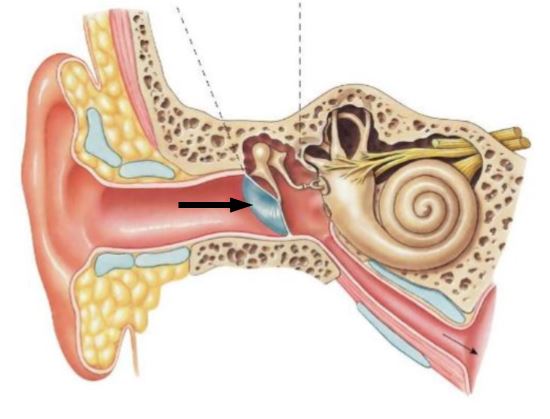
What is this?
Ear Drum
Ear Canal
Pinna
Hammer
Cochlea

What is this?
Ear Drum
Ear Canal
Pinna
Cochlea
Hearing Nerve
The only moveable joint in the skull is the _______ ____.
Upper Jaw
Lower Jaw
All joints are moveable
No joint is moveable
What is the round, coloured part behind the cornea?
Pupil
Iris
Lens
Retina
What is the part of the year that passes sound waves from the
outer ear to the eardrum?
Ear Drum
Ear Tunnel
Ear Canal
Middle Ear
What is the part of the year that passes sound waves from the
outer ear to the eardrum?
Ear Drum
Ear Tunnel
Ear Canal
Middle Ear
What is the joint that allows movement of our head?
Hinge Joint
Gliding Joint
Pivot Joint
Ball & Socket Joint
What is the bone that protects the spinal cord?
Rib Cage
Backbone
Femur
Skull
Which joint is present at the hip and shoulder girdles?
Hinge Joint
Gliding Joint
Pivot Joint
Ball & Socket Joint
The nerves that send messages from the body to the brain and spinal cord are called ______ nerves.
Motor
Sensory
Mixed
Arteries
What is the smallest bone in a human?
Femur
Humerus
Backbone
Stirrup
What is the longest bone in a human?
Humerur
Stirrup
Femur
Backbone
How many pairs of ribs does and adult human being?
14
12
10
15
How many bones are present in the skull of a adult human being
22
32
33
23
Which of the following would motor neurons do?
Take information in from your surroundings
Allow you to do math problems
Taste and smell your food
Tell your muscles to move
What kind of neurons take information in from your senses?
Sensory
Motor
Hepatic
Spinal
What are cells if your nervous system that communicate with each other called?
Nerves
Neurons
Spinal cells
None of the above
What is the hard material at the ends of bones called?
Bone
Cartilage
Joints
Marrow
Where would you find smooth muscle?
In the digestive tract
In the heart
In the arms and legs
No such thing

What do the bones create?
water
fat
red blood cells
flying turkeys

What bone is highlighted?
Radius
Ulna
Humerus
Carpals
Which of the following is a result of voluntary muscles?
throwing up
digesting food
kicking a ball
your heart beating
What are the four functions of the Skeletal System?
support, movement, protection, balance
support, movement, protection, production of blood cells
running, jumping, walking, bending
running, jumping, bending, standing

What system is represented by the picture?
Digestive system
Circulatory system
Nervous system
Spinal system
What gives the brain messages?
Heart
Large intestine
Leg
Nerves
The brain communicates with the rest of the body through the spinal cord and nerves
False
True
What is the cranium?
spine
skull
thigh
arm
What does the cranium protect?
heart
eyes
brain
liver
Babies have more bones than adults.
True
False
The ribs protect your...
heart
lungs
all of the above


Motor nerves are important part of nervous system as they help in __________.
Receiving the information from the sense organs.
Passing the information to the brain from the other part of the body.
Giving messages or commands from brain to the other part of the brain.
These nerves are function-less.
If a person finds difficulty in dancing, which part of the brain is yet to be developed?
Cerebellum
Cerebrum
Pons
Medulla
What will happen if all the sensory nerves stop working in any human's body?
Messages will not reach to the brain or spinal cord.
Brain is not able to process the received information.
Nothing will happen as motor nerves will perform the functions.
Our breathing system is control and coordinated by this part of the brain.
Spinal cord
Cerebellum
Medulla
Cerebrum
Reflex actions are controlled by which part of the nervous system?
Brain
Cerebellum
Spinal Cord
None of these
How intelligent you are that depends on which part of the brain?
Spinal Cord
Cerebellum
Cerebrum
Medulla
Actions which are NOT under your control
voluntary
involuntary
vertebrae
brain

Which organ is represented by letter C?
Brain
Spinal Cord
Nerves
The left side of your brain controls the _______ side of your body.
Right
Left
Front
Back
The nervous system includes sensory organs (eyes, ears, skin)
True
False
What are the three main parts of the nervous system?
Blood
Nerve
Brain
Spinal Cord
Which system has the brain as the main organ?
Respiratory
Nervous
Muscular
Skeletal
Which system controls all parts of your body and sends/receives messages?
Nervous
Circulatory
Digestive
Muscular
What is an example of an involuntary muscle?
Heart
Legs
shoulders
Arms
Which of the following is voluntary?
Heart
Digesting your food
Breathing
Picking your nose
Which body system sends electrical signals to the rest of the body?
Skeletal system
Circulatory system
Nervous system
Digestive system

