
 Worksheets
ECG - Post test
Total questions: 10
Worksheet time: 5mins
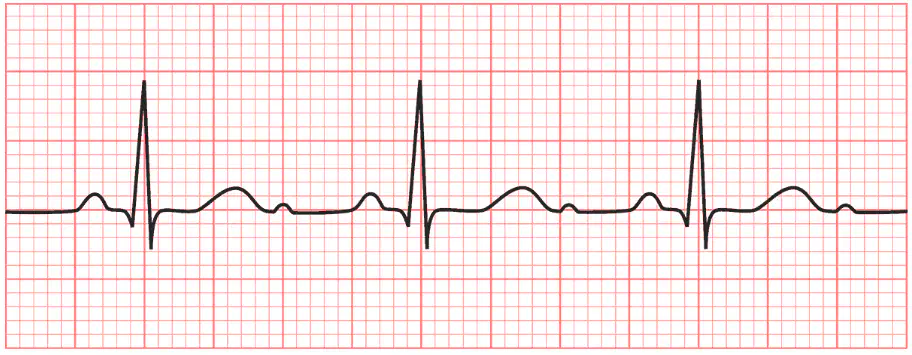
What electrolyte abnormality may produce the following ECG finding?
Hypokalaemia
Hyperkalaemia
Hypomagnesemia
Hypocalcaemia

. What is the most likely diagnosis based on the following ECG?
Suprventricular Tachycardia
Pulmonary embolism
Left ventricular hypertrophy
Inferior STEMI

What does the ECG findings shows?
Anterior STEMI
Inferior STEMI
Asystole
Atrial tachycardia
4. A 58-years-old male admitted in the ward has sudden cardiac arrest who do not have pulse? What interventions are provided other than CPR?
Inotropes
Pacemaker
Defibrillator
Cardioversion
The nurse reviews a client's laboratory results and notes the potassium level is 5.6 mEq/L (mmol/L) [3.5-5 mEq/L, mmol/L]. Which change to the cardiac rhythm would be expected?
Tall Peaked T waves
ST segment elevation
Peaked P waves
Noticeable U waves
The nurse assesses the following electrocardiogram (ECG) strips for assigned clients. The nurse should immediately follow up with the client with which ECG strip?
Normal sinus rhythm
Premature Ventricular contraction
Ventricular tachycardia
Sinus tachycardia
73 old patient ECG shows severe bradycardia and AV dissociation, what will be the ECG interpretation?
Bundle branch block
First degree heart block
Second degree heart block
Third degree heart block
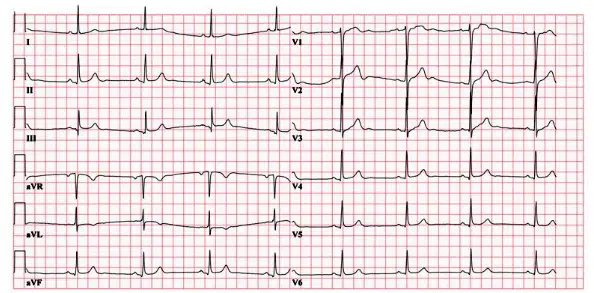
A 72 year old lady presents with collapse. This is her ECG. Her Rate is 50b/mt, Rhythm is regular, Axis, P, QRS, T waves are normal. How would you proceed?
Sinus tachycardia
Sinus Bradycardia
Wellness syndrome
MI
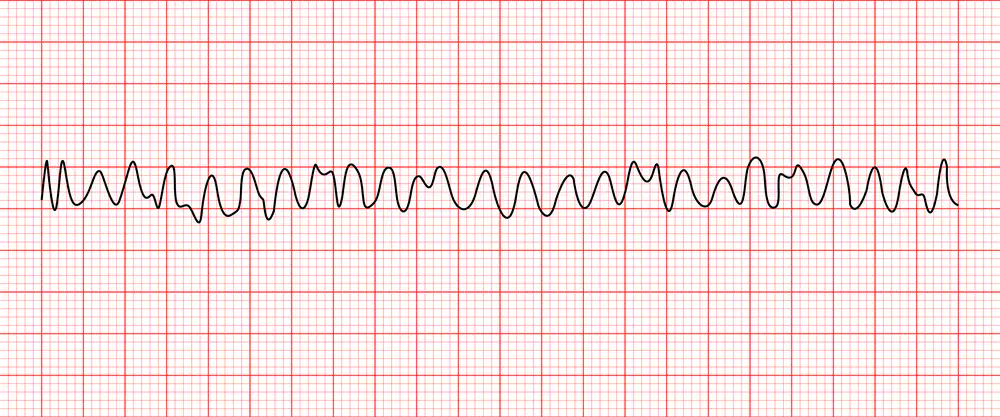
What is your ECG interpretation?
Atrial flutter
Atrial fibrillation
Ventricular fibrillation
Ventricular tachycardia
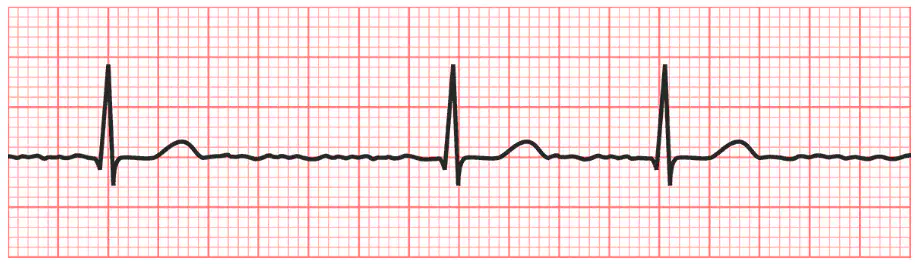
What rhythm is present on the ECG below?
Sinus bradycardia
complete heart block
Slow Atrial Fibrillation
Atrial flutter with variable block

