
 Worksheets
Objective: Introduction to Electrical Circuits
Total questions: 45
Worksheet time: 23mins
Atomic structure as it relates to electricity involves the components of an atom. Which of the following correctly identifies the components of an atom?
Protons, neutrons, and electrons
Protons, photons, and neutrons
Electrons, positrons, and neutrons
Ed Edd and Eddy
Atomic structure as it relates to electricity involves the movement of which subatomic particle, and what is the role of magnetism in electrical devices?
Electrons; Magnetism is used to generate and control electric currents in devices.
Protons; Magnetism has no role in electrical devices.
Neutrons; Magnetism only affects non-electrical devices.
Electrons; Magnetism is unrelated to electricity.
A basic electrical circuit contains a ______ source, a load, and conductors to carry the current.
voltage
resistance
magnetic
Football
Current flow (in amps) is affected by the ______ (in ohms) presented by the load.
resistance
capacitance
inductance
weight
The amount of energy consumed by a load is often expressed in ______ (W).
watts
joules
amperes
cheeseburgers
Which of the following is NOT a component of a basic electrical circuit?
Voltage source
Load
Conductor
Magnet
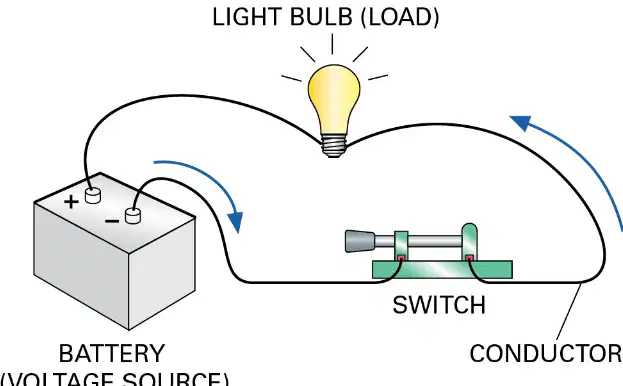
Refer to the diagram of the simple circuit. What component is labeled as the 'load' in the diagram?
Light bulb
Switch
Battery
Wire
The nucleus of an atom contains one or more positive particles called _________?
protons
neutrons
electrons
photons
The nucleus of an atom is orbited by one or more negative particles called _________?
electrons
protons
neutrons
positrons
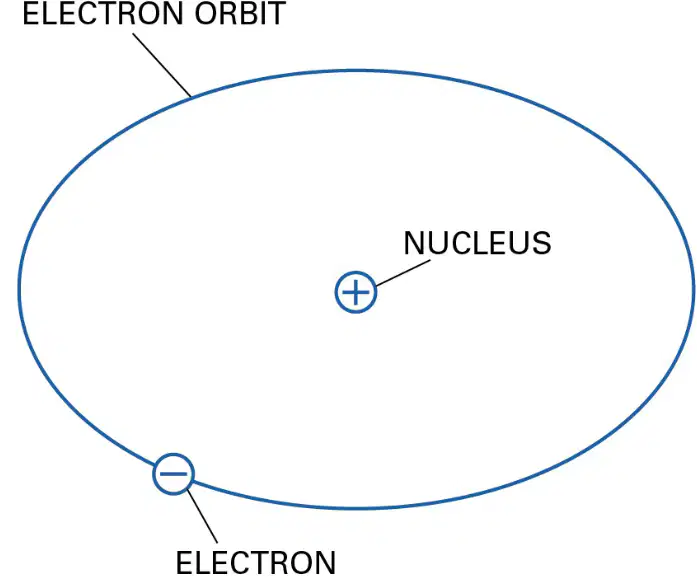
Refer to the diagram of the atom. What is the charge of the particle labeled 'NUCLEUS'?
Positive (+)
Negative (-)
Neutral (0)
No charge
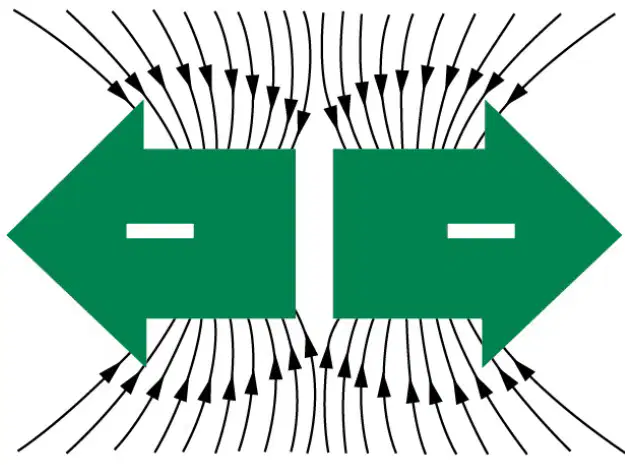
According to the Law of Electrical Charges, what happens when like charges are brought close to each other?
They attract each other
They repel each other
Nothing happens
They combine to form a new charge
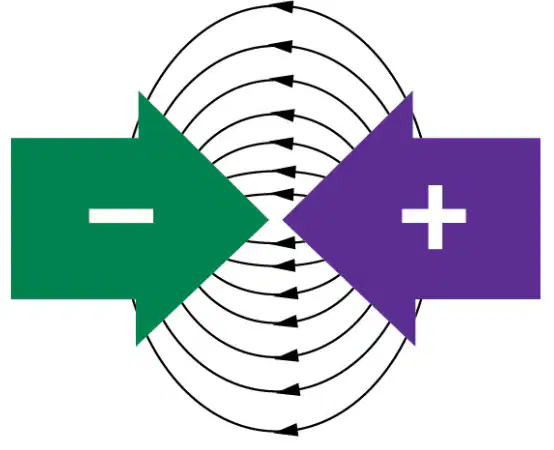
According to the Law of Electrical Charges, what happens when unlike charges are brought close to each other?
They attract each other
They repel each other
Nothing happens
They combine to form a new charge
Like charges _______ one another, while unlike charges _______ one another.
repel, attract
attract, repel
repel, repel
attract, attract
Whether or not a substance is a good conductor or insulator depends on the number of electrons in the outermost (valence) shell of the atom. What does the number of electrons in the outermost shell determine?
The color of the atom
Whether the substance is a conductor or insulator
The atomic mass
The number of protons
A conductor has ______ or fewer electrons in the outer shell, an insulator has five or more, and a semiconductor has four.
three
two
six
six seven
Which of the following best describes a semiconductor?
Has three or fewer electrons in the outer shell
Has four electrons in the outer shell
Has five or more electrons in the outer shell
Has no electrons in the outer shell
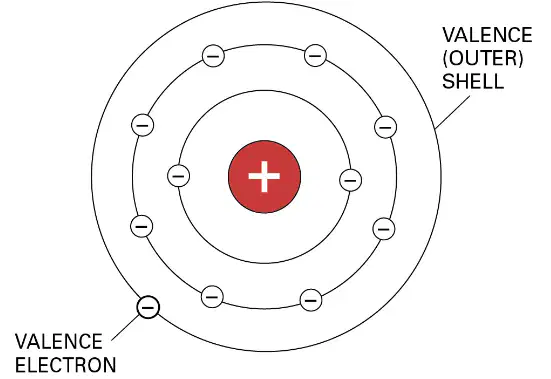
What is the name of the outermost shell labeled in the diagram?
Core shell
Valence (outer) shell
Middle shell
Proton shell
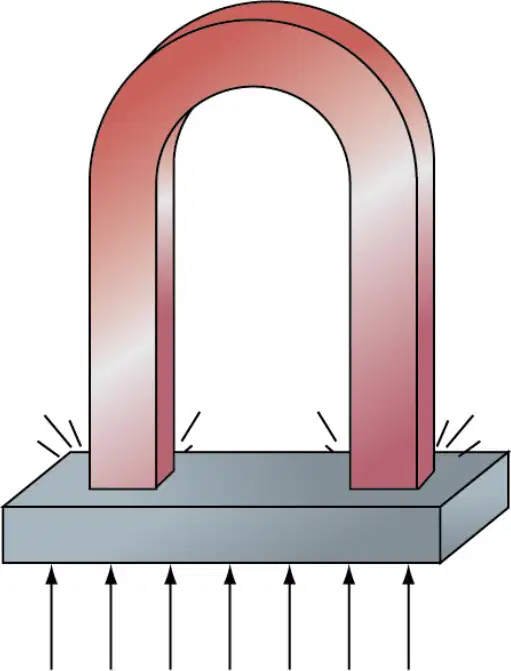
Magnetic fields are used to operate which of the following devices?
Motors
Relays
Transformers
Solenoids
All of the above
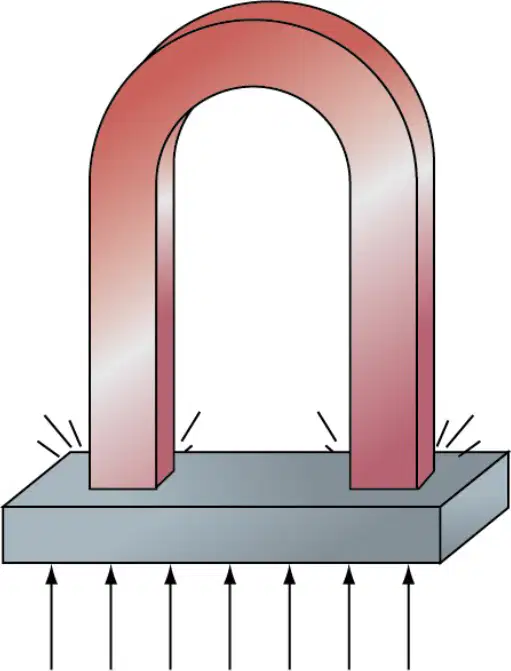
Magnetic objects have a north and south pole. Opposing poles attract while like poles repel.
True
False
Magnetic objects have a ______ and ______ pole.
north, south
east, west
positive, negative
top, bottom
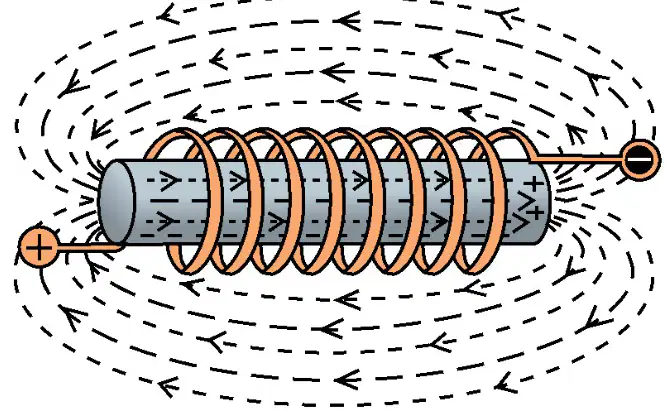
Current flow through a conductor produces a magnetic field. When wrapped around an iron bar, it produces an _________?
electromagnet
insulator
semiconductor
resistor
The opposing forces in a rotating magnetic field can be used to turn a ________.
motor
light bulb
battery
wheel
Electric power can be generated using which of the following types of power plants?
Nuclear
Coal-burning
Solar
All of the above
Hydroelectric
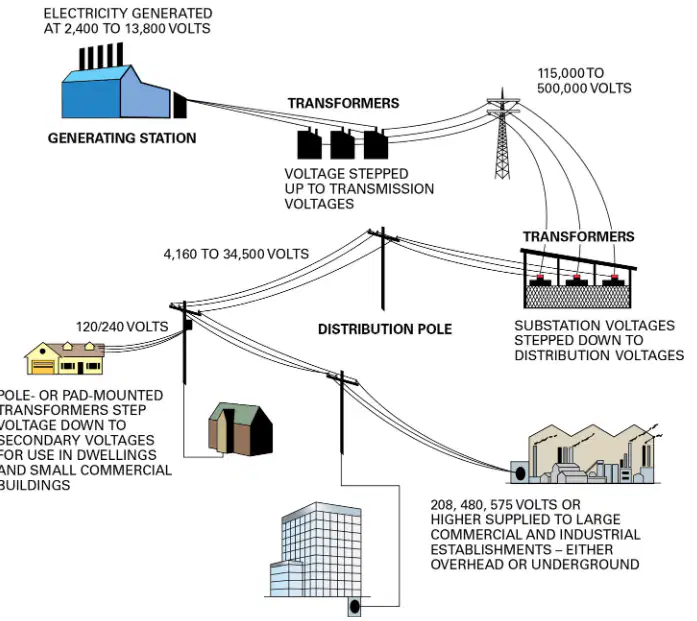
According to the diagram, what is the voltage range at which electricity is generated at the generating station?
2,400 to 13,800 volts
120 to 240 volts
69,000 to 138,000 volts
500,000 to 765,000 volts
What device is used to step up or step down voltage in the power distribution process?
Transformer
Resistor
Capacitor
Inductor
Typical residences receive voltage at what value to operate large appliances such as stoves and clothes dryers?
120V
240V
480V
Like 6-7
Small appliances such as toasters and hair dryers operate at ________ in typical residences.
120V
240V
12V
48V
Commercial power is typically three-phase and supplied at which of the following voltages?
120V, 240V
208V, 480V, 575V
7200V
100V, 200V
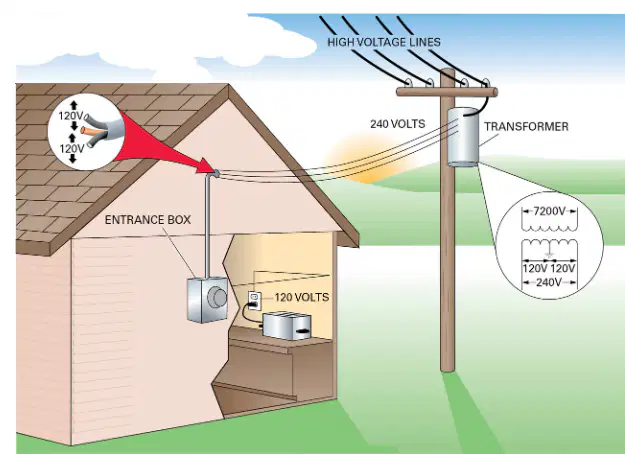
What is the voltage supplied to the entrance box of a typical residence?
120V
240V
7200V
575V
The basic unit of measurement for electrical current, represented by the letter A, is called ________.
Amperes (A)
Volts (V)
Ohms (Ω)
Watts (W)
A quantity of electricity that is either positive or negative is called a ________.
Charge
Current
Voltage
Resistance
A complete path for current flow is called a ________.
Circuit
Resistor
Switch
Battery
The movement, or flow, of electrons in a circuit is called ________. It is measured in amperes.
Current
Voltage
Resistance
Power
Negatively charged particles that orbit the nucleus of an atom are called ________.
Electrons
Protons
Neutrons
Photons
A material through which it is difficult to conduct an electric current is called an ________.
Insulator
Conductor
Semiconductor
Electrolyte
Any substance that has mass and occupies space is called ________.
Matter
Energy
Light
Force
The center of an atom, which contains the protons and neutrons of the atom, is called the _______.
Nucleus
Electron cloud
Molecule
Shell
The basic unit of measurement for resistance, represented by the symbol Ω, is called _______.
Ohms (Ω)
Volts (V)
Amperes (A)
Watts (W)
Electromechanical devices consisting of a coil and one or more sets of contacts. Used as a switching device.
Relays
Transformers
Resistors
Capacitors
An electrical property that opposes the flow of current through a circuit. ______ (R) is measured in ohms.
Resistance
Capacitance
Inductance
Conductance
Electromagnetic coils used to control a mechanical device such as a valve.
Solenoids
Transistors
Resistors
Capacitors
The unit of measurement for voltage, represented by the letter V, is called ________.
Volts (V)
Amperes (A)
Watts (W)
Ohms (Ω)
The basic unit of measurement for electrical power, represented by the letter W, is called ________.
Watts (W)
Volts (V)
Amperes (A)
Ohms (Ω)
A proton repels a(n) (a) .
electron
proton
neutron
negative ion
A (a) is a complete electrical path. An (b) is an electrical path that is not complete.

